Concrete Hole Saw and Core Drill Are Not the Same Thing
A concrete hole saw and a core drill both make round holes in concrete, but they are different tools for different jobs, and confusing them leads to wasted money and broken equipment. A hole saw is a quick, light tool for small, shallow holes in block and thin masonry. A core drill is a heavy, precise machine for deep, large-diameter holes through thick, reinforced concrete. Knowing which one your job needs is the first decision.
In Miami, both come up constantly, from hanging a fixture on a block wall to running plumbing and electrical penetrations through a slab. Let me break down the difference and when to use each.
What a Concrete Hole Saw Does Well
A concrete hole saw is essentially a carbide or diamond grit cylinder that spins on a drill to cut a round hole. It is fast and portable, and it is perfect for small holes in block walls, brick, and thin concrete. Hanging a conduit clamp, running a small pipe through a CMU wall, or cutting a hole for a vent are all hole saw jobs.
The limits are depth and diameter. A hole saw has a fixed depth, and it struggles in thick, heavily reinforced concrete. When the hole needs to be deep, large, or perfectly round through steel, a hole saw is the wrong tool. That is where core drilling takes over. For a full picture of the tools, our guide to concrete cutting tools covers the whole kit.
When Core Drilling Is the Right Choice
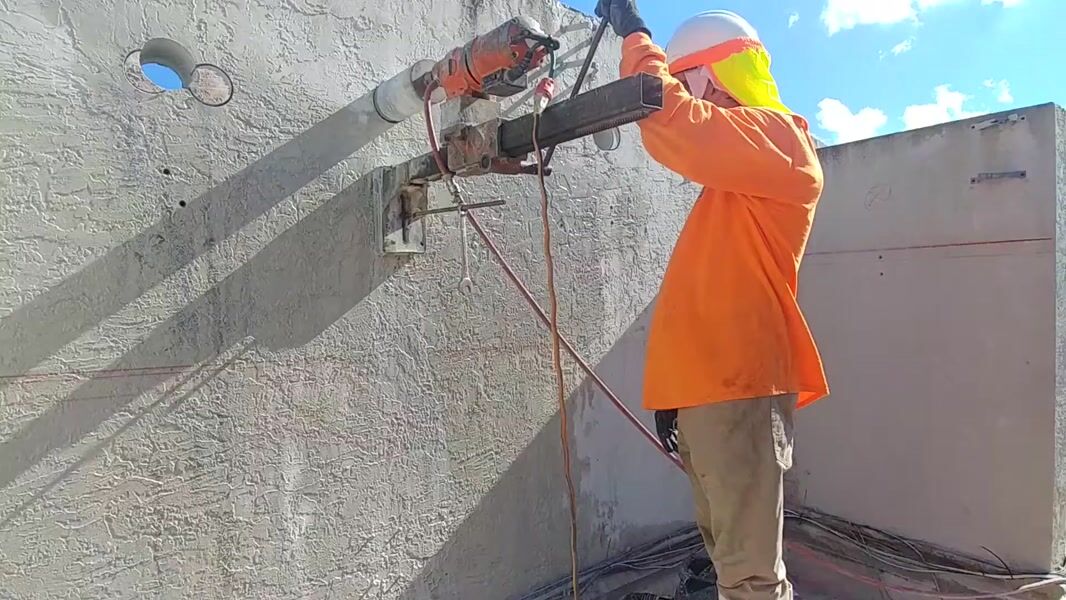
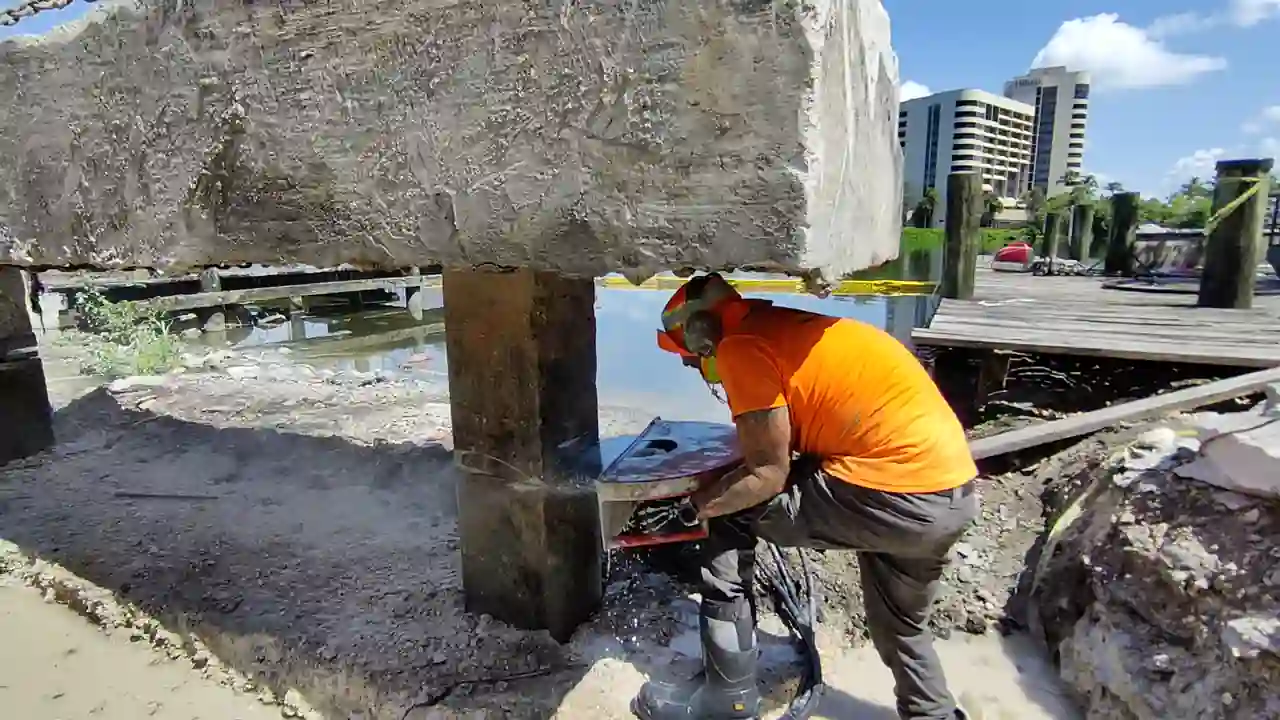
Core drilling is a different process. A core drill uses a diamond bit to cut a precise, cylindrical hole through thick concrete, and it can go through rebar and reach depths a hole saw never could. Core drilling is how you put plumbing, electrical, and HVAC penetrations through slabs and walls, and it is the standard for anything structural or deep.
The precision is the point. A core drill leaves a clean, perfectly round hole that matches the pipe or conduit exactly, and it does it without cracking or spalling the surrounding concrete. For a deep look at the process, our guide to core drilling services explains how it works and what it costs.
Reinforcement and the Water Factor
Both hole saws and core drills hit rebar in reinforced concrete, but they handle it differently. A diamond core bit cuts through rebar as part of the process, while a hole saw will bind and stall on steel. If you know there is rebar, you know which tool to reach for.
Water is the other factor. Core drilling is done wet to cool the bit and control dust, which means slurry management is part of the job. A small hole saw in block might run dry, but any real concrete drilling in Miami should be done with water and dust control. Our guide to silica dust safety explains why.
Matching the Tool to the Hole
The decision between a concrete hole saw and a core drill comes down to three questions: how big is the hole, how deep is it, and is the concrete reinforced? A small, shallow hole in block is a hole saw job. A large, deep, or reinforced hole is a core drill job. Get this wrong and you either waste a hole saw on a job it cannot finish, or pay for a core drill when a hole saw would have done.
When in doubt, describe the hole to a professional: the diameter, the depth, and what the concrete is. They will tell you which tool to use and why. Our guide to choosing between cutting and coring is a good next step if you are planning a project with round penetrations.
Common Hole Sizes and What They Are For
Concrete holes come in a predictable set of sizes, each tied to a specific purpose. Small holes under an inch are for anchors and fasteners, and they are usually drilled with a standard masonry bit. Holes from one to six inches are the territory of the hole saw and the core drill, used for pipes, conduits, and vents. Larger holes, up to a foot or more, are strictly core drilling, and they are for big plumbing and HVAC penetrations.
Matching the hole to the purpose matters because an oversized or undersized hole causes problems downstream. A hole that is too big for the pipe leaves a gap that has to be sealed and can leak; a hole that is too small means the pipe does not fit and the work has to be redone. A professional sizes the hole to the penetration before drilling. Our guide to core drilling services covers the full range of hole sizes and what they are for.
Drilling Block Versus Drilling Poured Concrete
Concrete block and poured concrete drill very differently, and the tool choice changes with the material. Block is hollow in places, which makes it fast and easy to drill through, but the holes have to be positioned to avoid the hollow cells where an anchor will not hold. Poured concrete is solid and dense, which makes it slower to drill but gives a strong, consistent hold anywhere in the wall.
This difference shows up in how the holes are laid out. In block, a contractor places anchors in the webs and the solid cells, not the voids. In poured concrete, the anchor can go anywhere, but the drilling takes longer. Our guide to concrete cutting tools explains how the material dictates the approach.
Anchoring and the Integrity of the Hole
A drilled hole is only as good as what you anchor into it, and that depends on the quality of the hole itself. A clean, round hole with straight sides lets an anchor or a sleeve seat properly and hold its rated load. A ragged hole, with spalled edges or a wandering path, weakens the anchor and can lead to a failure down the line.
This is why drilling is done carefully, with the bit held square and the dust cleared as the hole is cut. A sloppy hole is not just ugly; it is structurally weaker. When the anchor is holding something important, like a railing or a piece of equipment, the integrity of the hole is the integrity of the installation. Our guide to how a concrete saw works covers the mechanics behind clean cuts and holes.
A concrete hole saw, or more precisely a core bit, cuts a round hole through a slab or wall using a diamond-impregnated barrel, and it is the standard for plumbing, electrical, and HVAC penetrations. Unlike a twist drill, a core bit removes a solid plug and leaves a clean, round opening without cracking the surrounding concrete. That clean hole is what lets a pipe or conduit pass through without a ragged chase around it.
Water is the difference between a clean core and a burned one. A core bit generates real heat, and running it wet cools the bit, controls the dust, and extends the life of the barrel. In a finished space that means setting up containment for the slurry, but the alternative is a dry core that dulls the bit and fills the room with silica dust. On any interior core drilling job, wet is the only way to go.
Clean Holes Come From the Right Tool
Whether it is a hole saw for a quick block wall penetration or a core drill for a precise slab opening, the clean result comes from using the right tool and running it wet. Match the tool to the hole, control the dust and slurry, and the penetration will be clean, straight, and ready for whatever pipe or conduit follows.