Why concrete cutting tools are not one-size-fits-all — and using the wrong tool costs more than buying the right one
The phrase concrete cutting tools suggests a toolbox of interchangeable gadgets — grab the concrete saw for a concrete cut the way you grab a circular saw for a wood cut. The reality is that concrete cutting tools span an enormous range of size, power, cost, and application specificity. A gas-powered cutoff saw with a 14-inch diamond blade is a concrete cutting tool. So is a hydraulic wall saw with a 48-inch blade mounted on a vacuum-anchored track system. So is a wire saw drive unit that pulls a diamond-impregnated cable through a 36-inch-thick bridge pier. So is a core drilling rig that bores a precise 12-inch-diameter hole through a reinforced concrete floor. These are all concrete cutting tools, but they are as different from each other as a bicycle is from a semi-truck — different applications, different capabilities, different costs, and entirely different results when used on the wrong job.
 Concrete Cutting Miami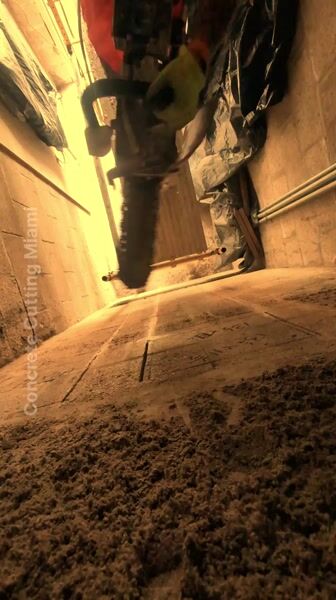
Understanding concrete cutting tools matters for anyone hiring a concrete cutting contractor in Miami because the tools the contractor owns define the work they can actually perform. A contractor whose concrete cutting tools consist of a gas cutoff saw and a rented electric breaker can cut small slabs and break them up, but cannot cut a straight, plumb door opening through a wall, cannot drill a precise 6-inch core hole for a plumbing riser, and cannot cut through concrete thicker than about 5 inches in a single pass. The tool inventory is the contractor’s capability ceiling. You cannot hire a contractor to do work that exceeds their tools. Understanding what tools exist and what each one does helps you ask the right question before hiring: do you own the tool that my project requires?
The core concrete cutting tools and what each one is used for
Diamond blades — the cutting edge of every concrete saw
The diamond blade is the fundamental concrete cutting tool across every saw type. The blade is a steel disc with synthetic diamond crystals embedded in metal matrix segments welded around the rim. The diamonds grind through concrete at the microscopic level while the metal matrix wears away to expose fresh diamonds — a self-sharpening process that continues until the segments are consumed. Diamond blades come in different bond hardnesses matched to the aggregate type of the concrete being cut. Softer bonds for hard aggregate like granite. Harder bonds for soft, abrasive aggregate like Miami’s limestone. Using the wrong bond hardness for the aggregate type either wears out the blade prematurely (bond too soft) or glazes the blade surface and stops cutting (bond too hard). Blade diameter determines maximum cutting depth — typically about 40 percent of blade diameter for most saws.
Walk-behind flat saws
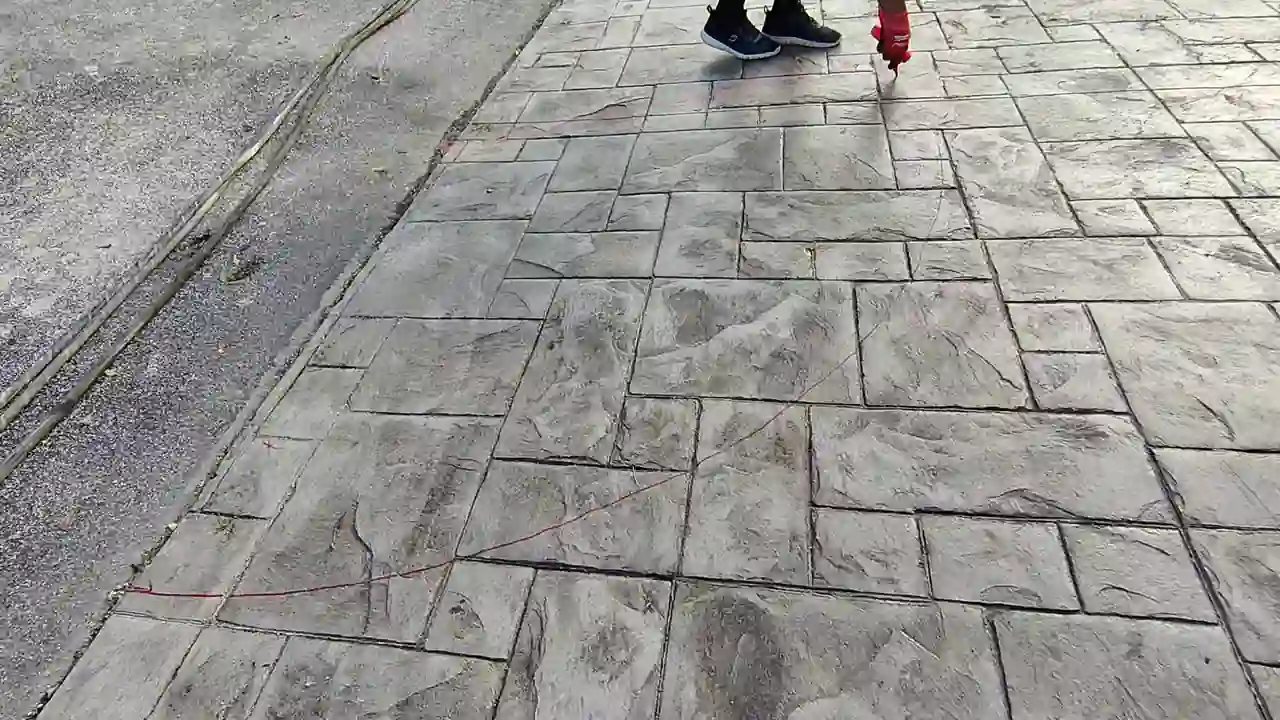
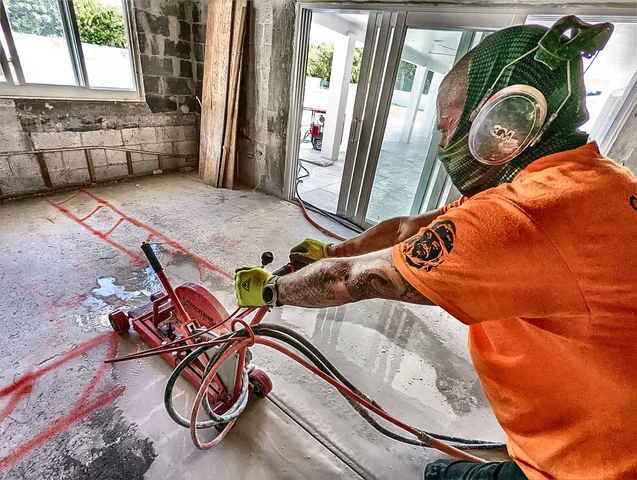
The walk-behind flat saw is the most widely used concrete cutting tool for horizontal surfaces — slabs, floors, pavement, and any concrete that lies flat. The saw consists of a frame on wheels or tracks, a gasoline, diesel, electric, or hydraulic power unit, and a diamond blade that cuts downward into the surface. The operator walks behind the saw, guiding it along the cut line. Blade depth is adjustable. Flat saws range from compact models cutting 4 to 6 inches deep for residential work to large diesel-powered saws cutting 12 to 18 inches deep for heavy civil and industrial applications. Slab sawing with a walk-behind flat saw is the most common concrete cutting operation in Miami.
Wall saws with track systems
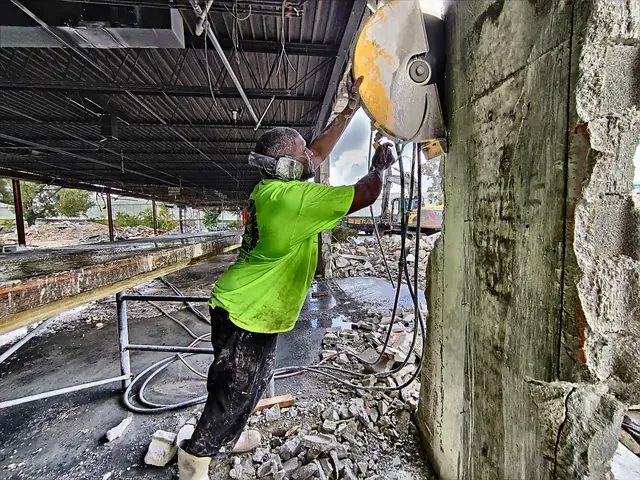
The hydraulic wall saw is the definitive concrete cutting tool for vertical and overhead surfaces. The saw head — carrying a diamond blade up to 48 inches or more in diameter — mounts to a track system that is attached to the wall with vacuum anchors or mechanical fasteners. The saw head travels along the track under power, making a straight, plumb cut with each pass. For walls thicker than the blade’s single-pass depth, the saw makes multiple passes with increasing depth. The track system provides the mechanical precision that a hand-held saw cannot — the cut is straight within a fraction of an inch and the cut face is perpendicular to the wall surface. Wall saws are the essential concrete cutting tool for creating door openings, window openings, mechanical penetrations, and structural modifications in concrete walls.
Handheld concrete saws
Handheld concrete saws — gas cutoff saws, electric hand saws, and hydraulic hand saws — are the concrete cutting tools for tight access, small cuts, corner finishing, and situations where larger saws cannot physically reach the cut. Gas cutoff saws are the most common handheld type: portable, self-contained, powerful enough for most residential and light commercial cutting. Electric hand saws are preferred indoors for their lack of exhaust emissions. Hydraulic hand saws provide the most cutting power but require a remote hydraulic power unit. Hand sawing is slower per linear foot than track-mounted or walk-behind cutting, but it is often the only viable method for cuts in confined or awkward-access locations.
Wire saws
A wire saw is a specialized concrete cutting tool consisting of a drive unit that pulls a continuous loop of diamond-impregnated steel cable through concrete. The wire is threaded through a small cored access hole and wrapped around the concrete section to be cut. The drive unit applies hydraulic tension to the wire while pulling it through the concrete. Wire saws cut through concrete of virtually any thickness — there is no practical limit as long as the wire can be threaded around the section. Wire sawing is used for massive concrete cutting applications: bridge piers, dam structures, thick foundation walls, large concrete vaults, and any section too thick for circular blade saws.
Core drilling rigs
Core drilling rigs are concrete cutting tools for creating precise circular penetrations. The rig consists of a drill motor mounted on a stand or column, with a diamond-tipped cylindrical core bit. The stand is anchored to the floor or wall with a vacuum base, expansion anchors, or mechanical bracing. The motor spins the core bit while feeding it into the concrete at a controlled rate, with water delivered to the cutting surface for cooling and dust suppression. Core drilling produces holes from half-inch diameter for anchor bolts to 12-inch diameter and larger for plumbing stacks and utility risers. The rig’s mechanical feed and rigid mounting produce holes that are straight, round, and accurately located — essential for penetrations that must align with pipes, conduits, or structural connections.
Ancillary concrete cutting tools that are equally essential
- GPR scanning equipment: GPR scanning devices are not cutting tools, but they are essential concrete cutting tools in the broader sense — every cut should be preceded by a scan to locate post-tension cables, conduits, and embedded utilities. A contractor who cuts without scanning is missing the most important pre-cutting tool in modern concrete work.
- Hydraulic power units: Wall saws, wire saws, and hydraulic hand saws require an external hydraulic power unit — a diesel, gas, or electric motor driving a hydraulic pump that delivers high-pressure fluid to the saw through hoses. The power unit is as important as the saw — an underpowered unit slows cutting and reduces blade life.
- Slurry containment systems: Wet cutting produces slurry that must be captured. Vacuum collection systems, containment berms, and settling tanks are standard concrete cutting tools in any professional Miami concrete cutting operation where county regulations require slurry containment.
- Dust collection systems: For dry cutting operations or for capturing airborne dust that escapes wet cutting, HEPA-filtered vacuum systems are essential concrete cutting tools for compliance with OSHA silica dust exposure standards.
How to evaluate a contractor’s concrete cutting tools before hiring
When you are evaluating a contractor for concrete cutting work in Miami, ask about their concrete cutting tools directly. What saws do they own? For your specific project, which saw will they use? Can they show you photographs of that saw in operation on a similar project? A contractor who can answer these questions with specificity owns the tools they are quoting. A contractor who gives vague answers about having “the right equipment for the job” may be planning to rent, borrow, or improvise — none of which produces the same result as a contractor who arrives with their own maintained, familiar equipment operated by a crew trained on that specific machine. Contact us to discuss your project — we will tell you exactly which concrete cutting tools we will deploy, why those are the right tools for your specific concrete, and what you can expect from each stage of the work.