What Getting Rid of a Pool Actually Means in South Florida
When a Miami homeowner tells me they want to get rid of a pool, they usually mean one of two very different things. The first is full removal: break out the entire concrete shell, haul away every piece, and backfill the hole with clean compacted fill. The second is a partial fill: punch holes in the bottom for drainage, knock down the top few feet of the walls, and bury the rest. The two approaches cost differently, settle differently, and change what you can build on that spot afterward. I have watched both go right and both go badly wrong.
The single biggest mistake is treating this like a demolition job with no plan for the hole. In Miami-Dade County, the water table sits close to the surface in a lot of neighborhoods, so an empty pool shell can actually float or shift if you drain it without a licensed plan. A proper swimming pool demolition starts with understanding where the groundwater is on your specific lot.
Full Demolition Versus Partial Fill and What Each One Costs You
Full removal means a crew cuts and breaks the entire shell, removes the rebar and concrete, and brings in engineered fill that gets compacted in lifts. It is the more expensive route but the only one that reliably gives you a buildable, stable yard. Partial fill is cheaper because most of the shell stays in the ground, but it restricts what you can put on top later, and some buyers and lenders look at it as a liability. For a breakdown of how contractors bid each one, our cost guide to inground pool removal walks through real numbers.
The price difference usually comes down to haul-off. Full removal generates dump-truck loads of broken concrete and rebar, and in Miami that material has to go to an approved facility, which is not free. A partial fill keeps that material on site but passes a different set of problems to the next owner. Neither option is universally right; the right one depends on whether you want to build, plant, or simply be done with the maintenance.
The Permit and Water Table Reality Most Homeowners Miss
Removing an inground pool in Miami-Dade is a permitted job, and the permit exists for a reason. The county wants to know the shell is being handled so it does not become a drainage trap or a sinkhole risk. The water table is the part that catches people. In low-lying areas, a drained pool can pop out of the ground like a boat hull if the groundwater pressure underneath is not managed. That is why a licensed contractor drains and demolishes in a controlled sequence rather than just pulling the plug.
There is also a real question of what you can build afterward. A partial fill leaves you with an area that can only support light use, while a properly compacted full removal can support a future addition or a new pool removal and rebuild scenario. Knowing the difference before you start is what separates a clean job from a legal headache.
Why a Clean Shell Break Matters More Than Speed
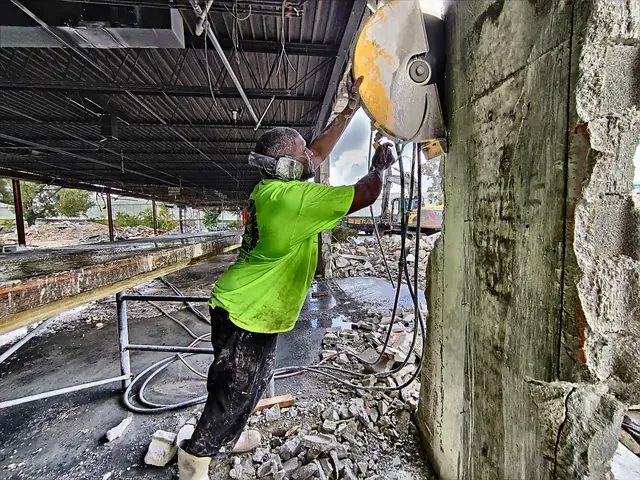
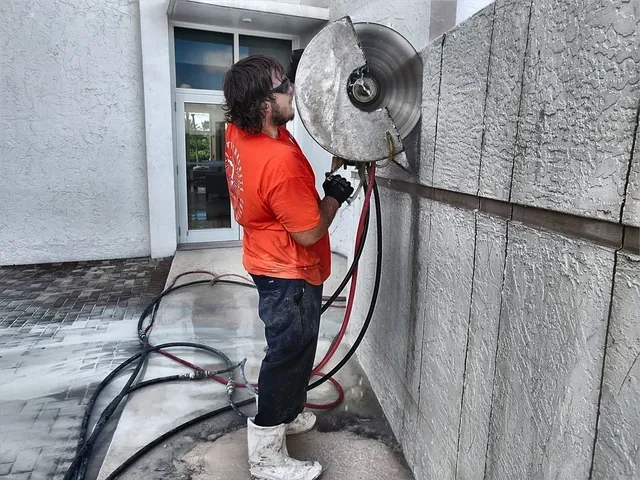
When our crews remove a pool, the goal is not just to make it disappear; it is to leave a hole that can be backfilled properly. That means cutting the shell into manageable sections with a diamond saw rather than pulverizing it blindly. Clean cuts mean the rebar can be separated from the concrete, which matters because mixed debris is harder and more expensive to dispose of. It also means less vibration traveling into your house and your neighbor’s foundation.
Vibration is a bigger deal than people think. Miami homes sit close together, and an aggressive breaker can crack stucco or stress an aging slab next door. A disciplined pool demolition plan accounts for that with saw cuts that isolate the shell before the breaker even starts. The result is a quieter, cleaner, more predictable job.
What Happens to the Concrete and Rebar Afterward
Every pool shell contains steel, and steel and concrete have to be separated for proper disposal. Clean concrete can often be crushed and recycled as fill or road base, while the rebar goes to a metal recycler. A contractor who tells you they just haul everything to the landfill is either not separating materials or not being straight with you about where it goes. Proper disposal is part of why the job costs what it costs, and it is also part of doing the job legally in Miami.
Backfill is the other half of the equation. The hole left by a pool is large, and filling it with loose dirt that settles for years is a recipe for a sunken yard. Engineered fill, compacted in lifts, is what gives you a stable surface. Our guide to filling a pool with dirt explains why the cheap fill is often the expensive mistake.
How the Water Table Changes the Whole Removal Plan
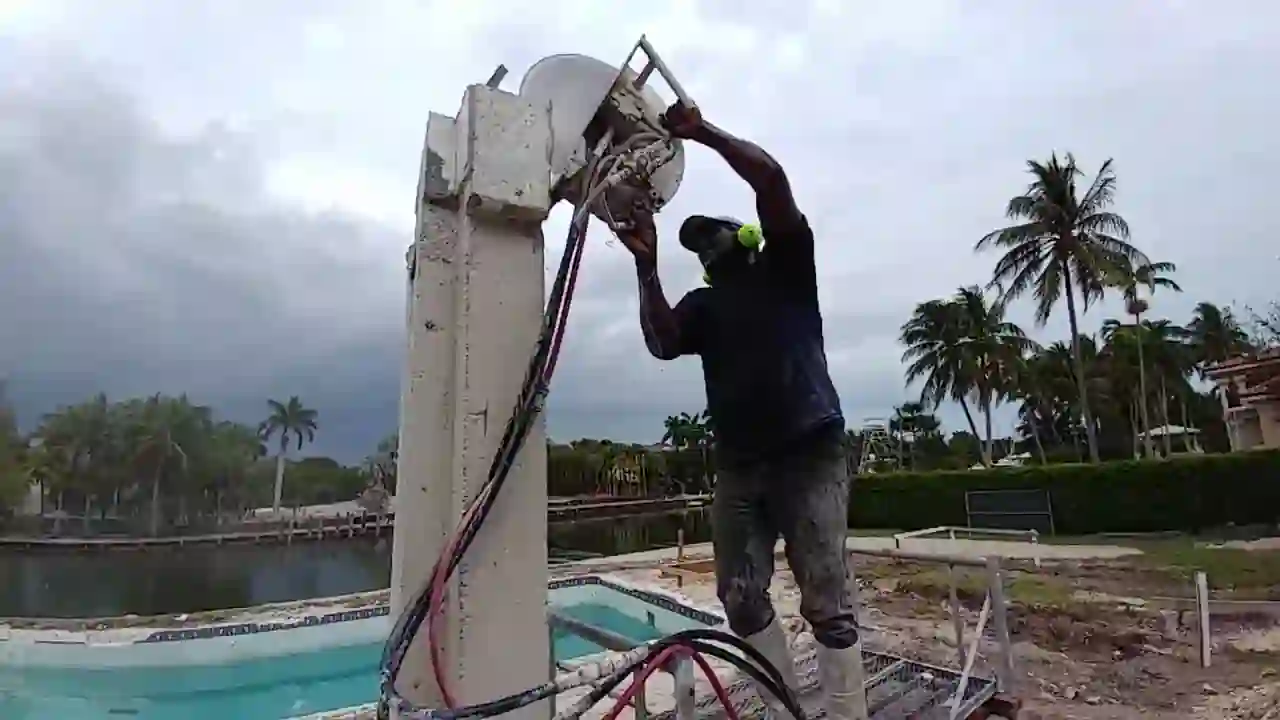
Miami’s high water table is the single biggest variable in a pool removal, and it is the one most homeowners never see coming. In neighborhoods like Kendall and Doral, the groundwater can sit only a few feet below the surface, and a drained pool shell becomes a boat that wants to float. If the groundwater pressure under the shell is not relieved before demolition, the whole structure can heave and shift, cracking the surrounding deck and even the house slab. A licensed contractor manages this by cutting drainage holes into the bottom of the shell in a controlled sequence, letting the pressure equalize before any breaking starts.
The water table also decides what kind of fill you can use. A low-lying lot that holds water needs engineered fill with good drainage, not just whatever dirt is cheapest. And it changes the permit conversation, because the county wants to know the removal will not turn your yard into a drainage basin that floods your neighbor. The water table is why the cheapest pool removal is almost never the one that actually works. For a closer look at how the groundwater changes the math, our guide to filling a pool with dirt walks through the fill and drainage realities.
There is also a timing factor. The dry season is the easiest time to remove a pool, because the groundwater is lower and the hole stays dry enough to backfill and compact properly. Attempting a removal at the height of the wet season can turn the hole into a pond mid-job, which adds pumping, delays, and cost. A contractor who schedules around the seasons is one who has done this in Miami before, and that experience is worth paying for.
What You Can Actually Do With the Space Afterward
Once the pool is gone and the hole is properly backfilled and compacted, the real question is what to do with the reclaimed yard. A full removal with engineered fill gives you the most options, because the ground can support a lawn, a garden, an addition, or a future structure. A partial fill is more limited, because the buried shell restricts what can be built on top and may require disclosure when you sell. The decision you make about the fill today is really a decision about what the space is worth tomorrow.
Many homeowners turn a removed pool into usable yard, and in Miami that usually means a lawn, a patio, or landscaping. The key is that the backfill has to be compacted in lifts and allowed to settle properly before anything heavy goes on top, or the new work will crack and sink. A rushed backfill is the hidden reason some post-removal yards develop low spots and settling years later. Our guide to the logistics of filling a pool explains why the compaction cannot be rushed.
The point is to think about the end use before you decide on the removal method. If you want a buildable yard, pay for the full removal and the proper fill. If you just want to stop maintaining a pool, a partial fill may be enough. The right choice is the one that matches what you actually want the space to become.
One last thing worth remembering is that the money you save on a cheap removal is almost always spent on the cleanup. A proper removal accounts for the water table, the fill, and the disposal up front, so there are no surprises when the hole is open. The job that looks expensive on the bid is usually the one that actually ends where the quote said it would.
Do Not Rush the Decision and Do Not Skip the Plan
Getting rid of a pool is a permanent change to your property, and it is worth doing once, correctly. Ask a contractor how they will handle the water table, how they will separate the steel, and what kind of fill they will use. The answers tell you whether you are hiring a demolition specialist or someone who owns a backhoe and a dream. If you want a yard you can actually use when it is over, call a crew that treats the hole as seriously as the demolition. Your property value, your drainage, and your peace of mind all depend on it.