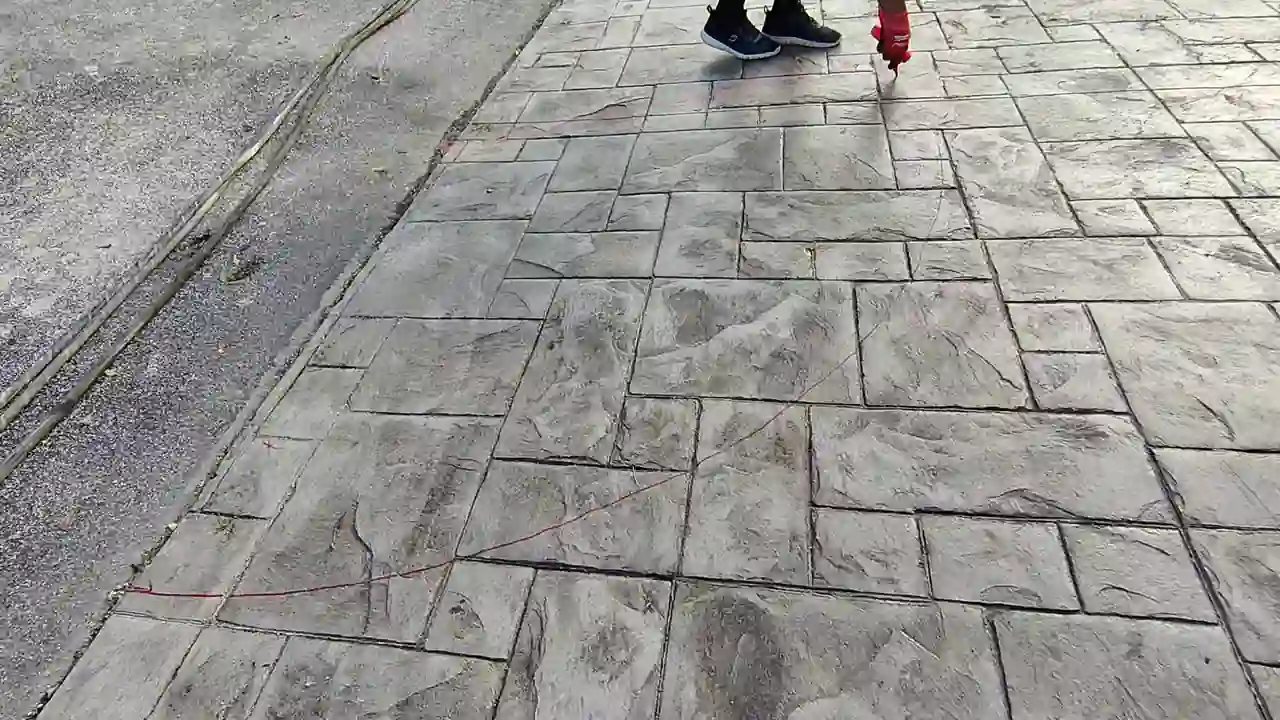
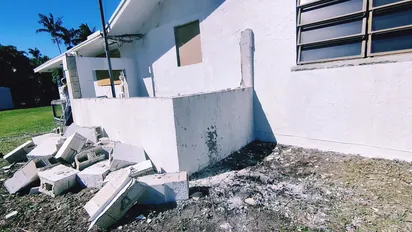
Why a Broward Concrete Patio Is Never a Straightforward Slab
When I quote a concrete patio job in Broward, the first thing I look at is access, not the slab itself. Broward lots run tight, especially in the older neighborhoods, and a patio is often wedged between a house, a fence, and a neighbor’s wall. That changes everything about which saw we bring and how we remove the debris. A slab that would take an afternoon in an open yard can take two days when the only way in is a 36-inch side gate.
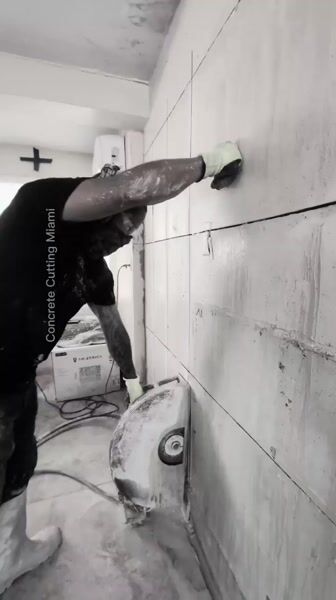
The soil is the second wildcard. Much of Broward sits on a mix of sand, muck, and limestone that does not always drain well, so a patio slab may be sitting on ground that has already shifted under it. Before we cut, we want to know whether the concrete is still doing its job or whether the patio is cracked and settled. That answer drives whether we are cutting for a repair or a full patio removal and replacement.
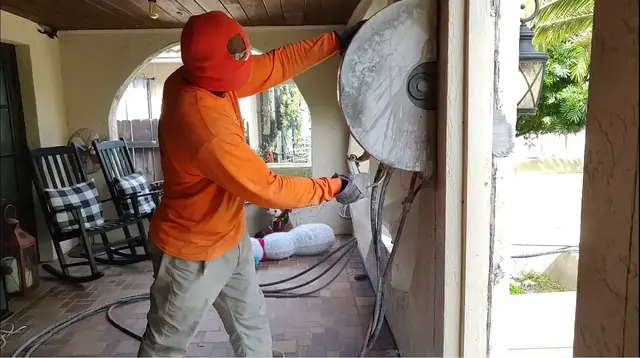
Cutting an Existing Patio Versus Tearing It All Out
Not every patio job means full removal. A lot of the time, a homeowner wants to cut an opening for a drain, remove a single cracked section, or trim a patio back to make room for an addition. In those cases, a clean saw cut is faster, cheaper, and far less disruptive than breaking the whole thing out. The key is cutting straight, clean lines so the remaining slab stays stable and the new pour or patch ties in correctly.
Full removal is a different animal. It means sawing the patio into sections, breaking those sections, and hauling them out through whatever access the property allows. The more the patio is reinforced, the slower the work goes, because rebar has to be cut and separated from the concrete. For a realistic look at what a full tear-out involves, see our guide to cutting existing concrete patios.
Access, HOAs, and the Neighbor Factor
Broward has a lot of communities with HOAs and strict rules about work hours, dumpsters, and even where a truck can park. I have had jobs where the HOA required the entire job to happen within a four-hour window, which forced us to pre-cut everything we could and stage the removal for speed. A contractor who works in Broward regularly knows to ask about these rules up front, because a stop-work order from an HOA is a costly surprise.
The neighbor factor matters too. When a patio sits inches from a shared fence or a neighbor’s stucco wall, vibration and debris control become real concerns. Clean saw cuts generate less vibration than aggressive breaking, and a dust and slurry plan keeps the mess from drifting onto someone else’s property. Our piece on patio sawing and slurry control covers how a professional keeps a tight job contained.
What the Job Realistically Costs in Broward
Patio removal pricing follows the same logic as most concrete work: it is driven by square footage, thickness, reinforcement, and access. A thin, unreinforced patio with easy access is at the low end, while a thick, rebar-heavy slab in a walled backyard is at the high end. Haul-off adds to the bill, and in Broward the distance to an approved disposal facility can nudge the number up. The honest way to compare bids is to ask what is included in the number: cutting, breaking, haul-off, and any grading afterward.
For homeowners planning a larger backyard project, it often makes sense to bundle the patio work with the rest of the demolition rather than doing it piecemeal. A single mobilization and a single dumpster is almost always cheaper than three separate trips. Our guide to backyard demolition costs breaks down where the money actually goes.
How the Broward Soil and Drainage Shape the Job
Broward sits on a mix of sand, muck, and limestone, and that soil does not behave the same way from one neighborhood to the next. Near the coast the soil is sandy and drains fast, while further inland it can be mucky and hold water. A patio slab poured on one type of soil fails differently than one poured on the other, and the removal or repair strategy has to account for it. Before we cut, we look at how the patio has settled and where the water is pooling, because that tells us what is happening underneath the concrete.
Drainage is the recurring theme in Broward patio work. A patio that sits in a low spot collects water, and standing water works its way under the slab and destabilizes the base. When we cut a patio for a drain or a repair, we are often also correcting the drainage that caused the problem, so the fix does not fail again in a season. The two jobs, the concrete and the water, go together. Our guide to drainage design and slurry control explains how they connect.
The limestone is the other Broward wildcard. In places where the soil is thin over limestone, the slab may sit close to rock, and cutting deep for a repair can hit stone. That is not a problem for an experienced crew, but it changes the blade and the approach, and it is one more reason the local experience matters. A contractor who knows Broward soil knows what to expect before the saw touches the concrete.
When a Patio Needs Cutting Versus Full Replacement
The decision between cutting a patio and replacing it comes down to the condition of the slab and what you are trying to accomplish. If the concrete is sound and you just need an opening for a drain, a new feature, or a utility line, a clean saw cut is the right call, because it preserves the good concrete and costs a fraction of a replacement. If the slab is cracked, settled, or spalling across its area, cutting a patch is just delaying an inevitable replacement, and you are often better off doing the full job once.
The test is what happens after the cut. A cut in sound concrete leaves a stable edge and a clean line, and the patch ties in neatly. A cut in failing concrete reveals more damage underneath, and the repair grows as you go. An experienced contractor can usually tell from the surface and the cracks whether the slab is worth saving, and that honest read is worth more than a quick quote. Our guide to cutting an existing patio walks through how to make the call.
The economics usually point the same way. A small cut is cheap, but a series of cuts chasing a failing slab adds up to more than one clean replacement. When the concrete is done, it is done, and the money is better spent on a proper new slab than on keeping the old one alive.
The bottom line is that a Broward patio job rewards the contractor who plans for the access, the soil, and the rules before the saw arrives. When those are handled, the cut or the removal is straightforward and the yard is left ready for whatever comes next. The planning is invisible when it works, and painfully obvious when it is skipped.
Get the Access and the Plan Right Before You Start
A Broward patio job succeeds or fails on planning, not muscle. Confirm the access route, check the HOA rules, and know whether the slab is reinforced before the first cut. When the plan is right, a patio cut or removal is a clean, predictable job that leaves your yard ready for whatever comes next. When it is not, you end up with a torn-up yard, a frustrated HOA, and a bill that keeps growing. Call a crew that asks the right questions before the saw ever starts.