Why Cutting Steel Rebar Creates a Bigger Environmental Problem Than Most Contractors Expect
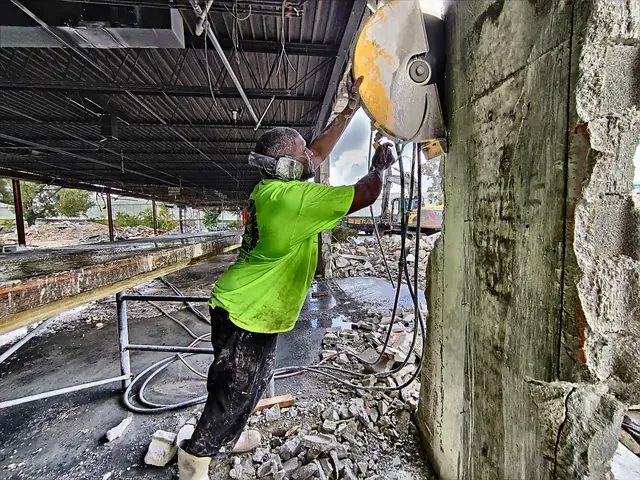
Walk onto any active demolition or renovation site in Miami-Dade County and you’ll find rebar — embedded in slabs, walls, columns, and footings — waiting to complicate your cut. Cutting steel rebar alongside concrete isn’t just a blade-wear issue or a horsepower calculation. The moment water-cooled diamond blades or wire saws engage reinforced concrete, you’re generating a slurry that contains suspended iron oxide particles, concrete fines, and potentially heavy metal leachate. In South Florida’s wet climate, with its proximity to Biscayne Bay and a porous limestone aquifer beneath the surface, that slurry is a serious environmental liability if it’s not managed with precision. Miami-Dade DERM (Department of Regulatory and Economic Resources) and FDEP regulations are explicit: construction-related slurry cannot enter storm drains, surface water, or groundwater. Contractors who treat rebar-cutting slurry as an afterthought are one site inspection away from a stop-work order.
The Chemistry Behind Rebar-Cutting Slurry and Why It’s Classified as a Pollutant
Standard concrete cutting slurry is already alkaline — typically registering between pH 11 and pH 13 — due to calcium hydroxide released from Portland cement hydration. When you introduce steel rebar into the cutting matrix, the slurry chemistry shifts further. Diamond blades or wire saws cutting through rebar generate iron particulates that oxidize rapidly in water, producing ferrous hydroxide. This compound is not only turbid and visually obvious to inspectors, but it also has measurable toxicity to aquatic organisms at concentrations as low as 1 mg/L. The combination of high pH and suspended iron makes rebar-cutting slurry a dual-category pollutant under Florida’s water quality standards — both a pH violator and a metals contributor. Understanding this chemistry is the first step toward designing a containment system that actually works rather than one that just looks compliant on paper.
Iron Particulate Settling Rates and Their Impact on Containment Design
Iron particles generated during rebar cutting are denser than concrete fines, with specific gravity ranging from 5.0 to 7.8 depending on the oxidation state. This means they settle faster in still water — a characteristic you can exploit in a properly designed settling tank system. A two-stage containment approach works best: the first stage captures the bulk of the iron-laden slurry using a primary bermed containment zone adjacent to the cut, and the second stage is a settling tank or pit where the slurry is pumped and allowed to clarify before any water is considered for discharge or reuse. In practice, iron particulates will settle to the bottom of a still tank within 20 to 45 minutes, depending on particle size distribution. This settling window must be factored into your workflow scheduling — particularly on high-volume jobs where multiple rebar-cutting operations are running simultaneously.
Water Containment Protocols for Rebar Cutting on Miami Job Sites
Miami’s flat topography and high water table create unique containment challenges. Unlike sites in elevated terrain where slurry naturally flows away from sensitive areas, Miami job sites often require active pumping and positive containment barriers to prevent migration. The following field-tested protocol is what our crews at Concrete Cutting Miami deploy on every reinforced concrete cutting operation where rebar is a significant component of the substrate.
- Perimeter Berming: Establish a minimum 4-inch compacted soil or rubber dam berm around the cutting zone before any water is introduced. On impervious surfaces like parking decks or slabs, use flexible rubber water dams rated for alkaline contact — standard sandbags are not adequate for pH 12+ slurry.
- Vacuum Slurry Recovery: Deploy wet/dry industrial vacuums or dedicated slurry vacuums with a minimum 20-gallon capacity at the point of cut. For high-production rebar cutting with wall saws or wire saws, use continuous-duty slurry vacuums capable of handling abrasive iron particulate without seal degradation.
- Primary Settling Tank Sizing: Size your primary settling tank at a minimum of 1.5 times the estimated slurry volume per shift. For a typical 8-hour reinforced slab cutting operation, plan on 150 to 300 gallons of slurry generation depending on cut depth and rebar density.
- Secondary Filtration: After primary settling, route clarified water through a geotextile filter bag rated for iron oxide particulate before any reuse or lawful discharge. Test pH prior to any discharge — target pH 6.5 to 8.5 per FDEP standards.
- Solid Waste Disposal: The settled iron and concrete sludge must be disposed of as solid waste at a licensed facility. Do not allow it to dry and blow off-site — dried iron oxide dust is a separate air quality concern.
Blade Selection and Water Flow Rates When Cutting Through Rebar-Heavy Concrete
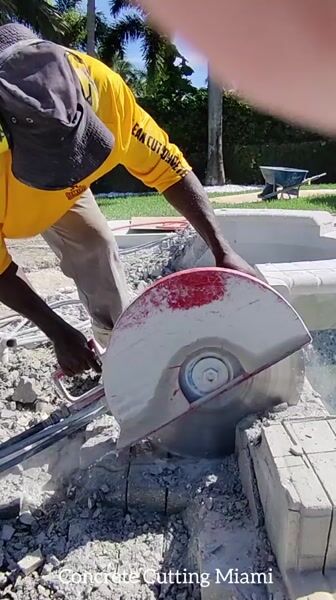
The type of diamond blade or cutting system you select directly affects slurry volume and composition. Segmented diamond blades with high-cobalt matrix bonds are designed to cut through rebar without catastrophic segment loss, but they generate more metallic fines than standard concrete blades. Wire saws using diamond-impregnated beads are increasingly the preferred method for heavily reinforced structures because the continuous cutting action produces a more uniform slurry with predictable iron content. If you’re still deciding between cutting systems for a reinforced concrete project, our detailed breakdown at choosing the right saw to cut concrete covers the trade-offs in depth.
Water flow rate is a critical variable that directly impacts both blade performance and slurry management burden. For rebar cutting with a 14-inch to 20-inch diamond blade on a walk-behind saw, the industry standard is 1.5 to 3.0 gallons per minute at the blade guard. Insufficient water flow causes premature diamond segment glazing and increases iron particulate generation as the blade heats and the steel rebar work-hardens under thermal stress. Excessive water flow dilutes the slurry but dramatically increases the volume you must contain and treat. Calibrate your water supply to the lower end of the acceptable range and use a flow meter — guessing water flow rates on rebar-cutting jobs is a compliance risk.
Stormwater Protection Measures Specific to South Florida’s Regulatory Environment
Florida’s NPDES Construction General Permit (CGP) and Miami-Dade’s local stormwater ordinances require that any construction activity disturbing one or more acres implement a SWPPP (Stormwater Pollution Prevention Plan). Rebar cutting operations on large commercial or infrastructure projects almost always fall within this threshold. Your SWPPP must specifically address concrete cutting and drilling operations as a pollutant source — a detail that many generic SWPPP templates omit. The plan should identify the cutting zones, describe your containment equipment, specify your slurry disposal method, and designate a trained operator responsible for daily inspection of containment integrity.
Storm drain inlet protection is non-negotiable on Miami job sites. Even with perimeter berming, a sudden tropical rain event can overwhelm a containment system and carry rebar-cutting slurry directly into the storm sewer network. Install filter sock inlet protection on all storm drains within 50 feet of any cutting operation before work begins — not after the rain starts. For core drilling operations near storm drains, the same principle applies, and our core drilling services page outlines the specific containment measures we use for those operations.
Documenting Compliance for DERM Inspections and Project Close-Out
Miami-Dade DERM inspectors are increasingly sophisticated about construction site water quality violations. Photographic documentation of your containment setup — taken before cutting begins, during operations, and at slurry disposal — is your primary defense if a complaint is filed or an inspection occurs. Maintain a cutting log that records date, location, equipment used, estimated slurry volume generated, disposal method, and the name of the operator who performed the pH test before any water discharge. This documentation chain is what separates a dismissed complaint from a $10,000-per-day civil penalty. The investment in proper record-keeping is trivial compared to the liability exposure of an undocumented discharge event.
Integrating Rebar Cutting Compliance Into a Broader Project Strategy
The most effective approach to rebar-cutting environmental compliance isn’t reactive — it’s engineered into the project plan before mobilization. Pre-job site assessments should identify all storm drain locations, surface water proximity, soil permeability, and existing drainage patterns. For complex reinforced concrete projects, consider engaging a licensed environmental consultant to review your SWPPP and containment plan before work begins. The cost of that consultation is recoverable as a project expense and provides an additional layer of documented due diligence.
Rebar cutting is just one piece of a larger picture when it comes to responsible concrete cutting practice. As we’ve explored in our broader discussion of transforming concrete cutting challenges into opportunities, the contractors who build reputations for environmental responsibility consistently win more bids on public and institutional projects where compliance track records are scrutinized. In Miami’s competitive market, your slurry management protocol is as much a business development asset as it is a regulatory requirement.
Practical Takeaways for Rebar Cutting Operations in Miami-Dade and Broward Counties
Cutting steel rebar in reinforced concrete demands a layered environmental management approach that accounts for the unique chemistry of iron-laden slurry, the regulatory specificity of South Florida’s water quality standards, and the logistical realities of working in a flat, water-sensitive coastal environment. The contractors who get this right — with properly sized containment systems, calibrated water flow, documented pH testing, and trained operators — are the ones who complete projects on schedule without regulatory interruptions. Those who treat slurry management as an afterthought are building a liability that will eventually catch up with them in the form of fines, stop-work orders, or lost contracts. Invest in the systems, train your crews, and document everything. That’s the standard of practice that protects your license, your reputation, and the South Florida environment your clients and community depend on.