Why Saw Selection Is the Single Biggest Cost Variable on Any Concrete Cutting Bid
Ask any senior estimator what tanks a concrete cutting bid faster than anything else, and they’ll tell you the same thing — wrong tool selection at the quoting stage. When a contractor grabs a walk-behind flat saw for a job that demands a ring saw, or specs out a wire saw when a wall saw would have closed the job in half the time, the margin evaporates before the first blade hits the slab. Choosing the right saw to cut concrete isn’t just an operational decision. It’s a financial one, and it has to be made before the ink dries on the proposal.
The Five Primary Saw Types and Their Real-World Cost Profiles
Each saw category carries a distinct cost structure — not just in equipment rental or ownership, but in labor hours, blade consumption, water usage, and setup time. Understanding these profiles is what separates a profitable bid from a break-even nightmare.
Flat Saws (Slab Saws) — High Production, Predictable Billing
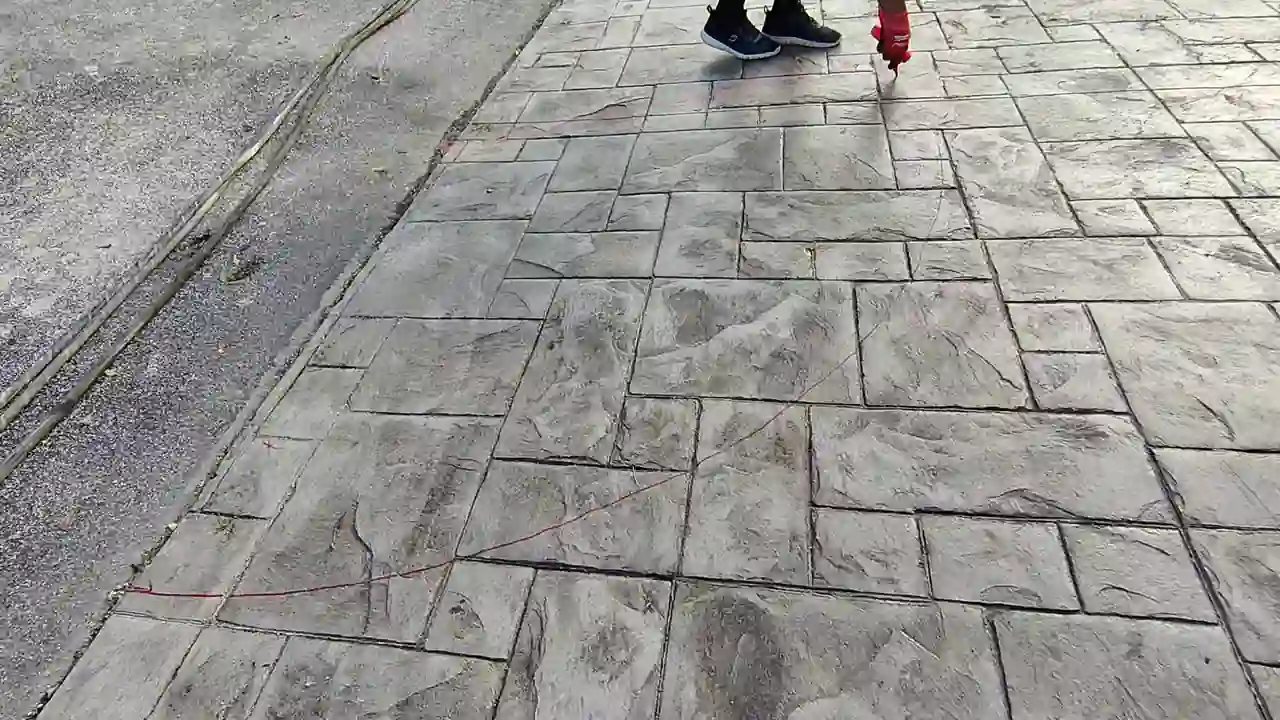
Flat saws are the workhorses of horizontal concrete cutting. On a standard 4-inch residential slab in Miami, an experienced operator running a 35-horsepower flat saw can cut approximately 150 to 200 linear feet per hour under normal conditions. When you’re bidding slab removal, expansion joint work, or utility trenching, flat saw rates typically run between $4.00 and $7.50 per linear foot depending on slab depth, aggregate hardness, and rebar density. Miami’s coastal aggregate — often harder due to local limestone composition — tends to push blade wear up by 15 to 20 percent compared to inland markets, so your blade cost line item needs to reflect that.
Wall Saws — Precision Cutting With a Premium Timeline
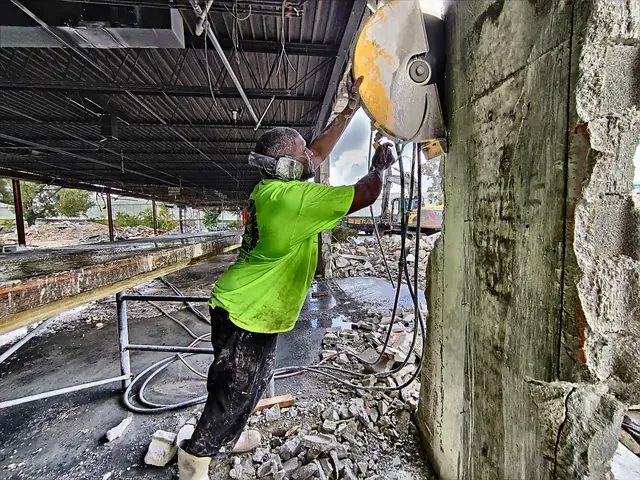
Wall saws operate on a track-mounted system and are the standard tool for cutting openings in vertical concrete structures — elevator shafts, window enlargements, door penetrations, and structural panel removal. Setup time alone runs 45 minutes to 2 hours depending on wall accessibility and anchor point availability. Billing rates for wall saw work in South Florida range from $12 to $22 per square foot, with the upper end applying to walls exceeding 24 inches in thickness or those with dense post-tension cable grids. If you’re comparing methods for a given project, the construction methods comparison resources here can help you benchmark wall saw versus core drill approaches for opening creation.
Wire Saws — The Heavy-Duty Option That Changes Your Timeline Entirely
Diamond wire saws are reserved for mass concrete removal — bridge abutments, dam sections, large foundation blocks, and marine structures. The wire saw’s ability to cut in any plane makes it irreplaceable for complex geometry cuts, but the mobilization cost is significant. Expect setup and rigging to consume 4 to 8 hours on a first-time application at a new site. Wire saw cutting rates run $18 to $35 per square foot in most South Florida markets, and projects involving seawall or marine concrete often require specialized blade configurations. If your bid involves coastal or waterfront structures, review the technical considerations around seawall repair and marine concrete cutting before you finalize your equipment line.
Ring Saws and Hand-Held Chainsaws — Small Footprint, High Hourly Rate
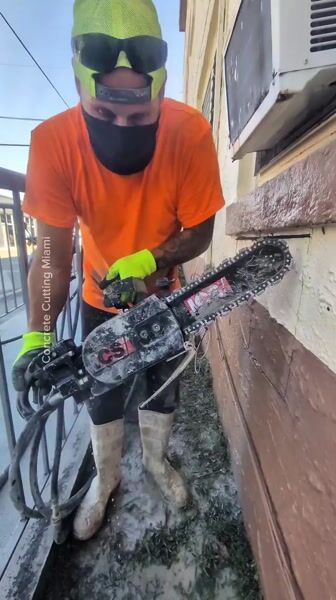
Ring saws and concrete chainsaws are the precision instruments of the trade. They’re ideal for confined spaces, interior demolition where vibration must be minimized, and cuts that require plunge-start capability without a pilot hole. Production rates are lower — typically 20 to 50 linear feet per hour — which means your labor cost per foot climbs fast. These tools are billed at $8 to $15 per linear foot on average, but the real value is in the access they provide where no other saw can operate. Budget for additional blade changes; ring saw blades in hard Miami limestone aggregate can wear out in as little as 80 to 120 linear feet.
Core Drills — The Underestimated Timeline Killer
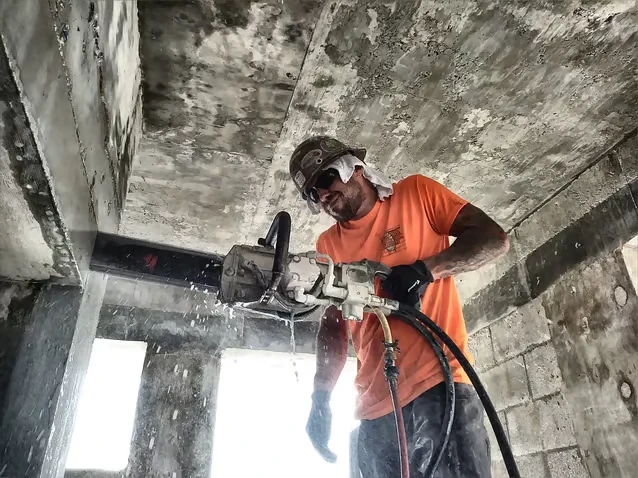
Core drilling is technically not a “saw” in the traditional sense, but it belongs in any discussion of concrete cutting cost modeling because it’s frequently paired with saw work on the same bid. A 6-inch diameter core through a 12-inch wall takes approximately 8 to 15 minutes depending on reinforcement. When you’re running 40 or 50 cores on a large MEP rough-in project, that adds up to a full day of production — a figure that’s routinely underestimated in competitive bids.
Bidding Factors That Move the Number More Than the Saw Itself
Experienced estimators know that the saw is just the starting point. The variables that actually swing a bid by 20 to 40 percent are site-specific and often invisible until you’re standing on the job.
Concrete Compressive Strength and Aggregate Hardness
Older Miami construction — particularly pre-1980 pours — frequently used local oolitic limestone aggregate, which is notoriously abrasive on diamond segments. A slab rated at 3,000 PSI with hard aggregate will consume blades at nearly double the rate of a 5,000 PSI modern mix using softer aggregate. Always request the original mix design or pull core samples before finalizing blade cost estimates. Ignoring this single variable is responsible for more blown concrete cutting budgets than any other factor.
Rebar Density and Post-Tension Cable Grids
Standard rebar at 12-inch centers adds roughly 10 to 15 percent to blade wear and cutting time. Post-tension slabs are a different category entirely — they require GPR scanning before any saw touches the surface, and cutting between cables demands precision that slows production rates by 30 to 50 percent. Always include GPR scanning as a line item in post-tension bids, and never absorb that cost into your flat cutting rate.
Slurry Management and Environmental Compliance
Wet cutting generates slurry — a mixture of water, concrete fines, and diamond segment residue — that cannot be discharged to storm drains under Miami-Dade environmental regulations. Slurry containment, vacuum extraction, and proper disposal add a real cost that’s often omitted from competitive bids. Budget $150 to $400 per day for slurry management depending on cut volume. For projects where environmental compliance is a central concern, the eco-friendly concrete cutting practices outlined in our resource library are worth reviewing before you write your spec.
Site Preparation and Access Logistics
A flat saw needs a clear, level approach path. A wall saw needs solid anchor points and a staging area for the power unit. Wire saw rigging requires overhead clearance and anchor geometry planning. Any site where equipment access is restricted — interior floors, below-grade spaces, occupied buildings — adds mobilization time that must appear in your timeline and your price. For projects that involve significant site prep before cutting can begin, the process of using a Bobcat for site clearing and preparation is often the first step that makes saw deployment possible at all.
Timeline Estimation by Project Type — What the Numbers Actually Look Like
Translating saw selection and site variables into a realistic project timeline is where estimating becomes an art backed by data. Here are production benchmarks that hold up in real South Florida field conditions:
- Residential slab trenching (50 linear feet, 4-inch depth): 2 to 3 hours including setup and slurry cleanup
- Commercial wall opening (4×8 feet, 10-inch wall, no post-tension): 4 to 6 hours including track setup and panel removal
- Parking garage expansion joint repair (500 linear feet, 6-inch depth): 1.5 to 2 full production days
- Bridge abutment removal via wire saw (40 square feet, 36-inch section): 6 to 10 hours including rigging
- Core drilling package (30 cores, 4-inch diameter, 8-inch wall): 6 to 8 hours with a two-man crew
These aren’t theoretical numbers — they’re derived from actual production logs on Miami-area projects where concrete hardness, humidity, and site access reflect local conditions. Adjust upward by 15 to 25 percent for any project with restricted access, elevated reinforcement density, or post-tension requirements.
How to Build a Defensible Bid Using Saw-Specific Cost Models
A winning bid isn’t just the lowest number — it’s the most credible number. Contractors who can walk a general contractor or owner through their cost model line by line win repeat work because they demonstrate competence before the job starts. Structure your concrete cutting bids around these components:
- Equipment mobilization and demobilization — fixed cost, not absorbed into linear foot rate
- Blade consumption estimate — based on concrete type, aggregate hardness, and total cut footage
- Water and slurry management — daily cost, scaled to cut volume
- Labor hours by task — setup, cutting production, cleanup, and scanning if required
- Contingency for rebar encounters — 10 to 15 percent buffer on reinforced slabs
- Permit and inspection fees — especially relevant for structural cuts in Miami-Dade County
When your bid shows this level of detail, it signals to the client that you’ve actually thought through their project — not just thrown a number at the wall. That credibility is worth more than a 5 percent price advantage from a competitor who can’t explain where their number came from.
The Bottom Line on Saw Selection and Profitable Concrete Cutting Work
The right saw to cut concrete on any given project is determined by the geometry of the cut, the physical properties of the concrete, the site access constraints, and the production rate required to hit your timeline. Get those four variables right, and your cost model falls into place. Miss any one of them, and you’re working your way through the job wondering where the margin went. In a competitive market like Miami, where project types range from high-rise post-tension slabs to marine seawall demolition, the contractors who build their bids on technical precision — not gut feel — are the ones writing the next proposal from a position of strength.