Why Pool Excavation in Miami FL Defies Standard Cost Estimating Models
If you’ve been shopping bids for pool excavation in Miami FL and noticed a $15,000 spread between the lowest and highest quotes, you’re not imagining things — and the low bidder almost certainly hasn’t factored in what’s actually under your yard. South Florida’s subsurface geology is one of the most punishing environments for excavation contractors in the entire country. Miami-Dade sits on a foundation of oolitic limestone and Miami limestone, commonly called coral rock, and that material does not yield to a standard excavator bucket without a fight. Understanding why bids vary so dramatically starts with understanding what’s happening three feet below your grass line.
Coral Rock Encounters and How They Blow Up Your Excavation Budget
The single largest cost variable in any Miami pool excavation project is coral rock. A standard residential pool — roughly 12×24 feet with a 5-foot deep end — requires excavating somewhere between 80 and 120 cubic yards of material. In areas like Pinecrest, Palmetto Bay, Kendall, and parts of Coral Gables, that material is often 60–80% limestone rock. When an excavator hits dense coral, mechanical digging slows to a crawl. The machine is now chiseling instead of scooping, and hourly rates for operator time, fuel, and equipment wear stack up fast.
Experienced South Florida excavation contractors will almost always recommend a geotechnical probe or hand-dig test before finalizing a bid. A $300–$500 soil probe can tell you exactly how deep the overburden soil layer goes and what rock density you’re dealing with. Contractors who skip this step and bid based on square footage alone are setting themselves — and you — up for a significant change order conversation mid-project. Understanding what makes subsurface material difficult to cut and remove is critical before any excavation price gets locked in.
Hydraulic Breaker vs. Diamond Wire Cutting for Coral Rock Removal
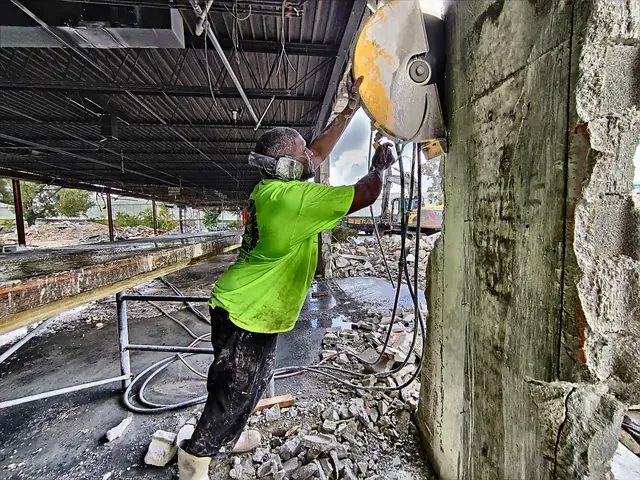
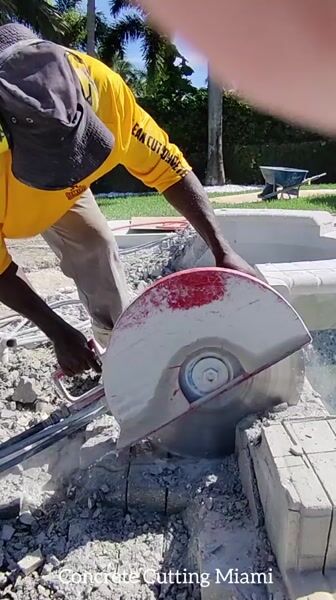
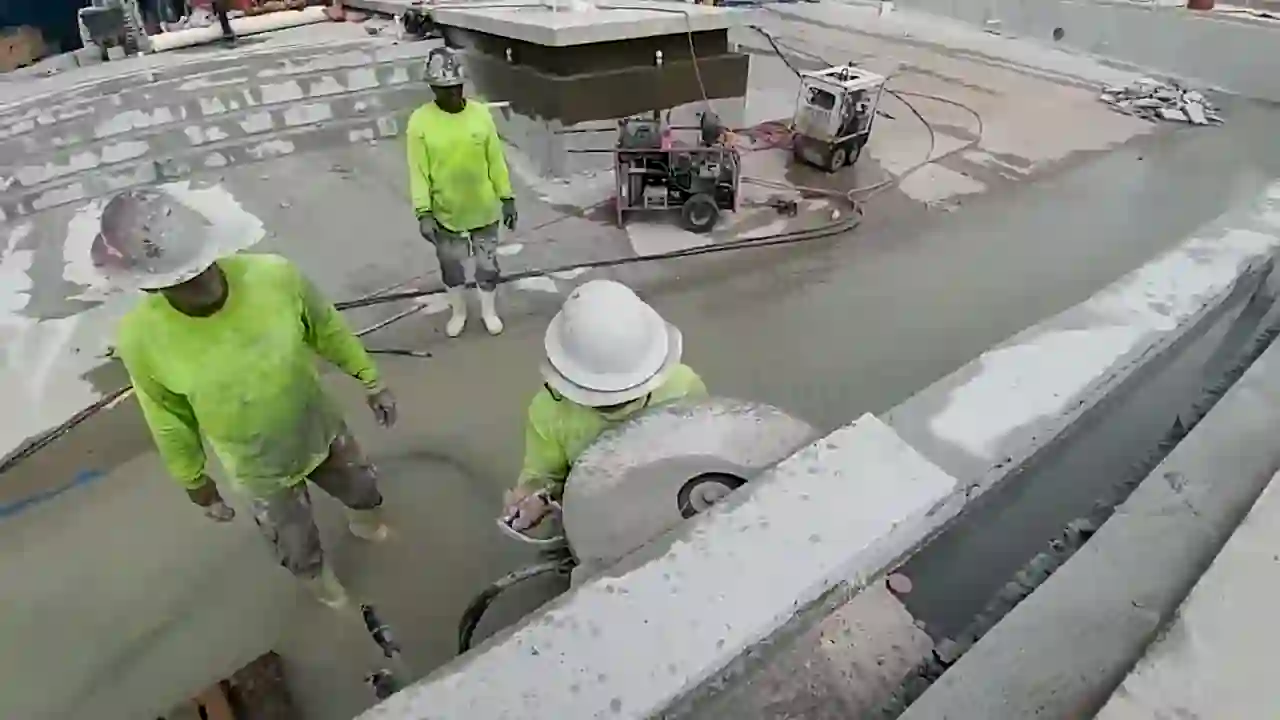
When coral rock is confirmed, contractors face a choice: run a hydraulic breaker attachment on the excavator arm, or bring in a concrete cutting crew with diamond wire or diamond chain saw equipment. Hydraulic breakers are faster for loose or fractured limestone but create significant vibration — a real concern near existing structures, pool equipment pads, or neighboring foundations. Diamond wire and diamond chain saw cutting produces cleaner cuts with dramatically less vibration, which matters enormously in dense urban lots or properties with mature landscaping you’re trying to protect. The wet vs. dry cutting decision also plays into this — wet cutting keeps blade temps down and extends diamond segment life, which affects how a cutting subcontractor prices the job.
Real Cost Ranges for Pool Excavation in Miami FL by Project Type
Let’s put actual numbers on the table. These ranges reflect current Miami-Dade market pricing and should be used as a framework, not a final budget number, until a site-specific assessment has been done.
- Standard residential pool (no rock): $3,500 – $6,500 for excavation and haul-off
- Standard residential pool (moderate coral rock, 30–50% of dig): $7,000 – $14,000
- Standard residential pool (heavy coral rock, 60–80% of dig): $14,000 – $28,000+
- Freeform or irregular pool shapes: Add 15–25% to any of the above categories due to increased machine repositioning time
- Pool with spa or raised bond beam: Add $1,500 – $3,500 for additional volume and forming work
- Tight access lots (gate width under 36 inches): Add $2,000 – $5,000 for mini-excavator use and extended haul-out time
Haul-off costs are often quoted separately in Miami. Expect $400–$700 per truck load for clean soil, and $600–$950 per load for rock and concrete debris. A heavy-rock residential dig may require 8–12 truck loads. That’s a line item that can run $6,000–$9,000 on its own.
Miami-Dade Permitting Timeline and Its Real Impact on Your Schedule
Permitting is where unrealistic timelines die. A pool permit in Miami-Dade County requires structural drawings, a signed and sealed survey, soil reports in some cases, and review by the Building Department. As of current processing times, plan review for residential pools runs 6 to 14 weeks through standard review. Expedited review is available at an additional fee — typically $400–$800 — and can compress that to 3–5 weeks, but it’s not guaranteed.
Contractors who quote you a 30-day start date without confirming permit status are either planning to pull a pre-approved permit on a different address (which is a compliance red flag) or they haven’t dealt with Miami-Dade recently. Build a realistic pre-construction window of 8–12 weeks for permitting into your project schedule before excavation equipment ever touches your property.
High Water Table Considerations in Coastal and Low-Lying Miami Zones
Biscayne Bay-adjacent neighborhoods, parts of Miami Beach, Hialeah, and low-elevation areas near the Miami River introduce another excavation variable that dramatically affects both cost and construction method: the water table. In some Miami Beach properties, standing water appears at 18–24 inches below grade. Excavating a 5-foot pool shell in that environment requires active dewatering — submersible pumps running continuously during the dig and during gunite or shotcrete shell application.
Dewatering equipment rental and operation adds $1,200–$3,500 to a project depending on duration and pump capacity required. More critically, it affects your timeline. You cannot pour or shoot a pool shell into standing water. The excavation must be dewatered, held stable, and inspected before concrete work begins. In tight tidal zones, that window may be narrow and weather-dependent. Contractors with experience in core drilling and precision concrete work in Miami’s coastal zones understand these sequencing constraints intimately.
What Drives the Biggest Gaps Between Pool Excavation Bids
When you’re holding three bids with a $20,000 spread, here’s what’s actually happening behind those numbers:
- Rock contingency allowances: A thorough contractor builds a rock contingency into the base bid. A low bidder excludes it entirely and calls it a change order when rock appears.
- Haul-off inclusion: Some bids quote excavation only. Others include full haul-off. Always confirm what’s included in writing.
- Equipment type and ownership: Contractors who own their equipment have lower daily costs than those who rent. Owned equipment often translates to more competitive rock-removal pricing.
- Subcontractor markup: If your pool builder is not self-performing the excavation, they’re marking up a sub. That markup is typically 15–25% on top of the sub’s actual cost.
- Insurance and licensing: Legitimate Miami-Dade excavation contractors carry general liability minimums of $1M per occurrence and workers’ comp. Contractors who don’t carry these costs have lower overhead — and leave you exposed.
Property owners who invest in proper pool excavation and construction are making a long-term asset decision. The relationship between quality construction and property value in Miami’s competitive real estate market is well documented, and cutting corners on excavation — the literal foundation of your pool — is where structural problems begin years later.
Timeline Breakdown From First Shovel to Gunite-Ready Shell
Here is a realistic week-by-week timeline for a standard residential pool excavation project in Miami FL, assuming permits are already in hand:
- Day 1–2: Site layout, utility markings (Sunshine 811 call), equipment mobilization
- Day 2–5: Active excavation — soil removal and initial rock breaking
- Day 3–8: Rock cutting and removal if coral is encountered (timeline expands with rock density)
- Day 6–10: Final grade, bottom prep, haul-off completion
- Day 10–12: Inspection by building department (schedule this early — inspectors in Miami-Dade are often booked 3–5 business days out)
- Day 12–14: Steel rebar placement begins post-inspection approval
Total excavation-to-gunite-ready timeline for a straightforward project with no rock: 10–14 days. With heavy coral rock involvement: 18–28 days. These are working-day estimates and do not account for rain delays, which in Miami’s wet season (May through October) should be factored as a 20–30% schedule buffer.
Choosing the Right Excavation and Concrete Cutting Partner in South Florida
Pool excavation in Miami FL is not a commodity service — it’s a highly technical operation that requires local geological knowledge, the right equipment mix, and realistic bid transparency. When you’re evaluating contractors, ask specifically how they handle coral rock discovery mid-dig, whether their haul-off pricing is per-load or all-inclusive, and what their dewatering protocol is for your specific address’s elevation. A contractor who can answer all three questions without hesitation has done this work in Miami before. One who pivots to vague answers probably hasn’t.
Concrete Cutting Miami, LLC works alongside pool excavation projects throughout Miami-Dade and Broward counties, providing precision diamond cutting, core drilling, and rock removal services that integrate directly into the excavation workflow. When your excavation crew hits a coral shelf that the bucket can’t break cleanly, having a cutting crew on call — not on a 3-day wait list — keeps your project on schedule and your budget intact.