Concrete contractors in Miami fall into two categories — and the one that poured your driveway is not the one you call to cut a door opening in your warehouse wall
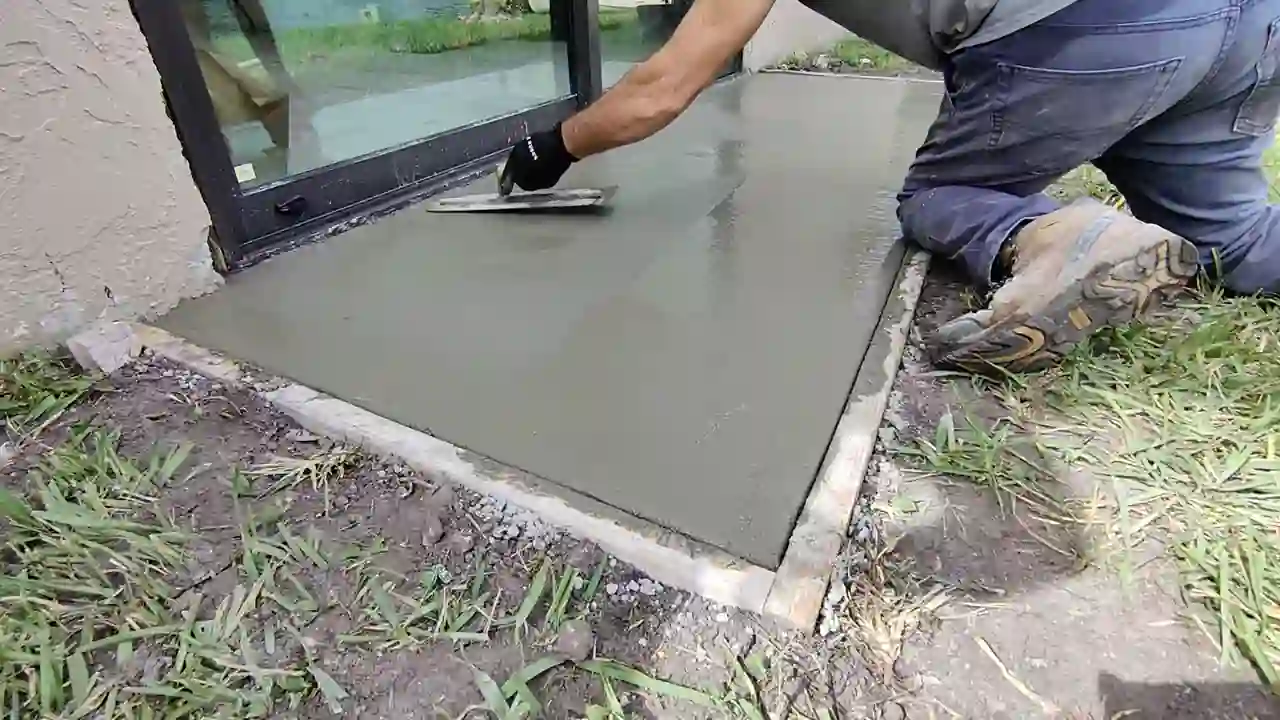
The term “concrete contractor” covers two fundamentally different businesses that share a material but nothing else. Concrete placement contractors — the ones with concrete pumps, screeds, trowel machines, and formwork — pour and finish new concrete. They are in the business of creating concrete structures. Concrete cutting contractors — the ones with hydraulic wall saws, diamond core drills, slab saws, and GPR scanning units — modify existing concrete structures. They are in the business of changing concrete after it has hardened. The equipment is different, the skill set is different, the licensing is different, and the failure mode is different: a bad pour is a surface defect. A bad cut into a structural element is a structural failure. If you are hiring for a project that involves cutting, drilling, or demolishing existing concrete, you need the second kind of contractor — and this guide explains how to find the right one in Miami-Dade County.
What concrete cutting contractors do that placement contractors do not
Concrete cutting is a specialty trade within the broader concrete industry. It requires its own equipment, its own training, and its own approach to the material. Here is what cutting contractors handle that placement contractors typically do not:
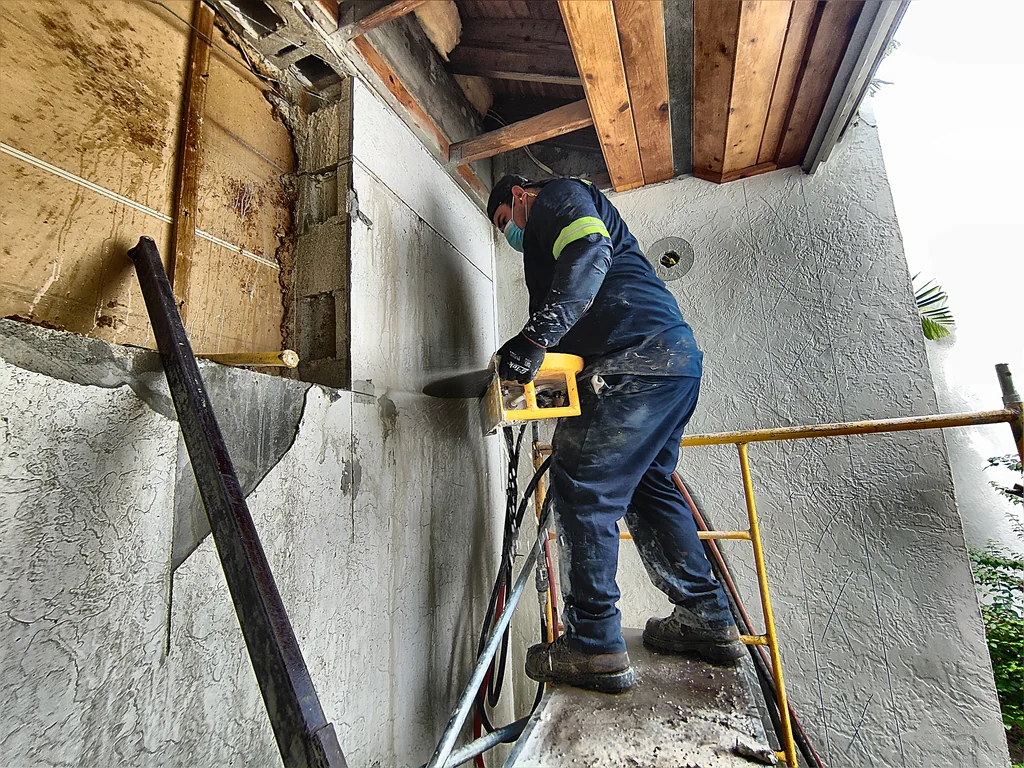
- Structural modifications to existing buildings — Cutting new door openings, window openings, and mechanical penetrations in concrete walls and slabs that are already in place. This requires understanding how the existing structure carries load and what happens when part of it is removed.
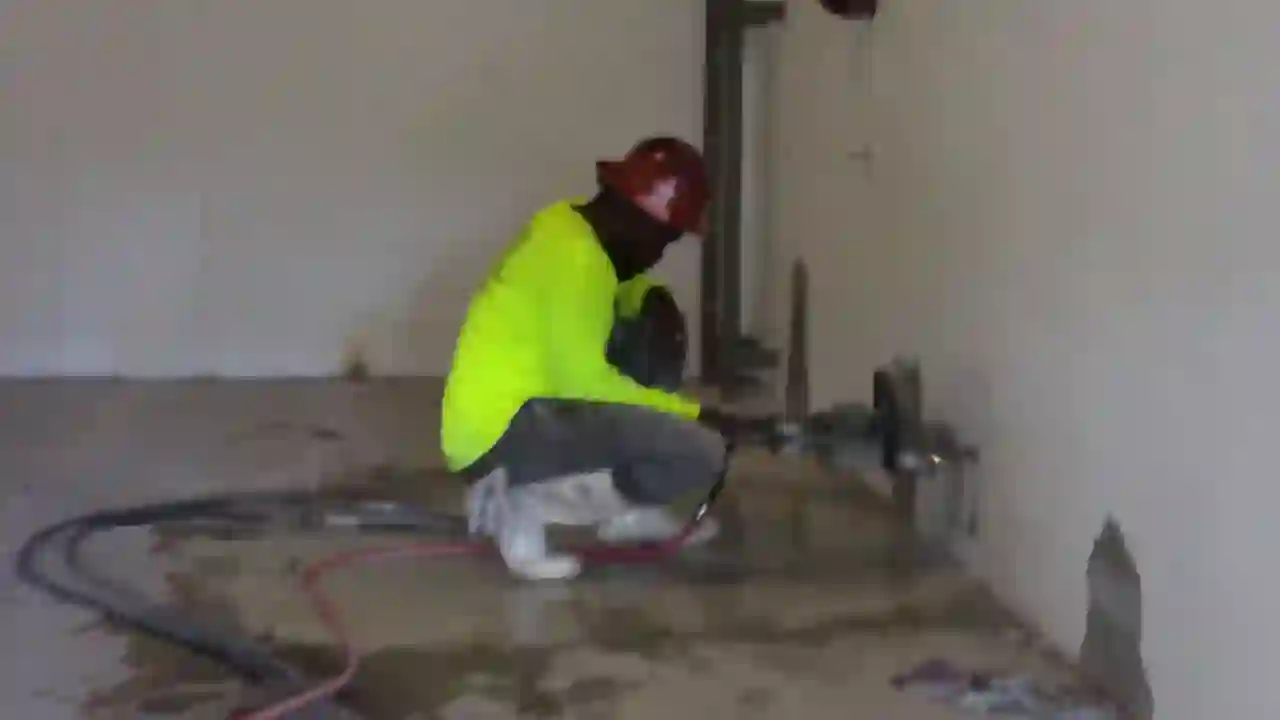
- Core drilling for building systems — Drilling precise round holes through concrete floors and walls for plumbing risers, electrical conduit, HVAC ducts, and fire sprinkler pipes. These holes have tight dimensional tolerances because pipes and ducts have specific clearance requirements.
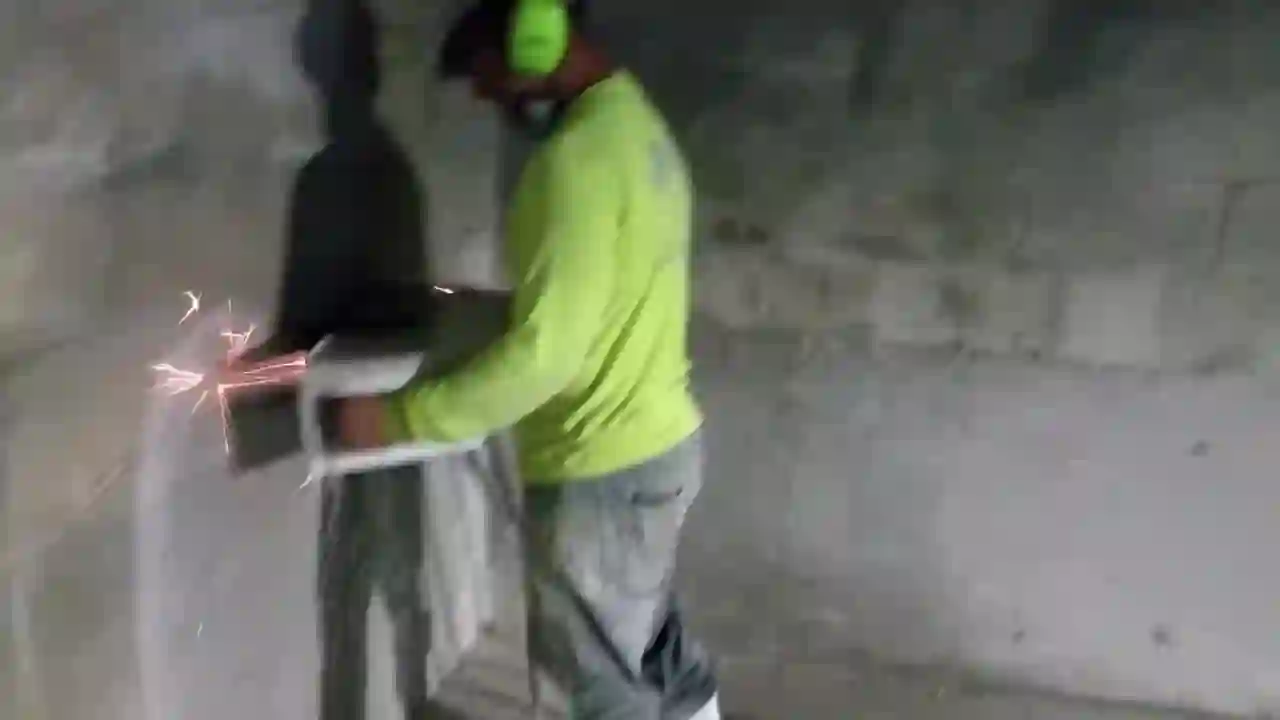
- Controlled demolition — Removing part of a concrete structure while preserving the adjacent concrete. This is fundamentally different from full demolition — it requires cutting a clean separation line and breaking only within the designated removal area.
- Slab trenching for utility installation — Cutting parallel lines through an existing floor slab to access the subgrade for new plumbing, electrical, or drainage lines. The cut edges become the boundary between old concrete and the patch material.
- GPR scanning and utility locating within concrete — Identifying rebar, post-tension cables, conduits, and pipes embedded in concrete before cutting. This pre-cut scanning is standard practice for cutting contractors and foreign territory for placement contractors.
For a detailed look at the full range of cutting methods, see our concrete cutting services overview.
” alt=”Concrete contractor team in Miami setting up hydraulic wall saw equipment for commercial door opening” style=”max-width:100%;height:auto;”/>
How to verify a concrete cutting contractor’s qualifications before they touch your building
The difference between a qualified cutting contractor and an unqualified one is verifiable — not a matter of opinion or salesmanship. Here is the verification checklist:
License verification
In Florida, concrete cutting falls under a Certified General Contractor (CGC) or Certified Building Contractor (CBC) license, and sometimes a specialty structure contractor classification. Verify the license number on the Florida DBPR website (myfloridalicense.com). Check that the license is active, that it has no complaints or disciplinary actions, and that the qualifying agent listed on the license matches the person you are dealing with. A common red flag: a contractor who gives you someone else’s license number — a practice called “renting a license” that is illegal and leaves you with zero recourse if something goes wrong.
Insurance verification
Request a certificate of insurance (COI) directly from the contractor’s insurance agent — not a PDF the contractor emails you. The COI should show:
- General liability: $1M per occurrence / $2M aggregate minimum. This covers property damage from cutting errors, slurry damage, and structural damage.
- Workers’ compensation — Required for any company with employees in Florida. Protects you from liability if a worker is injured on your property.
- You listed as certificate holder and additionally insured — This ensures you are notified if the policy is cancelled and gives you direct access to coverage.
Equipment verification
Ask what equipment they will use on your specific job. A qualified contractor can name the saw model, blade type, and blade diameter for each cut. “We will bring whatever we need” is not an acceptable answer — it means they have not scoped the job. Professional cutting contractors know exactly which tool fits each cut before they mobilize.
Reference verification
Ask for references from projects similar to yours — similar building type, similar scope, completed within the last 12 months. Call the references and ask about cut quality, jobsite cleanliness, schedule adherence, and whether there were any surprises on the final invoice.
For more on evaluating contractors, our earlier post on choosing a concrete cutting company covers verification in detail.
Questions to ask any concrete cutting contractor before you sign a contract
The answers to these questions reveal more about a contractor’s capability than any sales pitch:
- “Do you own a GPR unit and will you scan every cut location?” — The correct answer is “yes” to both. A contractor who subcontracts scanning or skips it is accepting structural risk on your behalf.
- “What is your slurry management plan for this job?” — If the work is interior or on finished surfaces, the answer must include specific equipment: vacuum attachments, catchment trays, wet vacuums, and where slurry is disposed. A vague answer means they will figure it out on your dime after the first mess.
- “Who pulls the permit and whose insurance covers the work?” — The contractor should pull the permit in their name with their insurance attached. An owner-builder permit arrangement is a sign the contractor is unlicensed.
- “What is not included in this price?” — Patching, grouting, finish work, disposal fees, and engineering review are commonly outside the cutting scope. Know where the contractor’s responsibility ends before you get a separate invoice for work you assumed was included.
- “How do you handle it if you hit an unexpected condition — more rebar than expected, different concrete thickness, embedded conduit?” — The answer should describe a change order process with written approval before additional work proceeds. If they say “we just deal with it,” ask whether “dealing with it” adds cost.
For projects requiring both cutting and other concrete work — for example, cutting a slab for removal and then pouring a replacement — our demolition services and slab sawing pages cover how we coordinate with placement contractors for seamless project execution.
Why Miami’s construction market makes choosing the right contractor more important here than in other cities
Miami-Dade County has the strictest building code in the United States for wind resistance, and for good reason — the county sits in the highest-risk hurricane zone in the country. This code environment affects concrete cutting in several ways:
- Structural modifications require engineering review more often — Cutting into a shear wall, a moment frame, or a roof diaphragm in a Miami building triggers engineering analysis because the wind load path is more critical and less redundant than in non-hurricane regions. A contractor who does not know when to flag a cut for engineering review is dangerous in this market.
- Rebar schedules are heavier — Miami’s code requires more reinforcing steel in structural concrete than the IBC minimum in most categories. This means cutting takes longer, blade wear is higher, and the contractor’s blade selection and feed rate control matter more to the outcome.
- Concrete mix designs are higher strength — High-PSI concrete with dense aggregate is harder to cut but produces cleaner results when the right blade bond is selected. A contractor who does not adjust blade selection for Miami’s typical 5,000-8,000 PSI structural concrete will produce slow cuts and burn through blades.
- Older building stock has hidden conditions — Miami’s pre-1992 concrete buildings (pre-Andrew code) may have construction that does not match the plans — undocumented repairs, changed rebar patterns, different concrete strengths. Experienced Miami contractors know to expect deviations between plans and reality; out-of-town contractors assume the plans are accurate.
For a full discussion of Miami-specific concrete conditions, our Miami service area page covers the building types, code requirements, and subsurface conditions that affect concrete work across the county.
” alt=”Miami concrete cutting contractor team reviewing plans before cutting structural wall opening in commercial building” style=”max-width:100%;height:auto;”/>
How to get and compare quotes from Miami concrete cutting contractors
The most common frustration from property owners is receiving three quotes that appear to be for three different jobs because each contractor scoped the work differently. Here is how to fix that:
- Provide a written scope of work to every contractor — Do not rely on each contractor to figure out what you need. Write down: what is being cut (wall, slab, column), how many cuts or holes, what dimensions, where it is located, what floor, what access constraints exist, and what finished surfaces need protection. Give the same document to all bidders.
- Require line-item pricing — A lump sum is useless for comparison. Require breakdown by: mobilization, GPR scanning, cutting work (by linear foot or per hole with diameter and depth specified), slurry containment, cleanup, and disposal. Extras like engineering review or permit fees should be separate line items.
- Compare equipment, not just price — A bid that uses a hydraulic wall saw with GPR scanning and slurry containment will cost more than one using a handheld gas saw with no scanning and no slurry plan. The higher price reflects the cost of doing the job correctly — the lower price reflects the cost of cutting corners.
- Ask for the timeline with assumptions stated — How many days on site? What weather conditions affect the schedule? What happens if the job runs long — is there a per-day overrun cost or is it fixed-price?
For pricing benchmarks across all types of concrete cutting in the Miami market, our concrete cutting cost guide provides ballpark ranges based on project type and scope. For a site evaluation and written quote, reach us through our contact page.