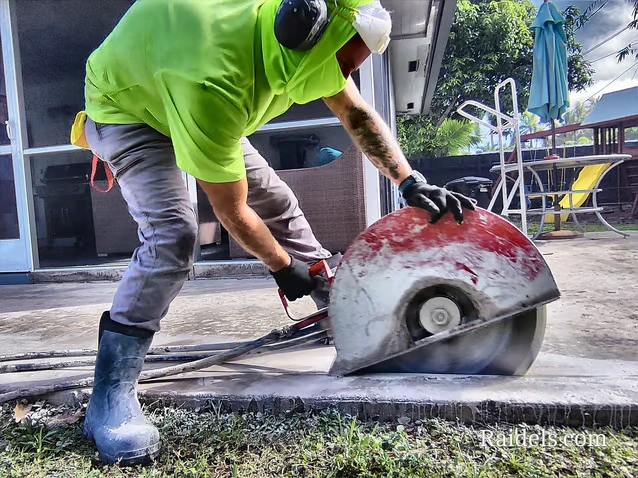
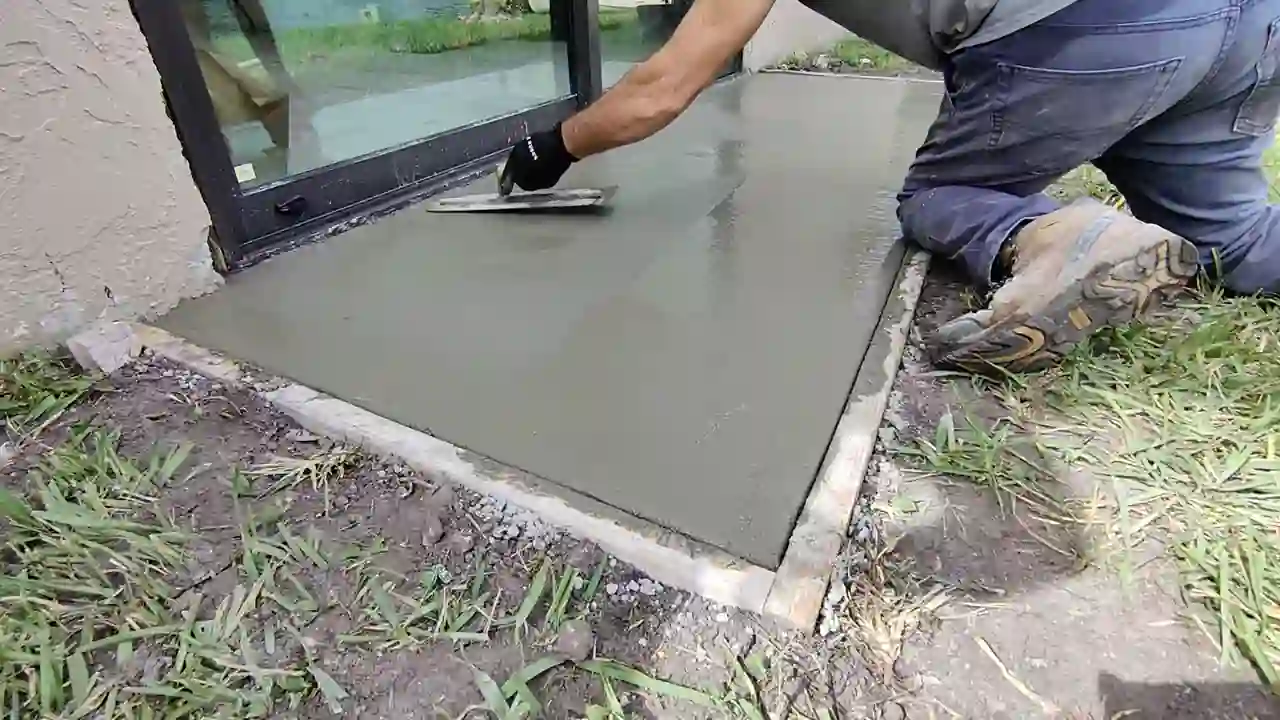
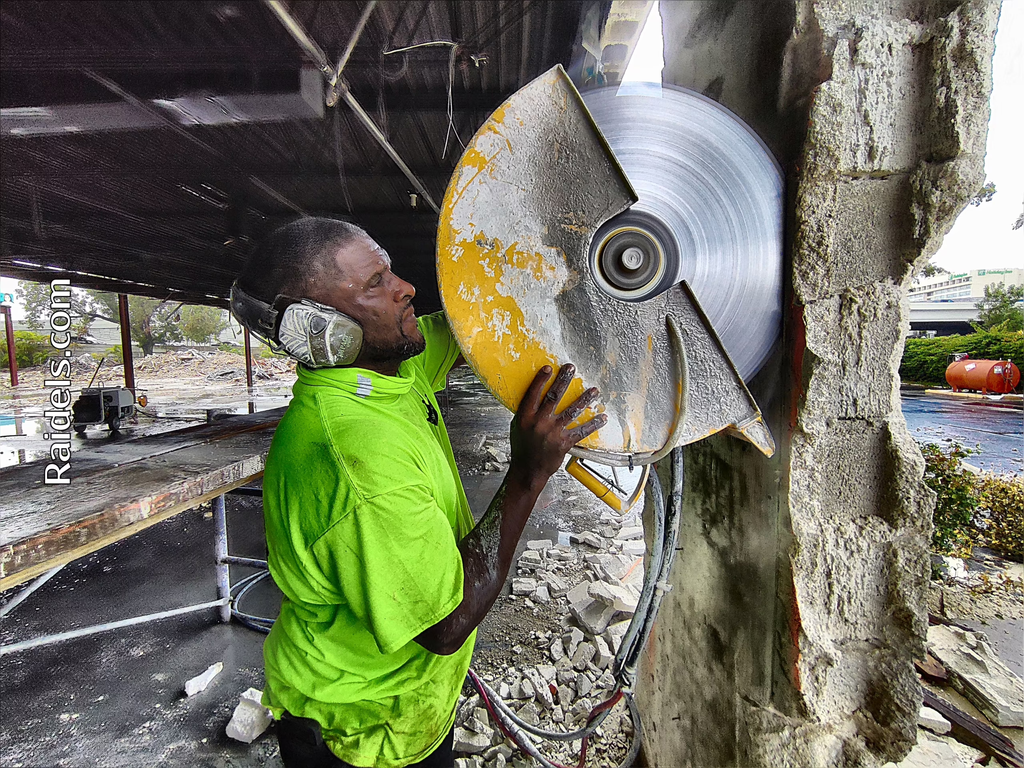
Every horizontal concrete surface eventually needs to be cut — for joints, for demolition, or for access to what is underneath it
Flat sawing — sometimes called slab sawing — is the method for cutting horizontal concrete surfaces from above. A walk-behind or ride-on machine pushes a diamond blade through the slab at a controlled depth, producing a straight cut that can be anywhere from a quarter-inch control joint to a full-depth cut through a 14-inch industrial floor. Flat sawing is what makes expansion joints, demolition sectioning, utility trenching, and partial-depth repairs possible on existing slabs. Without it, you are breaking concrete with a jackhammer — slower, rougher, and far more destructive to the surrounding slab. Whether you are cutting a driveway into sections for removal, opening a trench for new plumbing in an existing floor, or cutting control joints in fresh concrete, flat sawing is the method that produces the straightest cut with the least collateral damage to the concrete that stays in place.
How flat sawing works and what determines cut quality
A flat saw is a gas, diesel, or electric-powered machine that rolls on wheels or tracks across the slab surface. The blade — a diamond-segmented disc ranging from 12 to 48+ inches in diameter — protrudes from the bottom of the machine and plunges into the concrete to the set depth. The operator walks behind or rides on the machine, steering it along the cut line.
Cut quality depends on four variables:
- Blade diameter and condition — Larger blades cut deeper. A worn or glazed blade produces rough cut faces and slow progress because the diamonds are not being exposed by bond wear.
- Feed rate — How fast the machine advances. Too fast and the blade binds, overheats, or produces a ragged cut. Too slow and the blade polishes the concrete rather than cutting it, wasting blade life and time.
- Water cooling — Wet cutting cools the blade and suppresses silica dust. Dry cutting is faster to set up but requires vacuum dust collection for OSHA compliance and produces more blade wear from heat buildup.
- Depth control — The saw’s depth adjustment mechanism must hold the set depth consistently. If depth drifts during the cut, you get an uneven cut bottom — a problem when the cut needs to go through the full slab thickness but not into the subgrade below.
For small-scale cutting or tight access situations where a full-size slab saw cannot fit, our hand saw tools page covers handheld alternatives for short cuts and confined spaces.
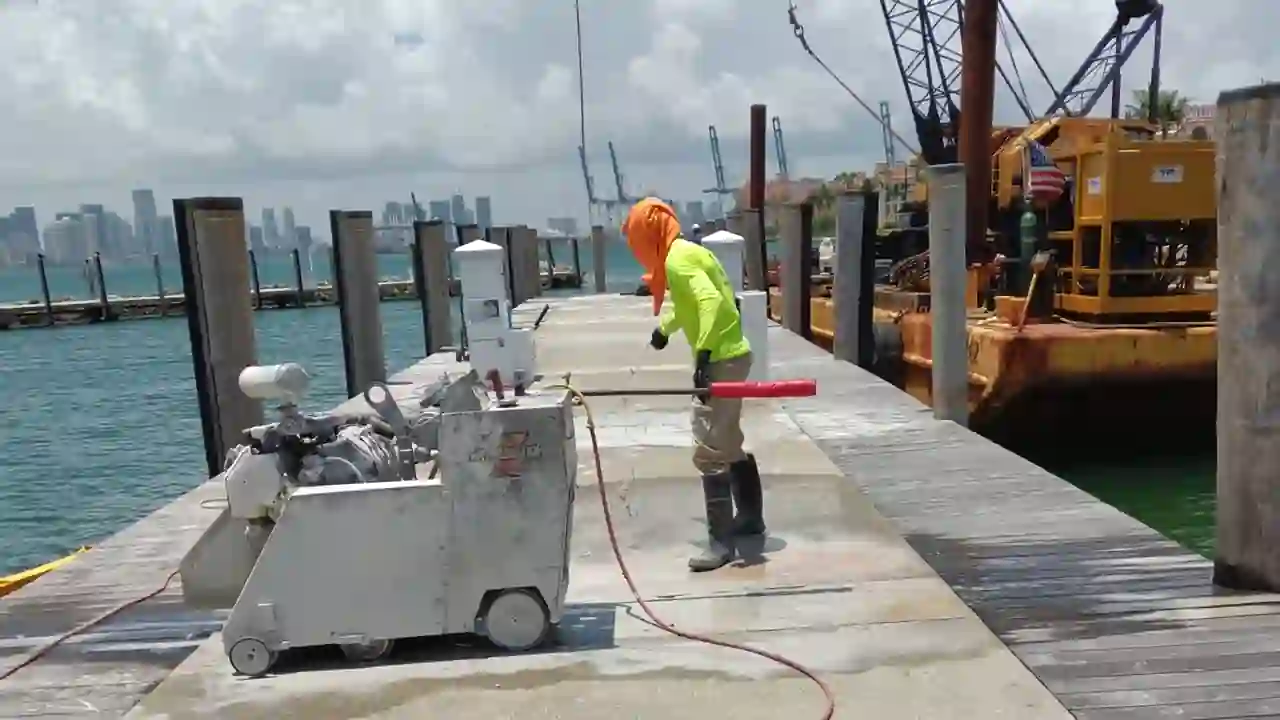
” alt=”Contractor operating walk-behind flat saw cutting concrete slab at Miami commercial construction site” style=”max-width:100%;height:auto;”/>
The most common flat sawing applications in Miami construction
Flat sawing appears in nearly every phase of concrete construction and demolition. These are the applications we handle most frequently in South Florida:
- Control joints and expansion joints — Cutting joints in newly placed concrete to control where cracking occurs as the slab cures and shrinks. Joints are cut when the concrete is “green” — hard enough to support the saw but before shrinkage cracking begins, typically 4-12 hours after placement depending on temperature and mix design.
- Demolition sectioning — Cutting a large slab into manageable sections before removal. A full-depth cut around the perimeter of each section allows the breaker to knock out clean rectangles that are easier to load and haul than randomly broken rubble.
- Utility trenching — Cutting parallel lines through an existing slab to create a trench for new plumbing, electrical conduit, or drainage pipe. Flat sawing produces clean trench edges that make patching easier and produce a stronger bond between old concrete and new fill.
- Partial-depth repairs — Cutting around a damaged area at a controlled depth — say 2 inches into a 6-inch slab — so the damaged surface layer can be removed and replaced without disturbing the sound concrete below or the reinforcement within it.
- Road and highway work — Cutting bridge deck overlays, pavement patches, and dowel bar retrofits on roads and highways. These applications typically use large ride-on saws with 24-48 inch blades.
- Driveway and patio removal — Cutting concrete driveways and patios into liftable sections for removal and replacement. Clean cuts around the perimeter prevent damage to adjacent slabs or structures.
For a full overview of slab cutting capabilities and how flat sawing integrates with other concrete work, see our slab sawing services page. If your project involves demolition that includes slab removal, our demolition services page covers how cutting and breaking combine for efficient concrete removal.
Wet cutting versus dry cutting — the trade-offs and when each is the right call
Flat saws can run wet or dry, and the choice affects blade life, dust control, jobsite conditions, and cut speed.
Wet cutting
Water is continuously delivered to the blade during cutting via an onboard tank or a hose connection. The water does three things: it cools the blade (extending life by preventing diamond glazing from heat buildup), it suppresses silica dust at the source (keeping airborne particulate below OSHA limits), and it lubricates the cut (reducing friction and allowing faster feed rates).
Wet cutting is the default for outdoor work and any application where water on the surface is manageable. The trade-off is slurry — a mixture of concrete dust and water that must be contained and cleaned up. On a dirt subgrade or outdoor surface, slurry management is straightforward. On a finished interior floor, slurry becomes a significant containment challenge.
Dry cutting
Dry cutting runs the blade without water, relying on air cooling and vacuum dust collection to manage heat and dust. The saw connects to an industrial vacuum with a HEPA filter that captures dust at the blade shroud. Dry cutting is slower than wet cutting for the same blade diameter because heat buildup limits feed rate, and blade life is shorter because the diamond segments run hotter.
Dry cutting is chosen when water cannot be introduced to the work area — occupied interior spaces, electrical rooms, data centers, and areas with moisture-sensitive equipment or finishes. It is also used for short cuts and small jobs where the setup time for water delivery and slurry containment exceeds the actual cutting time.
What flat sawing costs and how the variables affect your quote
Flat sawing is typically priced per linear foot of cut, with the depth of cut and concrete conditions driving the rate:
- Shallow cuts (1/4 to 2 inches) — Control joints and partial-depth repairs. Lowest cost per foot because the blade passes through quickly with minimal wear.
- Medium-depth cuts (2 to 6 inches) — Typical for residential slabs, patios, and driveways. Moderate cost; the blade is cutting through the full structural depth of the slab.
- Deep cuts (6 to 14+ inches) — Industrial floors, roadway pavement, heavily reinforced slabs. Higher cost per foot due to slower feed rates, larger blade requirements, and greater blade wear from rebar encounters.
- Green concrete cutting — Early-entry saws cut joints in fresh concrete within hours of placement. Priced per foot with a different cost structure because the concrete is softer and blade wear is lower, but the timing window is narrow (often a 2-4 hour window when the concrete is at the right stage of cure).
Mobilization, setup, and cleanup are typically separate line items. For Miami-specific pricing guidance across all types of concrete cutting, our cost guide covers what drives pricing in the South Florida market.
Miami-specific considerations that flat sawing contractors from out of town do not plan for
Miami flat sawing presents challenges that are less common in other markets:
- High water table effects on subgrade — When cutting a ground-supported slab in Miami, the soil underneath may be saturated, especially during wet season. Full-depth cuts can expose saturated subgrade that turns into mud when water from wet cutting drains into the cut. This makes slurry management harder because you are dealing with wet soil as well as concrete slurry.
- Limestone aggregate in older concrete — Much of Miami’s older concrete (pre-1990s) was made with locally sourced limestone aggregate, which is softer than the granite aggregate used in modern high-strength mixes. Softer aggregate means faster cutting but more blade glazing if the wrong bond is selected. Modern Miami concrete uses harder aggregate, requiring a different blade specification — and a contractor who does not adjust blade selection for the specific slab being cut will waste time and blade life.
- High rebar density in commercial slabs — Miami-Dade building code plus hurricane wind load requirements produce slabs with heavier rebar than equivalent structures elsewhere. A warehouse floor in Miami may have #4 or #5 rebar at 12-inch centers where a similar floor in Atlanta would use 6-gauge wire mesh. More rebar means slower cutting, more blade wear, and a softer bond matrix required on the blade.
For any flat sawing project in South Florida, contact us through our contact page for a site evaluation and written quote. We also serve Broward County — see our Ft. Lauderdale service area for coverage north of the county line.

” alt=”Ride-on concrete flat saw cutting deep expansion joints in Miami warehouse industrial floor” style=”max-width:100%;height:auto;”/>