A concrete saw in the back of a pickup truck does not make a concrete cutting company — and Miami has plenty of both
In a market where concrete is the primary building material for every structure taller than two stories, concrete cutting specialists exist for a reason. The work is not interchangeable with general demolition or construction labor. It requires specific equipment — hydraulic power units, track-mounted saw systems, diamond-segmented core bits, GPR scanning units — that a general contractor does not keep in inventory. It requires knowledge of structural load paths, rebar schedules, and post-tension cable mapping that a demolition crew does not need on a gut-and-rip job. And it requires insurance and licensing specific to structural cutting because the consequences of cutting into the wrong piece of concrete are measured in structural failures, not just bad workmanship. If you are evaluating concrete cutting companies for a project in Miami-Dade, here is what separates a professional operation from a general contractor who bought a saw.
The equipment that defines a professional concrete cutting operation
Walk through a professional concrete cutting company’s yard and you will see equipment that a general contractor never invests in. The equipment is the company — it determines what jobs they can take and how cleanly they can execute them.
Hydraulic wall saw systems
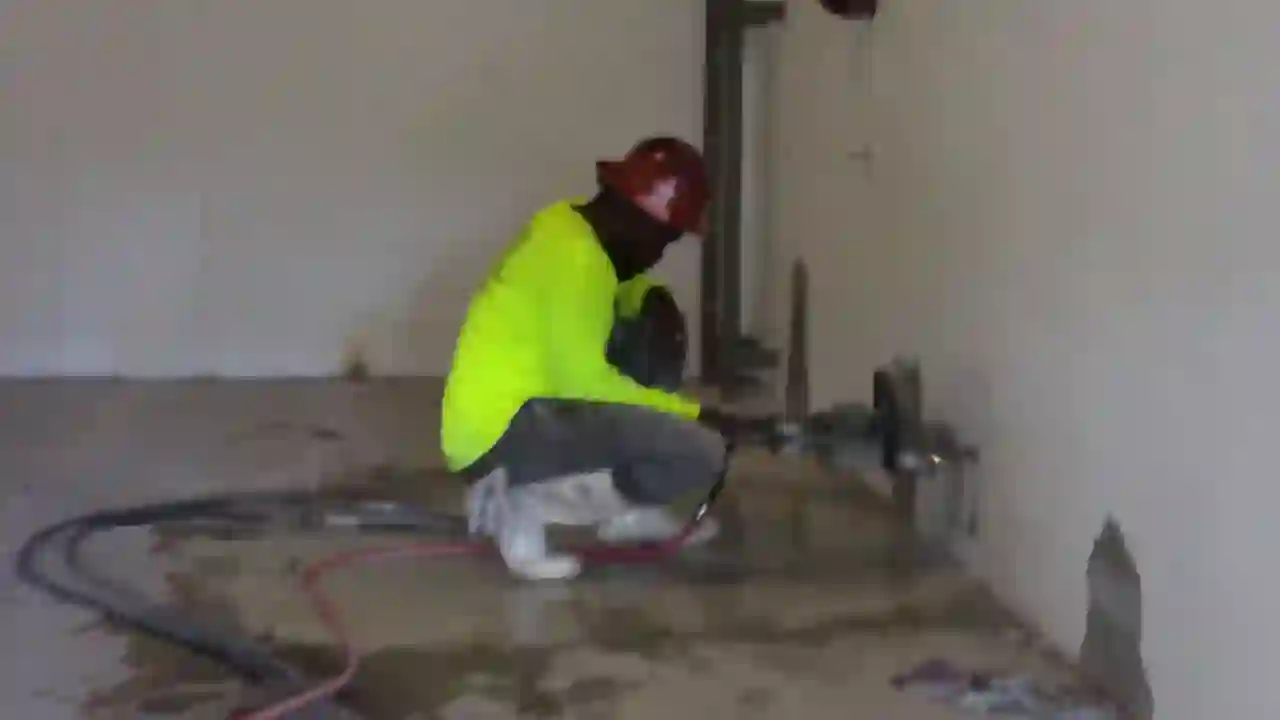
A track-mounted hydraulic wall saw is the centerpiece of any professional cutting operation. The hydraulic power unit (HPU) delivers consistent power to the saw head regardless of load, which means the blade maintains RPM even when it hits rebar. The track bolts or vacuums to the wall and guarantees a straight cut line — the blade cannot wander because it is mechanically constrained to the track. Entry-level companies use electric wall saws or, worse, try to make vertical cuts with gas-powered hand saws on their side. The difference in cut quality between a hydraulic track saw and any handheld method is immediately visible in the straightness and cleanliness of the cut face.
Diamond core drill rigs
Rig-mounted core drills with stands that bolt or vacuum-secure to floors and walls. The rig takes the operator’s muscle control out of the equation — feed rate and angle are mechanically controlled. Companies that only run handheld core drills cannot guarantee hole straightness on deep penetrations or handle the torque of bits larger than about 10 inches.
GPR scanning equipment
Ground-penetrating radar is not a luxury add-on — it is the difference between cutting confidently and cutting blindly. A company that owns and operates its own GPR unit integrates scanning into every job. A company that subcontracts scanning or skips it entirely is gambling with post-tension cables, embedded conduit, and structural rebar. The cost of one PT cable strike exceeds the cost of the GPR unit.
Slurry management systems
Professional cutting produces slurry — water mixed with concrete dust. Companies doing interior work or working on finished floors need vacuum attachments, wet vacuums, containment trays, and squeegees as standard equipment. If a company’s slurry management plan is “we will clean up after,” they do not do enough interior work to have learned why that approach fails.
For specific equipment used on different types of cutting jobs, our hydraulic chain saw page and hand saw tools page cover capability details.
Licensing and insurance — the verifiable credentials that separate professionals from pretenders
In Florida, concrete cutting falls under the scope of a Certified General Contractor (CGC) or Certified Building Contractor (CBC) license. A specialty structure contractor license may also apply depending on the scope. The key point: the contractor’s license should be verifiable on the Florida DBPR website, and it should be active with zero complaints or disciplinary actions. Check while you are on the phone with them — it takes 60 seconds.
Insurance is equally critical and equally verifiable:
- General liability — Minimum $1 million per occurrence, $2 million aggregate. This covers property damage if a cut goes wrong or slurry damages finishes.
- Workers’ compensation — Required for any company with employees in Florida. If a worker gets injured on your property and the company does not carry workers’ comp, the liability can fall to you as the property owner.
- Certificate of insurance naming you as additionally insured — A standard request that any legitimate contractor will provide within hours, not days.
A contractor who hesitates to provide license numbers or insurance certificates is a contractor you should not let onto your property. This is not negotiable — it is the minimum barrier to entry for structural work.
” alt=”Professional concrete cutting company truck with hydraulic wall saw equipment at Miami commercial jobsite” style=”max-width:100%;height:auto;”/>
The pre-cut process — what a professional concrete cutting company does before the blade ever touches concrete
The difference between a professional cutting company and a demolition crew is most visible before the work starts. The pre-cut process is where problems get identified and avoided rather than reacted to after the damage is done.
A professional pre-cut sequence looks like this:
- Site walk and measurement — The contractor visits the site, takes measurements, photographs the work area, and identifies access constraints, utility locations, and surface protection requirements. This produces a written scope of work, not a verbal estimate.
- GPR scan of every cut line — Before any blade touches concrete, every proposed cut line is scanned with ground-penetrating radar. The scan identifies rebar patterns, PT cables, electrical conduit, and plumbing embedded in the concrete. Cut locations are adjusted to avoid conflicts, or engineering review is requested if avoidance is not possible.
- Utility locating — For slab cutting, the contractor calls 811 for utility markout of underground lines. For wall cutting, they verify that the wall does not contain active electrical or plumbing that is not visible from either side.
- Engineering coordination — If cutting into a structural element — load-bearing wall, shear wall, PT slab, foundation — the contractor coordinates with the structural engineer of record before cutting. The engineer specifies any required shoring, cut sequencing, or size limitations on the opening.
- Surface protection and containment — Drop cloths, plastic sheeting, negative air containment (for interior work), and slurry catchment systems are set up before cutting begins, not after the first mess is made.
A contractor who skips these steps is not saving you time or money — they are deferring risk onto your property and hoping nothing goes wrong. For more on how we approach pre-cut planning on Miami-Dade projects, see our services overview.
Red flags that tell you a concrete cutting contractor is not qualified before they touch your building
Most bad outcomes in concrete cutting are predictable before the work starts if you know what to look for. Here are the signals that should make you reconsider:
- No GPR unit — and no plan to scan. This is the single biggest red flag in the industry. Any contractor willing to cut into concrete without scanning what is inside it is cutting blind. PT cable strikes, electrical hits, and water line ruptures are all preventable with a 15-minute GPR scan. If they do not scan, they are accepting risks on your behalf without your informed consent.
- Cannot produce a COI (certificate of insurance). If they do not carry proper insurance, any damage they cause becomes your problem. Do not accept “it is in the truck” or “I will email it later” — get the COI before they mobilize.
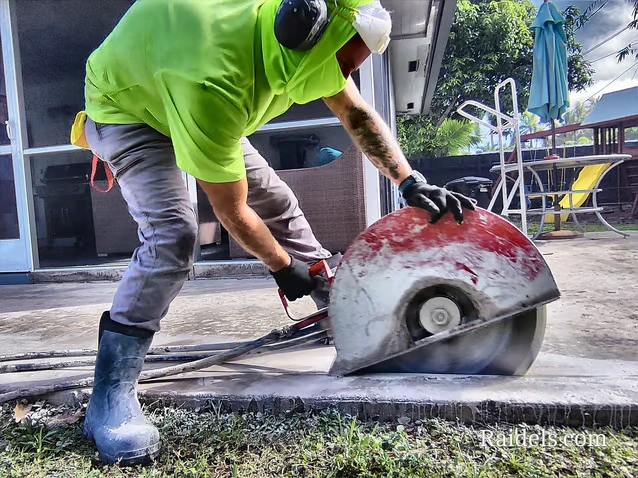
- No hydraulic wall saw — relying on hand saws or breakers for structural cuts. A company that cuts door openings with a gas-powered hand saw is doing demolition, not concrete cutting. The opening will need extensive patching, and the structural edges will be compromised by vibration and micro-cracking.
- Quote is suspiciously low. Professional concrete cutting is equipment-intensive and labor-skilled. If one quote is 40% below the others, the difference is almost certainly in what is being omitted — no GPR scan, no slurry containment, no insurance, or equipment inadequate for the job.
- Cannot describe their slurry management plan. Interior cutting generates gallons of concrete slurry that will stain flooring, clog drains, and dry into airborne silica dust. A contractor who has not thought about slurry management has not done enough interior work to handle your project.
For an overview of pricing across different types of concrete work, our concrete cutting cost guide gives you a baseline for evaluating quotes in the Miami market.
How to get accurate quotes you can actually compare across companies
The biggest frustration property owners report is receiving quotes that are impossible to compare because each contractor scopes the work differently. Here is how to get apples-to-apples quotes:
- Provide the same information to every contractor — Drawings, photos, access details, and a written description of what you need. If you give one contractor a site walk and another a phone description, their quotes will reflect different assumptions.
- Ask for line-item scope of work, not a lump sum — A lump sum number tells you nothing about what is included. A line-item scope breaks out mobilization, GPR scanning, cutting (by linear foot or per hole), slurry containment, cleanup, and disposal.
- Ask what is NOT included — Patching, grouting, door installation, electrical reconnection, and finish work are typically outside the cutting scope. Know where the cutting contractor’s responsibility ends and the next trade begins.
- Get the timeline in writing with weather contingencies — Miami wet season (May-October) affects outdoor cutting. Ask how rain days are handled in the schedule and whether the contractor carries pumps for dewatering if needed.
For site evaluations and written quotes on concrete cutting projects throughout South Florida, reach us through our contact page. We serve Miami-Dade, Broward, and the Keys — see our Ft. Lauderdale and Miami service area pages for coverage details.

” alt=”Concrete cutting company crew setting up hydraulic wall saw track system on Miami high-rise construction site” style=”max-width:100%;height:auto;”/>