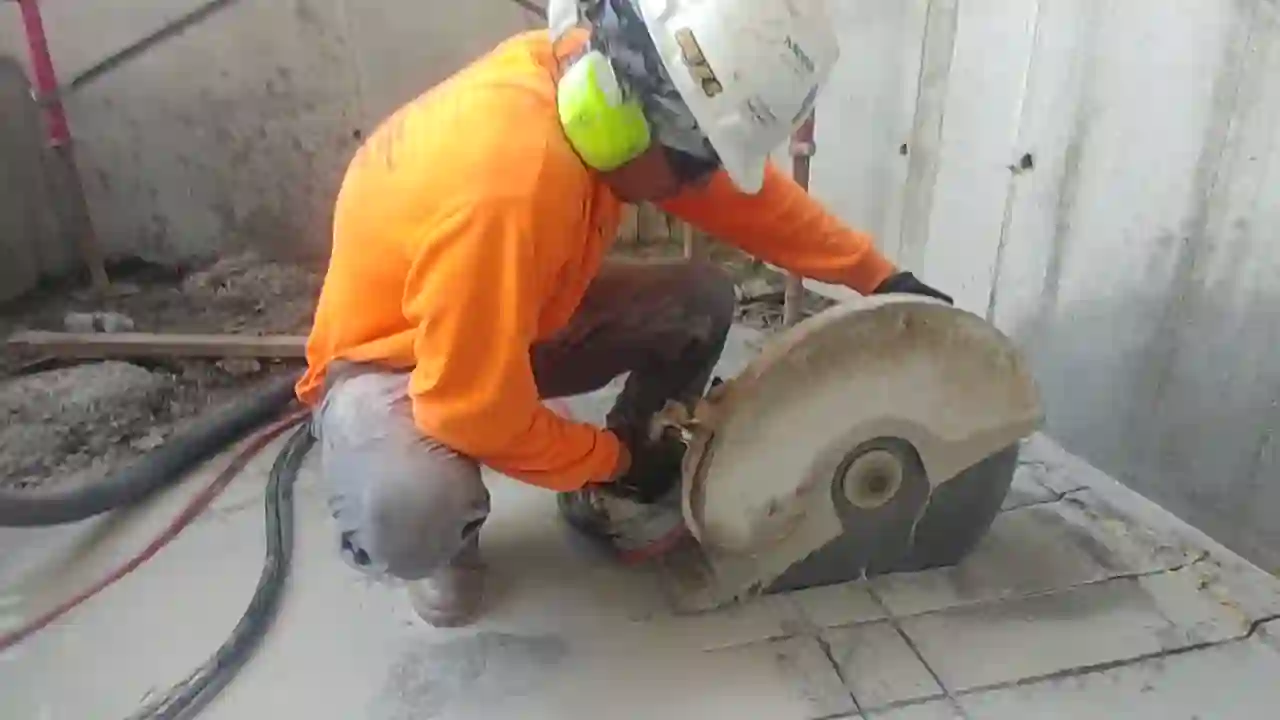
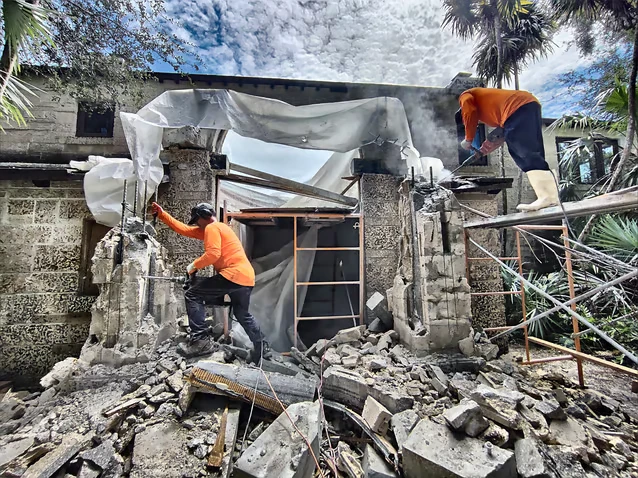
Why Lauderdale Lakes Construction and Demolition Sites Demand a Higher Safety Standard
Lauderdale Lakes sits in the heart of Broward County, a densely developed urban corridor where construction and demolition projects run back-to-back with residential neighborhoods, active roadways, and aging infrastructure. That proximity raises the stakes considerably. When a demolition crew fires up a hydraulic breaker or a concrete saw on a tight infill lot in Lauderdale Lakes, the margin for error is essentially zero. Dust migrates into neighboring properties, vibration travels through shared footings, and debris can reach public sidewalks within seconds if containment isn’t locked in before the first cut. Our team at Concrete Cutting Miami, LLC has worked dozens of projects across Broward County, and the pattern is consistent — the sites that run clean and safe are the ones where OSHA compliance is treated as a baseline, not a ceiling.
Pre-Demolition Hazard Assessment Protocols That Actually Hold Up Under Inspection
Before a single tool touches a structure in Lauderdale Lakes, a thorough pre-demolition engineering survey must be completed and documented. This isn’t a walkthrough with a clipboard — it’s a formal written assessment that identifies structural load paths, identifies potential collapse zones, and catalogs hazardous materials. In South Florida’s older building stock, asbestos-containing materials (ACMs) are common in floor tiles, pipe insulation, and roofing felts. Lead-based paint appears in structures built before 1978. Both require licensed abatement before mechanical demolition begins.
The survey must also identify underground utilities. Broward County’s utility density means gas lines, fiber conduits, and stormwater infrastructure can be within inches of a proposed saw cut or excavation line. Florida law requires Sunshine State One Call notification at least two full business days before any ground disturbance. On jobs where we’re performing concrete egress window cutting in Miami or similar precision work near foundation walls, we go further — we use ground-penetrating radar (GPR) to verify utility depth and confirm rebar placement before any blade enters the slab.
Structural Shoring Requirements Before Selective Demolition
Selective demolition — removing specific walls, floors, or structural elements while leaving the rest of a building intact — creates temporary instability that kills workers when it’s underestimated. OSHA 29 CFR 1926.850 mandates that all structural supports, floors, and walls be evaluated before any selective removal begins. In practice, this means a licensed engineer must stamp a shoring plan for any load-bearing element removal. Temporary shoring using adjustable steel columns, timber cribbing, or engineered scaffold frames must be installed and inspected before demolition proceeds.
On Lauderdale Lakes commercial projects involving parapet wall removal — a common scope on flat-roof retail buildings being repurposed — the shoring requirements become especially critical. Parapet walls often carry lateral wind loads that transfer into roof diaphragms. Removing them without temporary bracing can trigger progressive diaphragm failure. For that specific scope, our concrete parapet wall removal services in Miami include pre-cut structural analysis as a standard deliverable, not an add-on.
OSHA Silica Dust Control Under the Respirable Crystalline Silica Standard
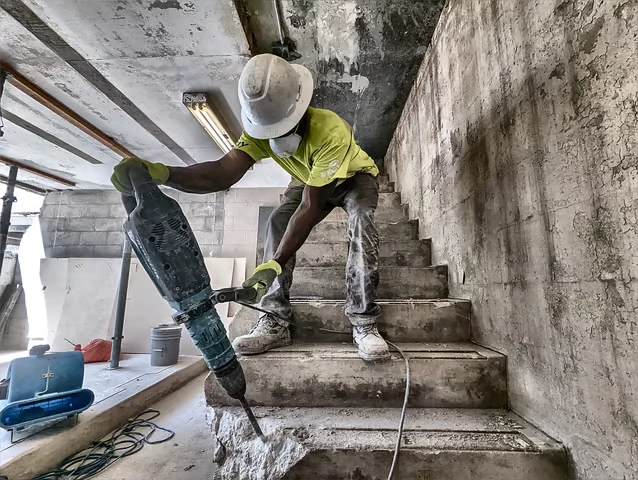
OSHA’s Respirable Crystalline Silica Standard (29 CFR 1926.1153) is arguably the most operationally impactful regulation affecting concrete demolition crews in Florida. The permissible exposure limit (PEL) for respirable crystalline silica is 50 micrograms per cubic meter of air as an 8-hour time-weighted average. Concrete cutting, grinding, and jackhammering all generate silica dust at levels that can exceed this limit within minutes without proper controls.
The standard allows contractors to comply through one of two methods. The first is the Table 1 engineering control method, which specifies exact dust suppression or ventilation requirements for each task. For example, handheld grinders used on mortar joints must use integrated water delivery systems providing at least 0.5 gallons per minute, or must be operated with a shroud connected to an HEPA-filtered vacuum rated at a minimum of 25 cubic feet per minute. The second method is objective data and air monitoring, which requires industrial hygiene sampling to demonstrate exposures remain below the action level of 25 μg/m³.
Wet Cutting Versus HEPA Vacuum Systems for Urban Demolition Sites
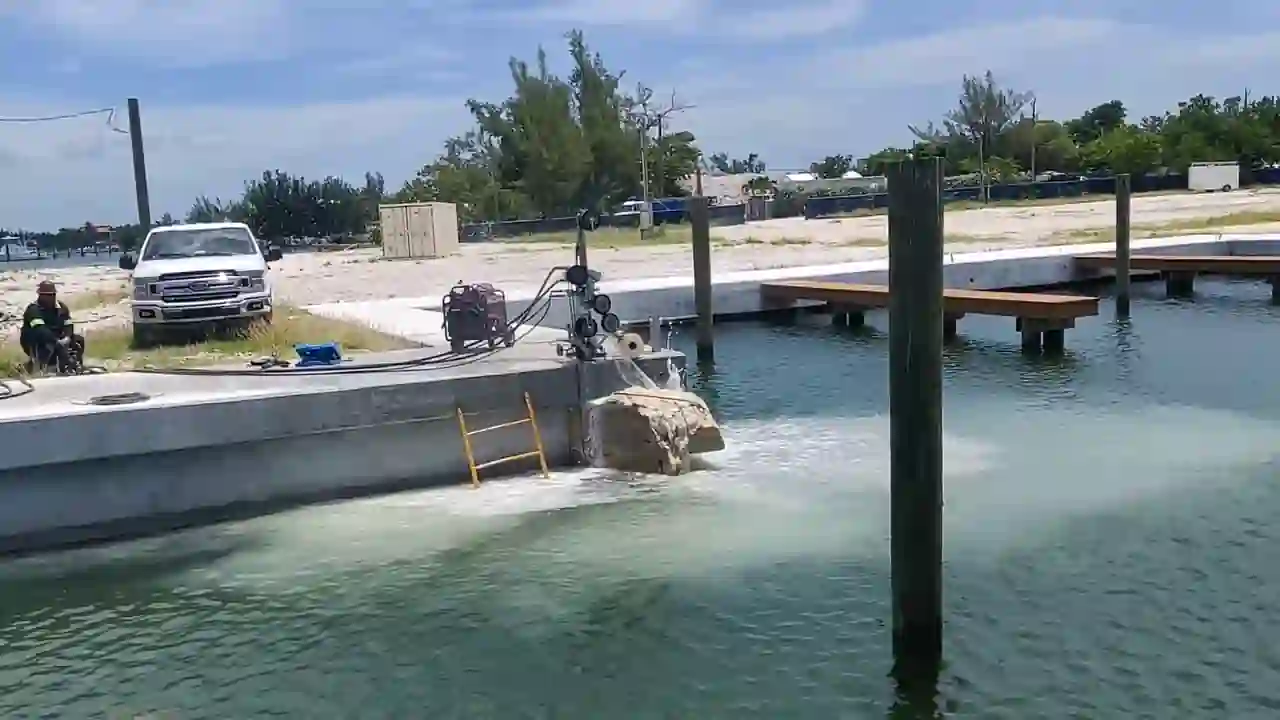
In Lauderdale Lakes, where many demolition projects occur in close proximity to occupied buildings, wet cutting is often the preferred silica control method because it suppresses dust at the point of generation before it becomes airborne. However, wet cutting introduces its own site management challenges — slurry runoff must be contained and cannot be allowed to enter stormwater drains under Florida DEP regulations. Berms, vacuum slurry recovery units, and secondary containment are all required on sites adjacent to storm drains.
HEPA vacuum shroud systems are the preferred alternative when water use is impractical, such as interior demolition or work near electrical panels. The vacuum must maintain negative pressure at the blade guard throughout the cut, and filters must be inspected and changed according to manufacturer specifications. Filter bypass — caused by a cracked housing or improperly seated filter — can expose workers to silica at concentrations far exceeding the PEL without any visible dust cloud. This is a failure mode that site supervisors must actively test for, not assume away.
Fall Protection and Overhead Hazard Control During Elevated Demolition Work
Demolition in Lauderdale Lakes frequently involves elevated work — removing second-floor slabs, cutting roof decks, or breaking down masonry parapets from elevated platforms. OSHA 29 CFR 1926.502 requires fall protection for any work surface six feet or more above a lower level. On demolition sites, this requirement is complicated by the fact that the working surface itself may be the element being removed.
The practical solution for slab demolition at elevation is a combination of controlled access zones (CAZs) and personal fall arrest systems (PFAS). Workers operating core drills or wall saws near slab edges must be tied off to anchor points rated at 5,000 pounds per attached worker, or to a certified engineered anchor system. Guardrail systems on demolition sites must account for the fact that the substrate they’re anchored to may be weakened by the demolition process — standard guardrail toe boards rated for construction may be inadequate if anchored into a deteriorated slab.
Debris Containment and Falling Object Protection Below Active Work Zones
Overhead protection for workers and the public below active demolition is a non-negotiable OSHA requirement under 29 CFR 1926.502(j). Debris nets, catch platforms, or solid overhead protection must be installed whenever work is performed above occupied or trafficked areas. In Lauderdale Lakes, where many commercial demolitions occur along active retail corridors, this means sidewalk sheds with overhead decking rated for the anticipated debris load, plus signage and physical barriers at the perimeter.
Concrete demolition generates unpredictable projectile hazards. A hydraulic breaker striking a post-tensioned slab can release stored cable tension violently — a phenomenon that has caused fatalities on Florida job sites. Pre-demolition identification of post-tensioned systems through structural drawings review and GPR scanning is mandatory before any mechanical breaking begins. If you’re managing a complex renovation that also involves pool deck or shell modifications, the same principles apply — our guide on reshaping an existing pool covers how post-tensioned deck systems must be handled before any cutting begins.
Noise and Vibration Compliance in Residential-Adjacent Lauderdale Lakes Demolition Projects
Broward County and the City of Lauderdale Lakes enforce noise ordinances that restrict construction activity to specific hours — generally 7:00 AM to 6:00 PM on weekdays, with more restrictive windows on weekends. Demolition equipment routinely exceeds 85 dB at the operator position, triggering OSHA’s hearing conservation program requirements under 29 CFR 1910.95. Workers exposed to time-weighted average noise levels at or above 85 dB must be enrolled in a hearing conservation program including audiometric testing, hearing protection provision, and training.
Ground-borne vibration from hydraulic breakers and compactors can damage adjacent structures and underground utilities. The accepted industry threshold for cosmetic damage to residential structures is a peak particle velocity (PPV) of 0.5 inches per second. On sensitive sites, vibration monitoring using seismographs placed at the nearest structure is the only defensible way to demonstrate compliance. Pre-construction condition surveys with photographic documentation protect contractors from fraudulent damage claims and provide baseline data for vibration monitoring interpretation.
Getting Your Lauderdale Lakes Demolition Project Started the Right Way
Every construction and demolition project in Lauderdale Lakes has a unique risk profile shaped by the structure’s age, materials, proximity to neighbors, and the scope of work. A cookie-cutter safety plan will fail inspection and, more importantly, will fail workers. The protocols described here — hazard surveys, silica controls, shoring plans, fall protection systems, and vibration monitoring — represent the minimum defensible standard for professional demolition work in Broward County.
Concrete Cutting Miami, LLC brings this level of technical discipline to every project we take on, from precision slab cuts to full structural demolition support. If your project in Lauderdale Lakes or anywhere in South Florida is ready to move forward, book a consultation with our team today and get a safety-first project plan built around your specific site conditions.