What saw cutting is and why it is the foundation of professional concrete work
Saw cutting is the process of cutting concrete using a diamond-blade saw — a circular blade with industrial diamond segments that grind through concrete, rebar, and aggregate. It is the foundational technique of professional concrete cutting, and the skill that separates a contractor who does concrete work from a concrete cutting specialist. Saw cutting is not one thing — it is a family of techniques, equipment types, and applications that together cover every scenario where concrete needs to be cut: from an eighth-inch-deep control joint in a freshly poured driveway to a full-depth 12-inch cut through a reinforced structural wall for a new doorway.
The defining characteristic of saw cutting versus other ways of breaching concrete is control. A jackhammer breaks concrete — uncontrolled fracture, irregular edges, vibration damage to surrounding material. A sledgehammer does the same thing, slower and more laboriously. Saw cutting separates concrete along a defined, straight line with clean edges, controlled depth, and no impact force transferred to the surrounding structure. The result is a cut that looks intentional, accepts a patch cleanly, or — in the case of control joints — gives the concrete a designated place to crack that is straight and controlled rather than random and ugly.
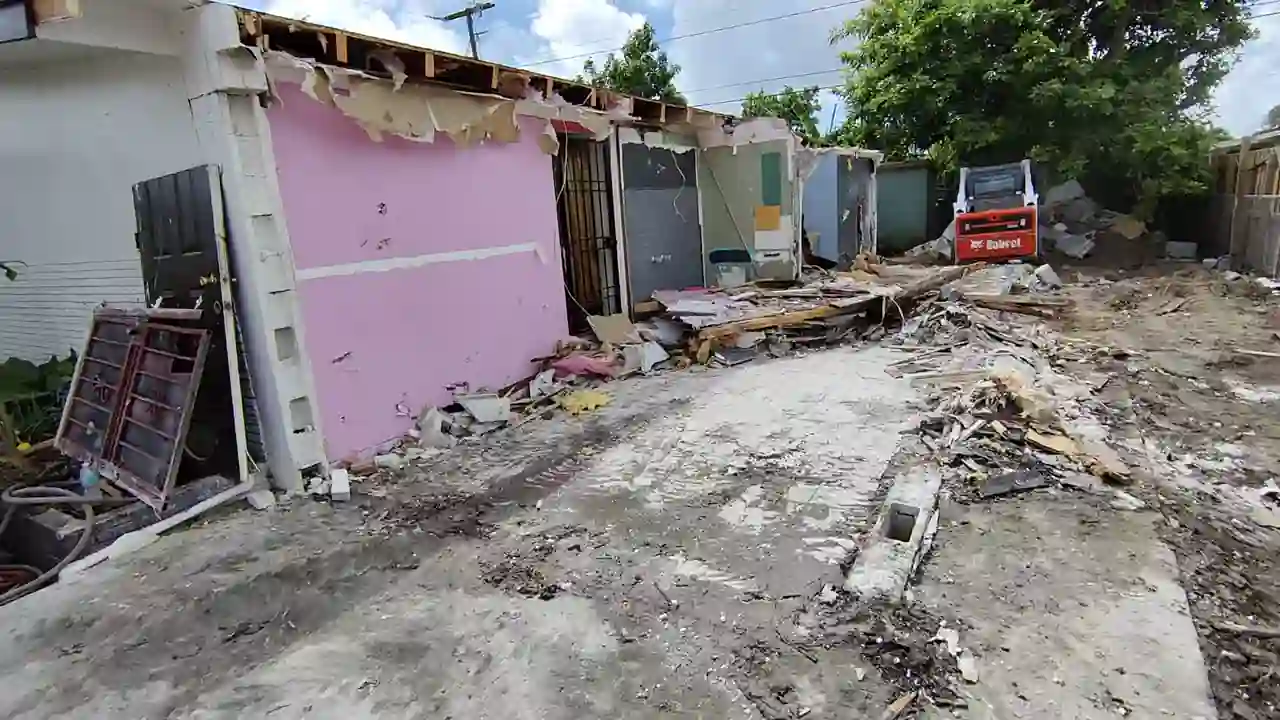
We saw-cut concrete daily in Miami-Dade County — control joints in new slabs, full-depth cuts for demolition sectioning, wall openings for doors and windows, trench lines for plumbing and electrical, and countless other applications. The saw is the tool we reach for first on nearly every job, because saw cutting defines the boundaries of what we are doing before we do anything else.
The types of saw cutting and when to use each
Flat sawing (slab sawing)
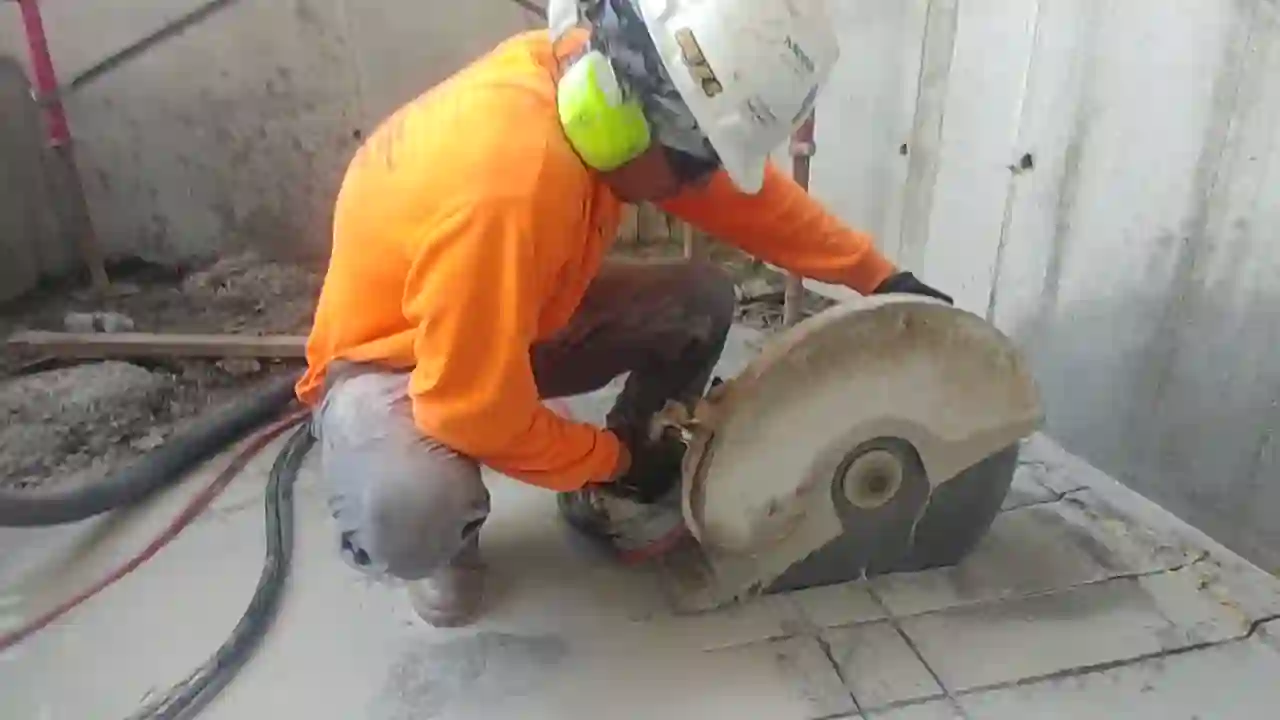
Flat sawing is cutting horizontal concrete surfaces — floors, slabs, pavements, driveways, patios, and roadways. The saw rides on the concrete surface, and the operator walks behind it (walk-behind saw) or rides on it (ride-on saw for large paving jobs). Flat saws use diamond blades typically ranging from 12 to 36 inches in diameter, providing cutting depths from a fraction of an inch up to about 15 inches in a single pass.
Flat sawing applications include:
- Control joint cutting: Shallow cuts (typically 1/4 of the slab thickness deep) made within 24 hours of concrete placement to create controlled cracking planes that prevent random cracking.
- Full-depth slab cutting: Cutting entirely through a slab for demolition sectioning, trenching, or slab removal.
- Expansion joint cutting: Creating joints that allow slabs to expand and contract with temperature changes without buckling or cracking.
- Utility trench cutting: Cutting parallel lines for plumbing, electrical, or drainage trenches through existing slabs.
Wall sawing (track sawing)
Wall sawing is cutting vertical or steeply inclined concrete surfaces — walls, bridge abutments, foundation walls, and similar structures. The saw mounts to a track system that is bolted or vacuum-anchored to the wall surface. The track guides the saw along a straight line, and the saw head feeds into the cut under hydraulic power. Wall saws use diamond blades from 18 to 48 inches, and the track can be extended to cut openings of any size.
Wall sawing applications include:
- Door and window openings: Cutting new openings in existing concrete walls for doors, windows, and pass-throughs.
- HVAC and mechanical openings: Creating penetrations for ductwork, piping, and equipment access.
- Elevator shaft openings: Cutting openings in elevator shaft walls for door installation.
- Wall removal for remodeling: Removing sections of concrete walls during building reconfiguration while preserving the surrounding structure.
Hand sawing
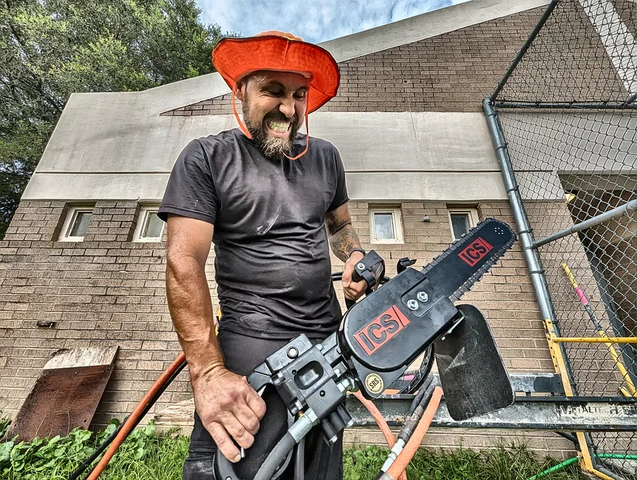
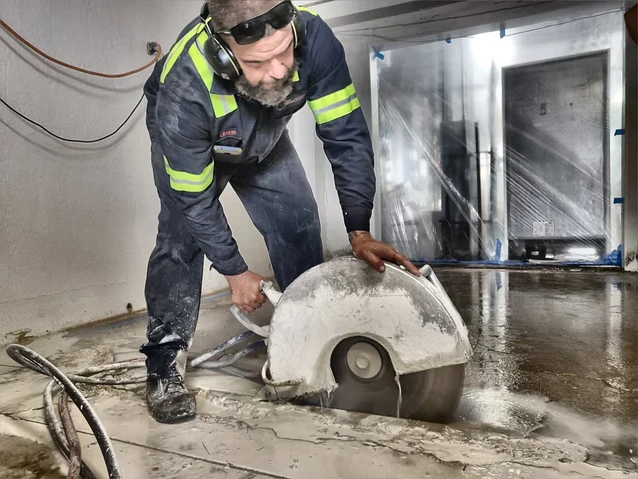
Handheld saws — gas, electric, or hydraulic — for cutting in confined spaces, finishing corners, cutting pipe, and any application where the size or geometry prevents the use of a flat saw or wall saw. Hand sawing requires the most operator skill because the cut is guided entirely by the operator’s hands.
Wire sawing
For concrete too thick for any circular blade — bridge piers, massive foundations, thick shear walls — a diamond-impregnated wire cable running on a pulley system cuts through the structure. Wire sawing can cut through concrete of virtually any thickness and is used for the largest-scale demolition and modification projects.
How saw cutting depth is determined
The maximum cutting depth of a diamond saw blade is governed by the blade diameter and the arbor (center shaft) size. The practical cutting depth is the blade radius minus the arbor radius, minus a small safety margin. A 14-inch blade on a saw with a 1-inch arbor has a theoretical maximum depth of about 6.5 inches, though the practical limit is typically 5-6 inches depending on the saw’s guard configuration. A 36-inch blade provides a practical cutting depth of about 15 inches.
For cuts that exceed the blade’s single-pass capacity, multiple passes are used. The first pass cuts as deep as the blade allows. Subsequent passes deepen the cut. Alternatively, for wall sawing, the cut can be made from both sides of the wall — the two cuts meet in the middle, effectively doubling the cutting depth for a given blade diameter. This technique requires precise alignment of the cuts from both sides.
Saw cutting wet vs dry — the Miami considerations
Wet saw cutting — with a continuous water stream at the blade — is the professional standard for nearly all saw cutting applications. The water serves three essential functions:
- Blade cooling: Friction between the diamond segments and the concrete generates heat. Without cooling, blade temperature rises rapidly, accelerating diamond wear and potentially causing the blade core to warp or crack.
- Dust suppression: Water captures airborne silica particles at the point of generation, reducing respirable dust to levels below the OSHA permissible exposure limit when properly applied.
- Lubrication: Water reduces friction between the blade and the concrete, lowering the power required to maintain cutting speed and extending blade life.
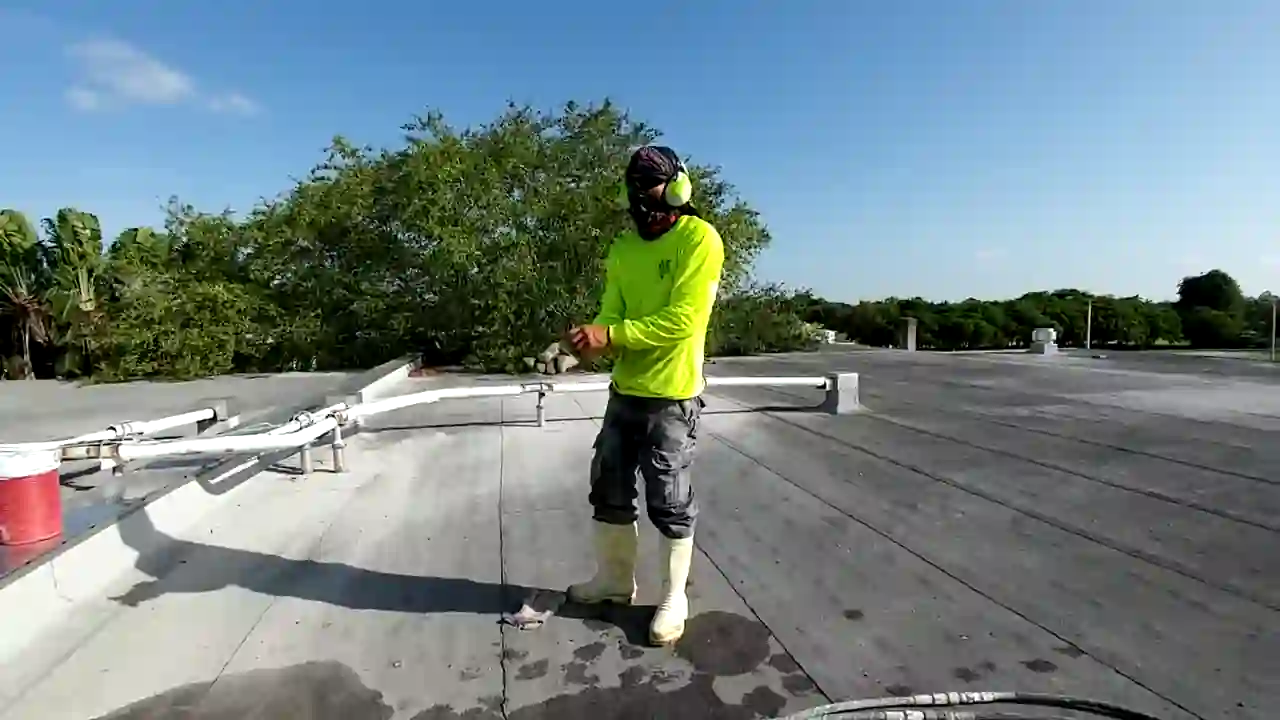
In Miami’s climate, wet cutting has an additional seasonal advantage: during the summer, when concrete surface temperatures can exceed 130 degrees, the blade runs hotter from ambient conditions alone. Wet cutting is essential for maintaining blade life in these conditions. Dry cutting in Miami summers destroys blades at an accelerated rate.
Dry cutting exists for specific applications — primarily where water would create unacceptable conditions (electrical rooms, occupied finished spaces where water damage is a concern) or where portable cutting speed is prioritized over blade life (quick residential cuts, emergency access cuts). Dry cutting requires respiratory protection for the operator and dust isolation for the work area. The blade life penalty is significant — a blade that cuts all day wet may last two hours dry.
Saw cutting cost factors in Miami
- Cut length: The primary variable. Saw cutting cost scales with the linear feet of cutting required.
- Cut depth: Deeper cuts require larger blades, more powerful saws, and potentially multiple passes. A 1-inch control joint cut costs dramatically less per foot than a 6-inch full-depth slab cut.
- Concrete composition: The hardness of the aggregate, the density of the concrete, and the amount of steel reinforcement all affect cutting speed and blade consumption. Miami’s limestone aggregate is favorable for cutting speed compared to harder aggregates used in other regions.
- Access conditions: Open exterior cuts are the most cost-effective. Interior cuts with dust containment, confined-space cuts, and cuts requiring specialized equipment setup (scaffolding, confined-space entry) add labor cost.
- Equipment type: Hand sawing is more expensive per linear foot than flat sawing due to slower cutting speeds and higher operator fatigue. Wall sawing is more expensive than flat sawing due to track setup time and hydraulic power unit requirements.
Saw cutting is the essential first step in almost every concrete modification project. The cut defines the work — its straightness, depth, and accuracy determine the quality of everything that follows. Get the saw cutting right, and the rest of the project builds on a clean, controlled foundation.