Why demolition dust control is a regulatory requirement, not a preference
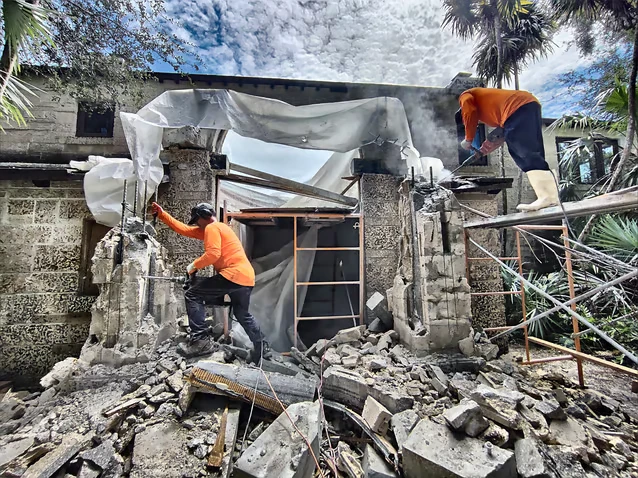
If you have ever watched a demolition without dust control — a building coming down in a cloud of particulate that drifts across the property line, settles on neighboring cars and pool decks, and leaves everyone nearby coughing — you have seen a violation of Miami-Dade County code, OSHA standards, and basic public health principles. Demolition dust control is legally required on every demolition project in Miami-Dade County, and the requirements are specific, enforceable, and increasingly aggressive as the county tightens air quality regulations in response to development density and population growth.
The dust from concrete demolition contains everything in the concrete — crystalline silica (the primary health hazard), cement fines (alkaline and caustic, irritating to skin and mucous membranes), aggregate particles (variable composition depending on the aggregate source), and any contaminants the concrete absorbed over its life — oil, chemicals, biological growth. When this dust becomes airborne without controls, the consequences are immediate and obvious: reduced visibility creating safety hazards, particulate deposition on adjacent properties creating nuisance and potential property damage, and respiratory exposure to everyone in the dust plume. The long-term consequences are less visible but more serious — cumulative silica exposure that causes silicosis in workers, and community exposure that triggers asthma, bronchitis, and other respiratory conditions in nearby residents.
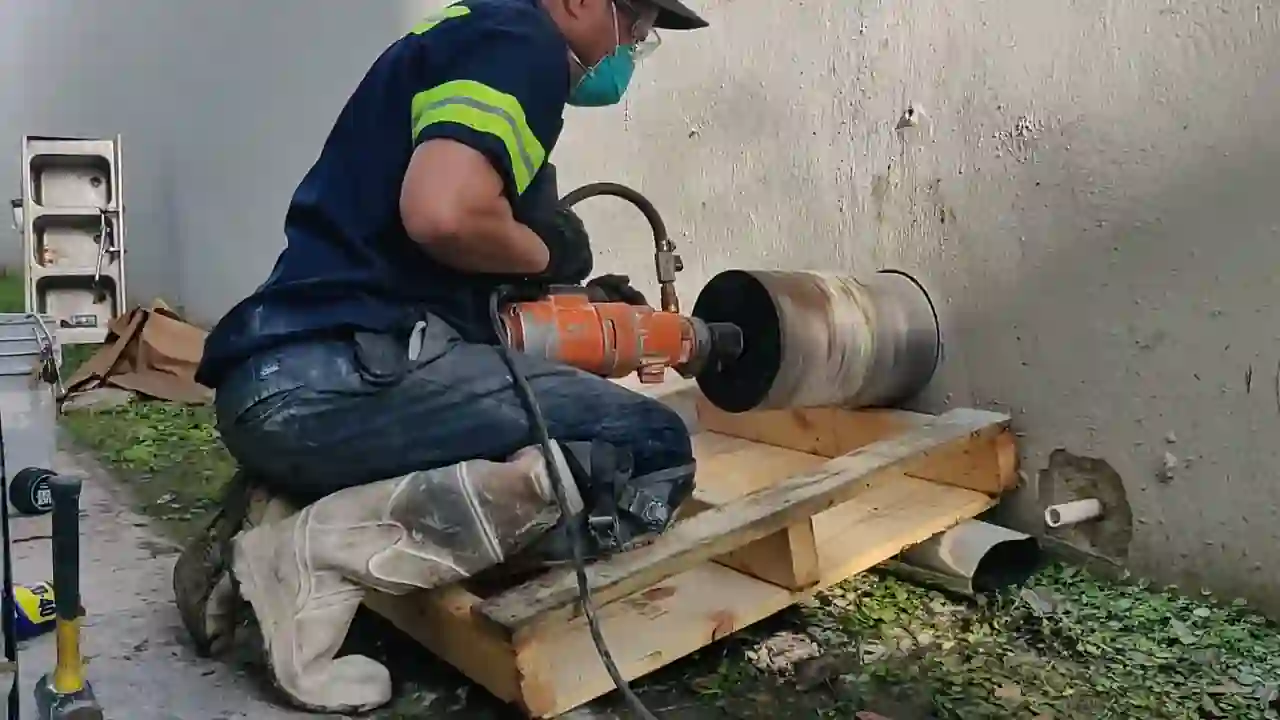
We implement demolition dust control on every project we run in Miami-Dade County — not because code enforcement might show up, but because it is the right way to work. Dust control protects our crew, protects your property, protects your neighbors, and keeps the job moving without interruption from regulatory enforcement. A dust control plan is not an optional add-on. It is as fundamental to the demolition process as the demolition itself.
The regulatory framework for demolition dust control in Miami-Dade
Miami-Dade County regulates demolition dust through multiple overlapping requirements:
- Miami-Dade County Code Chapter 24 (Environmental Protection): Prohibits the emission of visible dust beyond the property line. If a neighbor can see dust crossing the boundary, the site is in violation. Enforcement is complaint-driven, but once a complaint is filed, the inspector’s determination is difficult to challenge.
- Florida Department of Environmental Protection (FDEP): Regulates particulate matter emissions under the Florida Administrative Code. The standard is a limit on particulate matter concentration at the property boundary, and while routine FDEP monitoring of demolition sites is uncommon, violations can result in significant fines and stop-work orders.
- OSHA 29 CFR 1926.1153 (Silica Standard): Sets the permissible exposure limit for respirable crystalline silica at 50 micrograms per cubic meter and requires engineering controls — including wet methods and vacuum dust collection — to reduce worker exposure below this level.
- EPA National Emission Standards for Hazardous Air Pollutants (NESHAP): For demolitions involving asbestos-containing materials, which triggers additional requirements beyond dust control — full asbestos abatement by licensed contractors before demolition begins.
For Miami residential and commercial demolitions, the practical requirements boil down to this: you must prevent visible dust from leaving your property, and you must protect workers from respirable silica exposure through engineering controls. The methods to achieve both are well-established and widely available.
Primary dust control methods for demolition
Water suppression
Water is the most common and most effective demolition dust control method. The principle is simple: water droplets capture dust particles in the air and weigh them down so they fall to the ground instead of dispersing. The execution requires enough water volume and sufficient spray coverage to capture dust throughout the demolition operation.
Equipment for water suppression includes:
- Fire hoses with adjustable nozzles: The simplest approach — one or more workers direct water spray at the demolition point. Effective for small-scale demolition but labor-intensive and inconsistent.
- Misting cannons (dust bosses): Large fans with integrated water misting rings that project a curtain of water droplets across the work area. The mist covers a wide area and can be positioned to create a dust barrier at the property line. Misting cannons are standard equipment on medium and large Miami demolition sites.
- Equipment-mounted spray systems: Excavators and demolition machines can be equipped with water spray nozzles at the attachment point, delivering water directly to the demolition interface. This is the most water-efficient method because the water is applied exactly where dust is generated.
- Pre-wetting: Soaking the structure and debris pile with water before and during demolition. Water penetrates the material and prevents dust from becoming airborne when the material is broken. This is particularly effective for concrete demolition where the dust is generated at the fracture surface.
In Miami, water suppression must be managed carefully to avoid creating a different regulatory problem — runoff. The water used for dust suppression becomes slurry when it contacts concrete dust, and slurry cannot be allowed to enter storm drains or leave the property as surface runoff. This introduces the second component of dust control: containment.
Physical containment and barriers
Physical barriers prevent dust from migrating off the property:
- Wind screening: Mesh fabric or tarp barriers erected around the demolition area reduce wind speed at the dust source, which reduces the distance dust can travel. Screening is particularly important in coastal Miami where wind speeds are consistently higher than inland areas.
- Perimeter containment walls: For larger projects, temporary walls or fencing with dust-proof fabric can enclose the demolition area. This is common on commercial demolition sites adjacent to occupied buildings.
- Interior containment for selective demolition: When demolishing part of an occupied building, plastic sheeting containment with negative air pressure isolates the work area from occupied spaces. Air scrubbers with HEPA filtration run continuously during work hours and for a period after work stops to clear residual airborne dust.
- Covered debris chutes and containers: Debris transfer points — where material moves from the demolition area to a dumpster or truck — are major dust generation points. Chutes are enclosed or shrouded. Dumpsters are covered during transport. Debris piles are kept damp.
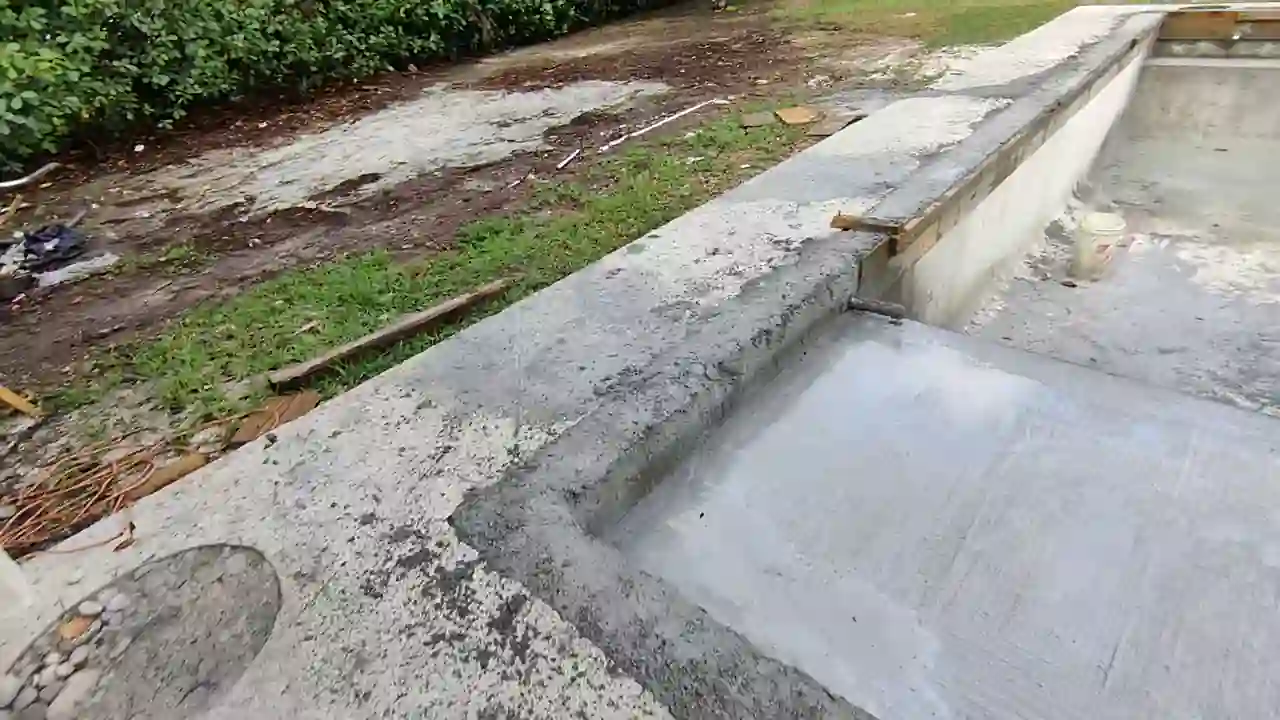
Specialized dust control for concrete cutting within demolition
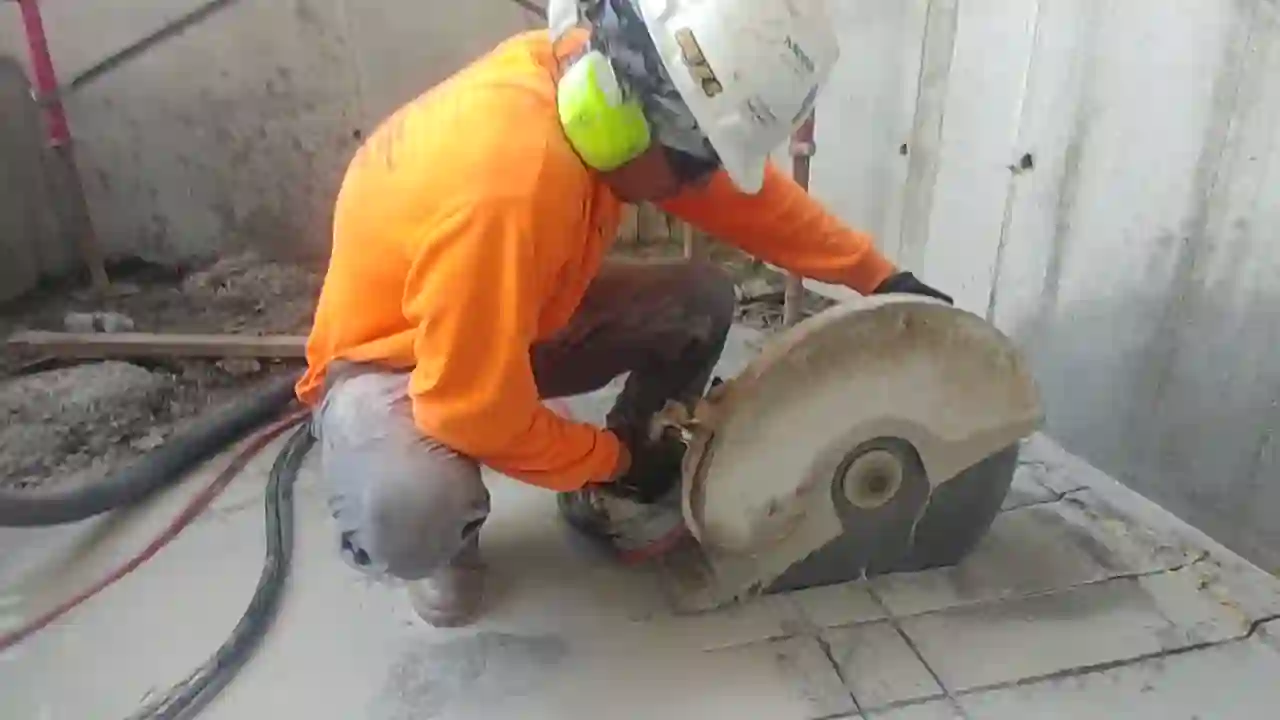
Concrete cutting within a demolition project generates dust differently than structural demolition — the dust is finer (because the diamond blade grinds rather than fractures), more concentrated at the blade, and more respirable (higher fraction of particles in the dangerous sub-10-micron size range). Dust control for concrete cutting within demolition includes:
- Wet cutting: Continuous water flow at the blade-material interface captures dust at the source. This is standard for all structural concrete cutting and should be used for any cut deeper than two inches.
- Vacuum dust extraction: For dry cutting applications where water would create unacceptable slurry management problems or electrical hazards, HEPA vacuum systems capture dust at the blade shroud. The vacuum must have sufficient airflow and filtration efficiency to capture the volume of dust generated by the specific cutting operation.
- Slurry vacuum systems: For wet cutting, the slurry — water containing suspended concrete dust — must be collected before it migrates. Wet vacuums with sufficient capacity and filtration capture slurry at the cut site and contain it for proper disposal.
Monitoring and documentation
Effective demolition dust control includes monitoring to verify the controls are working:
- Visual monitoring: A designated person observes the demolition operation for visible dust migration and adjusts controls immediately if dust crosses the work area boundary. This is the minimum monitoring standard for any demolition project.
- Real-time particulate monitoring: Handheld or stationary particulate monitors measure airborne dust concentrations at the property boundary and at worker breathing zones. These devices provide immediate feedback on control effectiveness and create a data record for regulatory compliance.
- Daily logs: Documenting wind direction and speed, water application rates, any visible dust observations, and any corrective actions taken. These logs are the first thing a code enforcement inspector will request if there is a complaint.
What to ask a demolition contractor about dust control
- “Show me your written dust control plan for this project.” A professional contractor has a site-specific plan. A vague verbal assurance is not a plan.
- “How do you prevent dust from crossing the property line?” The answer should be specific to wind conditions, adjacent properties, and the type of demolition.
- “What water source and volume do you need for dust suppression?” They should have calculated this. A contractor who assumes a garden hose is sufficient for a multi-day demolition does not understand dust control at scale.
- “How do you handle slurry from wet cutting and wet demolition?” They should describe collection and disposal methods that comply with Miami-Dade stormwater regulations.
Demolition dust control is the single most visible indicator of a contractor’s professionalism. A cloud of dust crossing your neighbor’s fence is visible to everyone. A clean demolition with no visible dust migration is the standard. Require it.