What a core drill service actually does and why it is essential on every concrete project
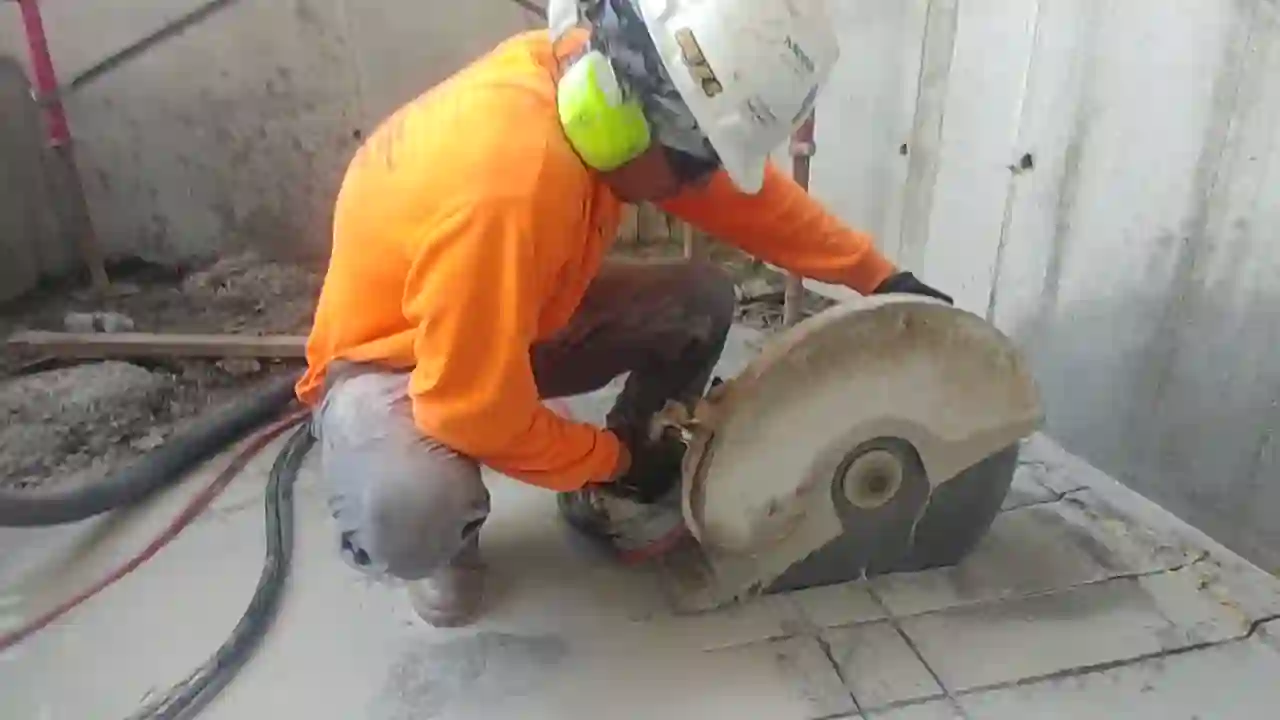
A core drill service creates circular penetrations through concrete — walls, floors, ceilings, foundations — for the mechanical, electrical, and plumbing (MEP) systems that every building requires. Every pipe that passes through a concrete wall, every electrical conduit that crosses a slab, every HVAC duct that penetrates a floor — each of these openings is created by a core drill. Without core drilling, concrete construction would require boxing out every penetration before pouring, a method that is less precise, less adaptable, and impossible for existing structures being modified. Core drilling is what makes concrete buildings adaptable — it allows new penetrations to be created after the concrete has set, anywhere the design requires.
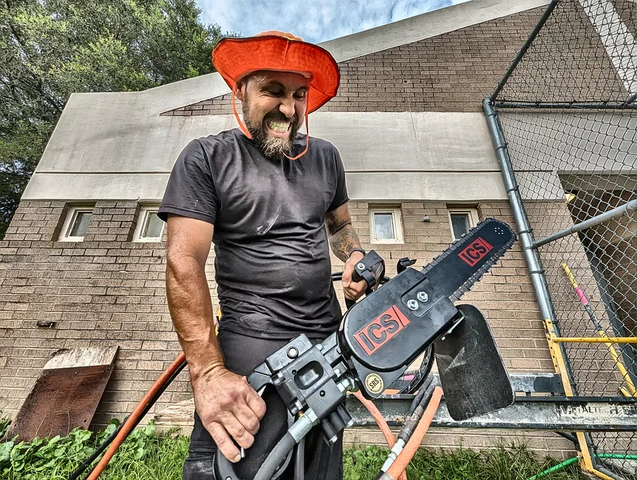
The core drill itself is a specialized tool that operates on the same diamond-cutting principle as concrete saws but produces a circular hole rather than a linear cut. The core bit is a hollow steel cylinder with diamond segments bonded to the cutting end. The drill rotates the bit while applying feed pressure, and the diamond segments grind an annular cut through the concrete. The center core — the cylinder of concrete inside the bit — remains intact and is extracted when the bit is removed. The result is a perfectly circular hole with clean, straight walls, ready for the pipe, conduit, or duct that will pass through it.
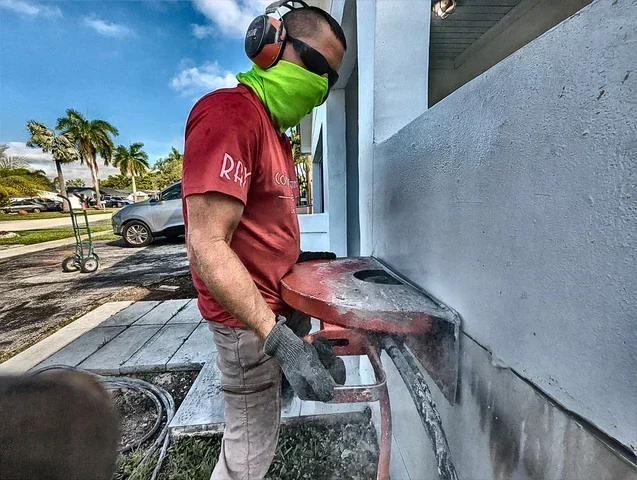
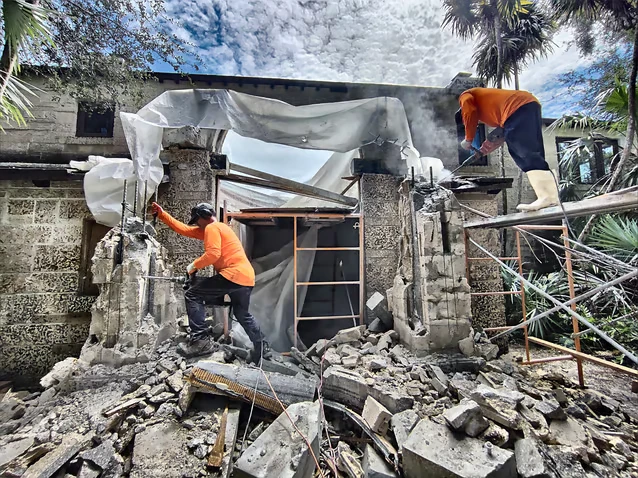
We provide core drill service across Miami-Dade County for projects ranging from single-family home renovations to commercial high-rise MEP rough-in. The core drill is one of the most frequently used tools in our operation because nearly every job requires it — a trench for plumbing also needs a core through the foundation wall for the drain line, a wall opening for a new door also needs cores for the electrical that feeds the room, a pool demolition also needs cores through the pool shell for drainage holes.
Core drill sizes, applications, and capabilities
Core drills can produce holes from less than one inch in diameter to over 60 inches, though typical construction applications fall in the 2-inch to 12-inch range. The size determines the application:
- 1-inch to 2-inch cores: Electrical conduit penetrations, small plumbing lines, anchor bolt holes, and dowel holes for rebar connections between old and new concrete. These small cores are often drilled with handheld core drills that clamp or vacuum-anchor to the concrete surface.
- 3-inch to 4-inch cores: Plumbing drain lines (1-1/2 inch and 2-inch pipe), larger electrical conduits, and mechanical system penetrations. These are the most common core sizes in residential construction.
- 5-inch to 6-inch cores: Larger plumbing lines (3-4 inch pipe), HVAC refrigerant line sets, and communication cable bundles.
- 8-inch to 12-inch cores: HVAC duct penetrations, large plumbing stacks, and mechanical chase openings. These larger cores require rig-mounted drills with substantial anchoring because the torque and feed pressure are beyond what a handheld drill can manage.
- 14-inch to 24-inch cores: Large duct openings, mechanical shaft penetrations, and specialty industrial applications. These require the largest core drill rigs with hydraulic power units and engineered anchoring systems.
How a professional core drill service operates
The core drilling process follows a disciplined sequence that ensures accurate hole placement, protects embedded hazards, and contains the water and slurry generated during drilling:
Layout and marking
The center point of each core hole is marked on the concrete surface based on the project drawings or the site measurement. For MEP rough-in, the layout must account for pipe diameter (the core hole is typically 1-2 inches larger than the pipe to allow for the pipe sleeve, insulation, or movement), pipe slope (drain lines require a consistent slope, so the entry and exit points on opposite sides of a wall or floor are at different elevations), and clearance from other penetrations and reinforcement.
GPR scanning
Before drilling, the area around each core location is scanned with ground-penetrating radar. The scan identifies rebar, post-tension cables, electrical conduits, and other embedded items that the core bit should avoid. If a core location conflicts with an embedded item that cannot be cut — a PT cable, a live conduit — the location is shifted. The shift is documented and communicated to the project engineer or architect if it affects MEP routing.
Drill setup and anchoring
The core drill is positioned at the marked center point. Handheld drills for small cores may be held manually or clamped. Larger rig-mounted drills are anchored to the concrete with expansion anchors, drop-in anchors, or vacuum pads depending on the surface condition and the drilling orientation. For horizontal drilling through walls, the drill is typically mounted on a stand. For overhead drilling, a column stand or boom-mounted rig supports the drill against gravity.
Wet drilling with water supply
The core bit requires a continuous water supply at the cutting face. Water cools the diamond segments (the friction of grinding through concrete generates significant heat at the narrow contact area of the core bit wall), suppresses dust, and flushes the cutting debris (swarf) out of the kerf. Without adequate water, the diamond segments overheat, the metal bond glazes, and the bit stops cutting. The water supply is connected to the drill spindle, which routes it through the center of the core bit to the cutting face.
Drilling and core extraction
The drill advances through the concrete at a controlled rate — typically 1-3 inches per minute depending on concrete strength, aggregate hardness, and rebar encounters. The operator monitors the feed pressure, water flow, and the sound of the bit (a change in pitch often signals a rebar encounter or a change in concrete composition). When the bit breaks through the far side of the concrete, the feed pressure drops. The bit is retracted, and the concrete core — the cylinder of concrete inside the bit — is extracted. For through-wall cores, the core falls out the far side and is collected. For blind cores (holes that do not go all the way through), the core is broken off at the bottom of the hole and extracted with core removal tongs.
Slurry containment and cleanup
The water-and-concrete-dust slurry generated during drilling is contained with vacuum systems, berms, or collection trays depending on the drilling orientation. For overhead drilling, a vacuum system captures slurry at the bit. For wall drilling, a tray positioned below the drill collects the slurry as it runs down the wall. For floor drilling, a berm around the drill area contains the slurry until it can be vacuumed. The slurry must be disposed of properly — it cannot be washed into storm drains or into the ground. In Miami-Dade, slurry disposal must comply with county stormwater regulations.
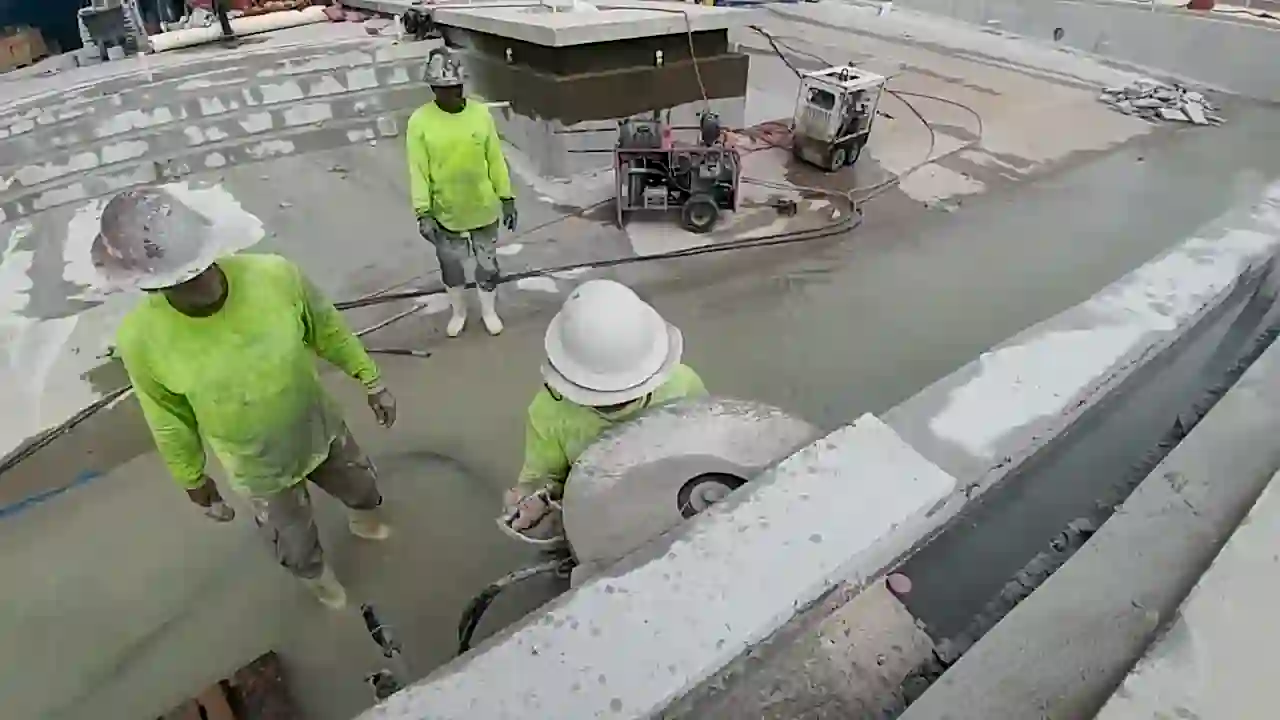
Core drill service cost factors
- Hole diameter: Larger core bits are more expensive to purchase and operate. A 10-inch core bit costs significantly more than a 3-inch bit and consumes more diamond segments per hole.
- Concrete thickness: A core through a 4-inch residential slab is faster and uses less bit life than a core through a 12-inch commercial foundation wall. Drilling time per inch is not constant — the deeper the hole, the slower the effective drilling rate because swarf removal becomes less efficient and the bit has more surface area in contact with the concrete.
- Rebar encounters: Core bits can cut through rebar, but each rebar encounter slows the drilling rate and increases diamond consumption. A core hole that passes through six bars costs more than a core through unreinforced concrete of the same thickness.
- Drilling orientation: Vertical down-drilling uses gravity to assist feed pressure and swarf removal — fastest and most cost-effective. Horizontal drilling is more labor-intensive. Overhead drilling is the most difficult and expensive orientation.
- Access conditions: A core in an open, accessible area is straightforward. A core at the back of a mechanical closet, in a ceiling with 18 inches of clearance, or in a location requiring scaffolding adds setup time and labor cost.
- Number of holes: Per-hole cost decreases with quantity — the mobilization, setup, and cleanup costs are amortized across multiple holes on the same project.
Questions to ask when hiring a core drill service
- “Do you scan before drilling?” GPR scanning should be standard, not optional. A contractor who drills without scanning is gambling on what is inside the concrete.
- “What core bit type do you use for reinforced concrete?” The answer should reference diamond bits rated for steel. Generic bits will struggle or fail when they hit rebar.
- “How do you handle slurry containment and disposal?” They should describe specific methods (vacuum collection, containment trays) and confirm that slurry is disposed of in compliance with Miami-Dade regulations.
- “How do you ensure hole placement accuracy?” They should describe a layout and verification process — not just marking and drilling. For MEP rough-in, a hole placed two inches from the specified location can mean a pipe that does not align, requiring costly rework.
- “Can you core through my specific concrete thickness with a single setup?” Some core drill rigs have limited stroke or barrel length and require a barrel extension or two-sided drilling for thick concrete. The contractor should confirm their equipment can handle your thickness in a single setup.
A professional core drill service produces holes that are precisely located, cleanly cut, and safely drilled. The value is not just in the hole — it is in the hole being right the first time, with no damage to surrounding concrete, no conflicts with embedded hazards, and no cleanup surprises after the drill rig leaves.