Why professional concrete cutting is a distinct specialty, not a subset of general construction
There is a fundamental difference between a contractor who owns a concrete saw and a professional concrete cutting contractor. The difference is not the tool — any general contractor can rent a concrete saw from a equipment yard. The difference is everything that happens before the saw starts and everything that the saw operator knows about what is happening during the cut. A professional concrete cutting contractor brings specialized equipment, specialized knowledge, and a specialized process that together produce results a general contractor with a rental saw cannot replicate.
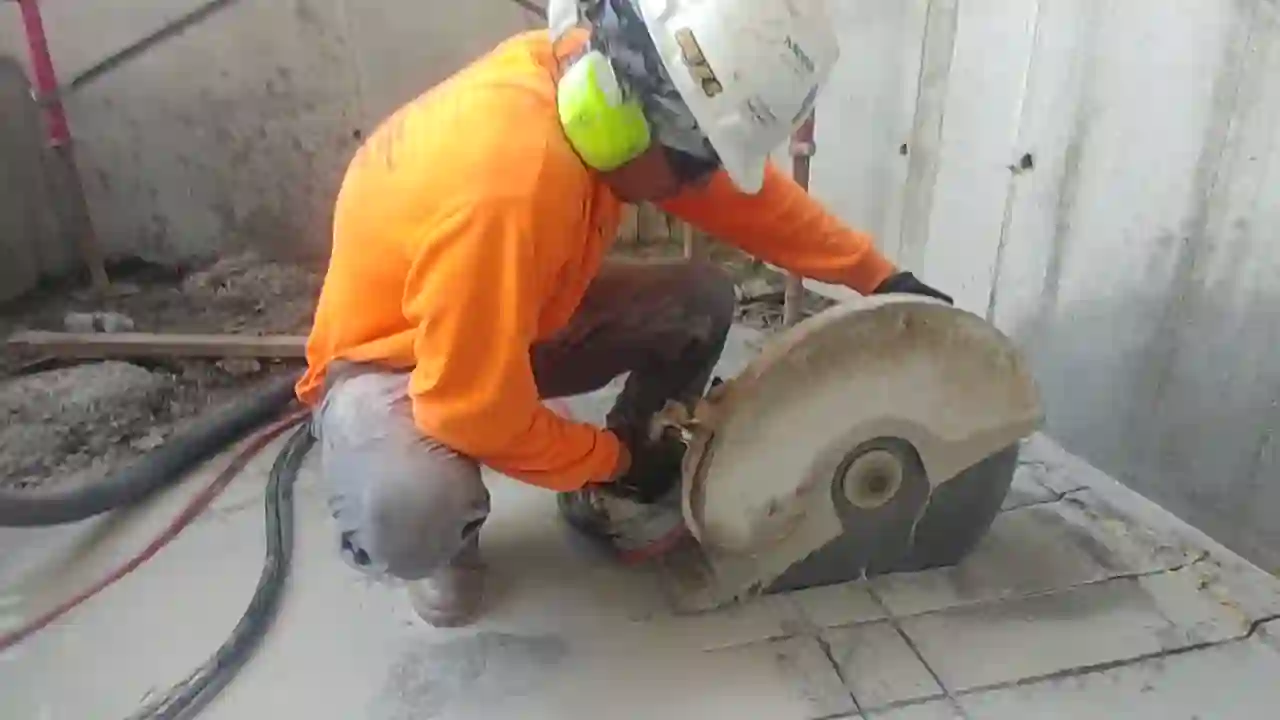
Consider what happens when a general contractor needs to cut a door opening in a concrete wall. They rent a concrete saw from the equipment yard — typically a handheld cut-off saw because it is the most available and least expensive option. They mark the opening dimensions with a Sharpie and a level. They start cutting. And immediately they encounter problems the rental-yard clerk did not mention: the blade is not rated for rebar and skates when it hits the steel mat, the saw is underpowered for the wall thickness and bogs down, the water supply is a garden hose that delivers inconsistent flow, the cut line wanders because a hand saw cannot produce a straight cut over a four-foot distance, and the two hours they budgeted for the cut becomes an entire day — with a ragged cut that needs extensive cleanup before a door frame can be installed.
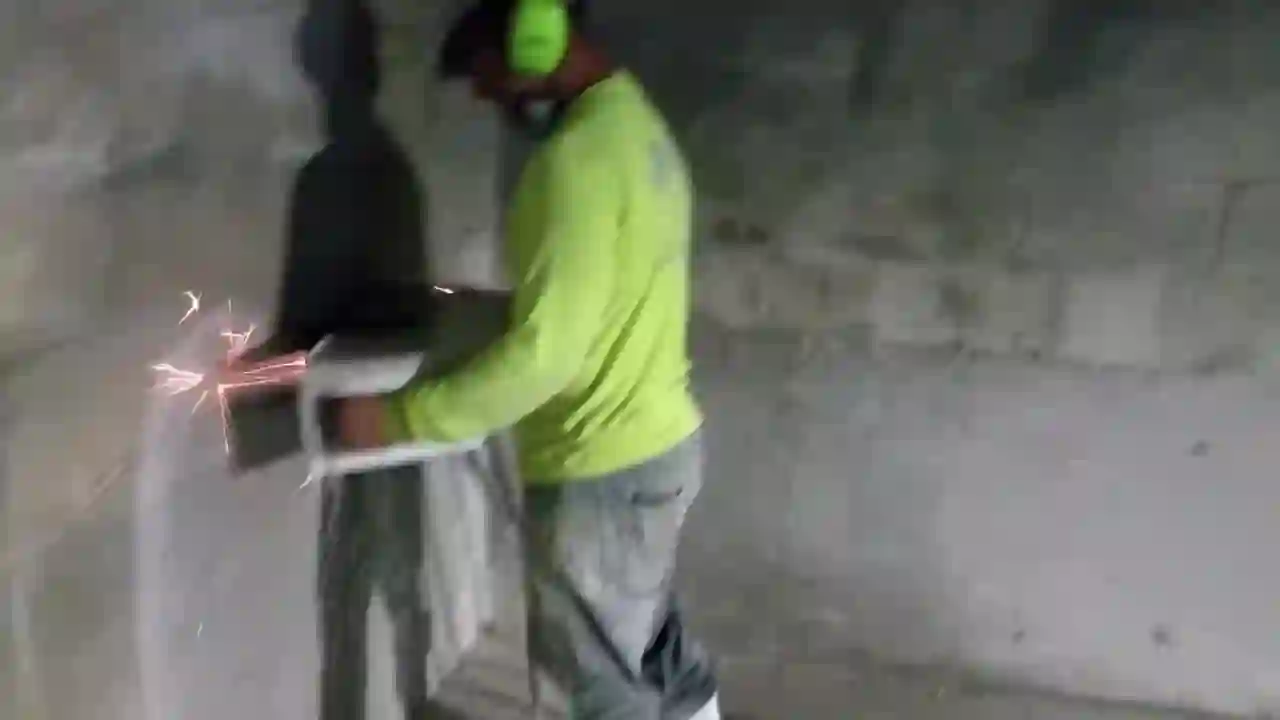
Now consider what happens when a professional concrete cutting contractor does the same job. They arrive with a GPR scanner and scan the wall — identifying rebar spacing, detecting any post-tension cables, locating electrical conduits. They mount a hydraulic wall saw track to the wall, precisely aligned to the opening dimensions. They select a diamond blade with the correct bond hardness and diamond concentration for Miami limestone aggregate and the rebar density shown on the GPR scan. They connect the hydraulic power unit and the water supply — consistent flow at the correct pressure. The wall saw rides the track and produces a dead-straight cut at a consistent feed rate. The cut is complete in less than two hours, edges clean, corners finished, ready for door frame installation. That is the difference between equipment and expertise.
What professional concrete cutting contractors have that others do not
GPR scanning capability
Ground-penetrating radar is non-negotiable for professional concrete cutting. Before any blade touches concrete, the cutting area is scanned to identify rebar, post-tension cables, electrical conduits, plumbing lines, and voids. The scan report becomes the cutting plan — showing exactly where the blade can cut and where it must stop or adjust. Professional contractors either own GPR equipment and have trained operators on staff, or have established relationships with GPR service providers who respond on the contractor’s schedule. A contractor who cuts without scanning is not a professional concrete cutter — they are gambling with your structure.
Diamond blade expertise
Professional concrete cutters understand blade technology at a level that goes far beyond matching blade diameter to saw size. They understand bond hardness — the rate at which the metal matrix holding the diamonds wears — and how to match it to the aggregate type, concrete hardness, and rebar content of the specific concrete being cut. They understand diamond concentration, segment geometry, and the effect of blade RPM on cutting efficiency and blade life. They carry multiple blade types on every job and select the optimal blade for each specific cut based on material conditions confirmed by GPR scanning. A rental saw comes with whatever blade the yard had on hand. Professional cutting comes with the right blade for the job.
Hydraulic power for consistent cutting
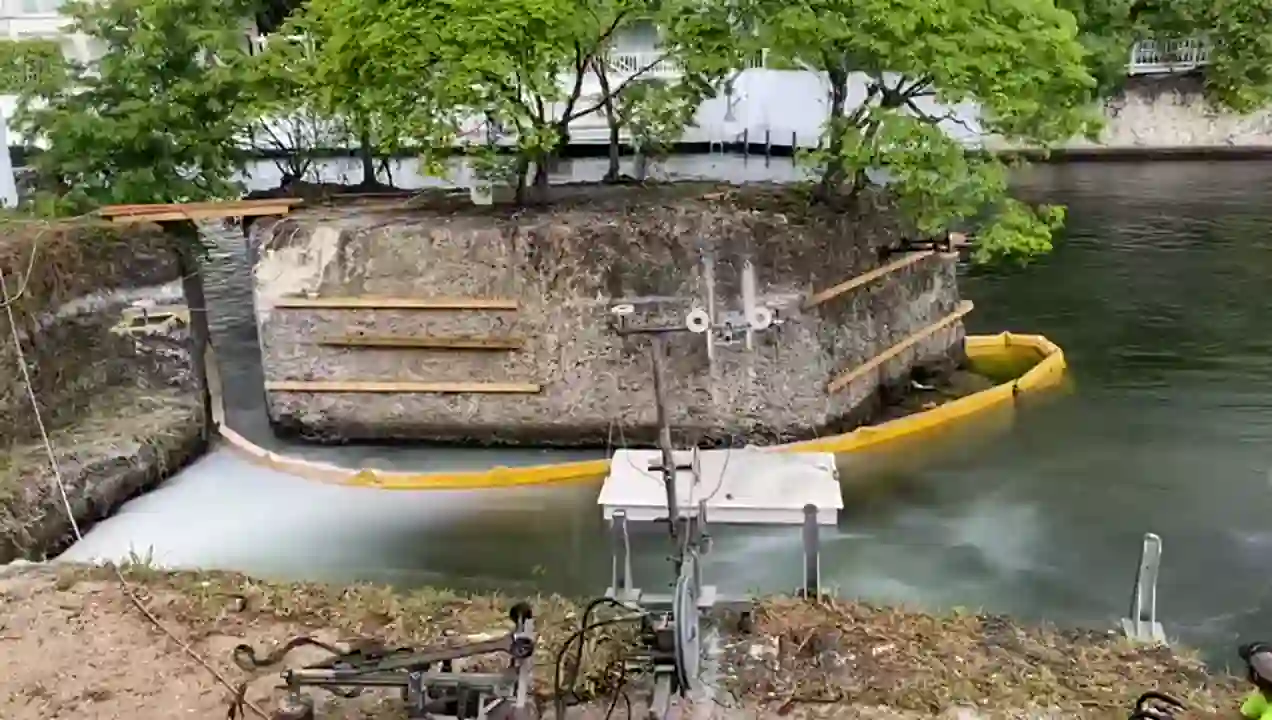
Professional wall sawing and large-scale slab sawing use hydraulic power units — standalone diesel, gas, or electric power packs that drive hydraulic motors on the saw heads. Hydraulic power provides consistent torque regardless of load variation — when the blade hits rebar, the hydraulic motor compensates instantly and maintains cutting RPM. Electric and gas saws bog down under load spikes, slowing the cut and causing uneven blade wear. Hydraulic power is heavier, more expensive, and more complex to set up than electric or gas — which is why rental yards do not stock hydraulic saws and general contractors do not know how to set them up. Professional concrete cutting contractors invest in hydraulic equipment because it is the right tool for the work.
Slurry management systems
Wet cutting generates slurry — water mixed with concrete dust — that must be contained and disposed of properly. Professional contractors arrive with vacuum systems, containment berms, collection trays, and floor protection to manage slurry throughout the job. They know that Miami-Dade stormwater regulations prohibit slurry discharge into drains, and they have disposal plans that comply with these regulations. A general contractor with a rental saw typically does not have a slurry plan — and the slurry that washes into the storm drain is a code violation waiting to be discovered.
Insurance and licensing specific to the trade
Professional concrete cutting contractors carry general liability insurance with limits appropriate to the risk — typically one million dollars or more per occurrence, with higher aggregate limits. They carry workers compensation insurance. They may carry pollution liability insurance for slurry-related claims. Their Florida contractor license is appropriate to the scope of work. And they can provide certificates of all of this before the first saw arrives on site. When you hire a general contractor who is cutting concrete as an incidental part of a larger project, verify that their insurance covers concrete cutting specifically — not all general liability policies do.
What professional concrete cutting costs vs the alternatives
Professional concrete cutting typically costs more per hour than a general contractor performing the same task. The question is whether the higher hourly rate results in a higher total cost. In most cases, it does not — because the professional completes the work faster, with fewer problems, and without the collateral damage that creates additional costs.
Consider these cost comparisons:
- Wall opening for a door: A professional wall sawing contractor completes the cut in 2-3 hours at a higher hourly rate. A general contractor with a rental hand saw struggles for 6-8 hours at a lower hourly rate. The professional’s total cost is typically equal to or less than the general contractor’s, and the cut quality is dramatically better — straight edges, clean corners, no cleanup grinding required.
- Slab trench for plumbing: A professional flat sawing contractor cuts both edges of the trench in under an hour, then removes the center section cleanly. A general contractor jackhammers the trench — a process that takes several hours, creates a jagged trench with micro-fractures radiating into the surrounding slab, and leaves a rough edge that complicates the concrete patch.
- Core drilling for MEP penetrations: A professional core drill service drills each hole in minutes with a diamond core bit, producing a clean, circular penetration sized correctly for the pipe or conduit. A general contractor attempts to create the penetration by drilling a ring of small holes and knocking out the center — a method that produces an irregular hole that must be oversized and patched around the penetrating element.
The value proposition of professional concrete cutting is not a lower price on the line item. It is a lower total cost of the project because the cutting is right the first time, the surrounding structure is undamaged, and the work is done on the schedule promised. The most expensive concrete cutting is the cutting that has to be redone, or the cutting that damages something else that then needs to be fixed. Professional cutting eliminates both possibilities.
Questions to identify a professional concrete cutting contractor
- “Do you own your saws or do you rent them?” Owning equipment is not automatically a mark of quality, but a contractor who owns and maintains a fleet of diamond saws has made a capital investment in concrete cutting as their primary business. A contractor who rents a saw for each job is treating cutting as an incidental activity.
- “What GPR equipment do you use for pre-cut scanning?” They should name a specific GPR system. If they do not know what GPR stands for, they are not a concrete cutting contractor.
- “Can you provide references for similar concrete cutting projects in Miami-Dade County?” Professional contractors can produce references for the specific type of cutting you need. A general contractor’s references are for general construction, not for cutting.
- “How do you handle slurry containment and disposal?” They should have a specific answer referencing Miami-Dade regulations. Vague answers mean they have not thought about it, which means they will figure it out on your property.
Professional concrete cutting is an investment in getting the job done right. The premium, if there is one, is small compared to the cost of doing it wrong. Hire a specialist.