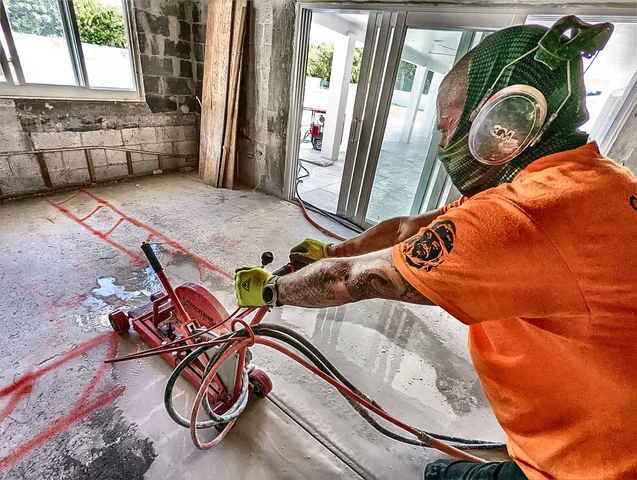
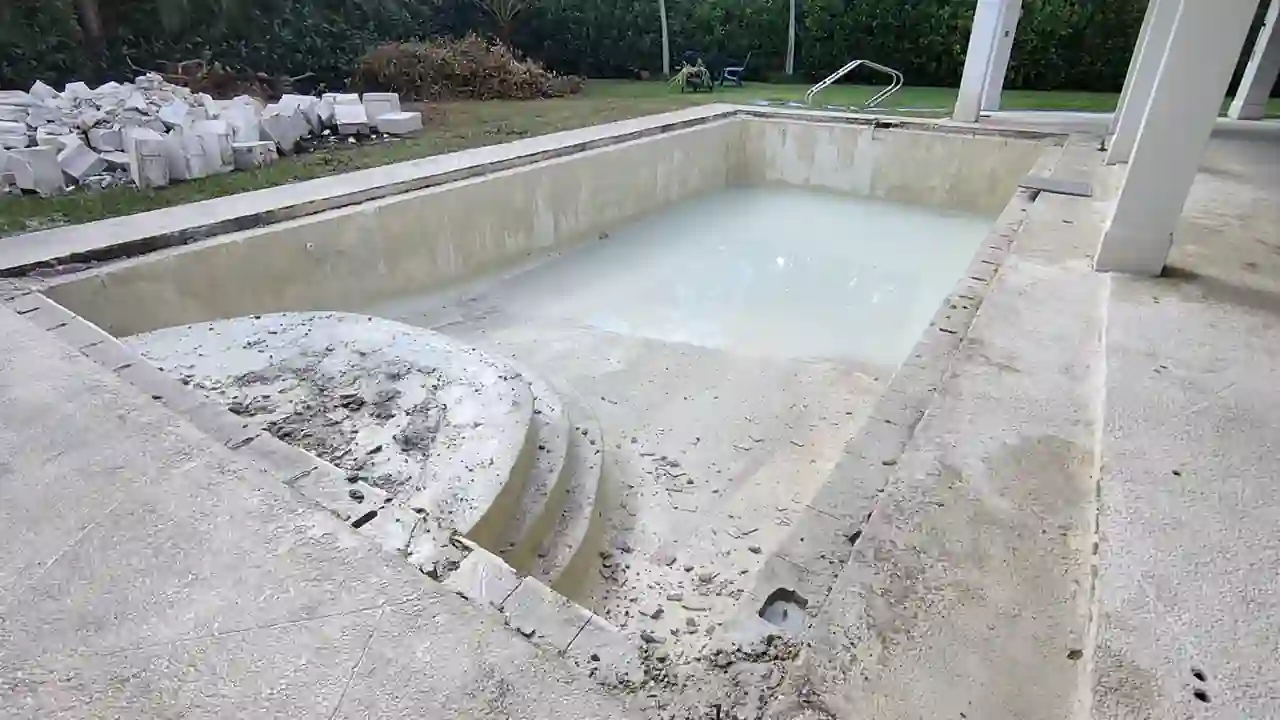
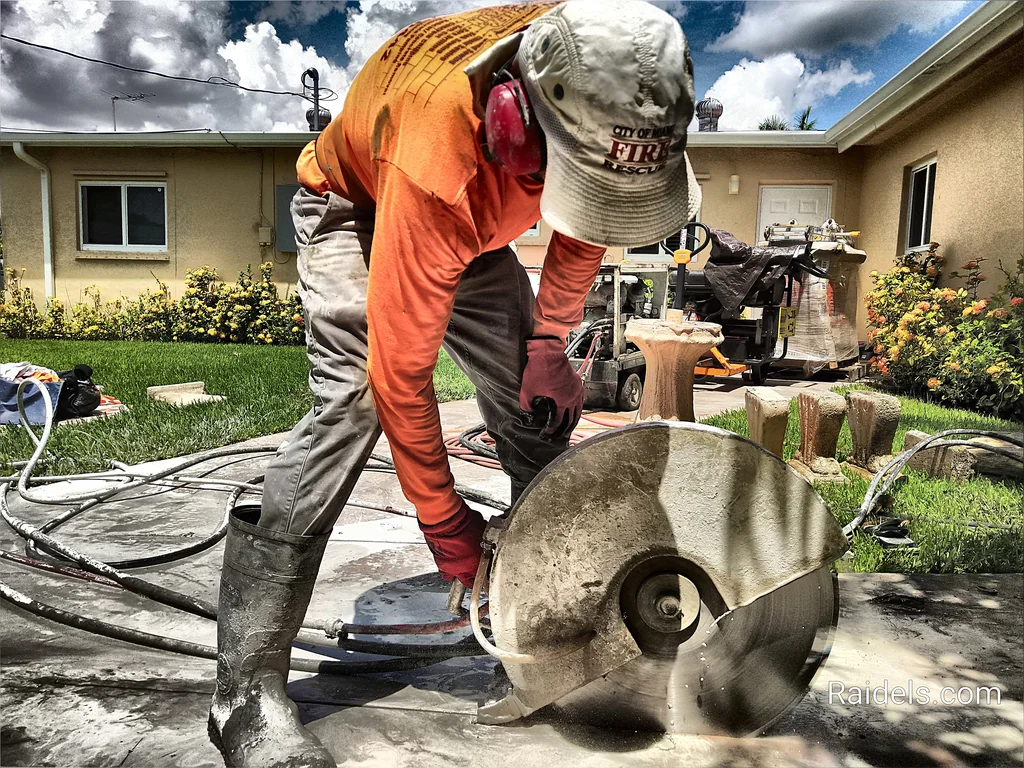
Chipping of concrete is surface modification — removing what is damaged or unwanted while preserving what is sound
The phrase chipping of concrete describes the controlled removal of concrete from a surface, edge, or element using impact tools. It is distinct from breaking concrete (which reduces concrete to rubble for disposal) and from cutting concrete (which creates clean separation lines with diamond blades). Chipping occupies the space between — it modifies existing concrete surfaces and edges, removing material that is damaged, irregular, or in the way, while leaving the surrounding concrete intact and ready for its next use.
We perform concrete chipping as part of larger cutting and demolition projects across Miami-Dade County. Chipping is rarely the main event — it is the supporting work that makes the main event possible. After a wall opening is cut, chipping squares the corners. After a slab section is removed, chipping cleans the exposed edge. Before a concrete repair, chipping removes the damaged material. It is the detail work of concrete modification, and the difference between professional chipping and amateur chipping is visible in every square inch of the finished surface.
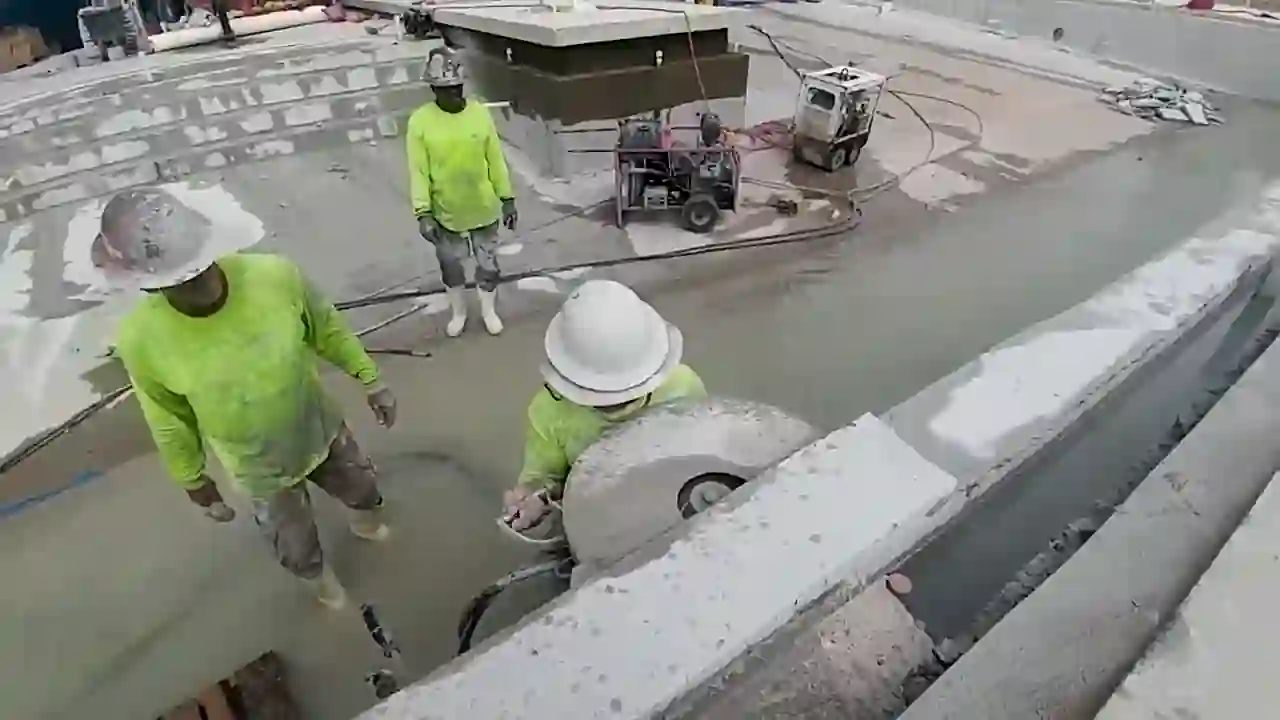
The main applications of concrete chipping
Surface removal for spall repair
When concrete spalls — when the surface layer separates from the body of the concrete — the damaged material must be removed before repair. Chipping of concrete for spall repair removes the loose, cracked, and delaminated concrete until sound concrete is reached. The repair area must extend beyond the visible damage because concrete adjacent to a spall is often micro-cracked even if it looks intact.
In Miami, rebar corrosion is the primary cause of concrete spalling. Salt from coastal air, pool chemicals, and deicing salts (rare in Miami but present on some commercial sites) penetrates the concrete and corrodes the rebar. The corrosion product (rust) occupies more volume than the original steel, creating internal pressure that spalls the concrete cover. Chipping for corrosion repair must expose the corroded rebar along its entire length within the repair area so the rebar can be cleaned and coated before the patch concrete is placed.
Surface preparation for overlays and coatings
When new concrete, epoxy, or coating is applied to existing concrete, the existing surface must be prepared to receive the new material. Chipping — specifically scaling chipping with multi-head tools — removes surface contaminants (dirt, oil, curing compounds) and creates a rough profile that the new material mechanically bonds to. The required surface profile is specified by the overlay or coating manufacturer and achieved through chipping depth and tool selection.
In Miami, surface preparation chipping is common before epoxy floor coatings in garages and commercial spaces, before self-leveling underlayment for new flooring, and before thin concrete overlays on deteriorated slabs. Concrete surface preparation services determine the right chipping method for the specified surface profile.
Edge finishing after cutting
Saw-cut edges, while straight, are not perfectly smooth. For architectural applications — exposed concrete edges, decorative joints, visible opening perimeters — chipping smooths the cut face to a uniform appearance. This is finish chipping done with hand chisels and light electric hammers, removing small amounts of material to eliminate saw marks and produce a consistent edge profile.
Leveling and high-spot removal
Concrete slabs are not perfectly flat. Form deflection, differential settlement, and finishing variations create high spots. When flooring is installed over a slab — tile, hardwood, vinyl — those high spots must be removed or the flooring will not lay flat. Chipping knocks down high spots faster than grinding for small, isolated areas. For large areas, grinding is more efficient. For small high spots (less than a few square feet), chipping is the faster method.
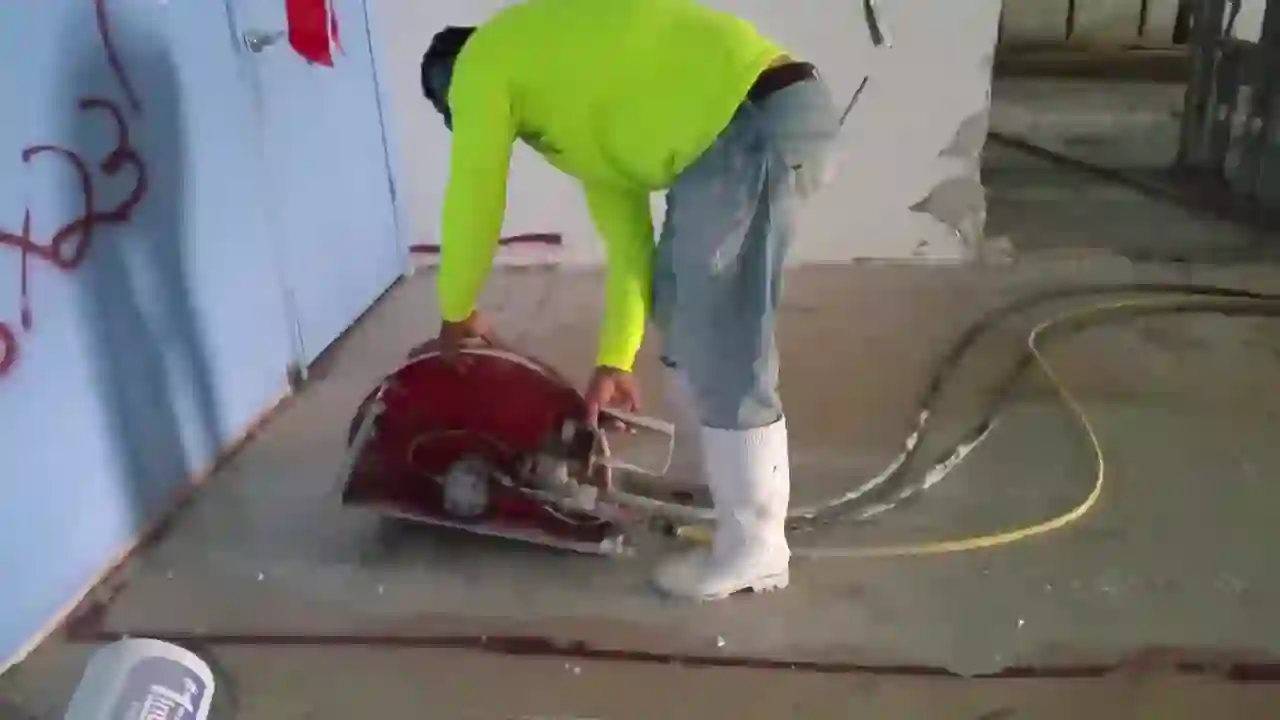
Chipping techniques — controlled removal at the surface level
Shallow chipping — surface layer removal
Shallow chipping removes the top 1/8 to 1/2 inch of concrete. The chisel angle is shallow — about 20 to 30 degrees from the surface — and the impact energy is directed almost parallel to the surface. The chisel skims the surface, removing thin layers without penetrating deep into the slab. Shallow chipping is used for coating removal, surface profiling for overlays, and high-spot reduction.
Medium-depth chipping — spall and damage removal
Medium-depth chipping removes 1/2 to 2 inches of concrete. The chisel angle is steeper — about 45 degrees — to penetrate deeper into the concrete. This is the most common chipping depth for spall repair, where the damaged concrete must be removed until sound concrete is reached. The operator adjusts depth continuously based on the concrete condition — going deeper where the damage extends further, staying shallower where the concrete is sound.
Deep chipping — edge and corner modification
Deep chipping removes 2 inches or more of concrete, typically at edges and corners. The chisel angle is steep — 60 degrees or more — to drive deep into the concrete. Deep chipping is used for creating recesses, modifying slab edges, and removing concrete at corners where a saw could not reach. Professional demolition and chipping services handle deep material removal with the right tools for the depth and concrete conditions.
Miami considerations for chipping of concrete
- Limestone aggregate: Miami concrete’s limestone aggregate is softer than granite aggregate. Chipping is faster in Miami concrete but the concrete is more susceptible to over-chipping — the chisel penetrates more easily, and the operator must control depth carefully.
- Post-tension slabs: Chipping in PT slabs must avoid tendons. GPR scanning identifies tendon locations, and the chipping depth is carefully controlled to avoid damaging tendon sheathing. A chipped tendon sheath that exposes the strand to moisture will eventually corrode and fail.
- Tile-on-slab: Most Miami homes have tile directly on the slab. Chipping the slab surface requires tile removal first. Vibration from chipping can crack adjacent tile if the area is not first isolated with saw cuts.
- Indoor chipping and dust: Dry chipping indoors produces silica dust. Wet chipping reduces dust but creates slurry. The work area should be contained, and dust or slurry should be managed per OSHA and Miami-Dade requirements.
Chipping of concrete — the quality indicators
A professional concrete chipping job is characterized by:
- Clean edges: The transition from chipped area to unchipped area is crisp, not ragged.
- Controlled depth: The chipping depth is consistent across the work area, not variable with deep gouges.
- No collateral damage: Concrete outside the chipping area is uncracked and undisturbed.
- Sound base concrete: In repair chipping, all damaged material is removed, leaving only sound concrete for the repair to bond to.
- Proper surface profile: For overlay preparation, the surface profile meets the specified standard for the overlay material.
- Clean work area: Debris and dust are contained, collected, and properly disposed of.
Chipping of concrete is not the glamorous part of concrete modification, but it is the part that determines whether a repair bonds, whether an overlay adheres, and whether a finished edge looks professional. The right chipping technique, the right tool for the depth and area, and the right operator skill — these are what turn a rough concrete surface into a surface ready for what comes next.