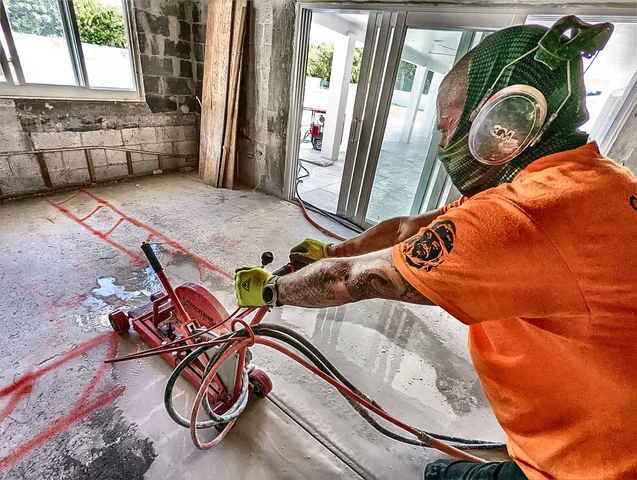
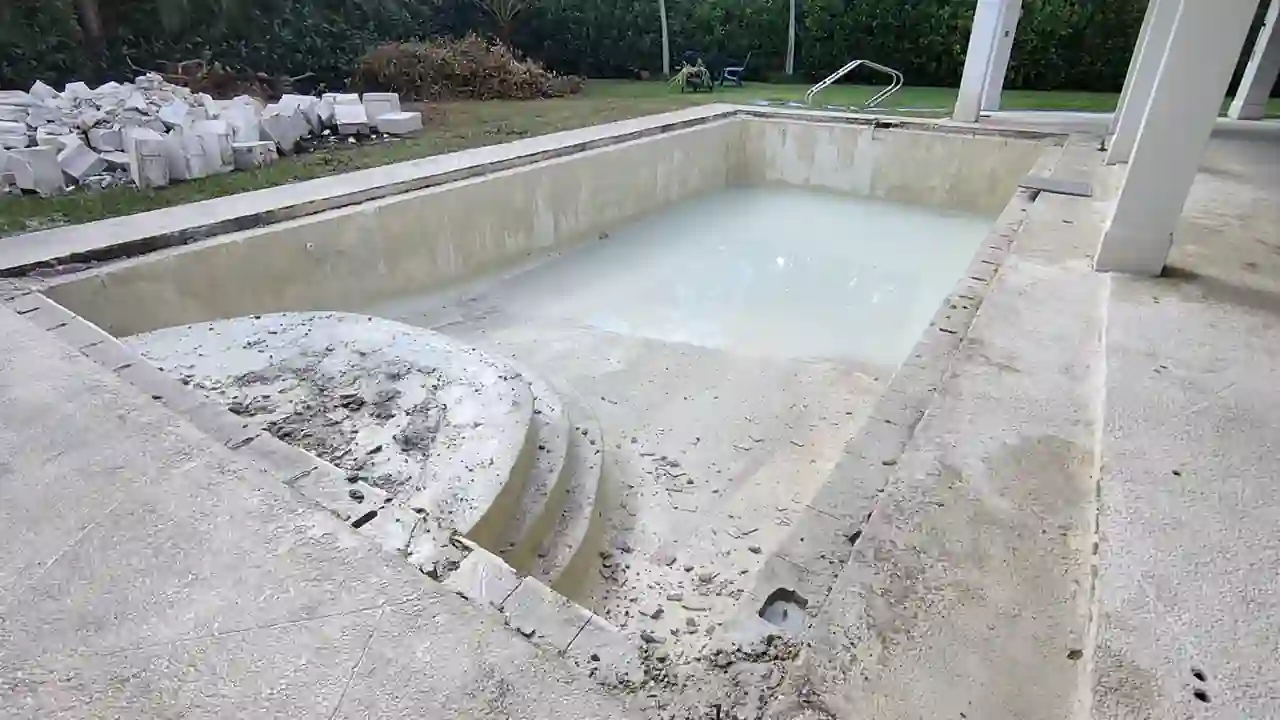
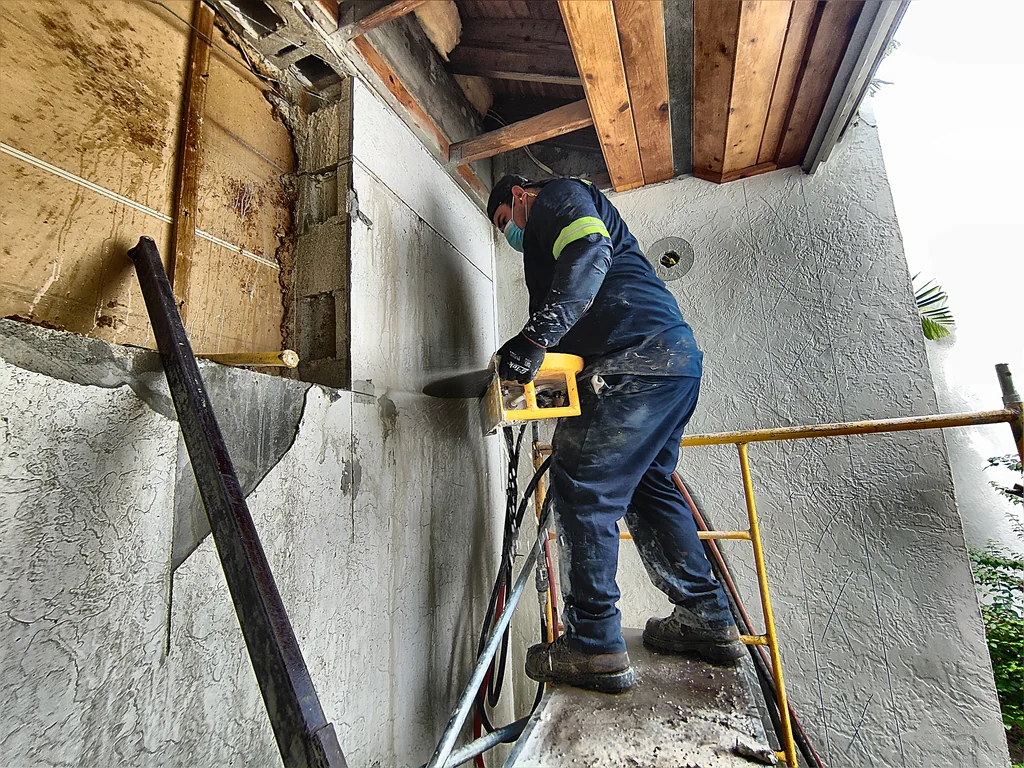
Chipping construction is the precision work that happens after the saw stops and before the concrete is ready for its next phase
Chipping construction is one of those terms that construction professionals use constantly and everyone outside the industry has never heard. It refers to the controlled removal of concrete using impact tools — chipping hammers, hand chisels, scaling chippers — to modify a concrete surface, edge, or element. It is not the same as breaking concrete (which reduces large masses to rubble for removal) or cutting concrete (which uses diamond blades to create clean separation lines). Chipping is the intermediate step — the detail work that makes a saw-cut opening square, that removes spalled concrete before a repair, and that creates channels and recesses for utilities and hardware.
On Miami construction sites, chipping is everywhere if you know what to look for. The electrician chipping a chase for conduit in a block wall. The plumber chipping around a pipe sleeve that needs replacement. The concrete finisher chipping down a form ridge before polishing the floor. The demolition crew chipping the last few inches of a wall section that the saw could not reach. Each of these is chipping in construction, and each requires the operator to control the impact force precisely — removing only what needs to go while leaving everything around it undisturbed.
The construction applications of chipping — where it fits in the sequence of work
Chipping after cutting — finishing what the saw started
A diamond saw cuts straight lines, but a circular blade cannot cut a square inside corner. After the saw makes four cuts for a wall opening, the corners have overcuts — small triangular sections of concrete that the blade radius could not reach. Chipping removes these corner sections and squares up the opening so a door frame or window frame fits properly. Without chipping, the opening has rounded corners, and the frame does not seat correctly.
Chipping also cleans up saw-cut edges. Even the best saw cut leaves a slight roughness on the cut face. When the cut edge will be visible — an architectural opening, a decorative joint — chipping smooths the edge to a uniform finish. This is finish chipping, done with hand tools and light electric chippers, not the heavy breakers used for demolition. Concrete cutting services include chipping as the final step that turns a rough opening into a finished one.
Chipping for concrete repair — removing the damaged zone
Concrete repair begins with removal of damaged material. Spalled concrete — cracked, delaminated, or otherwise compromised — is chipped away until sound concrete is reached. The chipping must extend beyond the visible damage because concrete around a spall is often micro-cracked even if it looks intact. A professional repair chipper removes concrete until the chisel produces a ringing sound rather than a dull thud — the sound difference indicates sound concrete versus partially detached concrete.
In Miami, rebar corrosion is the most common cause of concrete spalling. The rebar rusts (often due to salt-laden coastal air or pool chemicals), the rust expands, and the expansion pressure spalls the concrete cover. Chipping to repair corrosion damage must expose the corroded rebar completely so it can be cleaned, coated, or replaced before the repair concrete is placed. The chipping depth is determined by the extent of corrosion, not by a predetermined dimension.
Chipping for surface preparation — creating the bond profile
When new concrete, overlay, or coating is applied to existing concrete, the surface must have adequate bond strength. Chipping — specifically scaling chipping with multi-head tools — creates a rough, profiled surface that the new material can mechanically bond to. The profile is measured in terms of CSP (concrete surface profile) standards, with different overlay materials requiring different CSP levels. Chipping achieves the profile without removing more concrete than necessary, unlike grinding, which can remove sound concrete needlessly.
Chipping for utility and hardware installation
Electrical boxes recessed into concrete walls, conduit chases in slabs, anchor bolt pockets, pipe sleeves — all require chipping to create the recess or opening. The chipping must be deep enough for the hardware being installed but not so deep that it compromises the concrete structurally. This is precision chipping done with small electric hammers and hand chisels, where the difference between the right depth and too deep is measured in fractions of an inch.

Construction chipping tools and their applications
- Hand chisel and hammer: For finish chipping — corner squaring, edge smoothing, small recesses. Maximum precision, minimum material removal per strike.
- Electric chipping hammer (SDS-max, 10-15 lbs): For general construction chipping — surface prep, channel cutting, spall removal, utility recesses. The most versatile tool for residential and light commercial chipping.
- Pneumatic chipping hammer (20-30 lbs): For heavier chipping — larger repair areas, deeper chase work, bulk material removal near sensitive edges. Requires an air compressor. Hand tools and pneumatic tools cover the full range of chipping applications.
- Scaling chipper (multi-head): For surface preparation over large areas — floor prep before overlays, coating removal, light scaling. Multiple chisel heads cover more area per pass than single-point tools.
- Needle scaler: For cleaning rebar, removing rust and loose concrete from irregular surfaces, and preparing repair areas. The needle bundle conforms to the surface profile.
Chipping construction safety — dust, debris, and ergonomics
Construction chipping produces three categories of hazard:
- Airborne dust: Chipping dry concrete produces respirable crystalline silica dust. Wet chipping — spraying the work area with water — reduces dust significantly. When wet chipping is not possible (electrical work, some interior applications), vacuum dust collection at the chipping point or respiratory protection is required.
- Flying debris: Chipping produces high-velocity concrete fragments. Eye protection is mandatory, and the work area should be screened if other workers are nearby.
- Hand-arm vibration: Extended use of chipping hammers transmits vibration that causes cumulative damage to hands and arms. Professional chippers rotate tasks, use anti-vibration gloves, and maintain tools to minimize vibration.
Chipping construction is the bridge between the heavy work of cutting and breaking and the finish work of patching and painting. It is the step that makes a saw-cut opening square, that removes damaged concrete before a repair, and that creates the recesses and chases that utilities and hardware need. It is not glamorous work, but it is essential work, and the difference between professional chipping and amateur chipping is immediately visible in the result. Clean, controlled, and ready for what comes next — that is what construction chipping should produce.