What is the method of concrete demolition — there is no single answer, and the wrong answer costs more than the demolition itself
Ask what is the method of concrete demolition and the only honest answer is: it depends entirely on what you are demolishing, where it is, what is around it, and what happens to the space after the concrete is gone. Concrete demolition is not one method. It is a family of methods ordered by precision and force — from surgical diamond wire sawing that produces clean, cuttable blocks, to brute-force hydraulic breaking that reduces concrete to rubble in minutes. Choosing the right method for the specific structure, location, and project requirements is the demolition contractor’s primary skill.
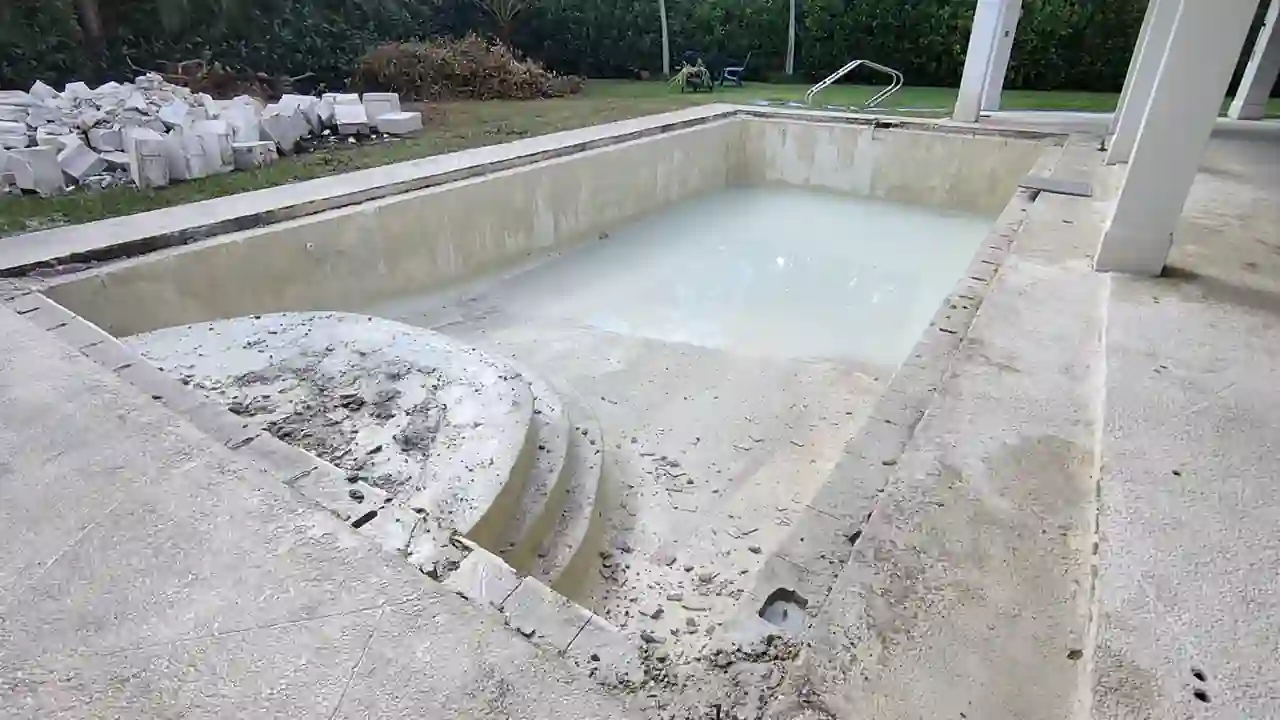
In Miami, concrete demolition happens daily across a wide range of applications: a residential pool being filled in, a commercial floor being removed for a new tenant buildout, a bridge abutment being demolished for a highway widening, a foundation being removed for a new construction project. Each of these requires a different demolition method — or more commonly, a combination of methods sequenced to maximize efficiency while protecting the surrounding structures and environment. Understanding the method options is the first step in choosing the right demolition contractor for your project.

The concrete demolition method spectrum — from precision to power
Method 1: Saw cutting and sectioning
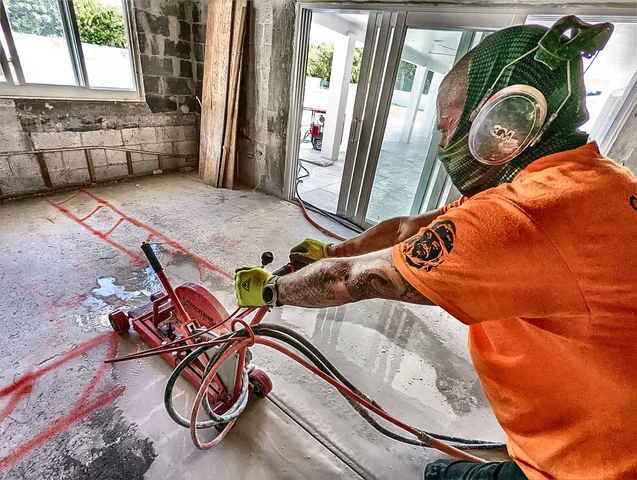
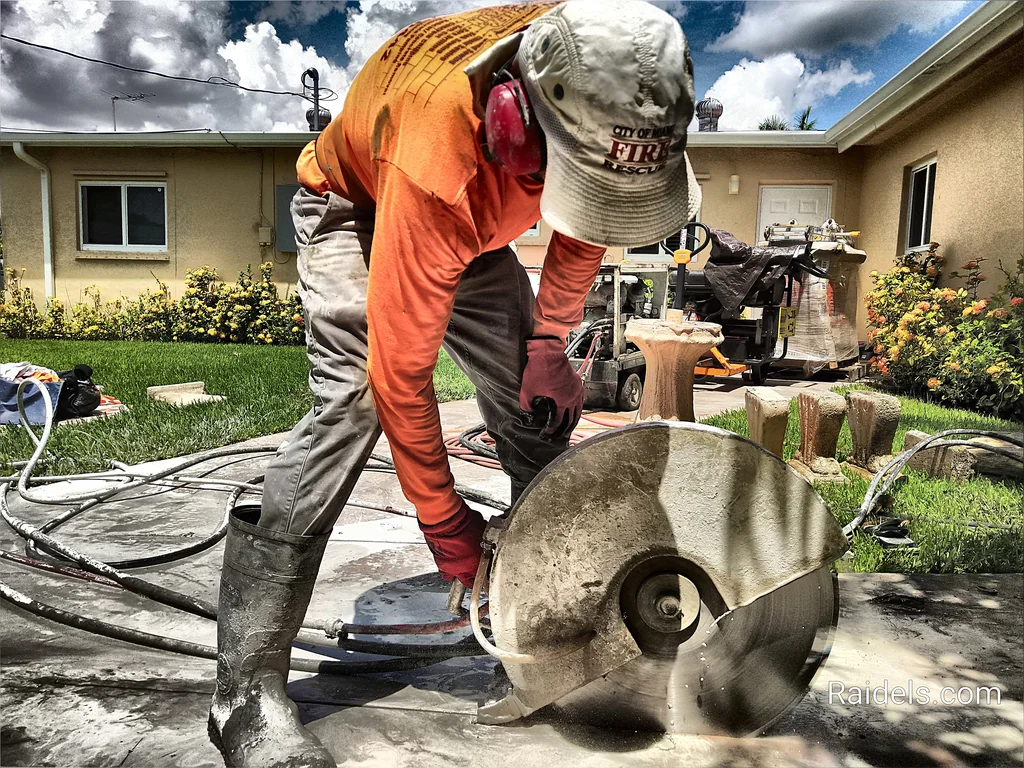
Saw cutting is not demolition in the traditional sense — it is concrete modification that enables controlled demolition. A diamond saw cuts the concrete into sections that are lifted out intact, without the vibration, dust, and debris of impact breaking. Saw cutting is used when the concrete being removed is adjacent to concrete being preserved (a driveway section next to a foundation, a pool deck next to coping that must survive), when vibration control is critical, and when the removed sections have value as clean concrete for recycling.
Saw cutting methods include flat sawing (horizontal surfaces), wall sawing (vertical surfaces), wire sawing (thick sections where circular blades cannot reach), and ring sawing (deep cuts in confined spaces). Concrete cutting services provide the saw cutting phase that precedes controlled demolition.
Method 2: Mechanical breaking — pneumatic and hydraulic
Mechanical breaking is the most common concrete demolition method. A breaker — handheld pneumatic, excavator-mounted hydraulic, or skid-steer-mounted — delivers high-frequency impact to the concrete, fracturing it into pieces that can be loaded into trucks or containers. Mechanical breaking is fast, effective, and capable of handling any concrete thickness and reinforcement level with the right-sized tool.
The tradeoffs: mechanical breaking produces vibration that can damage adjacent structures if the demolition area is not first isolated with saw cuts. It produces noise that can disturb neighbors and occupants. It produces dust that requires suppression. And it leaves jagged edges that may need to be cleaned up with hand tools or smaller breakers. Despite these tradeoffs, mechanical breaking is the default demolition method for most projects because it is the fastest and most cost-effective way to reduce concrete to transportable pieces.
Method 3: Expansive grout — silent demolition
Expansive grout (also called expansive cement or demolition grout) is a powdered material that, when mixed with water and poured into drilled holes, expands with sufficient force to fracture concrete. The expansion is silent — no impact, no vibration, no noise beyond the initial drilling. The concrete cracks along the lines defined by the hole pattern over a period of hours.
Expansive grout is used in Miami for demolition in hospitals, occupied office buildings, historic structures, and anywhere that vibration from mechanical breaking is unacceptable. The method is slower than mechanical breaking — planning the hole pattern, drilling, pouring, and waiting hours for the grout to work — but for vibration-sensitive applications, the speed difference is irrelevant compared to the benefit of zero vibration and zero flying debris. Professional demolition services use expansive grout when the site conditions demand it.
Method 4: Hydraulic bursting
Hydraulic bursting uses a hydraulic power unit to drive wedges into pre-drilled holes in the concrete. The wedges expand with tremendous force — much higher than expansive grout — and fracture the concrete almost instantly. Like expansive grout, bursting produces no vibration beyond the concrete itself and no flying debris. It is faster than grout (minutes instead of hours) but requires the equipment (hydraulic power unit, bursting heads, hoses) and access for the drilling and bursting operation.
Bursting is used for demolition of thick, heavily reinforced concrete where mechanical breaking would be slow, dusty, and vibration-intensive. It is especially effective for foundations, mass concrete structures, and concrete where rebar density makes mechanical breaking inefficient.
Method 5: Wire sawing for controlled removal
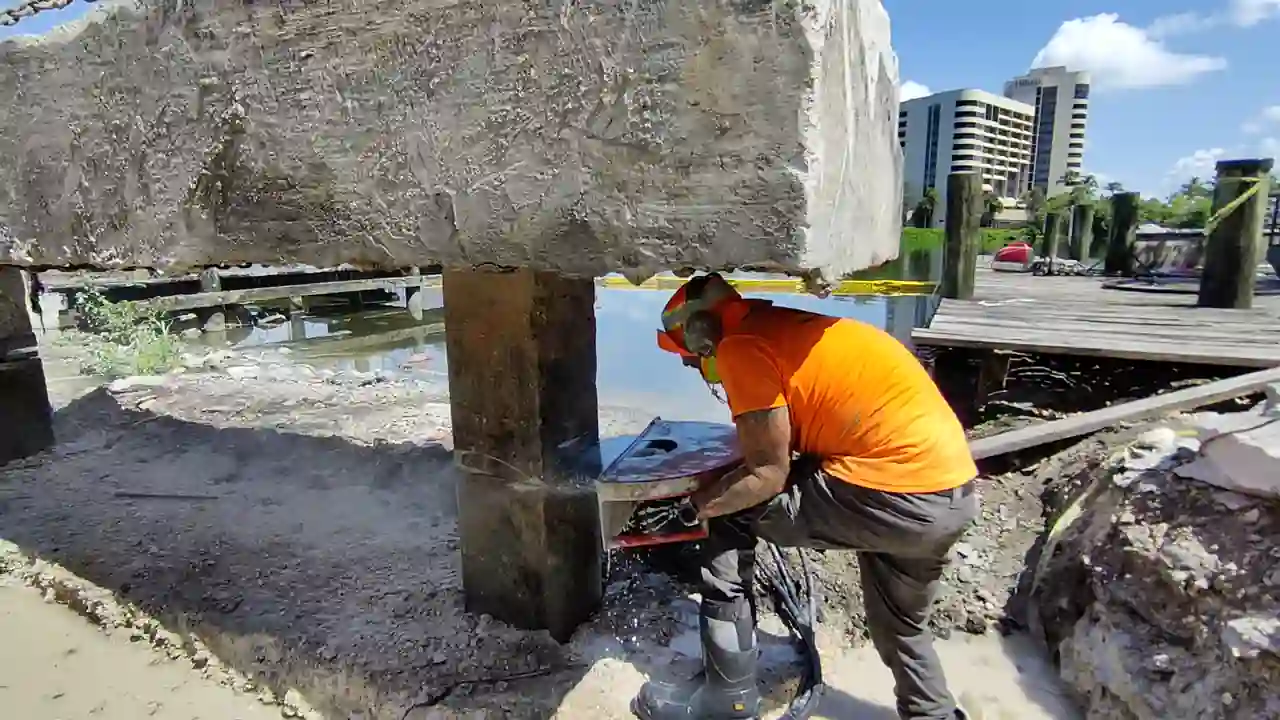
When concrete must be removed in large, intact sections — for crane lifting, for recycling, or because breaking would create unacceptable debris — wire sawing is the method. A diamond-impregnated wire cable is threaded through the concrete and driven by a hydraulic power unit. The wire cuts through the concrete and rebar, producing a clean cut face. The cut sections are then lifted out by crane or other lifting equipment.
Wire sawing is the most precise demolition method and the most expensive per cut surface. It is used for bridge demolition, thick foundation removal, large column removal, and any application where controlled section removal is required. Hydraulic chain saws provide an alternative for thick concrete where wire saw setup is impractical.
Selecting the right demolition method for Miami projects
The right demolition method — or combination of methods — depends on these factors:
- Concrete thickness and reinforcement: Thin, lightly reinforced concrete can be broken with handheld tools. Thick, heavily reinforced concrete requires hydraulic breakers, bursting, or wire sawing.
- Proximity to sensitive structures: Demolition adjacent to occupied buildings, sensitive equipment, or concrete being preserved favors cutting, bursting, or grout over mechanical breaking.
- Access for equipment: Interior demolition with limited access may require handheld breakers, expansive grout, or wire saws threaded through small access holes.
- Vibration constraints: Hospitals, laboratories, data centers, and historic structures require vibration-free methods — cutting, bursting, or grout.
- Debris handling: If debris must be removed through a building rather than from an exterior demolition area, saw cutting into manageable sections may be faster than breaking and handling irregular rubble.
- Schedule: Mechanical breaking is the fastest method for bulk demolition. Expansive grout is the slowest. The schedule may dictate the method regardless of other preferences.
- Environmental regulations: Dust control, noise limits, and debris disposal requirements vary by municipality and site. The demolition method must comply with all applicable regulations.
The demolition sequence — multiple methods working together
Most Miami concrete demolition projects use multiple methods in sequence:
- Scan: GPR scanning identifies hazards before any work begins.
- Cut: Saw cutting isolates the demolition area from surrounding concrete and sections the removal area for controlled demolition.
- Break or burst: Mechanical breaking, expansive grout, or hydraulic bursting reduces the concrete to transportable pieces.
- Cut rebar: Exposed rebar is cut flush with saw-cut edges after the concrete is broken away.
- Load and dispose: Debris is loaded into trucks or containers and transported to a C&D disposal facility.
- Clean and grade: The site is cleaned, and the area is prepared for its next use.
What is the method of concrete demolition? It is the sequence of methods selected for the specific structure, location, and project requirements. The right demolition contractor knows all the methods and chooses the ones that minimize cost, time, and risk for your specific project. The wrong contractor knows one method — usually mechanical breaking — and applies it to every project regardless of whether it is the right method for the conditions. When your concrete needs to disappear, hire the contractor who knows when to cut, when to break, when to burst, and when to use grout. That knowledge is what you are paying for.