Concrete pool wall thickness is the first question on every pool demolition and remodeling job in Miami
When we quote a pool demolition or pool modification project in Miami, the first measurement we need is the concrete pool wall thickness. Pool walls determine what equipment is needed to break through them, how long demolition takes, how much debris must be hauled away, and whether cutting or breaking is the more efficient approach. A 6-inch gunite pool shell and a 12-inch poured concrete pool wall are both concrete, but demolishing them requires different tools, different time, and different cost.
Miami has thousands of concrete swimming pools, most built during the housing booms from the 1950s through the 2000s. The construction method — and therefore the wall thickness — varies by era and builder, but the majority are pneumatically applied concrete (gunite or shotcrete) with wall thicknesses that range from 6 to 12 inches depending on depth and soil conditions. Knowing your pool’s wall thickness before planning any demolition, cutting, or remodeling work prevents surprises when the breaker hits the pool shell.
Standard concrete pool wall thickness by construction method
Gunite and shotcrete pools
The vast majority of Miami residential pools are gunite or shotcrete construction. Both methods pneumatically spray a concrete mixture onto a rebar framework at high velocity. The difference is when the water is added to the mix (gunite: dry mix, water added at the nozzle; shotcrete: wet mix, pumped to the nozzle). Both produce a dense, strong concrete shell with typical wall thicknesses of 6 to 8 inches for residential pools.
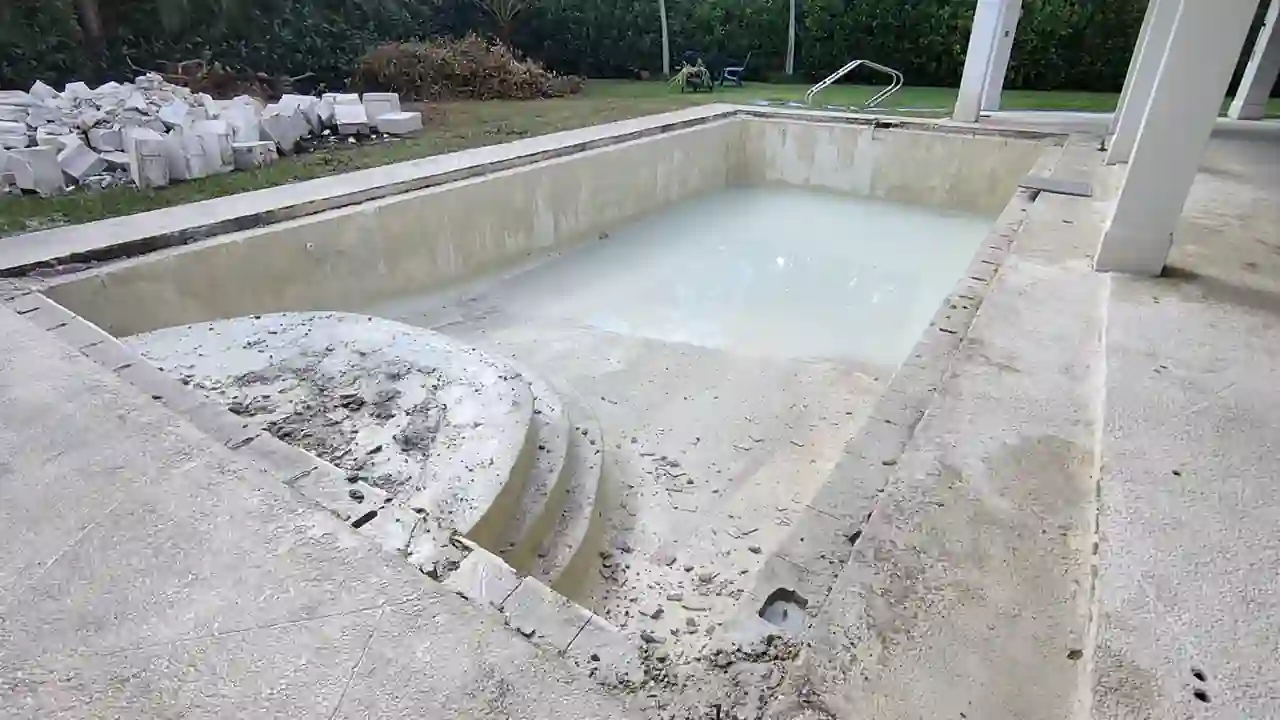
The floor of a gunite pool is typically thicker than the walls — 8 to 10 inches — because the floor carries more load and is often in contact with groundwater pressure. The bond beam — the thickened top edge of the pool wall where the coping sits — is typically 12 inches thick and heavily reinforced. When demolishing a gunite pool, the bond beam is the most challenging section to break because of its thickness and reinforcement.
Poured concrete pools
Less common in Miami residential construction but present in some older pools and commercial pools, poured concrete pools use formwork and conventional concrete placement. Wall thicknesses for poured concrete pools are typically 8 to 12 inches, with the thicker dimension for deeper pools and pools built in areas with high water tables. Poured concrete pools have consistent thickness throughout — unlike gunite, which can vary in thickness due to the application method.
Commercial and public pools
Commercial pools — hotels, apartment complexes, public facilities — have thicker walls than residential pools, typically 10 to 14 inches or more. The walls are designed for higher loading (more swimmers, more frequent use), longer service life, and compliance with commercial pool codes. Demolishing a commercial pool is a larger-scale operation requiring larger equipment.
How pool wall thickness affects demolition
Pool wall thickness directly determines the demolition approach:
- 6-inch gunite walls: A 30 to 60-pound pneumatic breaker or a small excavator-mounted hydraulic breaker can break through 6-inch gunite efficiently. Saw cutting around the bond beam and coping before breaking creates clean separation lines.
- 8-10 inch walls: Larger hydraulic breakers — typically mounted on a mid-size excavator — are needed for efficient demolition. For partial demolition, cutting the upper walls first, then breaking, reduces vibration transfer to the remaining pool structure.
- 12+ inch walls: Heavy hydraulic breakers on large excavators, or wire sawing for clean cuts. Demolition of thick commercial pool walls is a major operation that requires heavy equipment and substantial debris removal capacity. Professional demolition services size equipment based on the pool’s construction.
The rebar inside pool walls
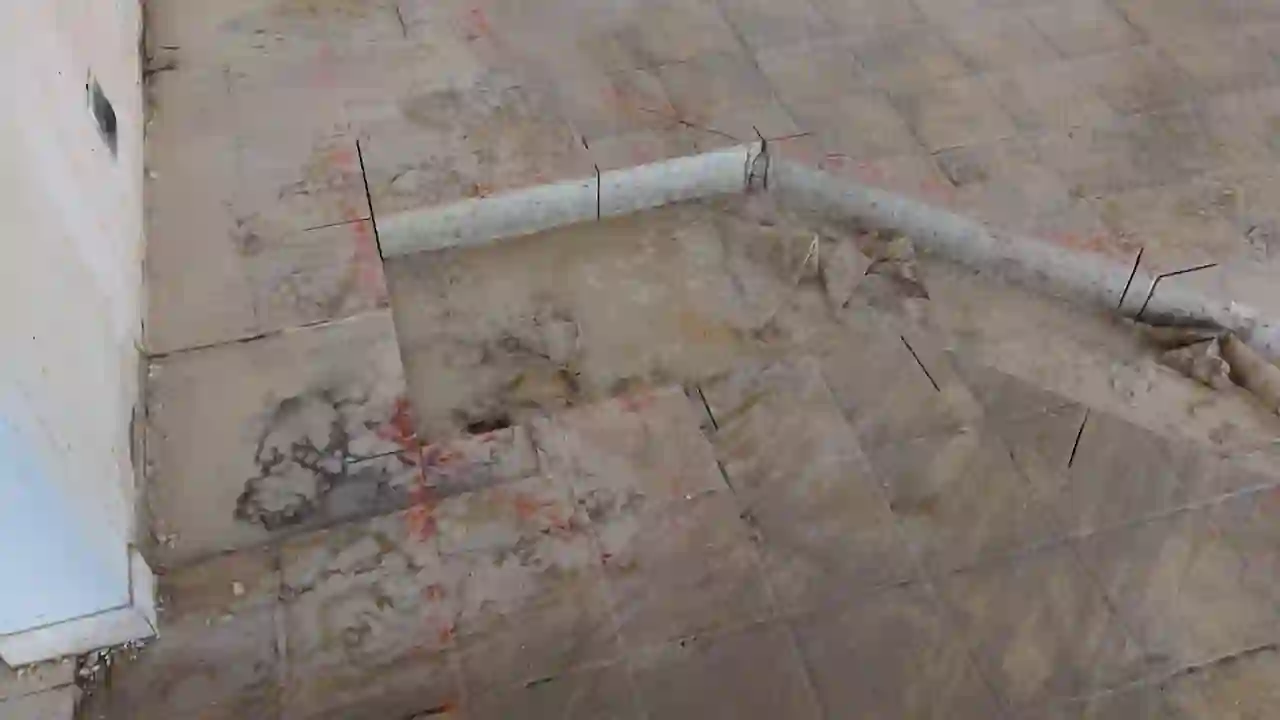
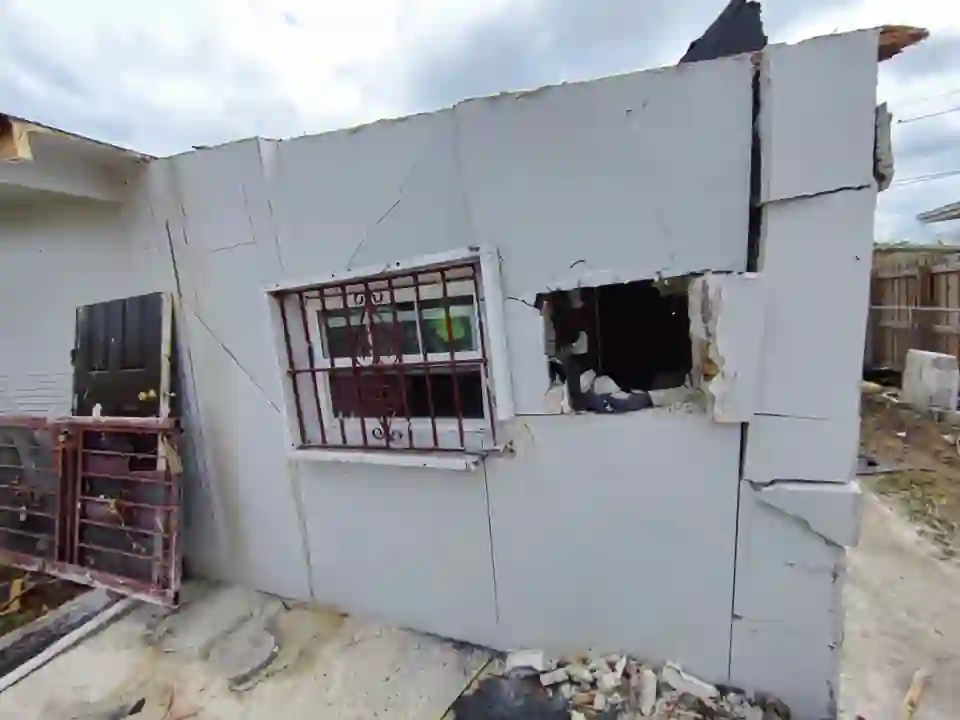
Pool wall thickness tells only half the story. The reinforcement inside the concrete determines how the pool shell behaves during demolition. Miami pool construction typically uses #3 or #4 rebar on 8 to 12-inch centers, in a single mat centered in the wall thickness. The bond beam has heavier reinforcement — typically #4 or #5 bars, multiple bars horizontally and vertically. The floor has rebar in both directions, often #4 bars on 12-inch centers.
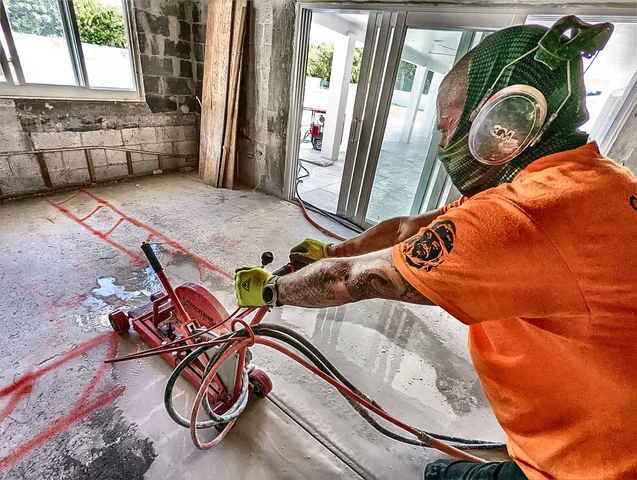
Rebar makes demolition slower and more expensive. Breaking concrete around rebar is like breaking a material that has internal cables holding it together — the concrete fractures, but the pieces do not separate because the rebar spans the fractures. The rebar must be cut to release each piece. For large pool demolition jobs, the rebar cutting can take as long as the concrete breaking. Concrete cutting services can cut through the rebar as part of the wall sawing or slab sawing process, which is faster than breaking concrete around rebar and cutting it separately.
Measuring your pool’s wall thickness
If you are planning pool demolition or remodeling, you need to know the wall thickness. Here is how to find it:
- Check the original construction documents: If you have the pool plans, the wall thickness is specified in the structural drawings.
- Core drill a sample: A 2-inch core drill through the pool wall (above the water line, in a location that will be demolished or that can be patched) provides an exact measurement of the wall thickness at that point. The core sample also shows the rebar depth and concrete condition.
- Measure at the skimmer or return fitting: Skimmer throats and return fittings pass through the pool wall. Measuring the wall thickness at these penetrations gives you the local thickness, but be aware that walls may be thickened around penetrations.
- GPR scanning: Ground-penetrating radar can measure wall thickness without drilling. The scanner can also map the rebar pattern, which is useful for planning cutting or demolition.
Why pool wall thickness matters for remodeling
Pool remodeling — changing the pool shape, adding a spa, modifying the depth — involves cutting or breaking the existing pool shell. The wall thickness determines:
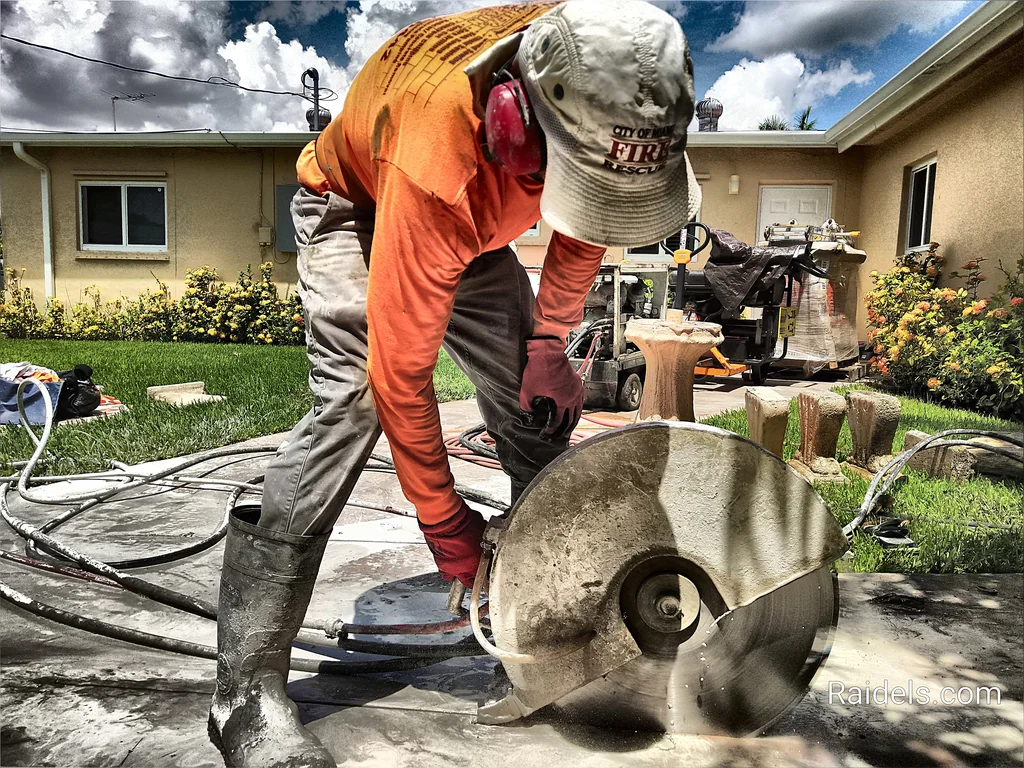
- Whether the pool can be cut or must be broken: Thin gunite walls (6 inches) can be saw-cut with a large-diameter diamond blade. Thick walls (10+ inches) may require wire sawing or stitch drilling.
- How the new shell ties into the old shell: When new concrete is poured against existing pool concrete, rebar dowels must be drilled into the existing wall. The wall must be thick enough to accommodate the dowel embedment depth specified by the engineer.
- Whether the existing shell is structurally adequate: Older pools with thin, deteriorated shells may not have enough remaining concrete for rebar doweling. In those cases, more extensive demolition may be required before the remodel can proceed.
Concrete pool wall thickness is the parameter that determines how a pool demolition or remodeling project is planned, equipped, and priced. Whether you are filling in a pool or transforming it into a new shape, knowing the wall thickness is the starting point for every decision that follows.