Cutting a concrete slab is the workhorse of the concrete cutting trade — and the operation that looks easiest to do badly
If you need a trench through your garage floor for a new drain, a cracked section of driveway removed, or control joints cut in a freshly poured patio, what you need is cutting concrete slab — horizontal concrete cutting using a diamond flat saw. It is the most common concrete cutting service, performed somewhere in Miami-Dade County every day of the year. And because it looks simple — a walk-behind saw moving slowly across a floor — it is also the service that unqualified contractors and overconfident DIYers attempt most often, with results that range from cosmetic damage to structural compromise.
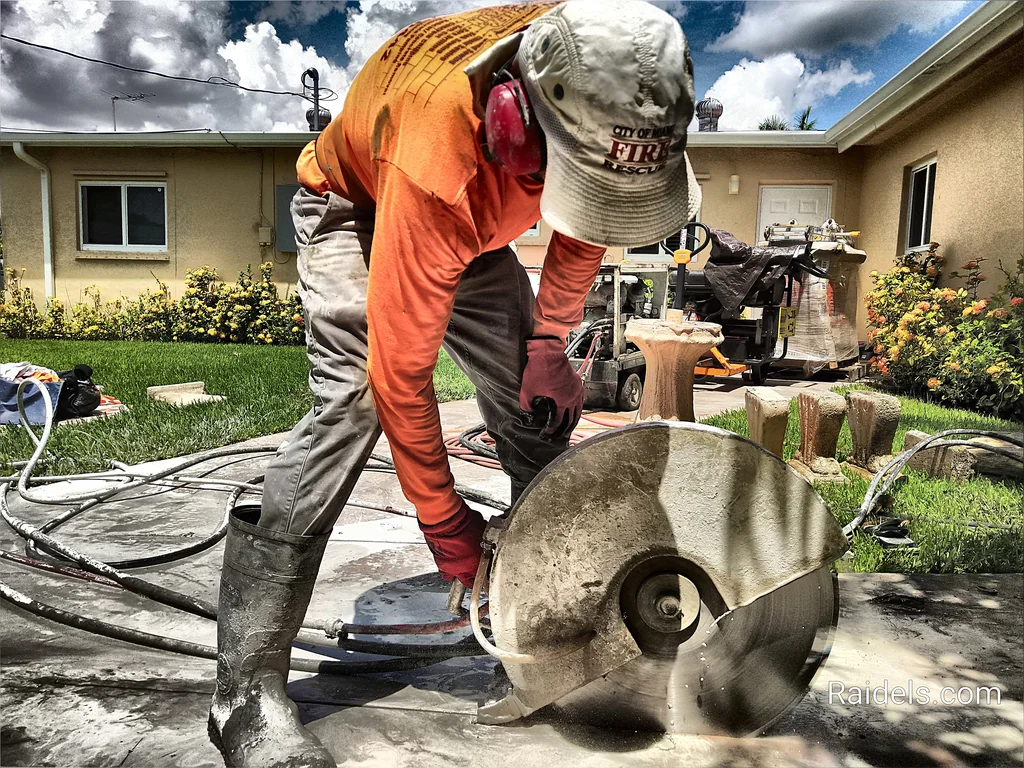
We cut concrete slabs across Miami every day, from 4-inch residential patios to 12-inch reinforced commercial floors. The saw itself is a purpose-built machine — a gas, electric, or hydraulic-powered unit with a diamond blade mounted on a depth-adjustable arbor that cuts by grinding through the concrete in incremental passes. The operator controls the depth, the line, and the feed rate. A professionally cut concrete slab has straight edges, consistent depth, and no damage to the surrounding concrete. An amateur cut has wavy edges, variable depth, and sometimes new cracks radiating from the cut line.
Why cutting a concrete slab is not as simple as it looks
The blade does not cut — it grinds
A diamond saw blade does not have teeth that chip away concrete like a wood saw. The diamond particles embedded in the blade segments grind through the concrete, producing fine dust that is carried away by water or vacuum. The grinding action requires the blade to maintain RPM within its optimal range — too fast and the blade overheats, too slow and the diamonds do not cut efficiently. The operator adjusts feed rate continuously to keep the blade at the right RPM for the concrete conditions.
Incremental depth — not full depth in one pass
A circular saw blade cannot cut the full depth of a slab in a single pass — or rather, it can try, and the result will be a wandering cut line, an overheated blade, and a bogged-down motor. Professional slab cutting advances the blade into the concrete in increments — typically 1 to 2 inches per pass — with each pass going deeper than the last. A 6-inch slab requires 3 to 4 passes. A 10-inch slab requires 5 to 7 passes. Each pass follows the kerf established by the previous pass, so the cut line stays straight from top to bottom.
Water is not optional
Wet cutting is standard for slab sawing in Miami. The water cools the blade, suppresses silica dust, and lubricates the cut. Without water, the blade overheats within minutes and the operator (and anyone nearby) inhales respirable crystalline silica. The water combines with concrete dust to form slurry, which must be contained and collected — not washed into drains or allowed to dry on the slab surface. Slurry management is part of the service.
What cutting a concrete slab is used for in Miami
Plumbing and utility trenching
The most common reason for cutting a concrete slab is trenching for plumbing, electrical, or drainage work. The slab saw cuts two parallel lines the length of the trench, and the concrete between them is removed. The result is a trench with clean, straight edges that can be patched cleanly after the underground work is complete. Professional slab sawing services handle trenching from cut to cleanup.
Partial slab removal and demolition
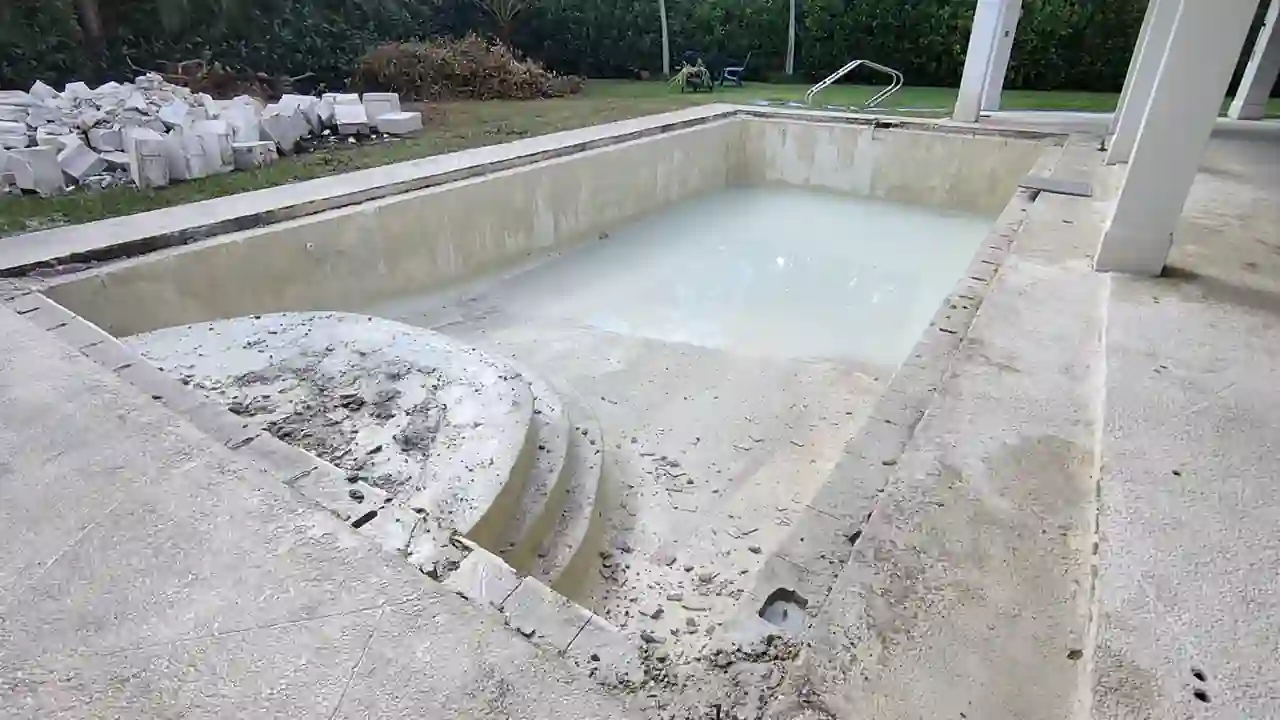
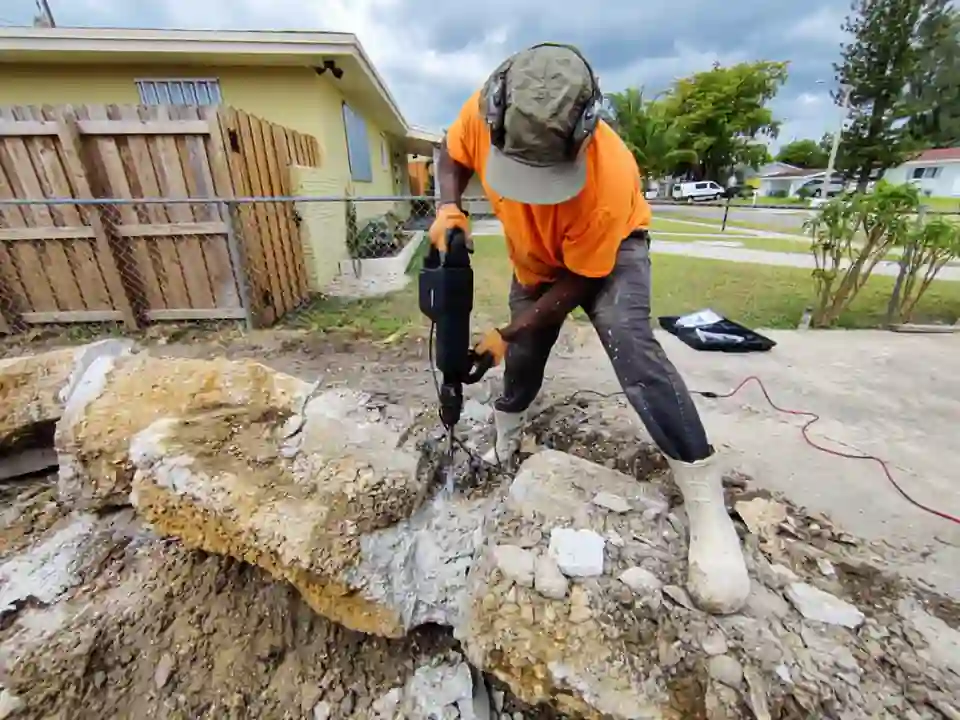
When a section of slab needs to be removed — a deteriorated area, a section for a new stair opening, a driveway section for replacement — the slab saw cuts the perimeter of the removal area, separating it from the surrounding concrete. Additional saw cuts divide the removal area into manageable sections. The separated sections are then broken up and removed. The perimeter cut is what prevents vibration damage to the surrounding slab during breaking.
Control joints and expansion joints
Freshly poured concrete shrinks as it cures and expands and contracts with temperature changes. Control joints — saw-cut grooves in the slab surface — create weakened planes that direct cracking to predetermined locations. The saw cuts are made within 24 hours of the pour, while the concrete is still green and relatively soft. The depth of the control joint is typically one-quarter of the slab thickness.
Decorative scoring
For decorative concrete — stained patios, polished floors, architectural slabs — shallow saw cuts create patterns, borders, and geometric designs. Decorative scoring cuts are typically 1/8 to 1/4 inch deep, made with smaller blades than structural cutting. The cuts are filled with grout, sealant, or left exposed depending on the design.
The Miami-specific factors that affect slab cutting
Post-tension slabs
Many Miami residential slabs built since the 1970s contain post-tension cables. Cutting through a PT cable is dangerous and expensive to repair. GPR scanning before any slab cutting is mandatory in Miami because the consequences of hitting a tendon are severe. The scan identifies the tendon locations, and the cutting plan is adjusted to avoid them. Professional concrete cutting companies scan every slab before cutting.
Limestone aggregate
Miami concrete uses oolitic limestone aggregate, which is softer and more abrasive than the granite aggregates common in other markets. The softer aggregate means cutting is faster, but the abrasive nature means blade life is shorter. Blade selection must account for Miami’s aggregate type — a harder bond blade is needed because the softer concrete wears the bond naturally.
Tile on slab
Most Miami homes have ceramic or porcelain tile directly on the concrete slab. Cutting the slab for any modification requires removing the tile first in the cutting area. The tile removal must extend beyond the cut line to provide clearance for the saw and to prevent tile edge chipping from vibration. After the slab work is complete, the tile is reinstalled over the patched area.
What cutting a concrete slab costs
Slab cutting is priced per linear foot, with the rate depending on:
- Slab thickness: Every additional inch of depth requires more passes and more blade consumption.
- Rebar content: Heavily reinforced slabs cut slower and consume more blade per foot.
- Interior vs exterior: Interior cutting requires dust and slurry containment that exterior cutting may not need.
- Access constraints: Cuts in tight spaces, near walls, or in occupied buildings add setup time and containment requirements.
Questions to ask before cutting a concrete slab
- “Do you GPR scan before cutting?” In Miami, where PT cables are common, the answer must be yes.
- “How deep are you cutting per pass?” The answer tells you whether they are cutting incrementally (professional) or forcing the blade through in one pass (not professional).
- “How do you handle the slurry?” Interior cuts require vacuum collection. Exterior cuts require containment. The contractor should have a specific plan.
- “What happens if you hit rebar?” The diamond blade should cut through it. If the contractor describes stopping and switching tools, they are not using blades rated for reinforced concrete.
- “Will the cut affect my tile?” If the slab has tile, the contractor should describe tile removal, clearance for the saw, and what to expect when the tile is reinstalled.
Cutting a concrete slab is the most common concrete cutting operation because concrete slabs are everywhere, and almost every renovation, repair, or modification requires cutting into one. The right contractor brings the right saw, the right blade, the right scanning equipment, and the right slurry management. The wrong contractor brings a rental saw and figures out the rest on your slab. The cost difference between the two is modest. The result difference is permanent.