Why Concrete Drilling and Sawing Gets Complicated Before the Blade Ever Touches the Slab
Most project managers think about concrete drilling and sawing as a single event — a crew shows up, cuts the opening, and leaves. In reality, the actual cutting is often the easiest part of the job. What complicates nearly every project in Miami is everything that happens before and around that blade: equipment staging, dust and slurry containment, power sourcing, overhead clearance, ventilation, and the sheer physical geometry of getting a 600-pound wall saw into a space that was never designed to receive one. If you’ve ever watched a crew problem-solve their way through a below-grade mechanical room or a load-bearing wall in a 1940s-era building, you already know what we mean. If you haven’t, this post will walk you through the real-world logistics that separate competent concrete cutting operations from exceptional ones.
Access Limitations That Dictate Every Equipment Decision on the Site
Before a single core drill is positioned, a qualified crew has to conduct a thorough site assessment focused entirely on access. This means measuring doorway widths, ceiling heights, staircase angles, and load-bearing capacity of floors that equipment will travel across. In Miami’s dense urban core — and particularly in older structures along Brickell, Downtown, and the Art Deco district of Miami Beach — these constraints are severe and non-negotiable.
A track-mounted wall saw, for example, requires not just clearance for the blade itself but also room for the hydraulic power unit, water supply lines, and the operator’s working envelope. When ceiling height drops below eight feet, standard upright configurations become impossible. Crews pivot to flat-mounted track systems or switch entirely to hand-held ring saws with vacuum shrouds — both of which demand different skill sets and significantly alter production rates. The equipment decision isn’t made at the shop. It’s made on-site, with a tape measure in hand.
- Doorway width under 32 inches: Requires component-by-component equipment breakdown and reassembly inside the space
- Ceiling height under 7 feet: Eliminates most upright core drill rigs; shifts to angle drilling or low-profile systems
- No freight elevator access: All equipment must be hand-carried or rigged through stairwells, adding significant mobilization time
- Occupied adjacent spaces: Mandates vibration isolation, dust barriers, and strict scheduling windows
Confined Space Protocols That OSHA Requires and Most Crews Underestimate
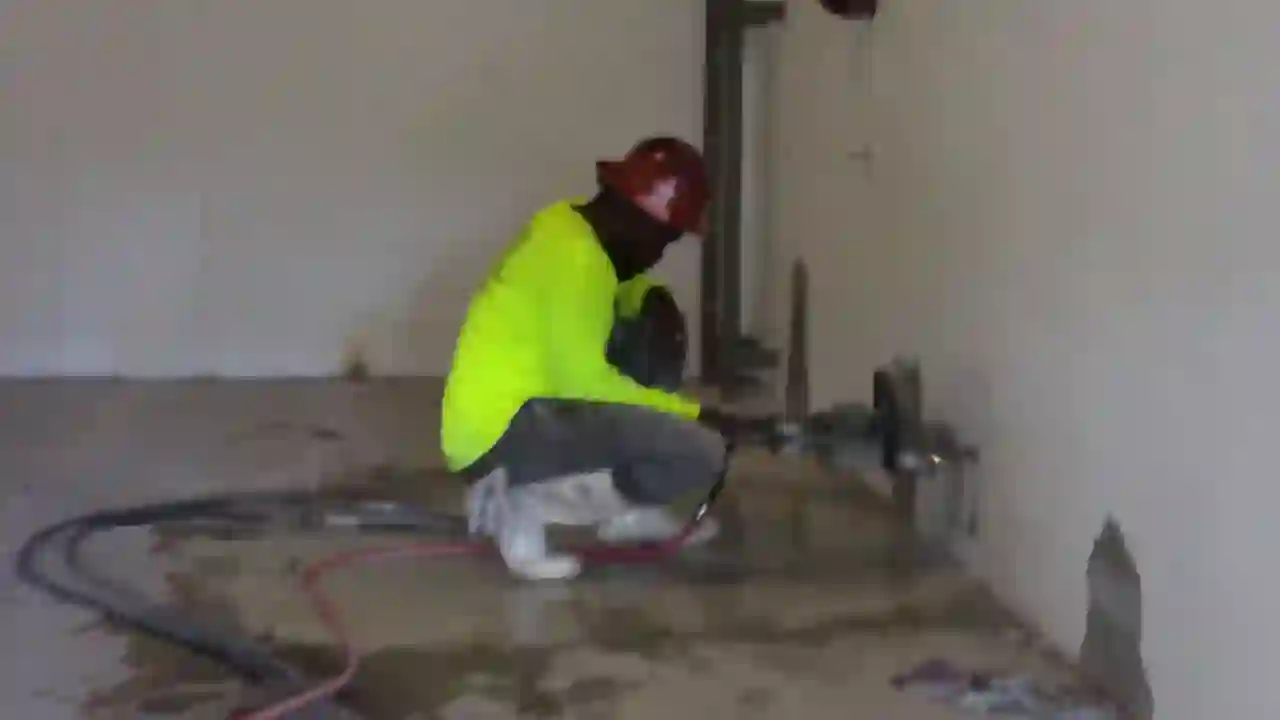
Concrete drilling and sawing in confined spaces — defined by OSHA as spaces large enough to enter but not designed for continuous occupancy, with limited entry and exit points — triggers a completely different regulatory framework. Parking garages, crawl spaces, utility tunnels, and below-grade mechanical rooms all potentially qualify. In these environments, the hazards aren’t just physical; they’re atmospheric.
Diamond blade sawing generates significant airborne silica dust, carbon monoxide from gasoline-powered equipment, and heat. In a confined space without adequate ventilation, these hazards compound rapidly. Professional operations in Miami run gas-powered equipment only with forced-air ventilation systems actively exhausting fumes to the exterior. Electric and hydraulic-powered equipment is strongly preferred in enclosed environments precisely because it eliminates combustion byproducts. Atmospheric monitoring — testing for oxygen levels, CO, and combustible gases before entry — is not optional on a properly run job site. It’s the first task before any tool is unloaded.
For a deeper look at how these challenges apply to specific project types, our concrete cutting FAQs cover common confined space scenarios that clients bring to us regularly.
Slurry Management in Spaces Where There Is Nowhere for the Water to Go
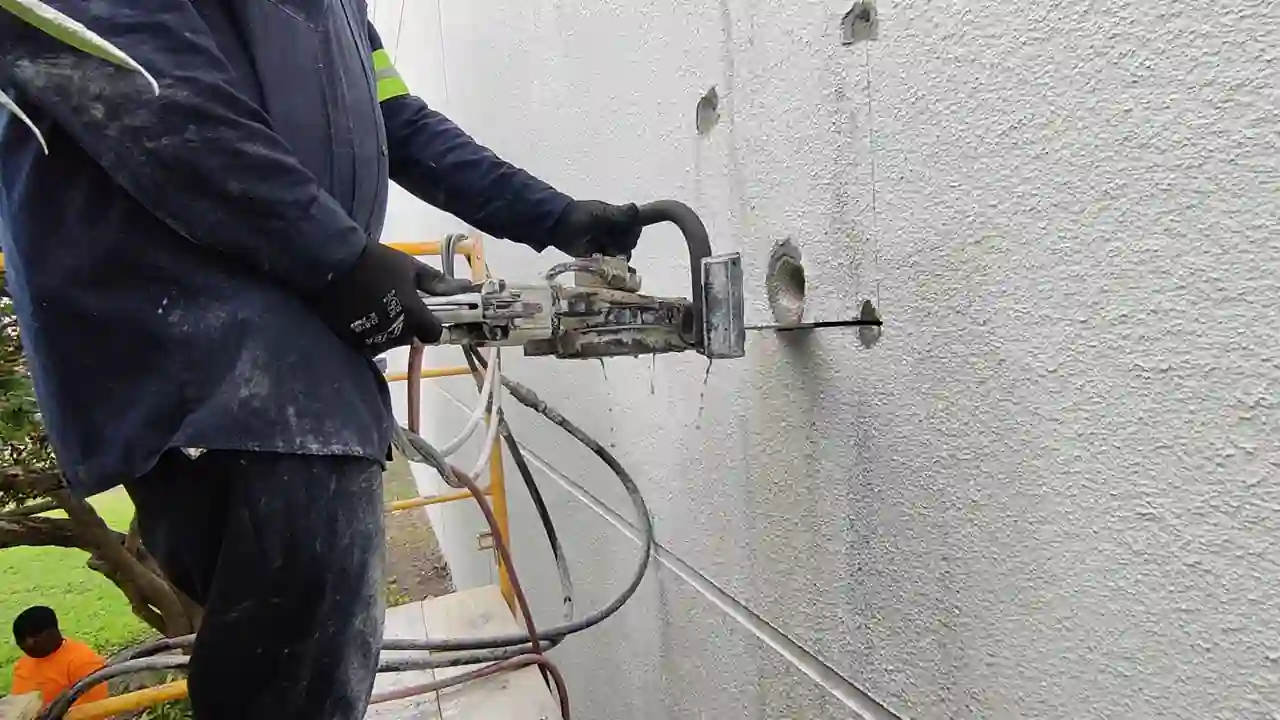
Wet-cutting methods — the industry standard for diamond core drilling and wall sawing — introduce a continuous stream of water-and-concrete-slurry that has to go somewhere. On an open exterior slab, this is a minor concern. In a confined interior space, it becomes a primary logistical challenge that must be engineered before work begins.
Slurry is not just water. It’s a highly alkaline mixture of concrete fines, silica particles, and water with a pH that can exceed 12. Allowing it to drain freely into building drains, storm systems, or adjacent occupied spaces is an environmental violation and a liability issue. Professional crews deploy wet-dry vacuum systems with slurry tanks, containment berms made from hydraulic cement or foam backer rod, and plastic sheeting systems that channel slurry to a single controlled collection point. On multi-day projects involving extensive concrete cutting operations, slurry tanks may need to be pumped out and disposed of off-site as regulated waste depending on local ordinances.
Hydraulic Power Units and the Problem of Running Long Hose Distances
When gasoline or diesel power units can’t enter a confined space, they’re staged outside — sometimes dozens of feet away. Hydraulic hoses connecting the power unit to the wall saw or core drill introduce pressure drop over distance, which directly affects blade speed and cutting performance. Standard hydraulic hose runs beyond 50 feet require upsized hose diameter or a higher-output power unit to compensate. Crews who don’t account for this end up with sluggish blade performance, increased blade wear, and extended cut times that blow project schedules.
Electric-hydraulic power units solve the exterior-staging problem but introduce their own constraint: available amperage. A 20-amp, 120-volt circuit simply cannot run a production wall saw. Most serious operations require a dedicated 240-volt, 60-amp circuit at minimum, and some larger equipment demands 480-volt three-phase power. On renovation projects in older Miami buildings, sourcing that power — and running temporary distribution panels — adds a pre-task that has to be coordinated with the electrical contractor weeks in advance.
Structural Sequencing When Multiple Cuts Are Required in the Same Zone
Projects involving multiple openings — new doorways, mechanical penetrations, and structural modifications — require careful sequencing to avoid compromising the structural integrity of the assembly during work. This is where concrete demolition technique sequencing becomes as important as the cutting method itself.
A common mistake on multi-opening projects is cutting all openings simultaneously or in rapid succession without allowing for temporary shoring between cuts. Load redistribution in reinforced concrete walls and slabs is not instantaneous — it follows the stiffness path of the remaining structure. Removing too much material in a localized zone before installing temporary support can cause micro-cracking in adjacent sections, complicate the next cut, and in worst-case scenarios, trigger partial collapse of non-structural elements above the opening.
- Always install temporary shoring before making the final plunge cut that frees a panel
- Sequence openings from top to bottom in multi-story applications where possible
- Coordinate with the structural engineer of record on any opening larger than 24 inches in a load-bearing wall
- Do not remove saw tracks or core drill anchors until the cut panel is fully supported and ready for controlled removal
Outdoor Confined Spaces and the Specific Challenge of Pool Deck and Deck Removal Work
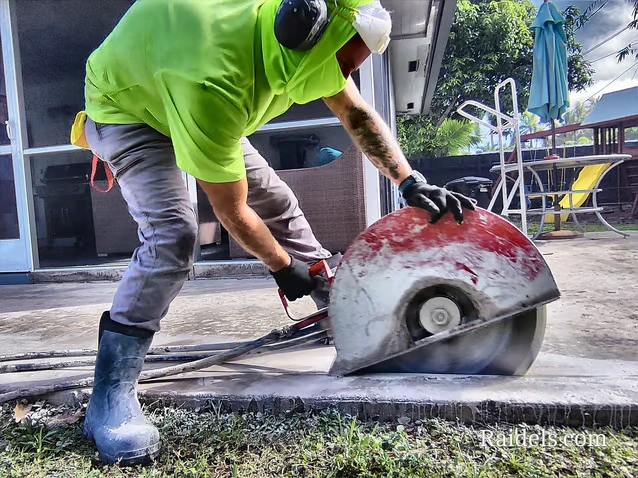
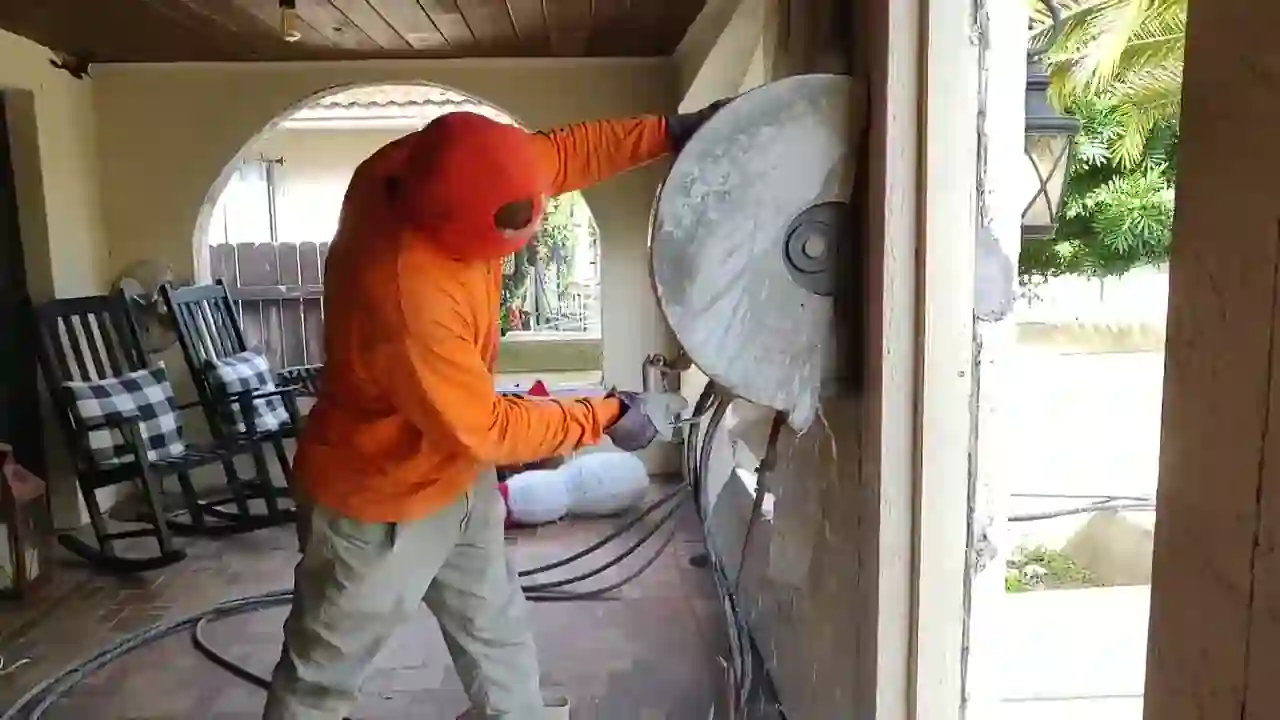
Not all confined-space challenges are indoors. Exterior work around pools, tight residential courtyards, and rooftop mechanical areas presents its own access and logistics puzzle. Equipment must often be craned or hoisted into position. Saw dust and slurry must be contained to avoid contaminating pool water or adjacent landscaping. And in Miami’s heat, operator fatigue in enclosed or semi-enclosed outdoor spaces becomes a genuine safety variable that responsible crews actively manage with rotation schedules and hydration protocols.
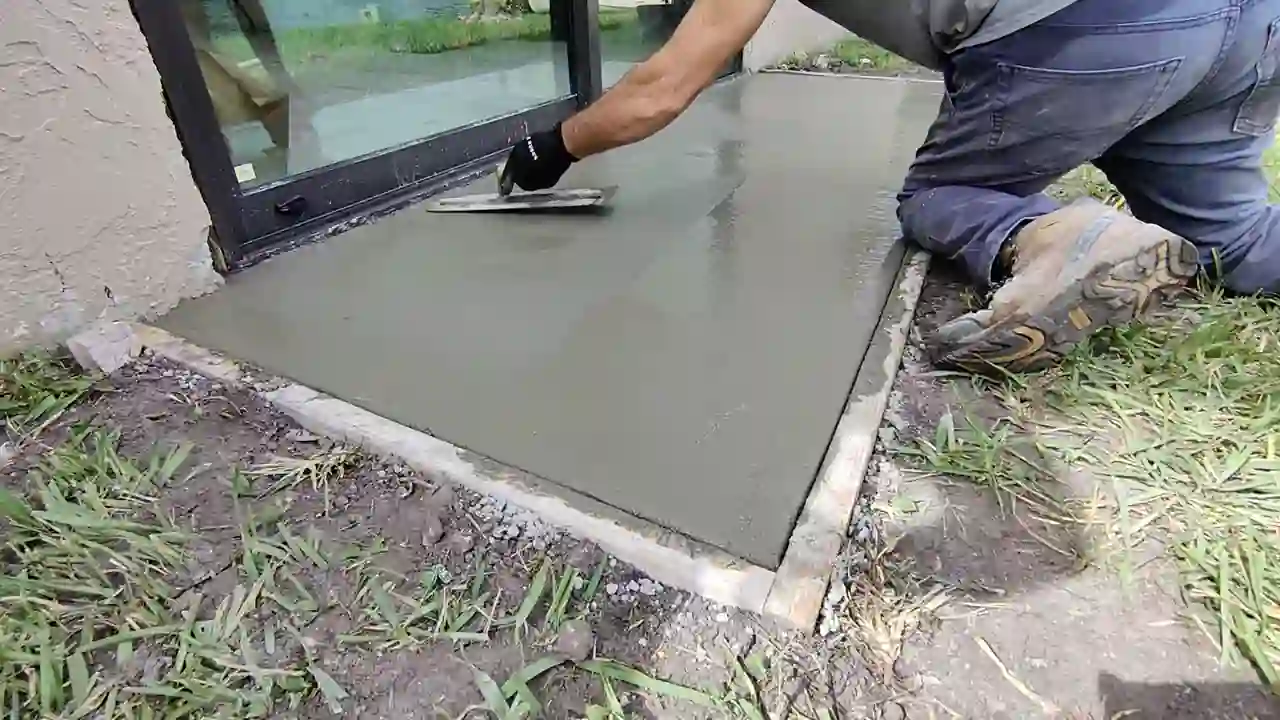
For a detailed look at how these logistics play out in a specific exterior application, our step-by-step guide on how to cut and remove a pool deck walks through the full process from staging to final debris removal — including the access and containment strategies that make the job clean and efficient.
The Pre-Job Investment That Determines Whether a Confined-Space Cut Goes Right
Every experienced concrete drilling and sawing crew will tell you the same thing: the hour you spend on a proper site walk-through saves four hours of problem-solving mid-cut. That pre-job investment includes confirming utility locations with ground-penetrating radar, identifying rebar density and layout from as-built drawings, testing available power circuits, mapping slurry drainage paths, confirming ventilation options, and verifying that every piece of equipment can physically enter the work zone before it’s loaded on the truck.
In Miami’s competitive construction market, the temptation to skip steps and mobilize fast is real. But confined-space concrete drilling and sawing is an environment where shortcuts don’t just cost money — they cost safety. The crews and contractors who consistently deliver clean, on-schedule cuts in the most restrictive job sites aren’t faster. They’re more thorough before the work ever starts. That preparation is the actual product being sold, and it’s what separates a call-back from a referral.