Why Minimum Concrete Thickness Is the First Number That Drives Every Bid
Before a single diamond blade touches a Miami slab, before a crew is scheduled, before a quote leaves our office — the first question is always the same: how thick is it? Minimum concrete thickness isn’t a footnote in a spec sheet. It is the load-bearing variable that determines labor hours, equipment selection, blade consumption, disposal volume, and ultimately, whether a project makes money or bleeds it. In South Florida’s construction environment — where we’re dealing with high humidity, aggressive rebar corrosion, and a mix of aging commercial slabs and new luxury residential pours — thickness specifications carry serious financial weight. Getting this number wrong at the estimate stage is how contractors lose four figures before lunch.
The Industry Baseline Numbers and What They Mean in the Field
Let’s establish the technical floor. Residential foot traffic slabs — patios, walkways, pool decks — are typically poured at a minimum of 4 inches (100mm). Residential driveways step up to a 4-to-6-inch range depending on expected vehicle load. Commercial driveways and light industrial floors generally require a minimum of 6 inches. Heavy industrial, warehouse, and loading dock applications routinely spec 8 inches and above, with post-tensioned systems sometimes pushing past 10 inches. In Miami specifically, the Florida Building Code aligns with ACI 318 standards, but local soil conditions — particularly the expansive marl and limestone substrate common across Miami-Dade County — frequently push engineers to specify above the code minimum. That’s not bureaucratic padding; that’s structural reality.
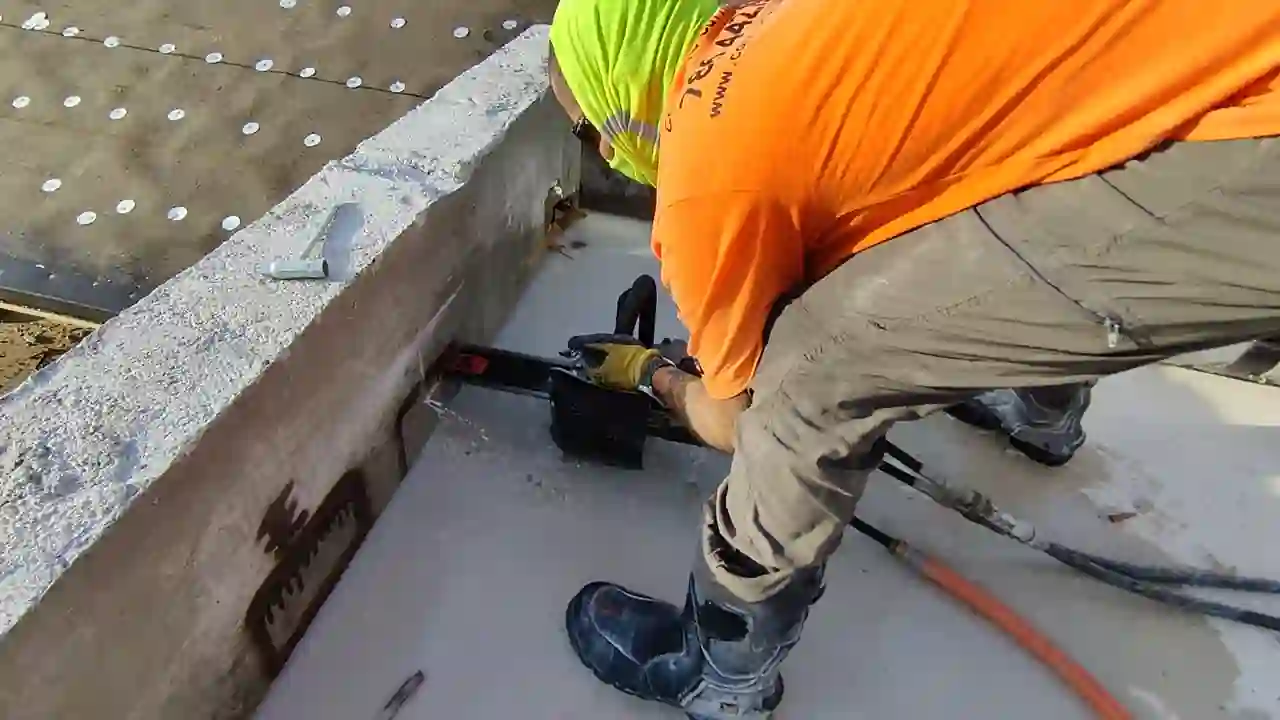
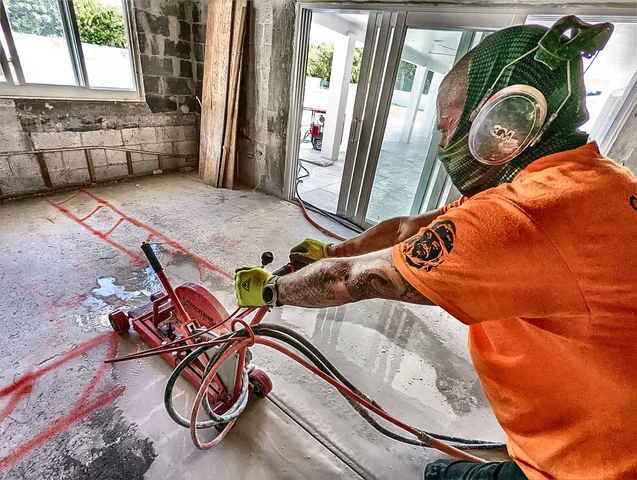
From a cutting and removal standpoint, every additional inch of thickness changes the job. It’s not linear math. Cutting through 6 inches versus 4 inches doesn’t just add 50% more material — it changes blade depth requirements, increases heat generation, demands more water flow for cooling, and in many cases, requires an equipment upgrade entirely. A walk-behind saw that handles a 4-inch slab comfortably may need to be swapped for a self-propelled unit at 6 inches, and that equipment substitution alone shifts your rental or ownership cost structure on the bid.
Thickness Verification Before Bidding — The Core Sampling Imperative
Never bid on assumed thickness. This is one of the most expensive mistakes we see smaller operators make in Miami. A property owner says “it’s just a 4-inch driveway,” and a contractor takes that at face value. Then the crew shows up and finds a 7-inch slab with double-mat rebar that was poured as part of a structural upgrade in the 1990s. That job just doubled in cost with zero opportunity to reprice. Core sampling — pulling a 2-to-4-inch diameter core at representative locations — costs between $150 and $400 per core in the Miami market, depending on depth and access. That’s not an overhead expense. That’s risk mitigation that belongs on the bid sheet as a line item.
GPR (ground-penetrating radar) scanning is increasingly standard practice before any major cutting or removal scope. GPR gives you rebar depth, spacing, and slab thickness across a broad area without destructive sampling. For projects over $5,000 in scope, GPR scanning is almost always worth the $300–$800 investment. It eliminates the thickness surprises that blow up schedules and profit margins.
How Slab Thickness Directly Structures Your Project Timeline
Timeline estimations in concrete cutting are thickness-dependent at every phase. Consider a driveway removal in Miami — a scope we handle regularly. A standard 4-inch residential driveway of 600 square feet might be cut, broken, and loaded in a single 8-hour day with a two-man crew. Bump that to a 6-inch slab with light rebar and you’re realistically looking at 1.5 days. Hit 8 inches with double-mat steel and you’re scheduling two full days minimum, potentially three depending on haul-off logistics. That timeline difference isn’t just labor cost — it’s equipment rental duration, traffic control permit windows, dumpster rental days, and potential impact on the client’s project schedule downstream.
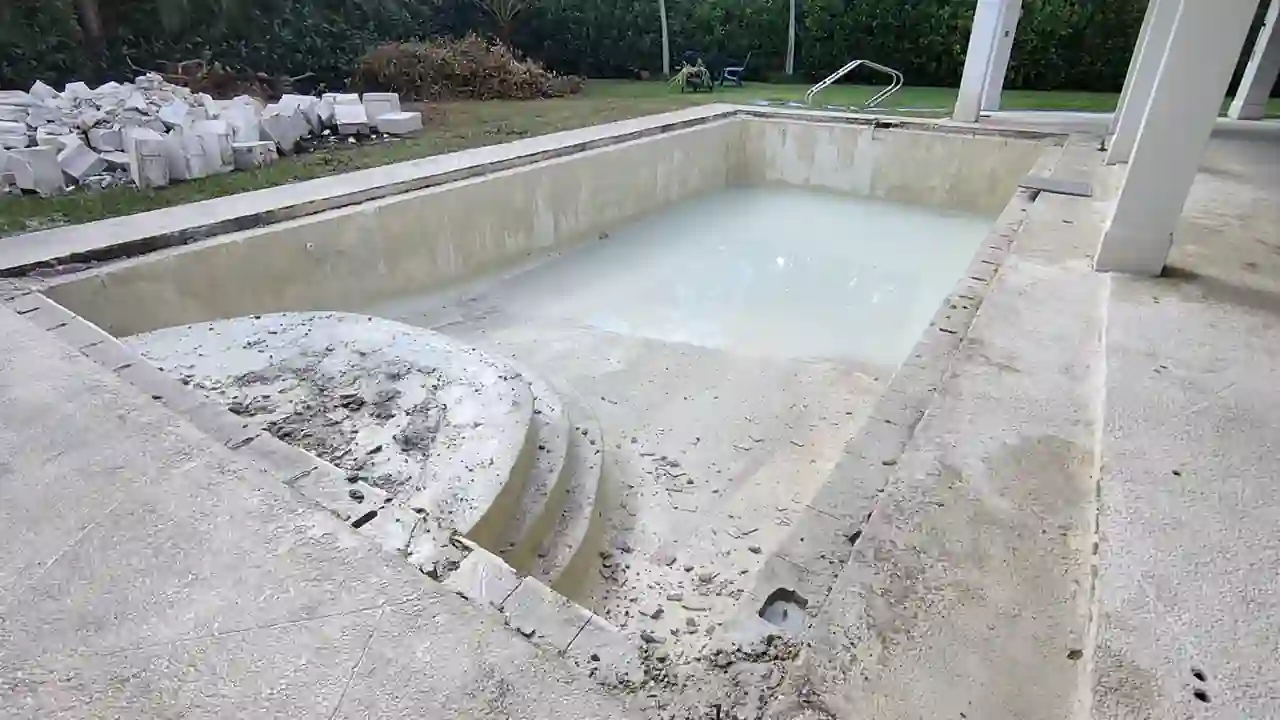
For interior work — say, a Miami indoor pool removal — slab thickness becomes even more critical because you’re working in an enclosed space with ventilation constraints and structural adjacency concerns. Pool shells are often 8 to 12 inches thick with heavy steel reinforcement. Cutting and breaking that material in a confined space requires hydraulic equipment, extended timelines, and meticulous debris management. Underestimating thickness in these scenarios doesn’t just hurt the budget — it creates legitimate safety exposure.
The Blade Cost Equation That Most Bids Get Wrong
Diamond blade consumption is exponential with thickness, not proportional. A quality 14-inch segmented diamond blade cutting a clean 4-inch unreinforced slab might yield 1,500 to 2,000 linear feet of cut before replacement. That same blade cutting a 7-inch rebar-reinforced slab? You might get 400 to 600 linear feet. The blade cost per linear foot just tripled or quadrupled. In a competitive Miami bid environment, failing to account for this accelerated blade wear is a direct path to negative margin. Experienced estimators build a blade consumption matrix into their bidding templates — factoring thickness, aggregate hardness, rebar density, and concrete compressive strength (PSI rating) into a per-linear-foot blade cost that gets applied to the overall cutting scope.
This is also where hydraulic concrete breaking becomes a legitimate cost alternative on thick slabs. For heavy demolition of slabs above 7 inches, hydraulic breakers mounted on mini-excavators can be more cost-effective than saw cutting the entire area, particularly when precision isn’t required. The equipment mobilization cost is higher, but blade savings and speed often offset that in large-scope projects. The bid should always model both approaches and present the most cost-effective path.
Bidding Factors That Change When Thickness Exceeds Code Minimums
When a slab has been poured above the specified minimum — which happens frequently in Miami’s commercial sector where over-engineering is common — several bid variables shift simultaneously. First, disposal costs increase. Concrete debris is typically hauled and disposed of by weight in Miami-Dade, with tipping fees running $60 to $100 per ton at regional facilities. A 6-inch slab produces roughly 75 pounds of debris per square foot. An 8-inch slab produces 100 pounds. On a 1,000-square-foot removal, that’s 12.5 tons versus nearly 17 tons — a disposal cost difference of $275 to $450 that needs to be on the bid sheet.
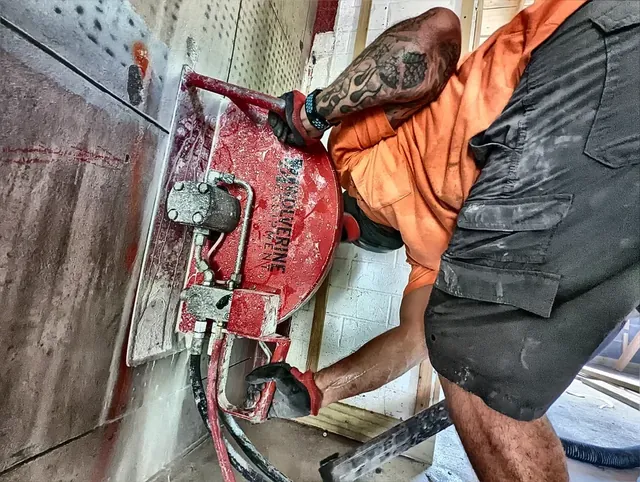
Second, structural considerations around openings become more complex. When we’re cutting new door enlargements or window openings through load-bearing walls, slab thickness at the lintel zone affects how much temporary shoring is required and for how long. Thicker structural elements require more robust shoring systems and longer cure times after any repair pours, which extends the critical path on renovation projects. These aren’t soft costs — they’re hard line items that should be captured in every bid for structural opening work.
Miami Market Pricing Benchmarks by Thickness Category
Based on current Miami market conditions, here is a realistic pricing framework by thickness range for standard flatwork cutting and removal:
- 3 to 4 inches, unreinforced: $3.00 to $4.50 per square foot for cut and remove, including haul-off
- 4 to 6 inches, light wire mesh reinforcement: $4.50 to $6.50 per square foot
- 6 to 8 inches, single-mat rebar at 12-inch spacing: $6.50 to $9.00 per square foot
- 8 inches and above, double-mat or post-tensioned: $9.00 to $14.00 per square foot and higher depending on access and complexity
These ranges reflect crew labor at Miami prevailing rates, equipment amortization, blade consumption, water management, and standard haul-off. They do not include engineering oversight, permit fees, or structural shoring — all of which are separate line items on any professional bid. The local small business ecosystem in Miami depends on contractors who can price these jobs accurately and execute them without surprises.
Post-Pour Thickness Verification and Its Role in Warranty and Liability
On new construction pours where you’re responsible for meeting a minimum thickness specification, post-pour verification isn’t optional — it’s your legal protection. Core sampling after cure (typically at 28 days for compressive strength testing) should include thickness measurement at the core. If a pour comes in under the specified minimum, you need to know before the client does, and you need a remediation plan ready. In Miami’s active construction litigation environment, documented thickness verification is the difference between a warranty claim you can defend and one that costs you six figures in a settlement.
For cutting and removal contractors, post-job documentation of actual field thickness — captured during core sampling or verified during the cut — provides defensible data if disputes arise about scope changes or cost overruns. Photograph the cut edges showing actual slab depth. Measure and record at multiple points. That documentation costs nothing and has saved more than a few jobs from becoming legal disputes.

Building Thickness Awareness Into Every Client Conversation
The most effective thing a Miami concrete cutting professional can do is educate clients on why thickness matters before the bid is even requested. When a property owner understands that a 2-inch difference in slab depth can mean a 40% increase in project cost and an extra day of work, they stop treating the estimate as a commodity to be shopped on price alone. They start treating it as a technical service requiring expertise. That shift in perception is worth more than any marketing spend — and it starts with being the contractor who asks the right questions before everyone else does.
Minimum concrete thickness is never just a number on a drawing. It is the architectural foundation of every cost estimate, every timeline commitment, and every equipment decision made on a Miami concrete project. Get it right at the front end, and the rest of the job has a fighting chance to perform. Get it wrong, and you’re managing a loss from day one.