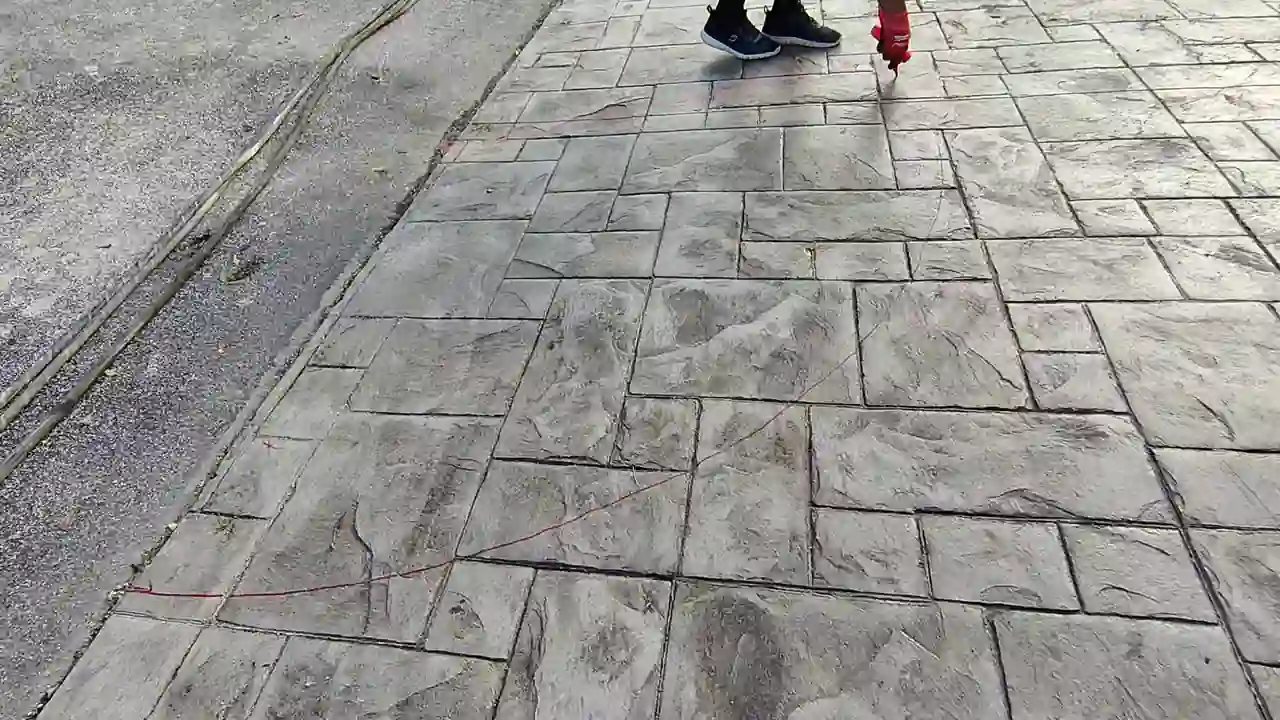
Why Surfside Concrete Removal Jobs Demand a Different Level of Site Planning
Surfside is not a forgiving jobsite. The municipality sits on a narrow barrier island roughly half a mile wide, bordered by the Atlantic Ocean to the east and the Intracoastal Waterway to the west. Every concrete removal project in Surfside — whether it’s a driveway slab, a pool deck, a ground-floor foundation section, or a structural wall in a mid-rise — carries a set of site logistics challenges that simply don’t exist on a standard inland Miami project. Street widths are constrained, residential lots are compact, underground utility corridors are dense, and the post-Champlain Towers environment has made local inspectors and building officials exceptionally attentive to any ground-disturbing work. As a senior concrete consultant who has coordinated demolition scopes across Miami-Dade and Broward for over two decades, I can tell you that Surfside jobs require a pre-mobilization planning phase that rivals what you’d expect on a downtown high-rise project — regardless of how modest the scope looks on paper.

Access Limitations That Define the Scope Before a Blade Touches Concrete
The single biggest variable in any Surfside concrete removal bid is equipment access. Collins Avenue and Harding Avenue carry significant traffic volumes, and the side streets feeding residential properties are frequently too narrow for a standard 26,000-lb track excavator to operate without encroaching on the travel lane. This forces crews to make a critical early decision: downsize to compact demolition equipment, or apply for a lane-closure permit through the Town of Surfside’s public works department and coordinate with Miami-Dade Traffic Engineering. Both paths add time and cost. Compact hydraulic breakers and mini-excavators in the 8,000–12,000 lb class can access most Surfside residential lots, but their production rates on thick slab work — say, a 10-inch post-tensioned pool deck — are substantially lower than full-size equipment. That productivity gap has to be priced into the project from day one.
Alley access, where it exists, is another consideration. Several Surfside blocks have rear service alleys, but many of these were not designed for heavy equipment and have shallow buried utilities — gas, water, and fiber optic conduit — running at depths as low as 18 inches. Before any equipment is staged in an alley, a Sunshine 811 locate is mandatory, and in many cases a hand-dig verification of utility depths is required before wheeled or tracked equipment is permitted to cross. This is not optional. Damaging a gas main in a densely populated coastal community is a catastrophic liability event, and experienced contractors build these verification steps into the schedule rather than treating them as surprises.
Confined Space Challenges in Surfside’s Below-Grade and Podium Structures
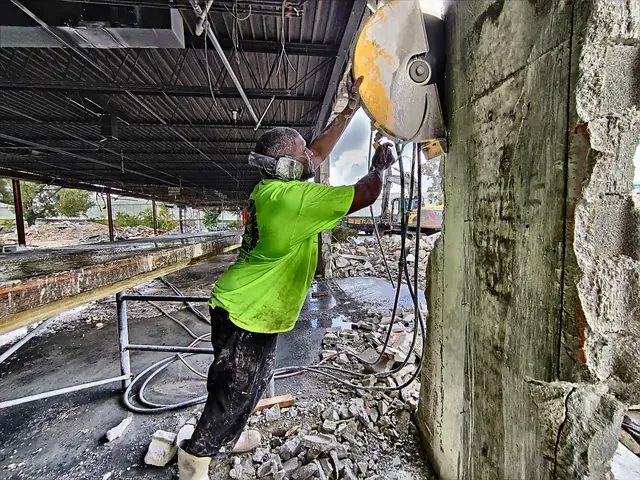
A growing percentage of Surfside concrete removal work involves below-grade spaces — parking garages, mechanical rooms, crawl spaces beneath elevated coastal foundations, and the ground-floor structural bays of older mid-rise buildings. These environments trigger OSHA’s confined space and restricted-entry protocols, and they fundamentally change the tooling strategy. Gasoline-powered saws and hydraulic breakers with diesel power packs cannot be operated in enclosed or semi-enclosed below-grade spaces without continuous forced-air ventilation and real-time atmospheric monitoring for CO, CO₂, and VOC levels. Most experienced Surfside contractors have shifted their confined-space concrete cutting programs to hydraulic sawing systems precisely because hydraulic power packs can be positioned outside the confined space while only the tool head — the ring saw, the chain saw, or the wall saw carriage — operates inside. This arrangement dramatically reduces atmospheric contamination risk and keeps the work area compliant without the productivity losses associated with constant ventilation breaks.
Structural height clearance is another confined-space constraint that gets underestimated. In a typical Surfside parking garage built in the 1970s or 1980s, floor-to-ceiling clearance in the lower level may be as low as 7 feet 6 inches. A standard wall saw track system with a 24-inch blade assembly can operate in that environment, but the power pack and vacuum extraction unit must be positioned strategically to avoid blocking egress paths — which is both a safety requirement and an OSHA citation risk. The choice of cutting method in these environments is never arbitrary; it is dictated by the geometry of the space, the reinforcement schedule of the concrete, and the structural sensitivity of adjacent elements.

Debris Handling and Haul-Out Logistics on Narrow Surfside Lots
Once concrete is broken and cut, it has to go somewhere — and in Surfside, the path from the demolition face to the haul truck is rarely straightforward. Consider a typical scenario: a two-story townhouse on a 50-foot-wide lot with a driveway that runs along one side of the building and terminates in a rear patio slab that needs to be removed. The driveway may be 9 feet wide. A standard concrete debris wheelbarrow loaded with two 80-lb chunks of broken slab will barely clear the building corners. A Bobcat skid steer — the go-to debris-moving tool on most demolition sites — may not physically fit through that corridor. In these situations, crews resort to manual wheel-out with debris carts, or they use a tracked mini-skid with a bucket width under 36 inches. Neither option is fast, and labor hours accumulate quickly when every piece of concrete has to be hand-fed out of a confined rear yard and loaded into a roll-off container positioned on the street or in the driveway apron.
Roll-off placement itself is a permitting issue in Surfside. The town requires a right-of-way permit for any container placed in the public right-of-way, and containers must be equipped with reflective markers and, in some cases, traffic cones and signage. Permit turnaround from the town is typically 24–48 hours, which means the container cannot be ordered the morning of the job — it has to be pre-staged as part of the mobilization plan. Experienced contractors coordinate roll-off delivery with permit issuance and communicate container pickup windows to the hauler in advance to avoid containers sitting on the street beyond the permitted period.
Vibration and Structural Sensitivity Near Coastal Foundations
Surfside’s post-2021 regulatory environment means that any concrete removal work near an occupied residential or commercial structure is subject to heightened scrutiny regarding vibration transmission. Impact demolition — jackhammering, hydraulic breaking — generates ground-borne vibration that can propagate through sandy coastal soils at higher amplitudes than in consolidated inland soils. When working within 20 feet of an occupied structure, or within 10 feet of any post-tensioned slab system, a vibration monitoring protocol is strongly advisable and in some cases required by the structural engineer of record. Seismograph monitoring units can be rented and positioned at the structure’s foundation to log peak particle velocity (PPV) in real time. The industry threshold for residential structures is typically 0.5 in/sec PPV, and for sensitive structures or historic masonry, 0.2 in/sec PPV. If readings approach threshold, the demolition method must shift from impact to cutting — specifically to diamond wire sawing, flat saw cutting, or hydraulic bursting using expanding grout or mechanical splitters.
This is not theoretical. On projects near older Surfside buildings with known foundation concerns, we have had to abandon hydraulic breaker operations mid-shift and pivot to a full diamond-saw cutting program because vibration readings were trending toward threshold before noon. Having that contingency planned — tooling on-site, operator trained, cutting sequence pre-engineered — is the difference between a project that finishes on schedule and one that stalls for three days while a new method gets sourced. For driveway removal projects near existing structures, this level of pre-planning is especially relevant because driveway slabs are often monolithically connected to garage foundations or building aprons.
Coordination with Surfside’s Post-Champlain Regulatory Framework
Since the Champlain Towers South collapse in 2021, the Town of Surfside has implemented enhanced oversight for any work that involves structural concrete modification, removal, or demolition in or adjacent to residential buildings. Contractors working in Surfside should expect that a structural engineer’s letter of no-objection may be required before a permit is issued for concrete removal that involves any slab, column, shear wall, or grade beam — even if the scope appears entirely cosmetic. This requirement is not unique to Surfside; Miami Beach and Bal Harbour have implemented similar review processes. But Surfside’s building department has been particularly thorough, and turnaround times for plan review can extend project timelines by one to three weeks if the submittal package is incomplete. Engaging a licensed structural engineer early — before the permit application is filed — is the most effective way to compress this timeline.
Noise ordinances also apply. Surfside’s code restricts construction noise to weekdays between 8:00 AM and 6:00 PM and Saturdays between 9:00 AM and 5:00 PM. Sunday work is prohibited except by special variance. For projects with aggressive schedules, this means the effective daily production window is tight, and any equipment downtime — for maintenance, fuel, blade changes — eats directly into billable cutting hours. Reviewing current tool performance data before mobilization helps crews select equipment with the reliability profile needed to maximize output within those constrained windows.
Pre-Mobilization Checklist Specific to Surfside Concrete Removal Projects
- Sunshine 811 utility locate — filed minimum 3 business days before ground disturbance; hand-dig verification required in alley and tight-access zones
- Town of Surfside building permit — include structural engineer letter of no-objection for any slab or structural element removal
- Right-of-way permit for roll-off container — coordinate with haul company for delivery and pickup windows aligned with permit dates
- Traffic control plan — required if any equipment or debris handling encroaches on the public right-of-way
- Vibration monitoring protocol — seismograph placement and threshold limits established before impact demolition begins
- Confined space entry plan — atmospheric monitoring equipment, forced-air ventilation, and attendant assignment for any below-grade work area
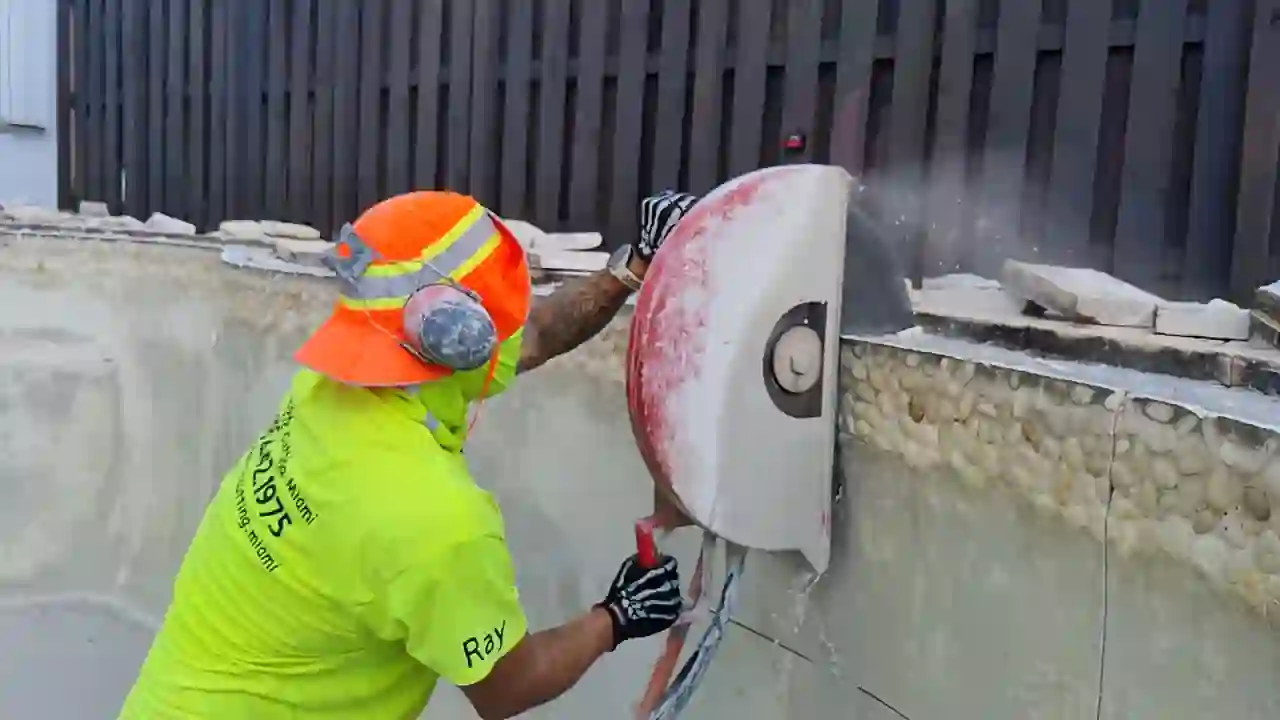
- Hydraulic saw contingency package — ring saw, chain saw, or wall saw system staged on-site as fallback if impact methods trigger vibration threshold exceedance
- Noise ordinance compliance schedule — daily start and stop times posted on-site; no Sunday mobilization without variance
- Debris haul-out path pre-walked — clearance dimensions confirmed for all equipment and debris carts; pinch points identified and mitigation planned
Surfside concrete removal is a specialty scope that rewards contractors who invest in pre-mobilization planning and penalizes those who treat it as a standard demolition job. The combination of compressed site geometry, sensitive coastal foundations, post-Champlain regulatory oversight, and confined-space work environments creates a project profile that requires the same level of engineering discipline as work on a much larger commercial project. The crews who perform consistently well in Surfside are the ones who show up with a plan — not just equipment.