Why Breaking Apart Concrete Is One of the Most Hazard-Dense Tasks in Commercial Demolition
Every year, concrete demolition operations send workers to emergency rooms with injuries that were entirely preventable. Flying spall, silica dust inhalation, struck-by incidents from equipment, and structural collapses during partial demolition — these aren’t freak accidents. They’re the predictable result of skipping proper hazard assessment and ignoring OSHA 29 CFR 1926 Subpart Q, which governs demolition operations in the construction industry. Before you pick up a hydraulic breaker or fire up a diamond blade, you need to understand what you’re actually dealing with. Breaking apart concrete isn’t brute force — it’s a disciplined, sequenced process governed by load analysis, silica exposure controls, equipment selection, and real-time site monitoring. This post covers all of it from a senior field perspective, because the margin for error in concrete demolition is razor thin.
OSHA 29 CFR 1926 Subpart Q — What the Standard Actually Requires Before You Touch Anything
OSHA’s demolition standard is non-negotiable, and inspectors on Miami-Dade job sites know it cold. Before any concrete breaking operation begins, Subpart Q mandates a written engineering survey of the structure. This isn’t a walk-around with a clipboard — it’s a formal assessment of structural integrity, load-bearing elements, the presence of hazardous materials like asbestos or lead paint in older concrete coatings, utility locations, and the sequence of demolition that won’t cause premature collapse.
The engineering survey must be conducted by a competent person, and that term has a specific OSHA definition — someone with the knowledge and authority to identify hazards and take corrective action immediately. On any job where we’re breaking apart reinforced slabs, retaining walls, or elevated decks, that survey drives every decision downstream. Skipping it isn’t just a citation risk — it’s how you end up with a partial structure failing on top of your crew.
- Utility verification: All electrical, gas, water, and communication lines must be positively identified, de-energized, or rerouted before breaking begins.
- Asbestos and lead survey: Required under NESHAP regulations for structures built before 1980 — mandatory before any mechanical demolition.
- Structural shoring plan: Any partial demolition that leaves adjacent concrete in place requires a shoring or bracing plan stamped by a licensed engineer.
- Perimeter controls: Barricades, debris nets, and exclusion zones must be established before equipment is staged.
Silica Dust Exposure Controls That OSHA Will Cite You For Missing
Respirable crystalline silica is the single most serious occupational health hazard in concrete breaking operations. OSHA’s silica standard, 29 CFR 1926.1153, established a permissible exposure limit (PEL) of 50 micrograms per cubic meter of air as an 8-hour time-weighted average — half the previous limit. For concrete breaking with handheld equipment, this is nearly impossible to achieve without active engineering controls.
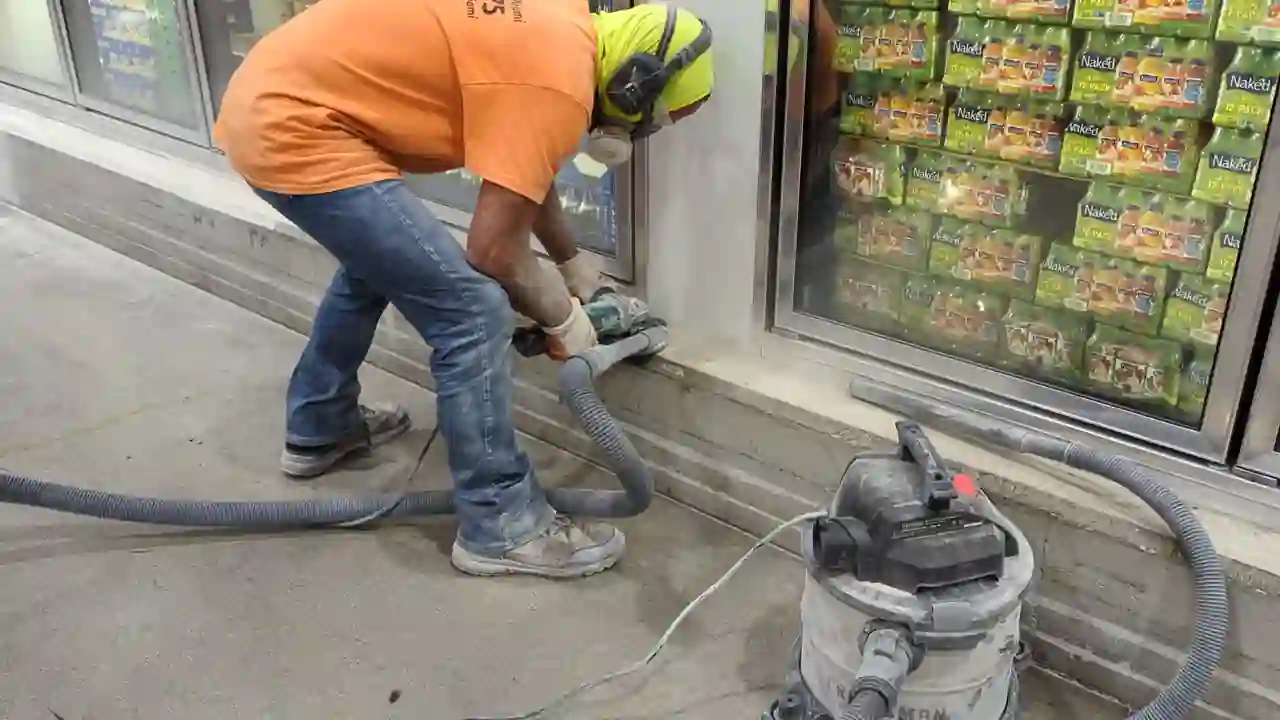
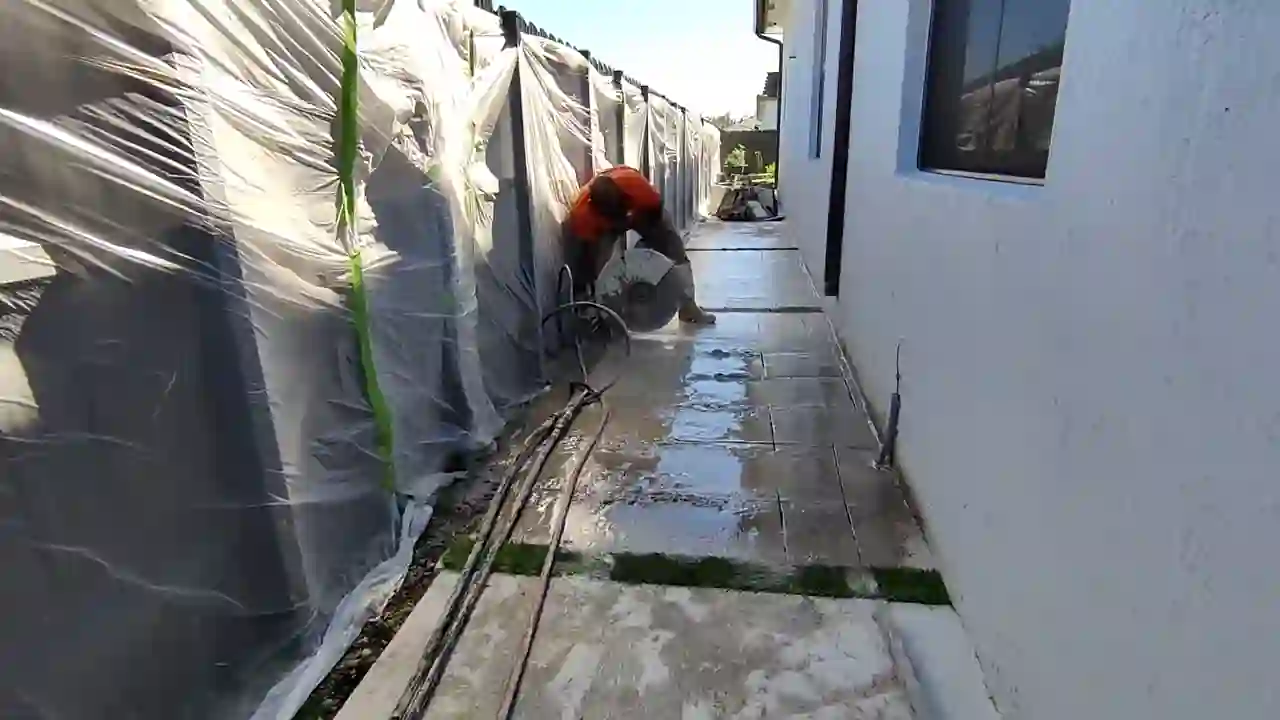
Table 1 of the silica standard provides specific control methods for common concrete tasks. For handheld and stand-mounted drilling and chipping, the standard requires either a water delivery system that continuously feeds water to the point of contact, or a vacuum dust collection system with a HEPA filter operating at the tool. Dry breaking without controls is a citation, a health hazard, and in Miami’s enforcement climate, a project shutdown.
Respirator selection matters too. A standard N95 is insufficient for high-exposure breaking operations. OSHA and NIOSH recommend a minimum of a P100 half-face respirator for most concrete breaking tasks, with full-face supplied-air respirators required in confined spaces or enclosed areas where dust accumulates rapidly. You can explore more about how concrete cutting safety protocols extend across all phases of a project on our resource hub.
Equipment Selection and the Specific Hazards Each Tool Introduces
The method you choose to break apart concrete directly determines your hazard profile. There is no universal tool — the right equipment depends on slab thickness, reinforcement density, proximity to utilities, vibration sensitivity of adjacent structures, and noise ordinance requirements. Here’s how the major methods stack up from a safety standpoint.
Hydraulic Breakers and Pneumatic Jackhammers — Vibration, Spall, and Struck-By Risks
Hydraulic breakers mounted on excavators are the workhorse of large slab demolition, but they generate significant ground vibration that can destabilize adjacent footings and underground utilities. Hand-operated pneumatic jackhammers expose operators to hand-arm vibration syndrome (HAVS) with prolonged use — OSHA and NIOSH both recommend limiting continuous exposure and rotating operators at 30-minute intervals during intensive breaking operations. Flying spall from impact breaking is a serious struck-by hazard; all personnel within 25 feet must wear ANSI Z87.1-rated eye protection and face shields, not just safety glasses.
Diamond Blade Saw Cutting Before Breaking — the Controlled Fracture Approach
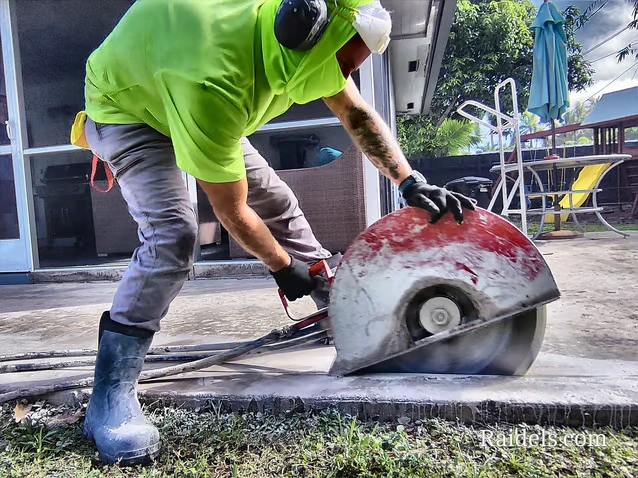
The safest and most controllable method for breaking apart concrete in occupied or sensitive environments is to pre-cut control lines with diamond blades before any impact breaking begins. Slab sawing services use walk-behind flat saws or hand-held cut-off saws to score perimeter cuts to full depth, which eliminates unpredictable fracture propagation and dramatically reduces flying debris during the subsequent breaking phase. This approach also reduces the total energy input required, which means less vibration transmitted to adjacent structures.
Wall Sawing for Vertical Concrete Removal
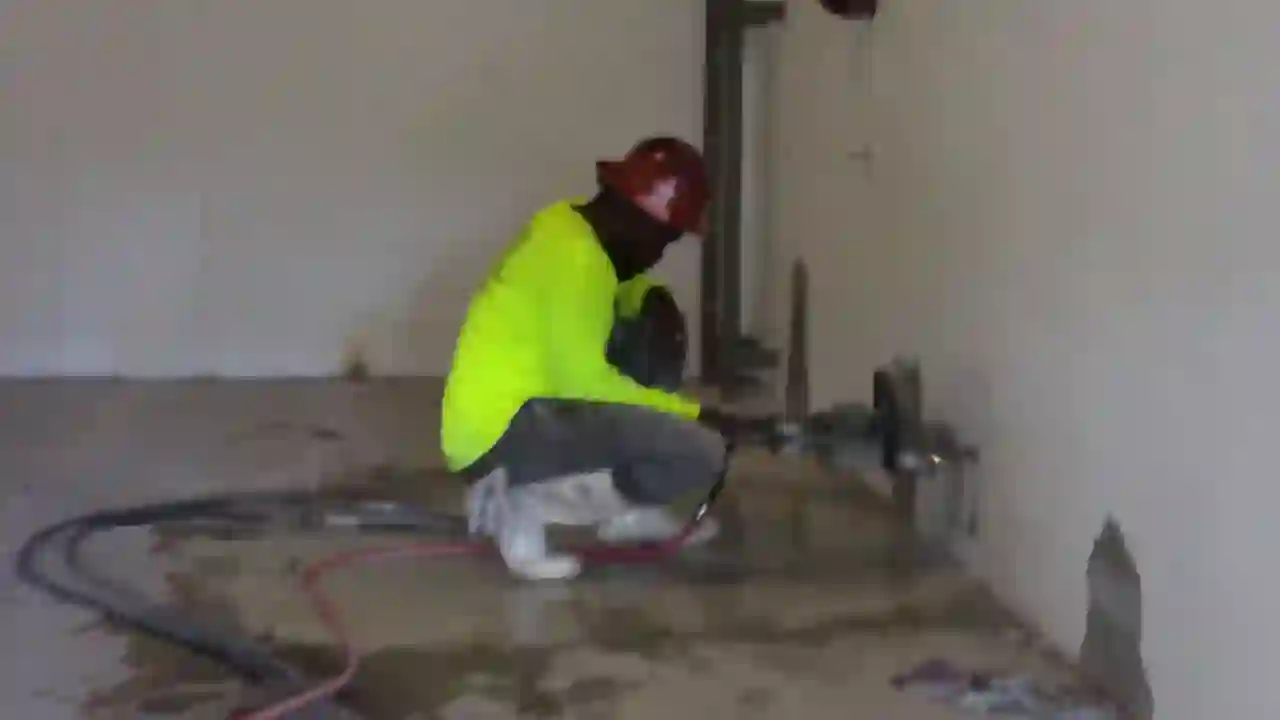
When breaking apart vertical concrete elements — shear walls, elevator cores, retaining walls — wall sawing with track-mounted diamond blade systems is the OSHA-preferred method in confined or structurally sensitive environments. Wall saws eliminate the spall hazard entirely and allow surgical removal of concrete sections without compromising adjacent reinforcement. The trade-off is setup time and the requirement for a trained operator — but in terms of hazard control, it’s the cleanest option available.
Confined Space Protocols When Breaking Concrete in Enclosed Areas
Breaking concrete in basements, utility vaults, tunnels, or any space with limited egress triggers OSHA’s confined space standard, 29 CFR 1926.1201 through 1213. These spaces require atmospheric testing for oxygen levels, combustible gases, and toxic vapors before entry and continuously during operations. Carbon monoxide from gas-powered equipment accumulates rapidly in enclosed spaces — electric or hydraulic-powered tools are mandatory in permit-required confined spaces.
Attendant requirements, rescue procedures, and entry permits are not optional paperwork — they’re the difference between a recoverable incident and a fatality. Every crew member entering a confined space during concrete breaking must be trained to the confined space standard, and a competent person must be designated as the entry supervisor for every shift.
Structural Sequencing — Breaking Concrete in the Wrong Order Collapses Buildings
This is where field experience becomes non-negotiable. Concrete structures are systems — slabs transfer loads to beams, beams transfer to columns, columns to footings. Breaking elements out of sequence removes load paths that adjacent elements are depending on, and the result can be sudden, catastrophic collapse with zero warning. The engineering survey required under Subpart Q must produce a written demolition sequence, and that sequence must be followed without improvisation.
Cantilevered slabs and post-tensioned concrete require special attention. Post-tensioned tendons store enormous energy — cutting a tendon without understanding the tendon layout can cause a sudden, violent release of stored stress that has killed workers. Before breaking any concrete in a post-tensioned system, the tendon layout must be identified through GPR scanning or structural drawings, and the breaking sequence must be engineered to prevent uncontrolled tendon release. Understanding the difference between concrete cutting and concrete drilling methods is foundational to making the right call in these situations.
Personal Protective Equipment Minimums for Concrete Breaking Operations
There is no such thing as over-protected on a concrete breaking site. The minimum PPE baseline for all personnel within the work zone should include hard hat (ANSI Z89.1 Type I or II, Class E), ANSI Z87.1 safety glasses with side shields, face shield for operators and anyone within spall range, P100 or higher respiratory protection, hearing protection rated to bring exposure below 85 dBA (most breakers operate at 100-115 dBA at the operator), cut-resistant gloves, steel-toed boots with metatarsal guards, and high-visibility vest when working near equipment traffic.
For projects where cost management is a priority without compromising safety standards, our guide on saving money on large-scale concrete cutting and demolition projects outlines how proper planning — including safety planning — actually reduces overall project cost by preventing rework, delays, and incident-related shutdowns.
Daily Safety Briefings and Toolbox Talks That Actually Change Behavior
Documentation matters for OSHA compliance, but the real value of daily safety briefings on concrete breaking sites is behavioral. A five-minute tailgate meeting that reviews the day’s breaking sequence, identifies the exclusion zone boundaries, confirms dust controls are operational, and assigns the competent person for the shift creates accountability that generic safety posters never will. Every crew member should be able to answer three questions before breaking begins — what are we breaking today, what’s the exclusion zone, and what do I do if something unexpected happens.
Incident reporting culture is equally critical. Near-miss reporting — spall that came close, a tool that malfunctioned, a section that cracked in an unexpected direction — is the early warning system that prevents fatalities. Crews that report near-misses without fear of punishment are crews that don’t have major incidents. Build that culture deliberately, and enforce it from the top down. For more detailed safety resources across all phases of concrete work, the construction techniques library covers the full spectrum of compliant field practices used by professional concrete contractors across South Florida.
The Bottom Line on Breaking Concrete Safely and Legally in Miami
Breaking apart concrete is skilled, hazard-intensive work that demands engineering oversight, proper equipment, disciplined PPE compliance, and a crew that understands OSHA requirements at the field level — not just in the safety manual. Every shortcut taken in the planning phase shows up as a hazard during execution. The professionals who do this work without incidents aren’t lucky — they’re methodical. They run the engineering survey, they control the silica, they follow the demolition sequence, and they never improvise around structural unknowns. That’s the standard, and on a Miami job site, it’s the only acceptable way to work.