Why Rebar Cutting Is One of the Most Underestimated Line Items in Concrete Demolition
Ask any experienced concrete contractor in Miami what kills a bid, and they’ll tell you the same thing — underestimating rebar. Cutting rebar sounds simple on paper. You’ve got steel, you’ve got a blade or a torch, you make your cut. But on a real job site, with real timelines, real equipment wear, and real labor costs stacking up by the hour, rebar cutting can quietly consume margins that were already thin. Whether you’re dealing with a slab removal in Brickell, a pool demolition in Coral Gables, or a structural retrofit in Doral, knowing how to accurately price rebar cutting work is the difference between a profitable job and a painful lesson. This post breaks down the actual cost drivers, timeline variables, and bidding factors that senior estimators use when cutting rebar is part of the scope.
The Real Variables That Drive Rebar Cutting Costs on Any Project
Before a single number goes on a bid sheet, you need to assess the rebar itself. Not all rebar is created equal, and in Miami’s construction environment — where you’ve got everything from 1950s-era unreinforced slabs to modern post-tensioned decks with high-strength steel — the variance in cutting difficulty is enormous. Here are the primary cost variables every estimator must account for:
- Rebar diameter and grade: Standard #4 (½ inch) mild steel cuts quickly with a diamond blade or angle grinder. Jump to #8 or #10 high-strength rebar and your cut times can triple. Grade 60 and Grade 75 rebar are significantly harder on blades and torches alike.
- Rebar density and spacing: A slab with rebar on 12-inch centers is a very different animal than one on 6-inch centers with dual mats. Density directly multiplies your labor hours and consumable usage.
- Accessibility and working position: Overhead cuts, confined trench work, and cuts made near existing utilities all slow production rates dramatically. A cut that takes 45 seconds in open air might take 4 minutes when you’re working in a crawl space.
- Concrete encasement: Rebar that’s fully exposed after breaking is faster to cut than steel that’s still partially encased in concrete. Partial encasement dulls blades faster and increases heat buildup.
- Post-tensioned cables vs. passive rebar: Post-tensioned systems require specialized handling. Cutting a live tendon without proper depressurization is a serious safety hazard and a liability issue. These cuts require additional planning time, safety protocols, and often engineering sign-off — all of which cost money.
Understanding these variables before you write a number is non-negotiable. For more on how material complexity affects cutting strategy, this breakdown of efficient concrete cutting techniques offers solid foundational guidance on matching methods to material conditions.
Cutting Method Selection and Its Direct Impact on Your Bid Price
The method you choose to cut rebar isn’t just a technical decision — it’s a financial one. Each approach carries a different cost profile in terms of equipment, consumables, labor skill level, and production speed.
Angle Grinder with Cutting Disc
This is the most common method for exposed rebar in demolition work. A standard 4.5-inch cutting disc runs between $2 and $5 per disc, and a skilled operator can cut #4 through #6 rebar at a rate of roughly 20 to 40 cuts per disc depending on steel grade. For high-volume rebar cutting on a slab demolition, this method is cost-effective but labor-intensive. Budget approximately $45 to $75 per hour for a qualified operator including tool cost amortization.
Hydraulic Rebar Cutters
Hydraulic cutters are fast, clean, and ideal for production environments where you’re making hundreds of cuts. The equipment cost is significant — rental rates run $150 to $300 per day for quality hydraulic shear units — but the production rate often justifies it. On high-density rebar grids, a hydraulic cutter can outperform three angle grinder operators. For large demolition scopes, this is often where the math tips in favor of equipment investment over labor hours.
Oxy-Acetylene and Plasma Cutting
Thermal cutting methods are fast through heavy steel but come with consumable costs, ventilation requirements, and fire watch obligations that add to project overhead. Plasma cutting is particularly effective on #8 rebar and above. Gas costs, tip wear, and the additional safety protocols typically add 20 to 35 percent to the base labor cost compared to mechanical cutting on the same material. In enclosed spaces or near flammable materials, thermal cutting may be prohibited entirely, which should be flagged during site assessment.
Diamond Wire and Wall Saw Integration
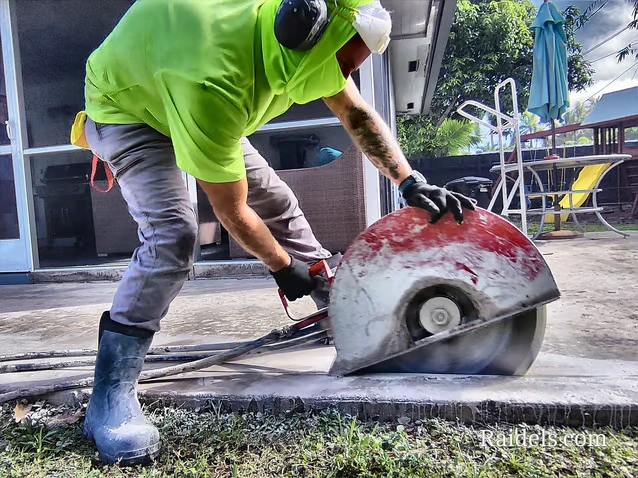
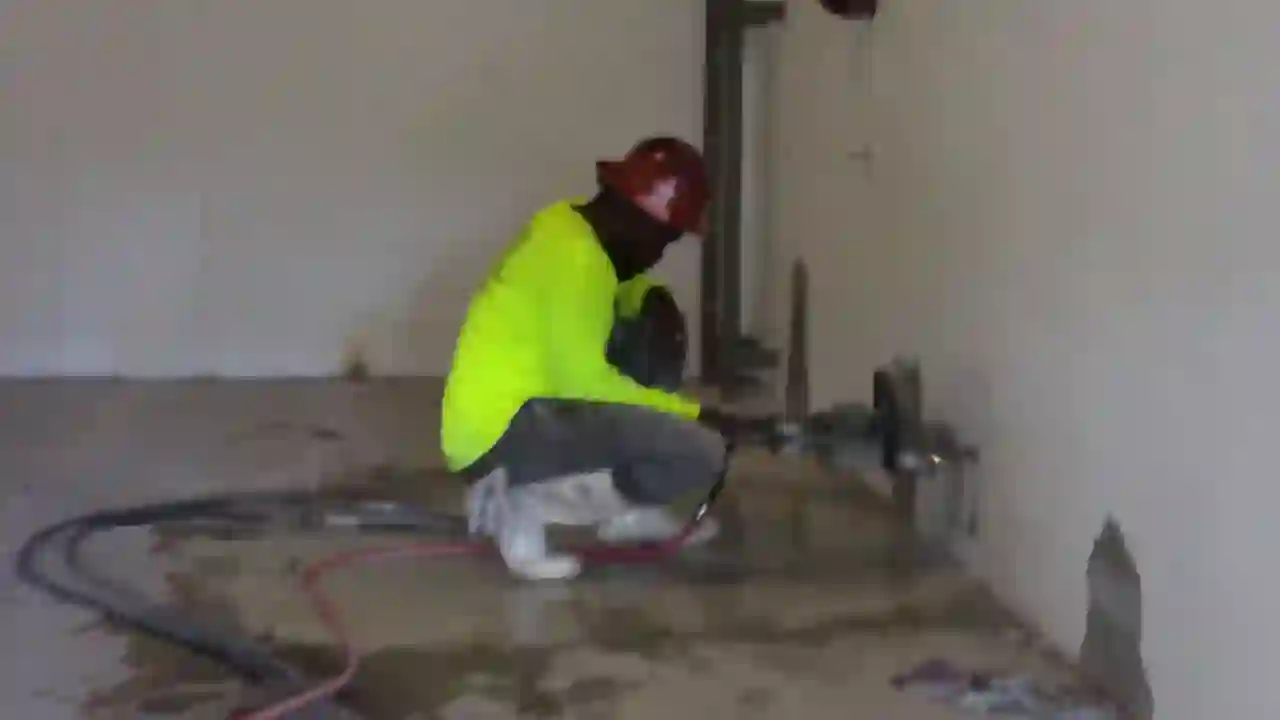
When rebar cutting is part of a larger wall or slab sawing operation, the rebar engagement is handled by the diamond wire or blade itself. This is common in structural modifications where clean, controlled cuts through reinforced concrete are required. The rebar doesn’t get cut separately — it gets cut as part of the concrete pass. Diamond wire cutting through heavily reinforced concrete can reduce wire life by 30 to 50 percent compared to plain concrete, and this consumable cost must be built into the unit pricing. Failing to account for this is one of the most common bidding errors we see on complex structural jobs.
Timeline Estimations for Rebar Cutting on Common Miami Project Types
Timeline accuracy is just as important as cost accuracy when bidding. A job that runs two days over schedule doesn’t just cost you labor — it costs you the next job. Here are realistic production benchmarks based on field experience in South Florida conditions:
- Residential slab removal (500 sq ft, single mat #4 rebar at 12-inch centers): Rebar cutting component runs 3 to 5 hours for a two-person crew using angle grinders. Total rebar cutting cost: $270 to $500 depending on labor rate.
- Pool demolition with dual-mat reinforcement: Pool shells in Miami are often heavily reinforced. A standard 15×30 pool with dual mat #5 rebar requires 6 to 10 hours of dedicated rebar cutting time. This is frequently underestimated by contractors unfamiliar with pool construction standards. For context on the full scope of pool demolition work, this resource on pool demolition and rebuilding covers the broader project picture.
- Commercial slab sawing with embedded #6 rebar grid: Expect blade life reduction of 40 percent and a production rate drop of 25 to 30 percent versus unreinforced concrete. A job that would take 4 hours clean might take 5.5 to 6 hours with heavy rebar engagement.
- Structural wall opening with post-tensioned cables: Add a minimum of 4 hours for engineering review, tendon mapping, and controlled depressurization before a single cut begins. This pre-cut phase is a fixed cost regardless of the opening size.
How to Structure a Rebar Cutting Bid That Holds Up in the Field
A well-structured bid separates rebar cutting costs as a distinct line item rather than burying it in a general demolition rate. Here’s the framework senior estimators use:
- Quantity takeoff: Count linear feet of rebar to be cut, not just square footage of slab. These are different numbers and conflating them leads to underbidding.
- Method assignment: Assign a cutting method to each rebar category based on diameter, access, and volume. Don’t apply a single rate across mixed conditions.
- Consumable escalation factor: Build in a 15 to 20 percent consumable buffer on any job with rebar harder than Grade 40 or diameters above #6.
- Access and position multipliers: Apply a 1.5x labor multiplier for confined space work and a 1.3x multiplier for overhead cuts.
- Contingency for unknown reinforcement: On any project involving concrete poured before 1980, add a 10 to 15 percent contingency. Rebar placement documentation from that era is often unreliable or nonexistent.
If you’re running into common challenges on concrete cutting projects, rebar surprises are consistently near the top of the list. Building contingency into your bid structure is professional practice, not padding.
Equipment Mobilization and Minimum Charges on Rebar-Heavy Jobs
One factor that often gets missed in rebar cutting bids is the mobilization cost for specialized equipment. If a job requires hydraulic shears, a plasma cutter, or a diamond wire saw specifically because of rebar complexity, that equipment has to get to the site. In Miami, mobilization for specialized cutting equipment typically runs $150 to $400 depending on distance and equipment size. For small jobs where rebar cutting is the primary scope, this mobilization cost can represent 20 to 30 percent of the total job cost — and it needs to be on the invoice.
Most reputable concrete cutting contractors in Miami carry a minimum charge of $350 to $600 for any mobilization, regardless of how small the rebar cutting scope is. This isn’t arbitrary — it reflects real costs for fuel, labor time, equipment wear, and insurance exposure on every site visit. Clients who push back on minimum charges are often comparing your quote to someone who hasn’t accounted for these costs and will either cut corners or come back with change orders.
Getting the Numbers Right Before You Commit to a Price
Cutting rebar is technical work that demands technical pricing. The contractors who consistently win profitable rebar cutting jobs in Miami are the ones who invest time in accurate site assessment, method-specific cost modeling, and transparent bid structures that hold up when the job conditions match — or don’t match — what was expected. Blanket square-footage pricing for rebar-intensive work is a recipe for margin erosion.
If you’re working through a complex project with significant rebar cutting scope and want an accurate, detailed quote from a team that knows how to price this work correctly, reach out and book a site assessment with Concrete Cutting Miami. We’ll walk the job, identify the variables, and give you numbers you can actually build a project around.