
Concrete Control Joints Why They Matter and Where to Cut Them in Miami
Concrete shrinks as it cures, and control joints are the planned weak points that keep that shrinkage from turning into
In each of these environments, dust doesn’t dissipate — it accumulates. Air monitoring before, during, and after cutting operations isn’t optional in these contexts; it’s the only way to verify that engineering controls are actually working.
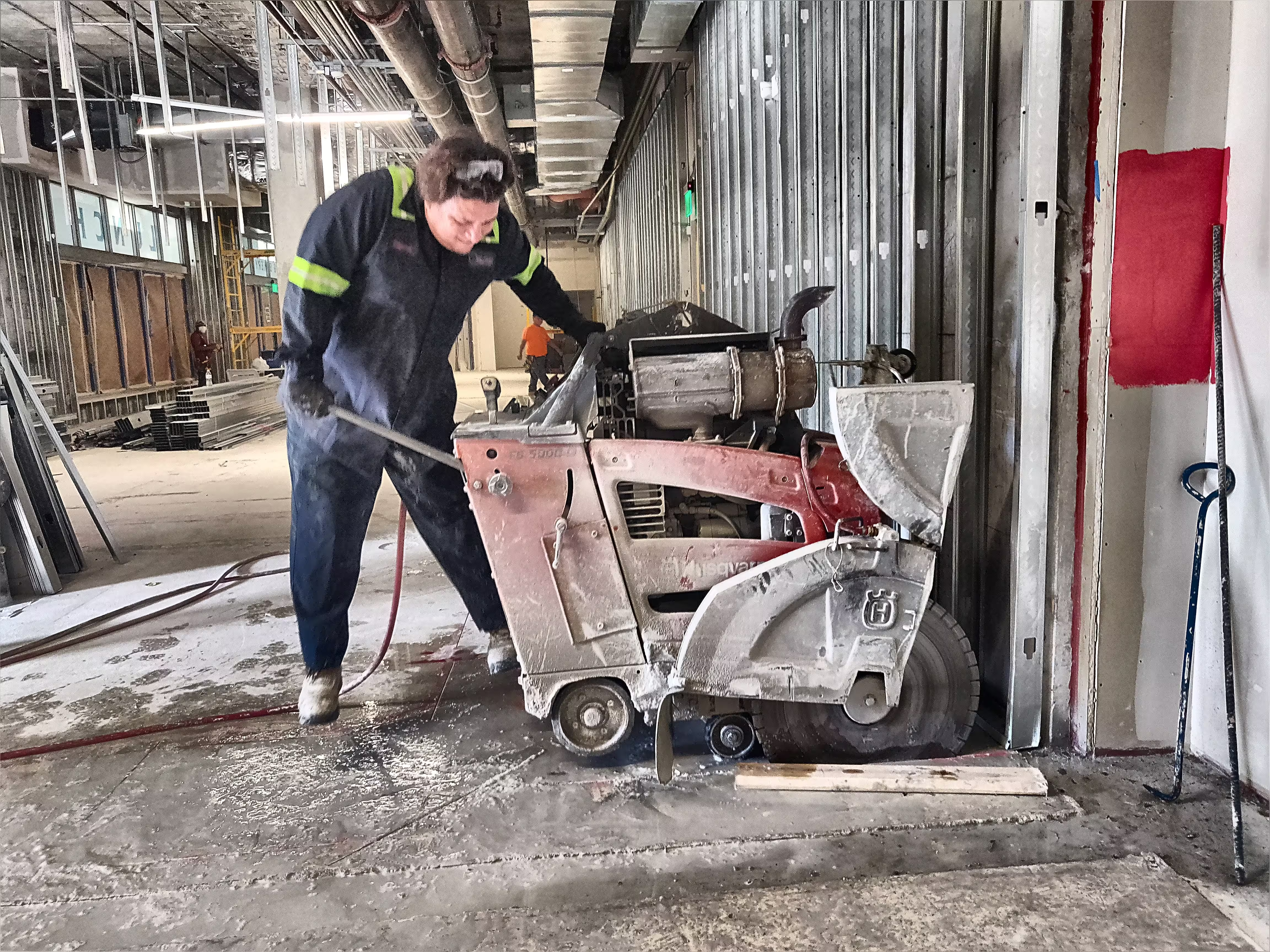
The hierarchy of controls for silica dust exposure starts with elimination and substitution — neither of which is typically available when the task is cutting concrete. That moves the priority to engineering controls, which must be selected based on site-specific constraints rather than generic best practices.
Wet cutting remains the most effective method for suppressing silica at the point of generation. For flat sawing operations in confined areas, the challenge is water management. Slurry accumulates rapidly, creates slip hazards, and can compromise structural assessments if it migrates into adjacent spaces. Vacuum-assisted wet systems — where the slurry is immediately extracted through a dedicated wet-vac line — address this in tight footprints without requiring large containment berms.
For core drilling in confined spaces, shroud-mounted vacuum systems attached directly to the drill motor housing are the standard engineering control. These systems capture particulate at the source before it enters the breathing zone. The critical specification is airflow rate: the vacuum unit must maintain sufficient face velocity at the shroud opening to capture dust generated at drilling speeds typical for the concrete density on site. In Miami’s high-PSI coastal construction, that often means denser aggregate and higher silica liberation rates per linear inch of penetration.
When cutting operations extend beyond 30 minutes in a space with limited natural ventilation, portable forced-air ventilation units should be staged to create directional airflow — drawing contaminated air away from the worker’s breathing zone and toward an exhaust point. The exhaust point must be evaluated carefully: venting into an adjacent occupied space or HVAC return is not acceptable. On concrete cutting services in Miami Beach projects involving occupied boutique hotels or mixed-use developments, this often requires after-hours scheduling and coordination with building management to temporarily disable return air systems in affected zones.
Half-face respirators with P100 particulate filters and OV cartridges are the minimum standard for workers in active cutting zones. In permit-required confined spaces with confirmed silica concentrations above the action level (25 µg/m³), supplied-air respirators or self-contained breathing apparatus may be required. The common site management error is treating respiratory PPE as the primary control rather than the backup. PPE fails — fit-check failures, filter saturation, user fatigue — and when it fails, there’s no redundancy if engineering controls weren’t implemented first.
Projects that integrate dust control planning into the early estimation and scoping phase consistently outperform those that treat it as a field-level decision. The equipment required for proper dust management in confined spaces — industrial HEPA vacuums, air monitoring instruments, forced ventilation units — adds weight, volume, and setup time. If access to the work area is via a single stairwell or a freight elevator with a 2,000-lb capacity limit, that equipment load must be factored into the logistics plan before mobilization, not discovered on the morning of the pour.
If you’re managing a renovation or structural modification in Miami involving concrete cutting, the questions you ask your contractor before work begins directly affect the health of workers on your site and your own liability exposure. A contractor without a written silica exposure control plan — required by OSHA’s 1926.1153 standard for construction — is operating outside federal compliance. That’s not a technicality; it’s a signal about how the entire operation will be run.
Properties undergoing this level of careful, compliant renovation see measurable returns — both in project quality and in long-term asset positioning. For context on how controlled structural modifications affect asset value, our property value optimization resources lay out the connection between quality execution and market performance.
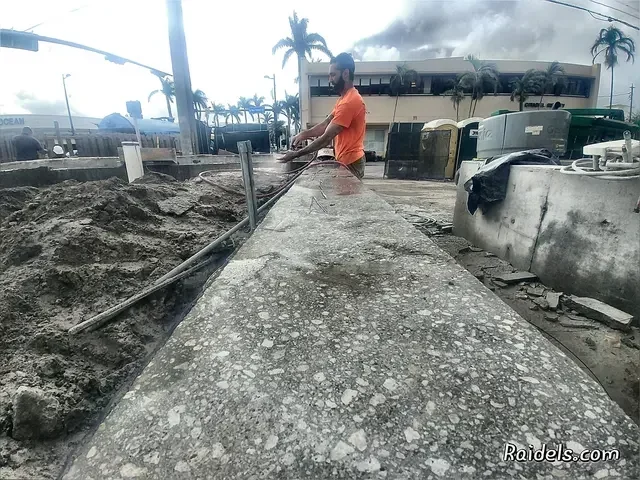
Miami’s construction environment presents unique compounding factors. High ambient humidity affects how silica particles behave in air — wet air doesn’t necessarily mean suppressed dust, and in enclosed spaces, humidity can actually extend particle suspension time by reducing static charge dissipation. Older pre-1980 construction stock in Brickell, Wynwood, and the Beach corridor often contains higher-silica aggregate mixes than modern engineered concrete, meaning dust generation per cut is higher even with equivalent cutting parameters.
The crews that operate safely and efficiently in these conditions are the ones who treat dust control as a core technical competency — not a compliance checkbox. Site logistics, confined space hazard assessment, access planning, and engineering control selection are all interconnected. Getting any one of them wrong doesn’t just create a regulatory problem; it creates a health crisis for the workers executing the work and a liability exposure for everyone in the project chain.
Cement dust is harmful. In confined spaces with restricted access and limited ventilation, it is acutely dangerous. The difference between a well-managed cutting operation and a hazardous one isn’t the type of saw or the skill of the operator alone — it’s the depth of planning that happens before the blade ever spins.
Concrete shrinks as it cures, and control joints are the planned weak points that keep that shrinkage from turning into
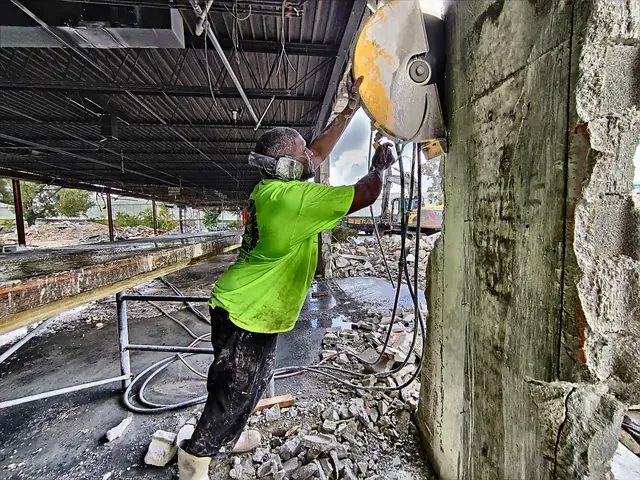
A concrete patio in Broward is rarely a simple slab in an open yard. Between tight side yards, HOA requirements,

Removing a pool is not a weekend project, and doing it wrong in South Florida can leave you with a