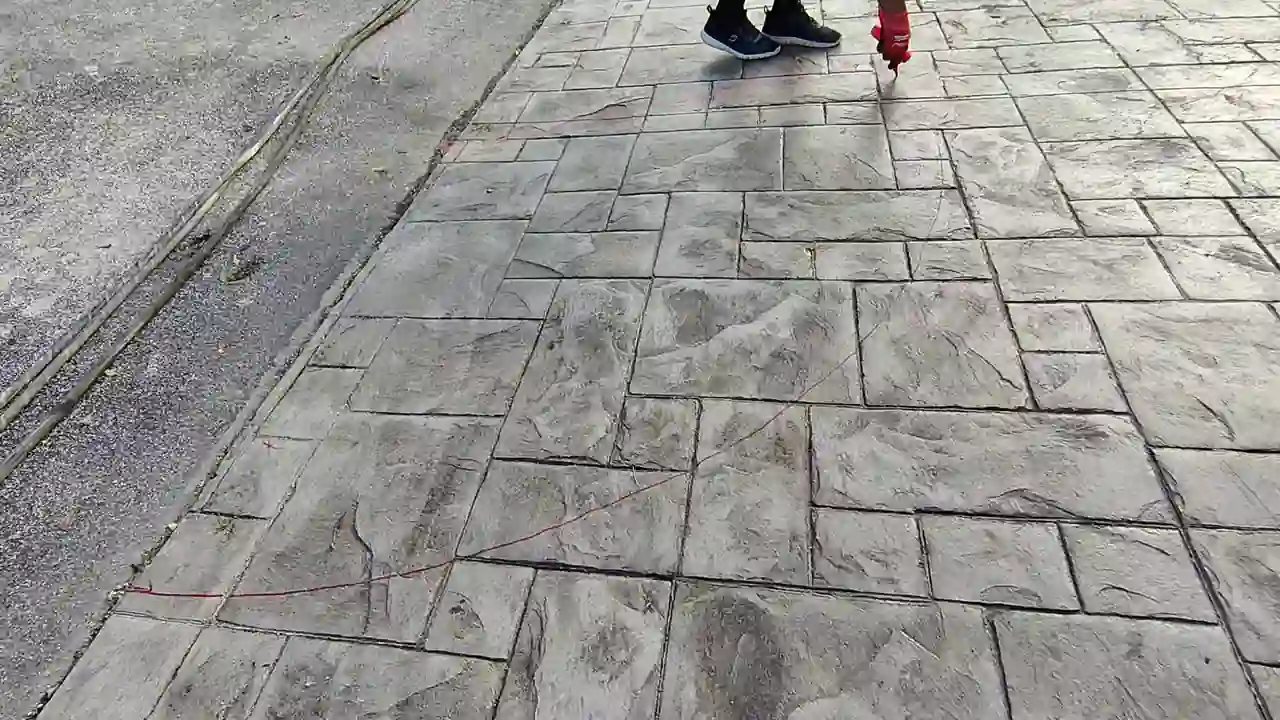
Match the Tool to the Concrete
Breaking concrete is not one job, it is a family of jobs, and the tool that works on a thin patio slab is useless on a thick, reinforced footing. Choosing the right tool comes down to three things: how thick the concrete is, whether it is reinforced, and how much of it you have to move. Get that wrong and you either waste a day or damage something you meant to keep.
In Miami, where slabs run from four-inch patios to footings measured in feet, the tool selection is the first decision on any demo. Breaking concrete in Miami starts with understanding what you are actually up against.
The Hand Tools
A sledgehammer is the entry-level tool, and for a thin, unreinforced slab or a small demolition, it genuinely works. The trick is technique: break the concrete into manageable pieces by working along the edges and any existing cracks, not by swinging wildly at the center. A sledge is slow, but it is cheap and it teaches you respect for the material.
A pry bar and a digging bar earn their keep once the concrete is cracked, letting you lever pieces up and break them further. Hand tools are the right call for small jobs where renting a machine is not worth it. Hand tool breaking is a real skill, not just brute force.
The Jackhammer
The electric or pneumatic jackhammer is the workhorse for medium concrete removal. It breaks a slab into haul-away chunks far faster than a sledge, and it handles reinforced concrete better, though the rebar still has to be cut separately. A jackhammer is the tool for driveways, walkways, and moderate slabs.
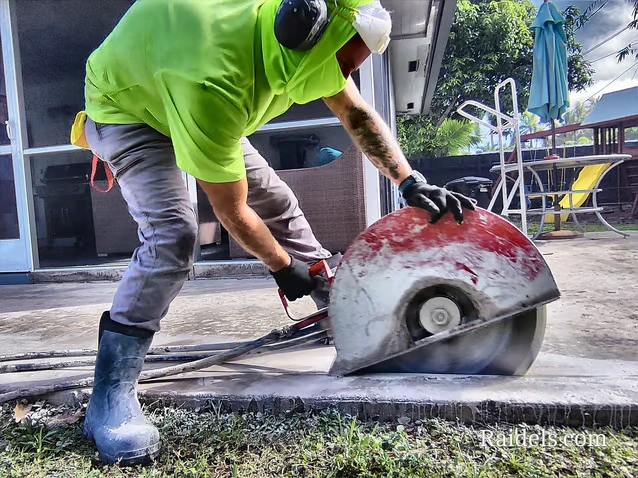
Jackhammers are also the tool that transmits the most vibration into surrounding concrete, so on selective demolition we saw relief cuts first to isolate the section being removed. Otherwise the vibration cracks the slab you are keeping.
The Hydraulic Breaker
For thick, heavily reinforced concrete, a hydraulic breaker mounted on a skid steer or excavator is the answer. It delivers far more impact energy than a handheld jackhammer and breaks footings, thick walls, and large slabs efficiently. This is the tool for real volume.
Hydraulic breakers are also loud and powerful enough to be dangerous, so they are run by operators who understand the machine and the material. On a big commercial demo, the breaker does in an hour what a jackhammer would take all week to do.
Cutting Before Breaking
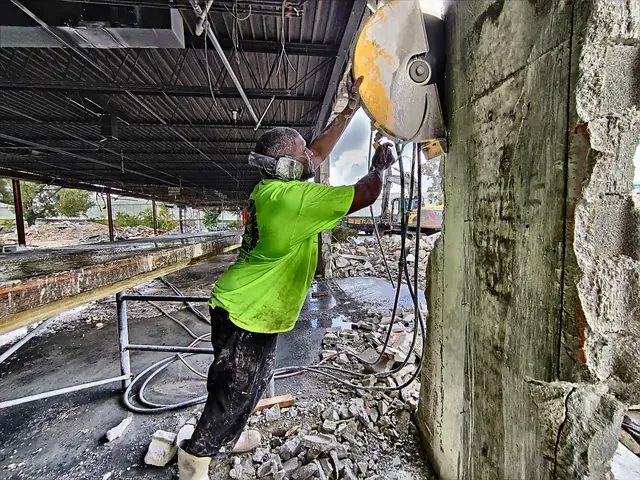
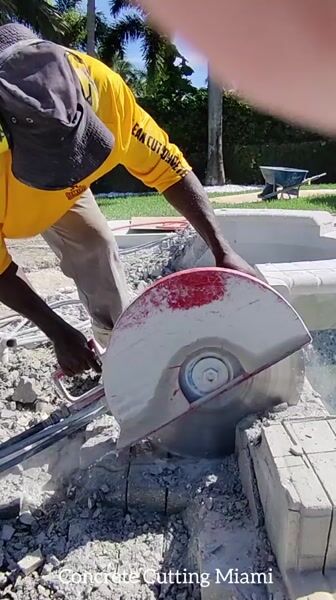
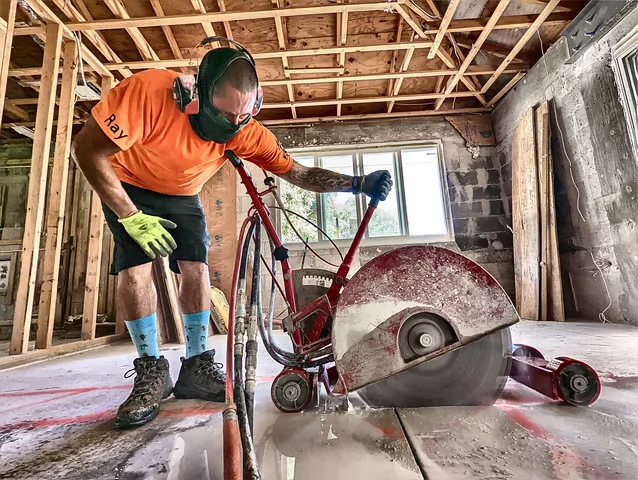
The smartest concrete breakers cut first. Sawing clean control lines around the area to be removed gives the breaker a defined edge and stops cracks from running into the concrete you are keeping. It is the difference between a clean removal and a jagged mess.
For full-depth cuts and precise edges, concrete saw cutting does what no breaker can, and the two tools work together on most jobs.
Rebar Changes the Game
Reinforced concrete is a different material to break. The rebar holds the concrete together even after it cracks, so the breaker works against the steel as much as the concrete. On reinforced slabs, the rebar has to be cut and the concrete peeled away, which is slower and more expensive.
This is why sawing and drilling often beat breaking on reinforced work, the saw cuts the steel and the concrete together in one clean pass.
The Role of Sawing in a Breaking Job
The best concrete breakers do not just break, they cut first. Sawing clean lines around the section to be removed does two things. It gives the breaker a defined edge to work toward, and it stops the cracks and vibration from running into the concrete you are keeping. The saw is the tool that makes breaking safe and clean.
This is especially true on selective demolition, where the concrete being removed is attached to concrete that stays. A breaker hammering away at a slab will send cracks into the neighboring section, but a sawed relief line stops those cracks cold. The saw and the breaker are partners, not rivals, and the smart crew uses both.
Matching Tool to Slab Thickness
- Thin patio, no rebar: sledgehammer and pry bar can handle it.
- Four-inch driveway: a jackhammer is the efficient choice.
- Thick reinforced slab: saw and hydraulic breaker work together.
- Footings and heavy walls: hydraulic breaker on a machine.
- Any selective job: saw relief lines before breaking.
Picking the right tool for the slab thickness is the first decision on any breaking job, and it is the difference between a day of progress and a day of fighting the concrete.
Safety Gear Is Part of the Tool Set
The tools that break concrete include the equipment you wear, not just the equipment you swing. Breaking concrete throws chips and dust, and the safety gear is what keeps a routine job from becoming an injury. Eye protection is non-negotiable, because a flying chip to the eye is one of the most common demo injuries. Hearing protection matters too, because the sustained noise of breakers causes permanent damage over time.
Dust protection is the one people underestimate. Breaking concrete creates silica dust, and breathing it over time causes silicosis. A respirator or at least a dust mask is part of the kit, and on a big job, water suppression on the breaker is the better answer. The dust is invisible in the moment, which is why it gets ignored, and why it is the most dangerous part of the job long-term.
Foot and hand protection round out the set. Steel-toe boots protect against dropped pieces, and gloves protect against the sharp edges of broken concrete. The full kit is cheap compared to the injury it prevents, and a professional crew wears it as a matter of course, not as an afterthought.
Air and power matter too. Pneumatic breakers need a compressor sized to the tool, and running one off an undersized compressor means a breaker that hits soft and a job that drags. Electric breakers are quieter and cleaner, which makes them the choice indoors and in occupied buildings. Matching the power source to the breaker is as important as matching the breaker to the concrete.
The rebar is where hand tools and light breakers hit their ceiling. Once the concrete cracks but the steel holds it together, a sledgehammer is done and a small breaker is just vibrating. That is when the saw comes out, because a diamond blade cuts the steel and the concrete together in one pass. The cut-versus-break decision is really about whether there is steel in the slab and how much of it there is.
Disposal is the part that surprises first-timers. Concrete is heavy, and a broken patio turns into far more debris than it looked like standing whole. A cubic yard of concrete weighs about two tons, and a small patio can be five or ten tons of material that has to be hauled somewhere. Plan the haul before you start breaking, because a pile of broken concrete with no truck lined up is a problem you created for yourself.
The subgrade is worth checking before you break. If the slab sits on wet or shifting soil, removing it can be the first step toward a bigger problem, and the fill underneath may need attention before the new pour. A quick look at what is under the slab tells you whether breaking is the whole job or just the start of a slab removal that includes the base.
Let Us Bring the Right Tool
You do not have to guess which breaker fits your slab. Tell us what you are removing, how thick, and whether it is reinforced, and we will bring the right tool and the operator for it.
From a thin patio to a thick commercial footing, breaking concrete done right starts with the right tool. Call us before you rent the wrong one.