Why concrete saw cutting services are not one service — and picking the wrong saw method doubles your cost
When a property owner searches for concrete saw cutting services, the natural assumption is that concrete cutting is concrete cutting — a saw, a blade, a straight line through concrete. The contractor shows up, makes the cut, and leaves. That assumption is expensive when it is wrong. There are at least four fundamentally different concrete saw cutting methods, and using the wrong one for your specific situation either costs more than necessary (using a wall saw where a hand saw would work), produces inferior results (using a hand saw where a wall saw track system is needed for a straight, plumb cut), or cannot achieve the required cut at all (trying to cut a 20-inch-thick foundation wall with a circular blade instead of a wire saw). Understanding what concrete saw cutting services actually encompass — and which method your project requires — is the first step toward hiring the right contractor with the right equipment.
 Concrete Cutting Miami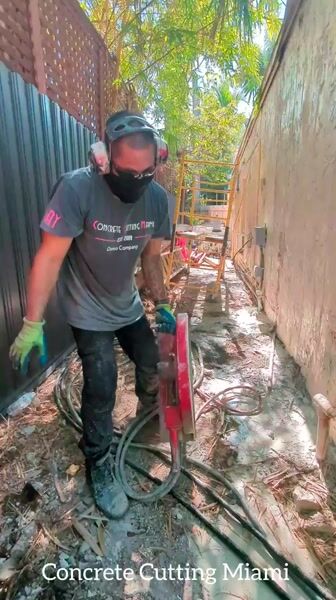
In Miami, the range of concrete saw cutting services is broader than most property owners expect because the built environment spans everything from 1950s single-story homes with 4-inch unreinforced slabs to modern high-rise parking garages with post-tension decks and heavily reinforced shear walls. A contractor who only owns a walk-behind flat saw and a gas cutoff saw can handle residential patio cutting but cannot cut a 12-foot-wide door opening through a structural wall in a commercial building. A contractor who owns a wall saw track system and hydraulic power unit can cut that opening but may not own a wire saw for the 36-inch-thick foundation wall that needs to be sectioned. The equipment inventory defines the services the contractor can actually perform — and a contractor who claims to offer all concrete saw cutting services without owning the corresponding equipment is subcontracting the work they cannot do themselves.
The four categories of concrete saw cutting services and what each one is designed to do
Flat sawing — cutting horizontal concrete surfaces
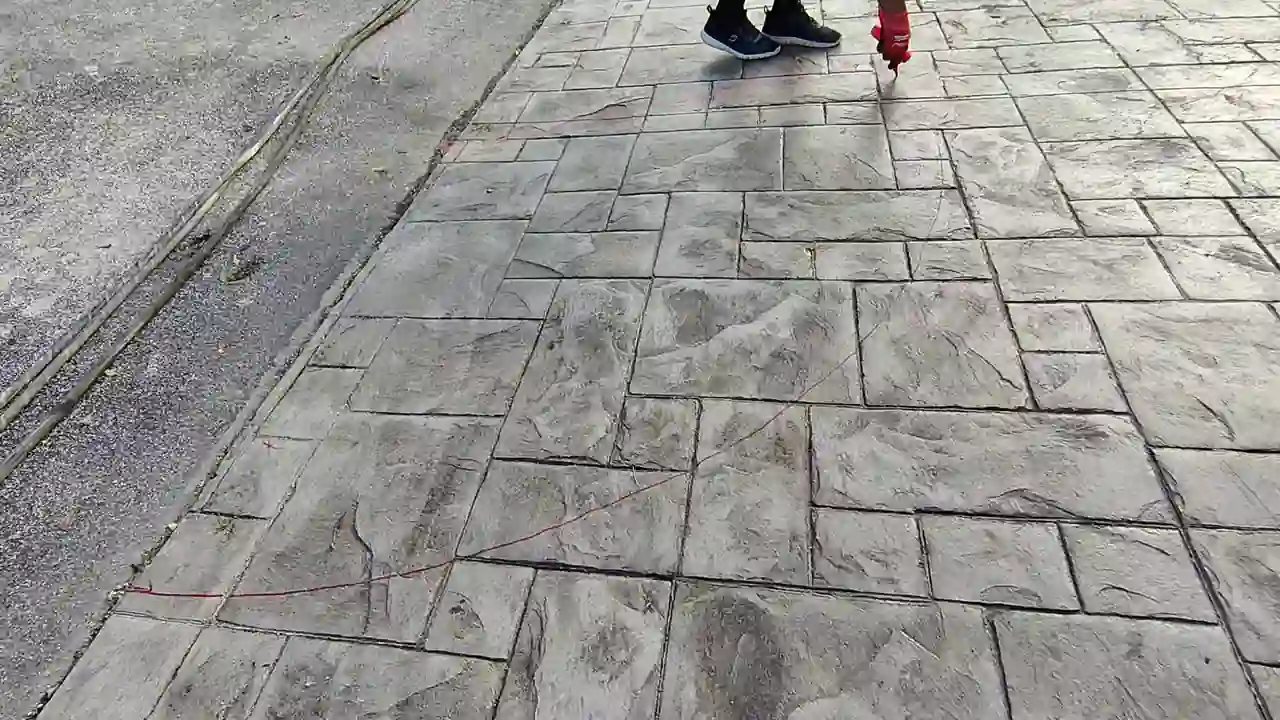
Flat sawing, also called slab sawing, is the most common concrete saw cutting service. A diamond blade on a walk-behind or ride-on saw cuts horizontal concrete surfaces — floors, slabs, pavement, bridge decks, and any concrete that lies flat. The saw travels along the cut line on wheels or tracks, with blade depth adjustable from surface scoring to full slab thickness depending on blade diameter and saw power. Flat sawing is used for cutting control joints in new concrete within 24 hours of placement, cutting expansion joints in pavement, trenching slabs for plumbing and electrical rough-ins, sectioning slabs for demolition and removal, and cutting the perimeter of slab sections that will be broken out for repair. In Miami, slab sawing is the concrete saw cutting service we perform most frequently — it is the foundation of virtually every slab modification project.
Wall sawing — cutting vertical and overhead concrete surfaces
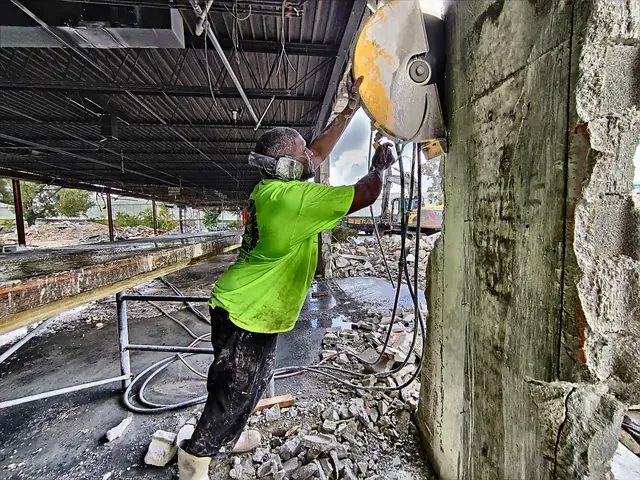
Wall sawing, also called track sawing, mounts a diamond blade on a track system attached to a vertical or overhead surface. The saw head travels along the track under power, with blade depth controlled by incremental passes for concrete thicker than the blade’s maximum single-pass depth. Wall sawing produces cuts that are straight within a fraction of an inch over the full track length and plumb — perpendicular to the wall surface. This precision is essential when the cut becomes a finished opening for a door or window frame that must fit exactly. Wall sawing is the method for creating new door openings through concrete walls, cutting window openings in building facades, making penetrations for ductwork and mechanical systems, sectioning walls for selective demolition, and cutting structural openings that must meet engineering tolerances. In Miami commercial and multi-family construction, wall sawing is the concrete saw cutting service that general contractors request most frequently.
Wire sawing — cutting massive concrete sections beyond blade capacity
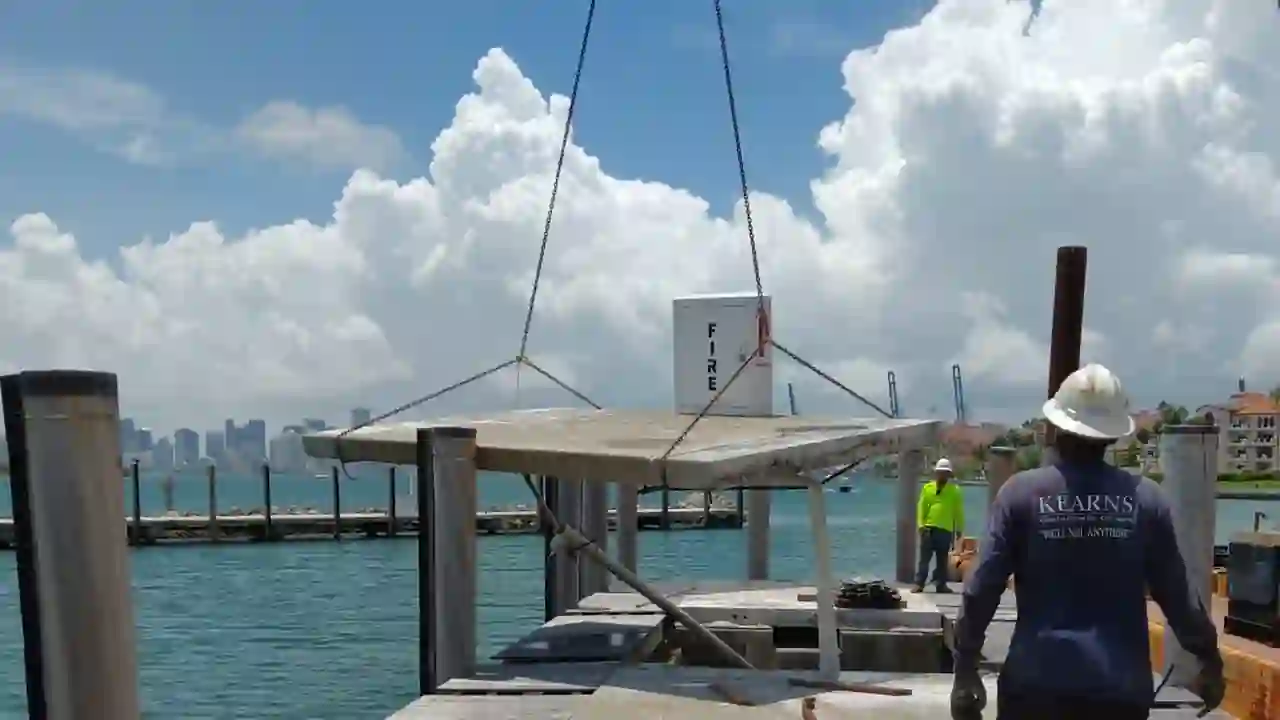
Wire sawing uses a continuous loop of diamond-impregnated steel cable driven through the concrete by a power unit with hydraulic tensioning. The wire can be threaded through a small cored access hole and then wrapped around the concrete section to be cut. The power unit pulls the wire through the concrete under controlled tension, and the diamond segments on the wire grind through the concrete regardless of thickness. There is no practical thickness limit for wire sawing — the wire cuts through 36-inch-thick foundation walls, 48-inch bridge piers, and 60-inch dam structures. Wire saws are a specialized concrete saw cutting service used when circular blades cannot reach through the full concrete thickness. Most residential projects do not require wire sawing. Commercial, industrial, and infrastructure projects frequently do.
Hand sawing — cutting concrete where larger saws cannot reach
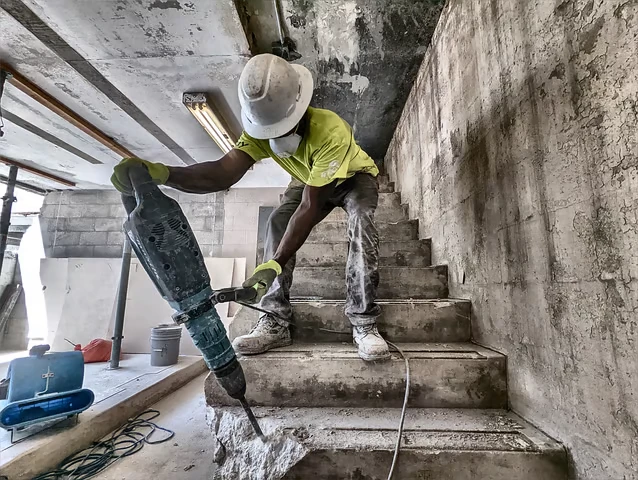
Hand sawing uses handheld saws — gas-powered, electric, or hydraulic — to cut concrete where walk-behind and track-mounted saws cannot physically access the cut location. Tight spaces against walls or ceilings, small openings where a track system cannot be mounted, corner finishing of openings cut by larger saws, and cuts in areas with zero clearance for saw frames are all hand sawing applications. Hand sawing is slower per linear foot than track-mounted or walk-behind equipment, and the maximum cutting depth is limited by blade diameter and the operator’s ability to control the saw. It is the concrete saw cutting service of last resort — deployed when other methods cannot reach the cut, not as a substitute for them.
How concrete saw cutting services are priced
Concrete saw cutting services are typically priced by the linear foot for straight cuts, with the rate varying by concrete thickness, reinforcement density, and access conditions. Additional charges apply for equipment setup (mounting a wall saw track takes time), for GPR scanning before cutting, for slurry containment and disposal, and for site cleanup. Some contractors quote a lump-sum price for the entire project rather than a per-foot rate. Both pricing methods are legitimate, but the lump-sum quote should explain what assumptions about concrete conditions are included and how unexpected conditions will be priced.
Flat sawing on an accessible slab is generally the least expensive saw cutting service per linear foot — the equipment is simpler, setup is faster, and the saw travels at production speed. Wall sawing costs more per linear foot because track setup and incremental-depth passes take more time. Wire sawing is typically the most expensive per linear foot of cut but is often the only viable method for the thickest concrete sections — the alternative is not a cheaper cutting method, it is not being able to make the cut at all. Hand sawing costs more per linear foot than the equivalent cut made by a larger saw, but is deployed precisely because the larger saw cannot reach the cut location.
Choosing a contractor for concrete saw cutting services in Miami
The contractor you hire for concrete saw cutting services should own the equipment required for your specific project — not rent it for the day, not borrow it from another company, not subcontract the cutting to someone you have never met. Equipment ownership means the crew is trained on that specific equipment, the equipment is maintained and ready to work, and the contractor’s investment in the equipment demonstrates commitment to concrete cutting as a business. Miami concrete cutting requires an understanding of local conditions — limestone aggregate, post-tension slabs, high water table slurry management — that out-of-town contractors or generalists may not have.
Verify that the contractor’s concrete cutting services include the specific method your project requires. If you need a door opening through a concrete wall, confirm that the contractor performs wall sawing with a track system — not hand sawing. If you need a thick foundation wall sectioned, confirm the contractor has wire sawing capability. The right saw for the right cut is the difference between a project that goes smoothly and a project where the contractor arrives with the wrong equipment and either struggles through with an inferior method or reschedules while they find the right tool. Contact us to discuss your project and confirm we deploy the correct saw cutting service for your specific concrete cutting requirements.