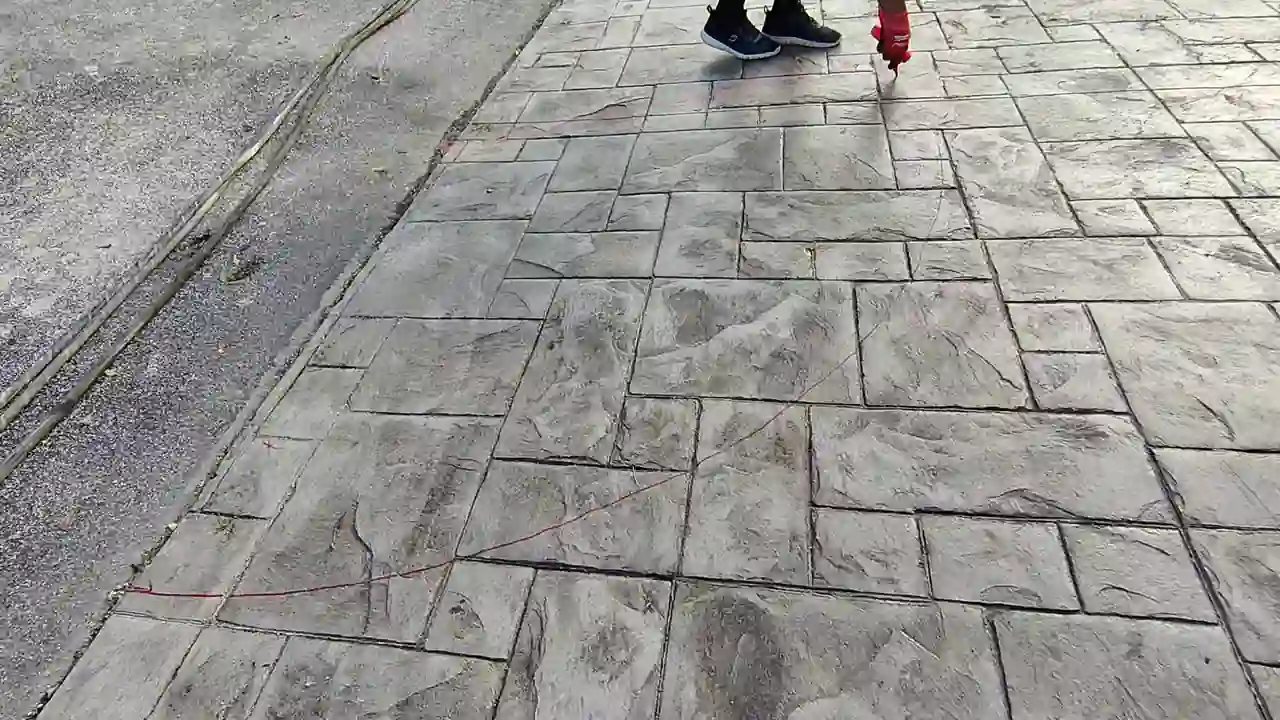
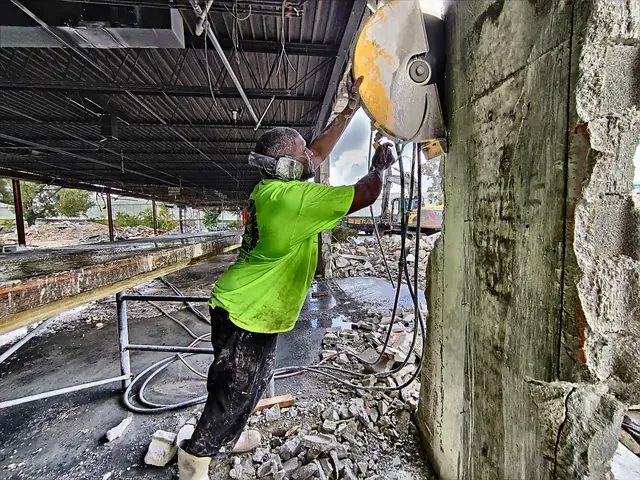
The Hand Saw Is the Precision Tool
A concrete hand saw is a portable, engine- or electric-powered cut-off saw with a diamond blade, and it is the tool that does the precise work a big walk-behind saw cannot. When a cut has to be made in a corner, up a wall, around a pipe, or in any space too tight for a larger machine, the hand saw is what comes out of the truck.
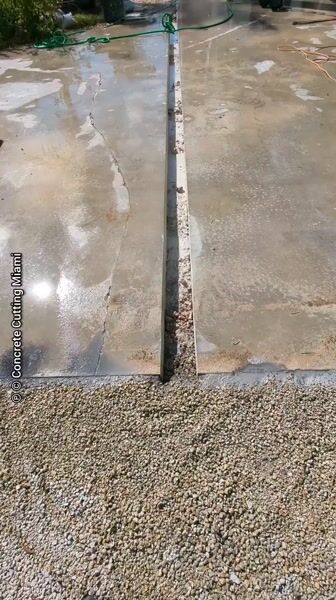
Hand saws sacrifice raw power for maneuverability, and that is exactly the point. They are the finish tool of concrete cutting, the one that makes the cuts that have to be right the first time. Hand sawing in tight spaces is a daily reality on Miami remodels and repairs.
The Types of Concrete Hand Saws
Gas-powered cut-off saws are the most common on job sites because they are portable and powerful and do not need a cord or a power source. They handle wet and dry cutting and are the go-to for most field work. Electric hand saws are quieter and cleaner, which makes them the choice indoors and in occupied buildings.
Hydraulic hand saws are the heavy option, used where the cut is deep and the material is tough, like thick walls and heavily reinforced concrete. Each type has a place, and matching the saw to the job is what keeps cuts clean and fast.
Blades for Hand Saws
The blade on a hand saw is a diamond blade, and the same bond and segment rules apply as with any concrete saw. The blade has to match the material, and the depth of cut is limited by the blade diameter, which is smaller on a hand saw than on a walk-behind machine.
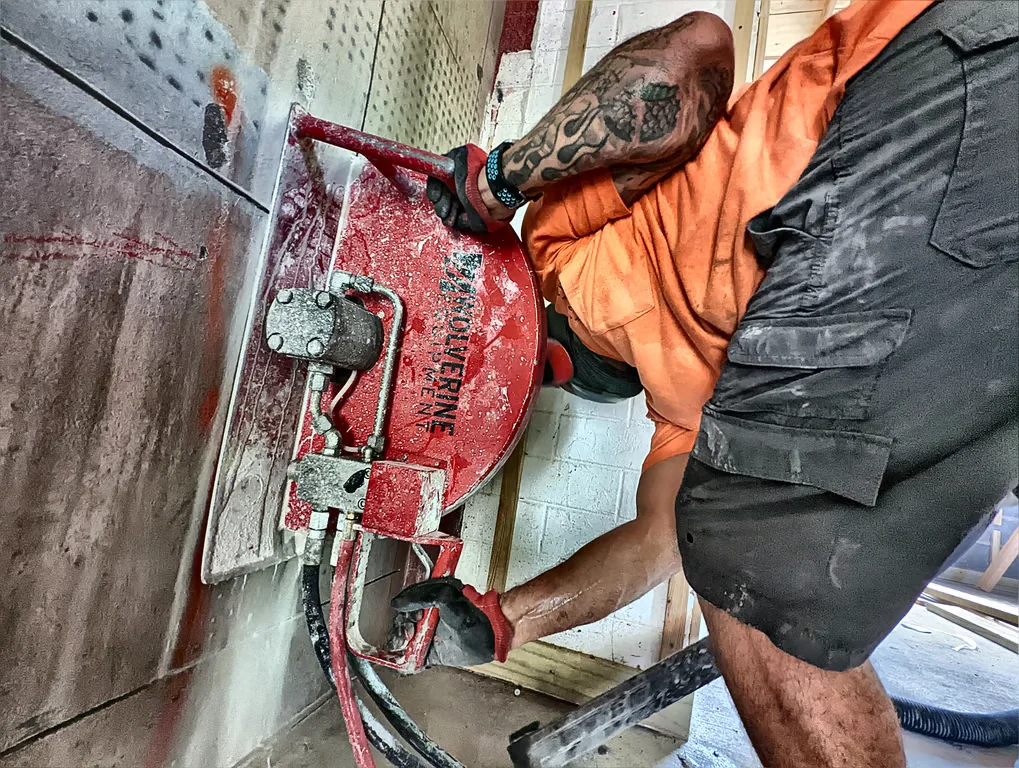
For most hand saw work, a segmented blade handles the general cutting, while a turbo or continuous blade is used where the edge finish matters. The right blade is the difference between a clean cut and a fight, and we carry several bonds for the range of Miami aggregate.
Where Hand Saws Earn Their Keep
Hand saws are the tool for control joints in small pours, for cutting door and window openings in block walls, for trimming slabs around plumbing penetrations, and for any cut where a walk-behind saw would be overkill or would not fit. They are also the tool for wall cuts at height, where a track saw is too slow to set up.
On a remodel, the hand saw is constantly in use, opening walls for plumbing and electrical, cutting back slabs for new doorways, and trimming edges for a clean fit. Cutting for renovation leans heavily on the hand saw.
Wet Versus Dry With a Hand Saw
Most professional hand sawing runs wet, because water cools the blade and controls silica dust. The wet hand saw attaches to a water source and sprays the blade as it cuts, keeping the dust down and the blade alive longer.
Dry cutting still has its place for quick, shallow cuts, but in Miami-Dade the dust rules make wet cutting the default. A dry hand saw without dust collection puts you on the wrong side of silica exposure rules, and it wears the blade out faster too.
The Skill Behind a Straight Hand Cut
A hand saw cuts as straight as the operator guides it, which is why experience matters. Following a chalk line, holding the saw steady, and managing the blade through the cut takes practice, and a wandering cut is a redo. I would rather put an experienced operator on a hand saw than a beginner on a track saw, because the track saw forgives and the hand saw does not.
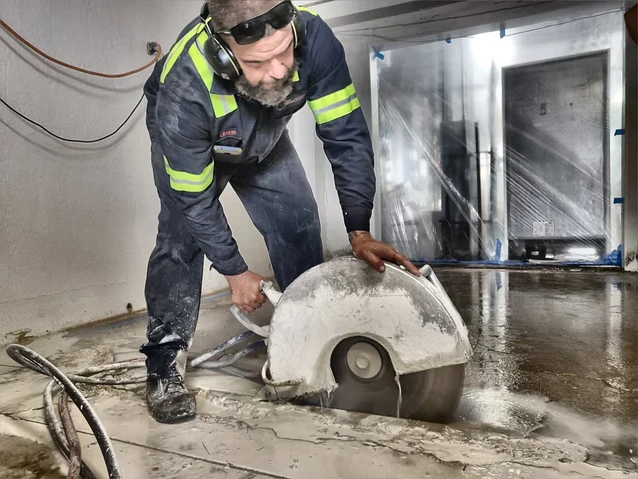
The cuts that have to be plumb and true, the ones a door frame or a pipe has to fit, are hand saw cuts, and they are only as good as the hands holding the saw.
Hand Saw Versus Track Saw on a Wall
When a cut has to be made in a vertical wall, the choice is usually between a handheld saw and a track-mounted wall saw, and the trade-off is precision versus speed. The track saw is slower to set up but cuts a perfectly straight line every time, because the track holds the blade. The hand saw is faster to start but only as straight as the operator guides it.
The rule we follow is simple. If the cut is long, load-bearing, or has to be plumb for a frame or a door, the track saw is the answer. If the cut is short, shallow, or in a spot the track cannot reach, the hand saw takes over. A good operator can make a straight hand cut, but the track saw removes the doubt on the cuts where straightness is non-negotiable.
Choosing Between Hand and Track
- Hand saw: short cuts, tight corners, and quick openings.
- Track saw: long vertical cuts and openings that must be plumb.
- Hand saw: shallow work where setup time would be wasted.
- Track saw: load-bearing walls where precision is safety.
Both have a place on the truck, and the skill is knowing which one the cut is asking for before you start.
Keeping a Hand Cut Straight and Square
A hand saw cuts as straight as the hand that guides it, and keeping a cut straight is a skill built on a few habits. The first is a good line, snapped in chalk and followed carefully, because the saw will only be as straight as the line you give it. The second is a steady stance and grip, so the saw does not twist as it cuts. The third is a consistent feed rate, because a saw that is pushed too hard wanders.
For a cut that has to be perfectly straight, a guide helps. A straightedge clamped to the surface gives the saw a fence to ride against, and it turns a freehand cut into a guided one. It is slower to set up, but on the cuts where straightness matters, the guide is worth it.
The other half of a square cut is the blade. A warped or dull blade will not cut straight no matter how steady the hand, so the blade has to be in good shape and matched to the material. A sharp blade on a good line in a steady hand is the formula for a clean hand cut, and it is the standard we hold on every job.
Blade depth on a hand saw is smaller than on a walk-behind machine, which is why hand sawing is about precision rather than volume. A hand saw’s blade reaches a limited depth, so full-depth cuts through thick slabs are walk-behind work, while the hand saw handles the shallow cuts, the corners, and the details. Knowing which tool the cut calls for is the first decision on any job.
The dust question is where a hand saw can go wrong indoors. A gas saw running dry inside a finished space throws silica into the air and stinks up the room, which is why electric saws dominate interior work and why we run them wet or with vacuum dust collection. Indoor cuts have to be clean, because the renovation work is happening in a space people are living and working in.
For a cut that has to be straight, a guide makes the difference. A straightedge clamped to the surface gives the saw a fence to ride against, and it turns a freehand cut into a guided one. It is slower to set up, but on the cuts where straightness matters, the guide is worth it. A sharp blade on a good line in a steady hand is the formula for a clean hand cut, and it is the standard we hold on every job.
Get the Precise Cut You Need
If you have a concrete cut that needs a light touch and a precise line, call us. We will bring the right hand saw, the right blade, and an operator who makes straight cuts all day.
For tight spaces and finish work anywhere in Miami-Dade, a concrete hand saw in the right hands is the fastest way to a clean, precise cut.