Patio Demolition in Miami Starts With the House It Is Attached To
Patio demolition in Miami is rarely just about the patio. Most concrete patios here are poured right against the house, and removing one means cutting the patio away from the foundation without damaging it. That is the part of the job that separates a careful demolition from a costly mistake, and it is why the process starts with the house, not the breaker.
Whether you are replacing a cracked patio in Kendall, expanding outdoor space in Coral Gables, or clearing the way for a pool deck in Doral, the sequence is the same: cut the patio free, break it in sections, and haul it away. Let me walk through how a professional handles it.
Cut the Patio Free Before You Break It
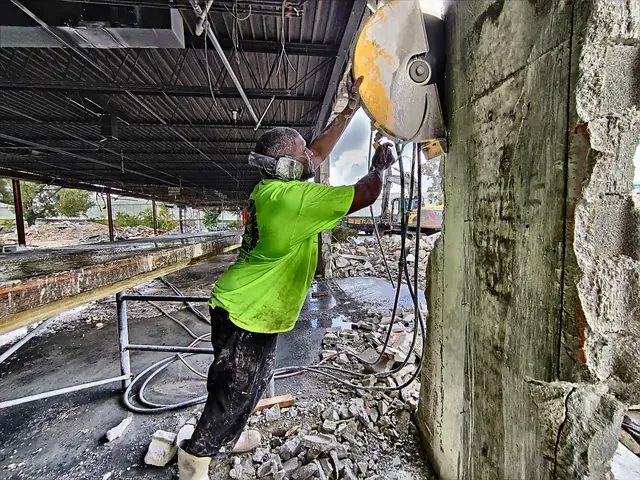
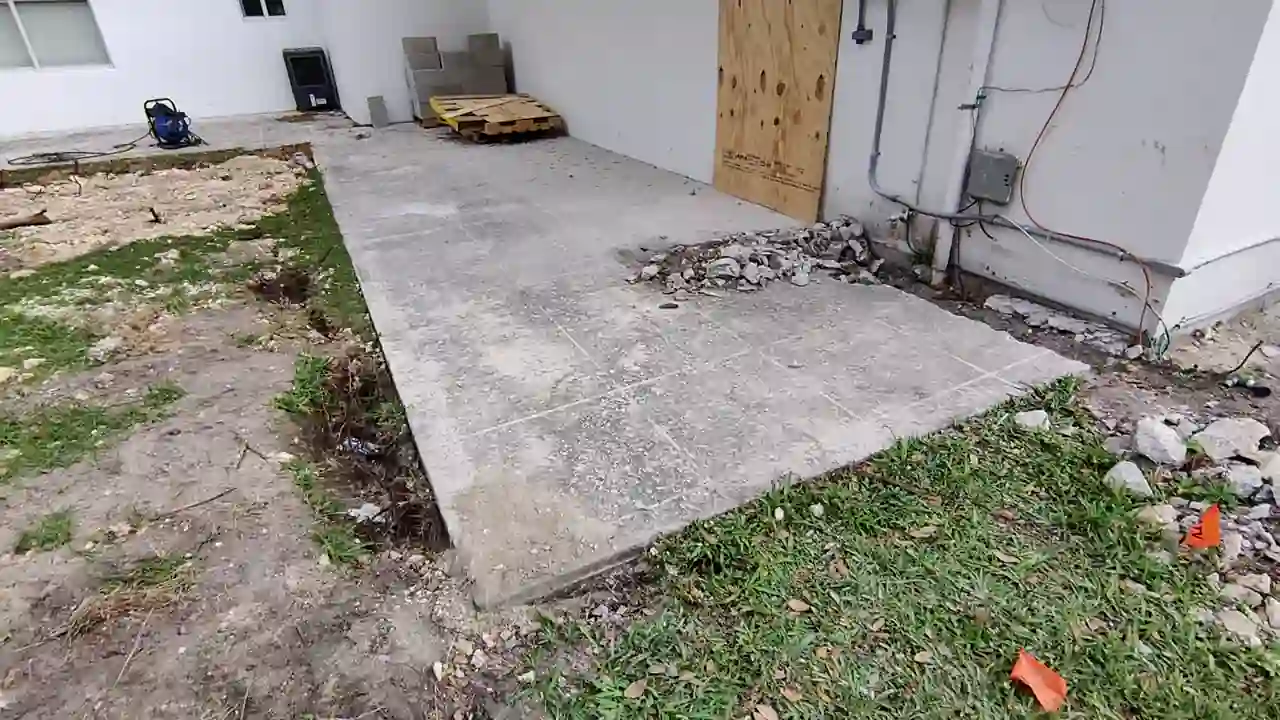
The first step is a saw cut along the line where the patio meets the house. This cut severs the patio from the foundation and any adjoining slab, so the breaking that follows does not transfer cracks into the structure. Without this cut, breaking the patio can send cracks running into the home’s slab or foundation, turning a patio replacement into a structural repair.
The cut also defines the boundary of the work. Where the patio meets a walkway or a driveway, the saw cut keeps the removal clean and the remaining concrete intact. This cut-then-break sequence is the foundation of professional slab removal, and it applies to patios as much as any other slab.
Break It in Sections, Not All at Once
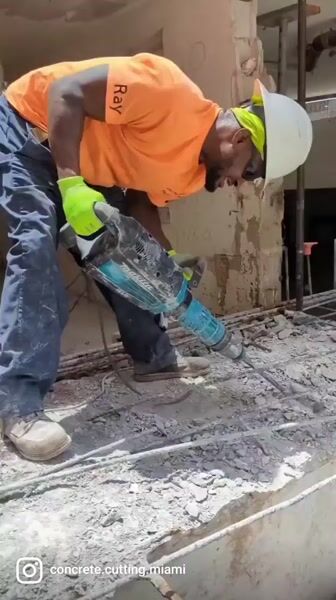
With the patio cut free, the breaking begins. The slab is broken into sections small enough to load and haul, and the method depends on the thickness and reinforcement. A typical four-inch patio slab comes out with a jackhammer or a small breaker; a thicker or reinforced patio takes a heavier machine.
Breaking in sections is faster and safer than attacking the whole slab at once. It also keeps the debris manageable for haul-off. On a tight Miami lot, where the breaker and the dump trailer have to share space with the house and the landscaping, that control matters. For the full breakdown of methods, our guide to concrete demolition methods is a good reference.
Protect the Landscaping and the House
A patio demolition throws dust and debris, and in Miami the landscaping is often right up against the work. A professional protects what is staying: plastic sheeting over doors and windows, plywood over grass or pavers the equipment has to cross, and dust control with water. The goal is to remove the patio without destroying the yard around it.
Dust control is more than courtesy. Concrete dust contains silica, and containing it is both a health issue and a compliance issue. Our guide to concrete dust exposure explains the risks, and a professional builds the dust control into the bid.
Haul It Away and Leave a Clean Base
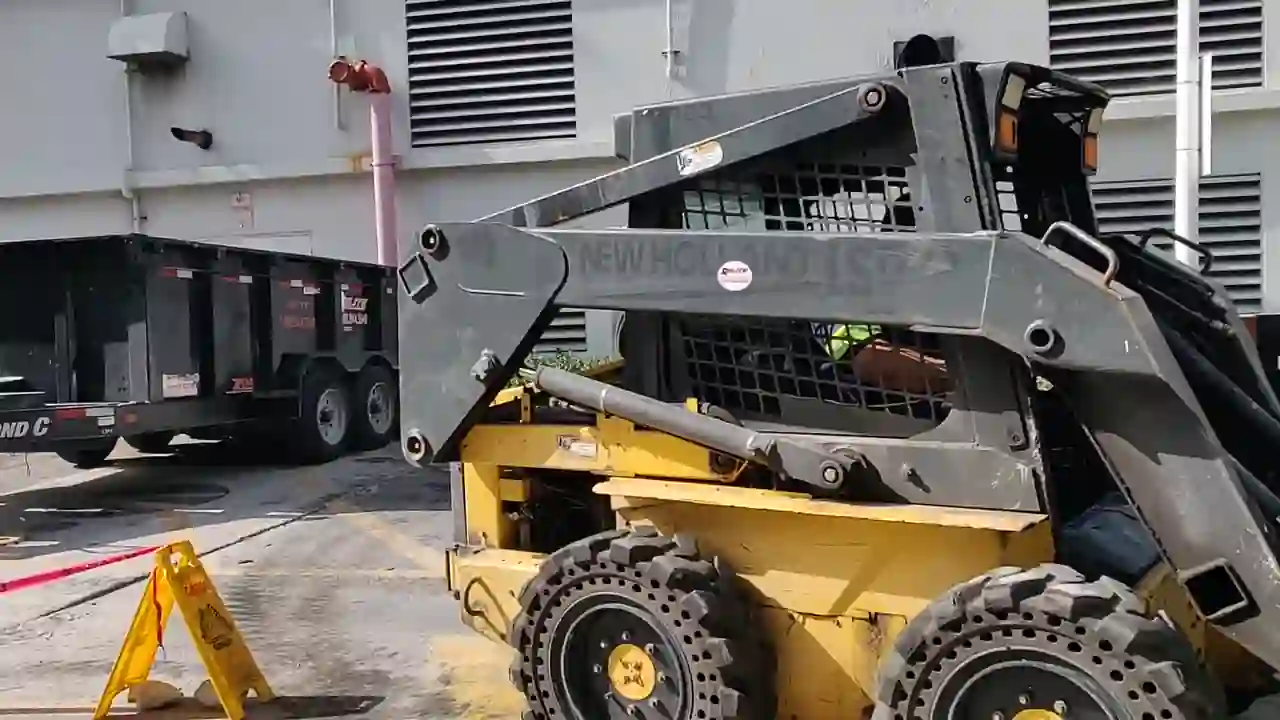
Once the patio is broken, the debris has to go. Concrete is heavy, and hauling it means loading it, trucking it, and disposing of it at a facility that accepts construction waste. In many cases the concrete can be recycled into aggregate, which is better for the environment and often cheaper. Ask about disposal up front so it is in the quote.
What is left behind matters too. A good demolition leaves a clean, level base ready for whatever comes next, whether that is a new patio, a deck, or landscaping. The base is the foundation of the next project, and leaving it right saves you money on the next step.
Attached Versus Freestanding Patios
Whether the patio is attached to the house or freestanding changes the job in important ways. An attached patio shares an edge with the foundation, so the first step is a clean saw cut that separates the patio from the home before any breaking begins. A freestanding patio, like a slab out in the yard, does not have that constraint and can be broken more directly, which usually makes it faster and cheaper to remove.
The attached patio is the far more common situation in Miami, because most patios here are poured as an extension of the home’s slab or walkway. That attachment is exactly why the saw cut matters so much, and why a contractor who skips it risks sending cracks into the house. Our guide to cutting an existing concrete patio explains how attached slabs are handled.
Reusing the Base for What Comes Next
Once the patio is out, what is left behind matters as much as what was removed. A well-done demolition leaves a level, compacted base that is ready for whatever comes next, whether that is a new patio, pavers, a deck, or landscaping. A sloppy demolition leaves an uneven mess that has to be regraded and compacted before anything new can go down, and that rework costs money.
This is why the demolition and the next phase should be planned together. If you are putting in a new patio, tell the contractor what is coming, so they leave the base at the right elevation and condition. Our guide to concrete patio removal and installation covers how the two phases fit together.
Permits and Property Lines to Watch
Most patio demolition in Miami does not need a structural permit, but there are two things worth watching: property lines and utilities. A patio near a lot line may sit over an easement or a buried utility, and breaking it up without checking can hit a line or run afoul of the setback rules. A quick check before the work starts avoids a costly surprise.
The same care applies to drainage, because removing a patio can change how water flows across the yard. A good contractor keeps an eye on the grade and makes sure the demolition does not leave the yard draining toward the house. Our guide to hiring a concrete removal contractor covers the site checks that happen before the work.
A patio demolition is rarely just about the slab on top. Under most Miami patios there is a base of compacted fill and often buried utilities, and what you find below the concrete shapes the whole job. A clean removal separates the slab from the base, so the area can be regraded and repoured without hauling in new fill, while a careless tear-out mixes everything together and costs more to clean up.
Think about what goes back in before you tear the old patio out. If the plan is a new pour, the base has to be compacted and the drainage corrected at the same time, and that is easier while the old slab is gone. Removing a patio without a plan for what comes next just means paying to haul the concrete out and then paying again to bring fill back. The demolition and the rebuild are one project, sequenced together.
Drainage is the thing to fix while the patio is open, and it is easy to miss. Most Miami patios slope for drainage, and when the old slab comes out you have a chance to correct any slope that was sending water toward the house instead of away from it. Pour a new patio over the same bad grade and you have rebuilt the same problem. The demolition is the one moment the base and the grade are fully exposed, and the smart money fixes them then.
What Patio Demolition Costs
Patio demolition is usually priced by the square foot, and the price reflects the thickness, reinforcement, access, and disposal distance. A simple patio on an open lot is the affordable end; a thick, reinforced patio in a tight backyard is the higher end. Get a quote that breaks out the cutting, breaking, haul-off, and disposal, and choose a contractor who handles the whole job. Done right, a patio demolition clears the way for whatever comes next without touching the home you are keeping.