Why not all concrete removal contractors are the same — and why the distinction matters for your property
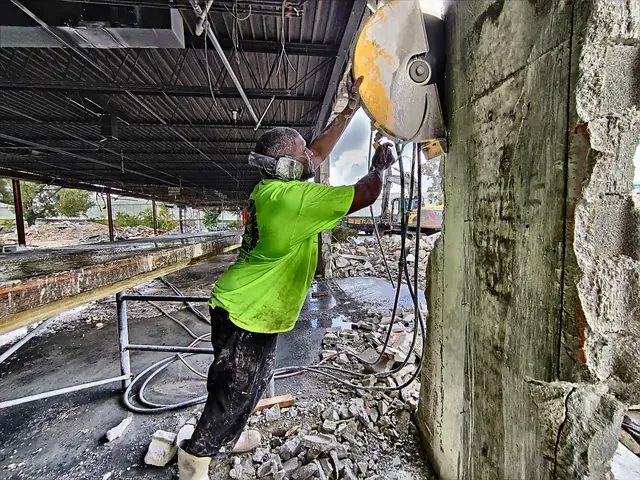
The term concrete removal contractors covers an unusually wide range of operators in the Miami market. At one end are professional contractors who own excavators, skid steers, hydraulic breakers, diamond saws, dump trucks, and roll-off containers — maintained, insured, and operated by trained crews. At the other end are individuals with a pickup truck, a rented jackhammer, and a business listing they created online. Both appear in search results for concrete removal contractors. Both will take your call. Both will give you a price. The difference is what happens after you accept the price — whether the concrete comes out cleanly without damaging surrounding structures, whether the debris goes to a legal disposal facility, whether the site is left clean, and whether you are protected by insurance if something goes wrong.
 Concrete Cutting Miami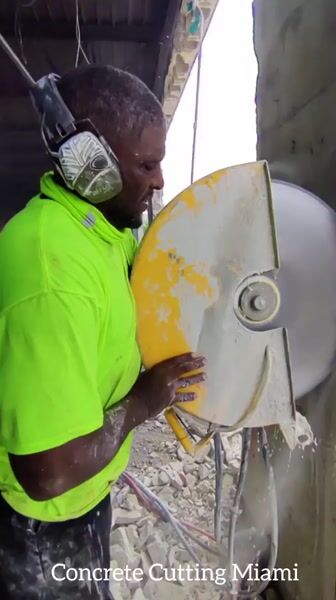
In Miami-Dade County, concrete removal contractors must operate within a regulatory framework that informal operators typically ignore. Post-tension slabs — standard in South Florida residential and commercial construction since the 1970s — require GPR scanning before any concrete is broken to avoid striking tensioned cables. Slurry from wet cutting operations must be contained and cannot wash into storm drains. Concrete debris is classified as construction and demolition waste requiring transport to a permitted C&D facility — dumping it in an empty lot or mixing it into residential trash collection is a code violation. Concrete removal that disturbs structural elements may require a building permit. A contractor who operates outside this regulatory framework is not saving you money — they are creating liability that attaches to you as the property owner when a violation is discovered.
What to look for when evaluating concrete removal contractors in Miami
Equipment inventory
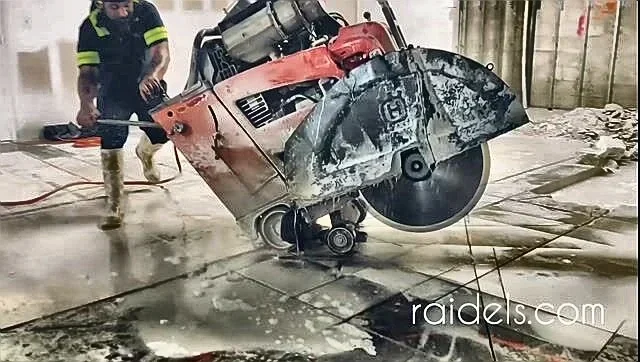
Professional concrete removal contractors own their core equipment. A flat saw or walk-behind saw with diamond blades for cutting the removal perimeter before breaking. A hydraulic breaker — either handheld pneumatic or excavator-mounted — for breaking the separated concrete sections. An excavator, skid steer, or mini-excavator for debris loading. Trucks or roll-off containers for debris transport. A contractor who owns this equipment has made a significant capital investment in concrete removal as a business. A contractor who needs to rent everything for each job is paying rental fees that either increase your price or reduce their margin — and reduced margin creates pressure to cut corners on safety, disposal compliance, and cleanup.
GPR scanning capability
Before any concrete is cut or broken, the contractor should perform GPR scanning of the removal area. The scan identifies post-tension cables, electrical conduits, plumbing lines, and any other subsurface conditions that affect how the concrete can be safely cut and broken. A contractor who does not scan before breaking is gambling that there is nothing dangerous in the concrete — and in Miami, where PT cables are common, that gamble can have severe consequences. The contractor may perform GPR scanning in-house or through a regular subcontractor, but the scan must happen before work begins.
Disposal compliance
Every professional concrete removal contractor should be able to answer the question “where does my concrete debris go?” with the name of a specific permitted C&D disposal facility or concrete recycling center in Miami-Dade County. They should be willing to provide disposal manifests documenting the weight and destination of the debris. A contractor who is vague about disposal or who suggests that concrete debris can go anywhere is either ignorant of county regulations or intentionally avoiding them.
Insurance coverage
Concrete removal is physically demanding work performed with heavy equipment on your property. The contractor must carry general liability insurance that specifically covers demolition and concrete removal operations — many standard policies exclude demolition. Workers compensation insurance must cover all employees who will be on your property. Request a certificate of insurance directly from the insurance agent — not a photocopy from the contractor — and ask to be named as an additional insured for the duration of the project. A contractor who cannot or will not provide current insurance documentation should not set foot on your property.
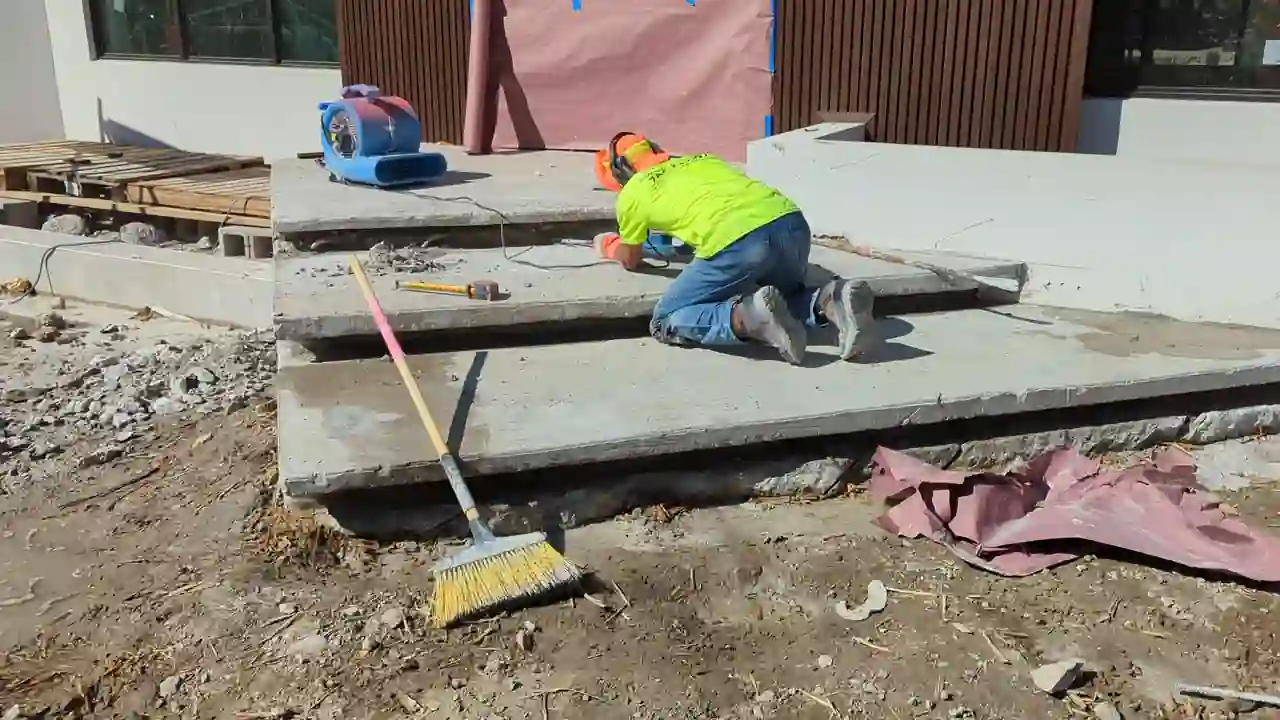
Questions to ask concrete removal contractors before hiring
- “What is your step-by-step process for my specific project?” The contractor should describe the sequence: GPR scanning, saw cutting the perimeter, sectioning if needed, controlled breaking, debris loading and transport, site cleanup. A vague answer like “we come in and take it out” indicates the contractor has not thought through your project.
- “Do you saw-cut the concrete before breaking it?” The answer must be yes, with a description of the cutting method. Slab sawing is the step that prevents vibration damage to adjacent concrete — skip it and your remaining concrete may crack.
- “What equipment will you use?” The contractor should name specific equipment: flat saw model for cutting, breaker type for breaking, loader type for debris handling, truck type for transport. Specificity indicates preparation. Vagueness indicates the opposite.
- “How do you handle dust and debris during removal?” Wet cutting with slurry containment for dust control. Plastic sheeting or barriers to contain debris. The contractor should describe their dust suppression and containment plan in detail.
- “What is your cleanup standard when the job is done?” The site should be cleared of all concrete fragments, dust, slurry residue, rebar cutoffs, and any other debris generated during removal. The contractor should walk the site with you before considering the job complete.
- “Can you provide references from concrete removal jobs you have done in Miami?” Call the references. Ask about schedule adherence, site cleanliness, how unexpected conditions were handled, and whether the final cost matched the quote.
Comparing quotes from concrete removal contractors
When you receive quotes from multiple concrete removal contractors, compare them on more than the bottom-line number. A lower quote that omits saw cutting, GPR scanning, legal disposal, or site cleanup is not actually lower — those costs will surface later as damage to your property, fines for illegal dumping, or the expense of hiring someone else to clean up a site that was left in unacceptable condition. A detailed quote should break out the major cost components: cutting, breaking, loading, transportation, disposal fees, and cleanup. It should state the assumptions about concrete thickness, reinforcement, and access conditions that the price is based on. It should explain how the price will be adjusted if those assumptions prove incorrect when work begins. The quote that is the most detailed and asks the most questions about your specific project is usually from the contractor who will do the best job.
Red flags that should disqualify concrete removal contractors
- No written quote: A verbal price is not binding and leaves you with no documentation of the agreed scope.
- No physical business address: A contractor with no permanent location may not have the equipment inventory that concrete removal requires.
- Demand for full cash payment upfront: The standard is a deposit with balance due upon completion. Full upfront payment eliminates your leverage if the work is unsatisfactory.
- Reluctance to provide proof of insurance: Insurance is non-negotiable for work performed on your property. A contractor who hesitates to provide insurance documentation is either uninsured or underinsured.
- No Miami-specific references: Concrete removal in other cities does not demonstrate experience with Miami-Dade conditions, regulations, and disposal requirements.
Finding qualified concrete removal contractors in Miami requires more than picking the first search result. It requires verifying that the contractor has the equipment, the insurance, the disposal compliance, and the local experience to perform your project correctly. The time spent evaluating contractors before hiring is time you will not spend dealing with problems after the work is done. Contact us for concrete removal services from a contractor that meets all of these qualifications and has the Miami-Dade concrete removal experience to prove it.