Why a concrete demolition company is not the same as a demolition company — and why hiring the wrong one costs more
A concrete demolition company and a general demolition company both break things for a living. The similarity ends there. A general demolition company tears down entire structures — houses, commercial buildings, warehouses, bridges. Their equipment is scaled for mass demolition: large excavators with grapple attachments, high-reach excavators for multi-story structures, shears and pulverizers for structural steel. Their job sites are fenced, permitted for full demolition, and cleared of occupants before work begins. A concrete demolition company removes specific concrete elements — slabs, walls, foundations, pool decks, driveways, equipment pads — while preserving the surrounding structure and often while the building remains occupied. The two types of companies share the word demolition in their names but operate in entirely different worlds with different equipment, different skills, and different approaches to protecting adjacent property.
 Concrete Cutting Miami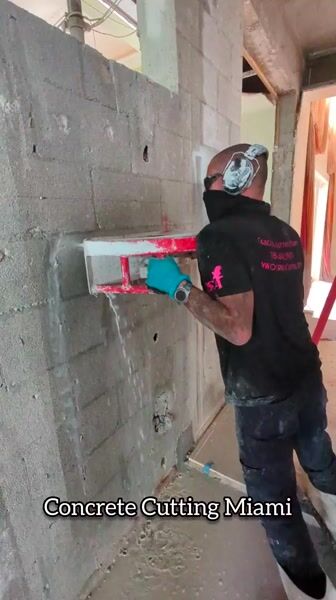
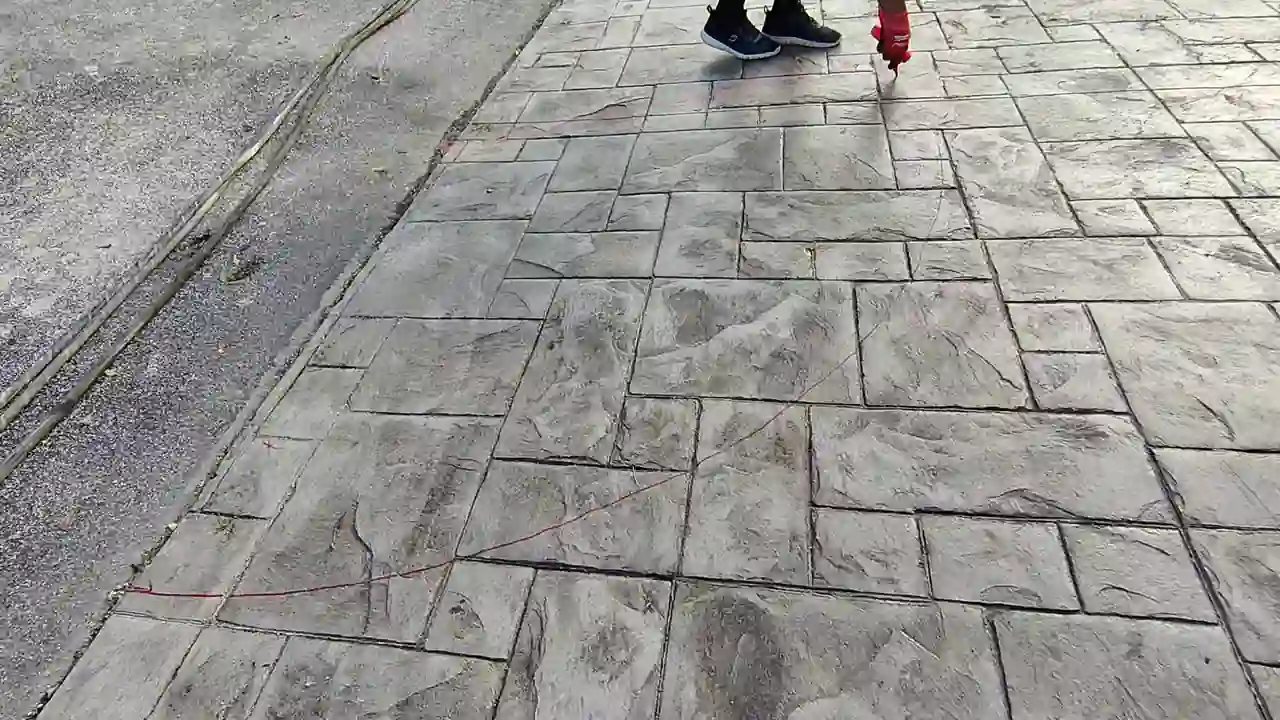
In Miami, the distinction between a concrete demolition company and a general demolition company matters for a practical reason that affects every project. A general demolition contractor called to remove a concrete patio behind a Coral Gables home will approach the job the same way they approach tearing down a building — bring the biggest excavator that fits through the gate and start breaking. The patio will come out. So might part of the pool coping, the foundation edge, the underground plumbing, and the neighbor’s patience. A concrete demolition company approaches the same patio by saw-cutting the perimeter first, separating the patio from everything it touches, and only then applying breaking force to sections that are already physically isolated. The patio comes out. Nothing else gets damaged. The difference in approach is the difference between demolition and surgical removal — and the cost of repairing collateral damage from the first approach almost always exceeds whatever was saved on the lower demolition quote.
What a professional concrete demolition company in Miami actually does
A concrete demolition company operating at a professional level in Miami-Dade County provides a specific set of services that require specific equipment and expertise. Here is what those services include.
Selective concrete demolition
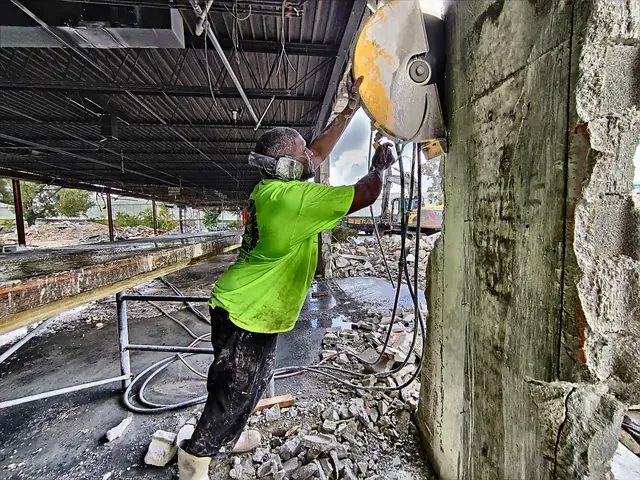
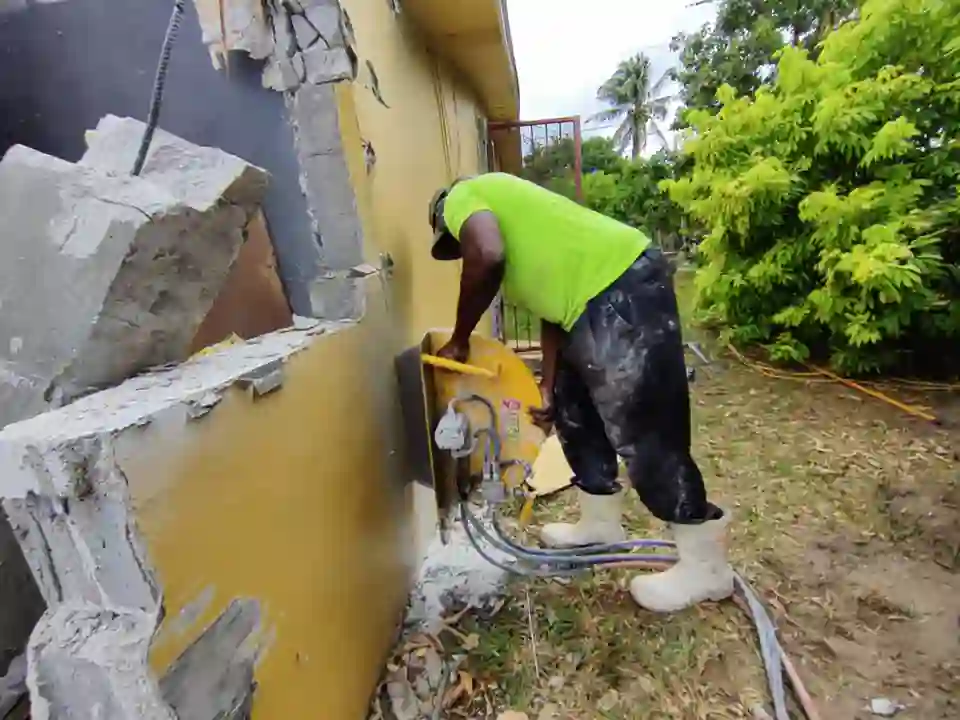
Selective demolition means removing specific concrete elements while leaving everything around them intact. A slab section in a warehouse floor that has settled and needs replacement. A concrete wall that is no longer needed in a building renovation. An equipment pad that must be removed to make way for a larger machine. Foundation sections that require modification for a building expansion. In each case, the concrete to be removed is cut free from the surrounding structure using diamond saws before any breaking force is applied. Selective demolition is the core service that distinguishes a concrete demolition company from a general demolition contractor.
Swimming pool demolition and removal
Pool demolition is one of the most common services requested from a concrete demolition company in Miami. An in-ground pool that has reached the end of its service life — leaking, structurally compromised, or simply unwanted — is demolished either partially (leaving the lower shell in place and backfilling) or fully (removing all concrete and backfilling to a buildable condition). Pool demolition requires a Miami-Dade County permit and is subject to inspection for demolition depth, fill compaction, and final grading. The pool deck is saw-cut to separate it from adjacent concrete before demolition. The pool shell is broken with hydraulic breakers, the floor is punctured for drainage, and the cavity is backfilled with clean material in compacted lifts.
Slab and pavement demolition
Concrete slabs — patios, driveways, walkways, parking areas, warehouse floors — are removed by saw-cutting the perimeter, sectioning the slab, breaking the sections, and loading the debris for disposal. Slab sawing is the essential first step. Slab demolition on occupied residential or commercial properties requires dust control and slurry containment — the building is in use while the demolition proceeds, and concrete dust migrating into occupied spaces is a major source of complaints and cleanup costs.
Wall and structural concrete demolition
Concrete walls — whether freestanding, retaining, or structural — are demolished by cutting them free from connecting elements and then breaking them down in a controlled sequence. Wall sawing creates the separation cuts. If the wall is load-bearing, temporary shoring must be installed before demolition begins, and a structural engineer should review and approve the demolition sequence. Wall demolition on upper floors of occupied buildings requires particularly careful planning for debris handling — concrete sections cannot simply be pushed off the building.
Foundation demolition
Foundation demolition — removing part or all of a concrete foundation — is the most structurally consequential service a concrete demolition company performs. The foundation carries the entire building load, and any modification must be engineered. Demolition is typically limited to small sections for utility access, underpinning, or partial removal for building expansion. The remaining foundation must maintain its load-bearing capacity, and new foundation elements must be properly tied into the existing structure.
What to verify before hiring a concrete demolition company in Miami
- License and insurance specific to demolition: A Florida Certified General Contractor license is typically required for structural concrete demolition. Verify the license number through the Florida DBPR website. Confirm that the contractor’s general liability insurance specifically covers demolition operations — many standard policies exclude demolition as an elevated-risk activity.
- Equipment ownership: A professional concrete demolition company owns its core equipment — flat saws, wall saws, hydraulic breakers, excavators or skid steers, and debris handling equipment. A contractor who rents all major equipment for each job is paying rental rates that either inflate your price or reduce their margin to the point where corners get cut.
- GPR scanning protocol: Before cutting or breaking concrete, the contractor should perform GPR scanning to locate post-tension cables, conduits, and utilities. This is a safety requirement, not an optional service.
- Miami-Dade disposal compliance: The contractor should be able to name the permitted C&D disposal facility or recycling center where your concrete debris will be taken. They should be prepared to provide disposal documentation.
- Written scope of work: The demolition contract should specify what is being demolished, what is being preserved, the demolition method, the equipment being used, the dust and slurry control measures, the debris disposal plan, the cleanup scope, and the timeline. Verbal agreements for concrete demolition are invitations to disputes.
The cost of hiring a concrete demolition company vs the cost of hiring the wrong one
A professional concrete demolition company in Miami charges more than a general laborer with a sledgehammer, a rented jackhammer, or a general demolition contractor who treats your selective demolition project like a building teardown. The price difference is real. The value difference is also real — measured in the condition of your remaining concrete, the absence of vibration damage to your building, the legal disposal of your debris, and the cleanliness of your site when the work is done. The cheapest demolition quote is almost never the best value. Contact us to discuss your concrete demolition project and receive a quote from a concrete demolition company that cuts first, demolishes second, and cleans up third — the sequence that protects your property at every stage.