How to Cut a Concrete Wall the Safe Way Starts With One Question
The most important question before anyone touches a blade to a concrete wall is simple: is it load-bearing? In Miami, most exterior walls and many interior walls in concrete buildings are carrying weight, resisting wind, or both. Cut into the wrong wall the wrong way and you can compromise the structure of the entire building. That is why how to cut a concrete wall always starts with the structure, not the saw.
A load-bearing wall transfers weight from above down to the foundation. A shear wall resists the lateral forces of wind, which matters enormously in a hurricane zone. Before any opening is cut, someone has to determine what the wall is doing and whether the opening needs a header, additional reinforcement, or an engineer’s sign-off. Let me walk through the whole process.
Wall Sawing Versus Hand Sawing and When to Use Each
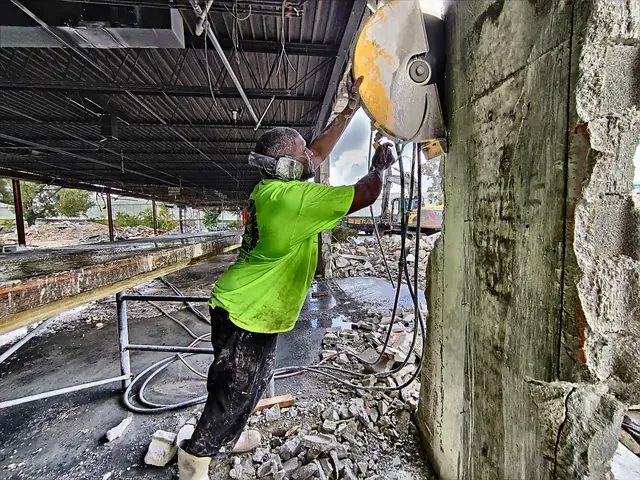
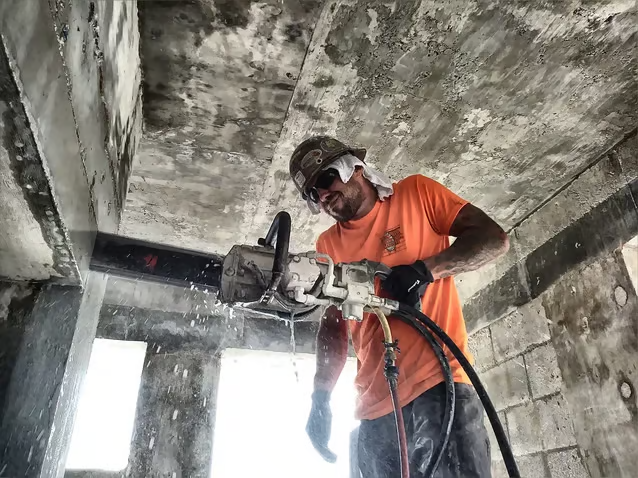
There are two main ways to cut a concrete wall: track-mounted wall sawing and hand-held sawing. Wall sawing uses a saw mounted on a track bolted to the wall, and it delivers the straightest, most precise cuts for door and window openings. It is the standard for structural openings because the track keeps the blade square and the cut perfectly straight.
Hand sawing is used for smaller openings, tight spaces, and jobs where a track saw cannot be mounted. A skilled operator with a hand-held saw and a concrete chainsaw can produce a clean opening, but it takes more skill and patience. For a full-height door opening in a load-bearing wall, wall sawing is almost always the right call.
Support the Wall Before You Remove Material
If the wall is load-bearing, you cannot just cut a hole in it. The opening has to be supported, usually with temporary shoring, and then a permanent header is installed to carry the load across the new opening. This is structural work, and in Miami-Dade it requires a permit and often an engineer’s design.
This is where many DIY projects go wrong. Someone cuts a door opening in a load-bearing wall, the header is undersized or missing, and within months there are cracks running from the corners of the opening. By the time the cracks appear, the fix is far more expensive than doing it right would have been. If you are cutting into any wall you suspect is structural, bring in a structural concrete cutting contractor who works with engineers.
Slurry Control and Dust Are Non-Negotiable
Concrete wall cutting is a wet process. The water keeps the blade cool and suppresses the silica dust that would otherwise fill the air. But that water becomes slurry, a heavy cement-laden mess that cannot be allowed to run into drains or soak into the ground. On an interior wall, slurry control means plastic sheeting, wet vacs, and constant cleanup. On an exterior wall, it means containment so the slurry does not run into the street or a neighbor’s property.
The dust is the other hazard. Even with water, some cutting generates airborne silica, and the operator needs proper respiratory protection. Our guide to concrete dust and silica exposure explains the OSHA limits and the right protection. None of this is optional on a Miami job.
What the Opening Will Cost
The cost to cut a concrete wall opening depends on the wall thickness, the amount of reinforcement, the size of the opening, and whether it is load-bearing. A simple penetration for a pipe is a different job than a full door opening that needs shoring and a header. Interior non-load-bearing walls are the most affordable; structural exterior walls are the most expensive for good reason.
Get a quote that separates the cutting from the structural work, and make sure the contractor is licensed and insured for structural modifications. Our concrete wall cutting cost guide breaks down what drives the number.
Permits and the Miami-Dade Process
Most wall cutting in Miami-Dade requires a permit, especially when the wall is structural or the opening changes the exterior of the building. The permit process ensures the work is reviewed, the engineering is sound, and the final result meets code. A licensed contractor handles the permit as part of the job, and that is one more reason to hire someone who does this regularly.
Skipping the permit is a false economy. Unpermitted structural work can complicate a future sale, and if the opening is done wrong, the liability is yours. The permit is not just paperwork; it is the city’s way of making sure the wall you cut today is still holding up the building tomorrow. Our guide to demolition in Miami-Dade covers the permitting side of structural work.
Matching the Opening to the Header
The header that carries the load over a new opening has to be sized to the span and the load, and that sizing is engineering, not guesswork. An undersized header deflects, and the deflection shows up as cracks at the corners and a door or window that binds. Getting the header right is the difference between an opening that lasts and one that fails slowly.
This is why the cutting and the structural work have to be planned together. The opening is cut to the exact dimensions the header needs, and the header is installed before the load shifts. Our guide to concrete wall cutting cost explains how the cutting and the structural work come together in the price.
Common Mistakes That Show Up Later
The mistakes in wall cutting rarely show up the day of the job; they show up months later as cracks, binding doors, and water stains. Cutting without support, skipping the header, or undercutting the corners all produce openings that look fine at first and fail slowly. By the time the problem is visible, the fix is expensive.
The common thread in every one of these mistakes is cutting corners on the structural work to save money up front. The walls that fail are almost always the ones where someone skipped the engineer, the shoring, or the permit. Our guide to what to know before cutting concrete walls walks through the pitfalls to avoid.
Before the blade goes down, take a hard look at what is embedded in the wall. Electrical conduits, plumbing lines, and post-tension cables all live inside Miami concrete walls, and hitting any of them mid-cut turns a clean opening into an emergency. A scan or a careful review of the plans tells you what you are about to cut through, and it is the cheapest insurance on the whole job.
The corners deserve special attention on any wall opening. A round blade cannot cut a square inside corner, so a professional finishes the corners with a chainsaw or a hand tool rather than overcutting. Overcut corners are the most common sign of a rushed wall cut, and they come back as cracks that run from the corner of the opening up into the wall. Square corners are not a cosmetic detail; they are how the load stays clean around the new opening.
When to Do It Yourself and When to Call a Pro
If the wall is a thin, non-load-bearing partition and the opening is small, a confident DIYer with the right equipment can sometimes handle it. But the moment the wall might be structural, or the opening is for a door or window, or you are unsure about what is inside the wall, call a professional. In Miami, where wind loads are real and concrete is everywhere, the cost of a pro is cheap compared to the cost of a compromised structure. Cut smart, support the load, and control the mess, and your opening will be clean and safe for decades.