Why You Cut Brick Instead of Breaking It
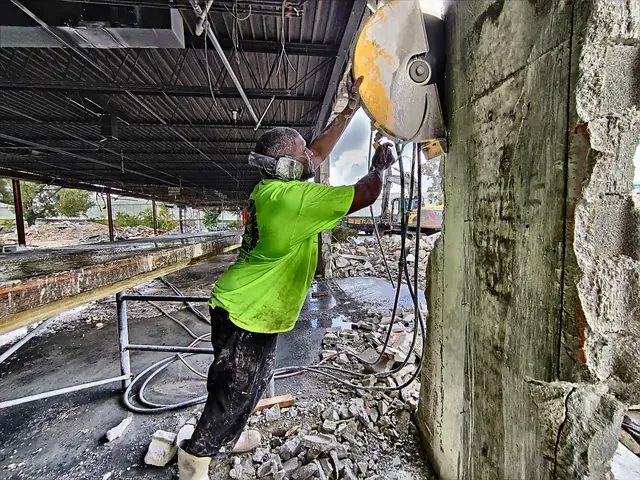
Brick is brittle, and a sledgehammer is the worst tool for opening a brick wall. One hard swing sends cracks through the surrounding courses, loosens mortar joints, and turns a small opening into a big repair. The right way to open a brick or CMU wall is to cut it, and that takes a wall saw with a diamond blade.
A brick wall cutter cuts clean, straight lines through the brick and mortar, leaving the surrounding wall intact and the edges square. Whether you are adding a window, a door, or a utility penetration, wall sawing is what keeps a masonry opening clean.
The Tools That Cut Brick Well
For most brick walls, a track-mounted wall saw or a handheld cut-off saw with a diamond blade is the tool. The track-mounted saw gives you the straightest lines and is the choice for long vertical or horizontal cuts, while the handheld saw handles smaller openings and tight spaces.
The blade matters as much as the saw. Brick and mortar are abrasive, so a segmented diamond blade with a bond matched to the material cuts clean and lasts. A blade matched to the brick, not to concrete, is the difference between a crisp cut and a chipped, ragged edge. Blade selection is where clean brick cuts start.
Cutting an Opening in a Brick Wall
An opening in a brick wall follows the same logic as concrete. First, know if the wall is load-bearing, because a brick exterior wall usually is. Support the wall above, cut the opening with a saw, and install a header to carry the load. Skipping the header is how brick walls develop stepped cracks over door and window openings.

We saw the opening to the rough opening spec, then finish the corners square. Brick cuts cleanly with a diamond blade, and the resulting jambs are straight enough that a door or window frame seats without a fight.
Dust and Mortar Control
Cutting brick throws fine silica dust, and in Miami-Dade that dust is regulated. We run wet saws or vacuum dust collection to keep the silica down and the job site clean. It protects the crew, the occupants, and your compliance with silica safety rules.
The slurry from wet cutting is captured and disposed of properly, not washed into a drain. A clean masonry cut is as much about the dust you do not leave behind as the line you cut.
Brick Versus Block Versus Concrete
Brick, CMU block, and poured concrete all cut with diamond blades, but they behave differently. Brick is hard and brittle, block is softer and hollow in the cells, and concrete is dense with aggregate. Each wants a slightly different blade bond and feed rate.
I match the blade to the material on every job, because a blade that is perfect on block will glaze on brick and vice versa. The complete equipment picture is about matching tool to material.
When to Call a Professional
A small brick opening can be a DIY job with a rented saw, but a load-bearing brick wall is not the place to learn. The header, the shoring, and the permit are where amateurs get hurt, both physically and financially. A wall that carries load needs a professional from the first cut.
We will tell you honestly whether your brick opening is a weekend job or a structural one. If it is structural, we bring the saw, the shoring, and the header work under one roof.
Cutting Brick Without Cracking the Courses
Brick is unforgiving of vibration, which is why a sledgehammer is the worst tool for opening a brick wall. One hard swing sends cracks running through the mortar joints and loosens bricks several courses away from the impact. Before you know it, a small opening has become a large repair, and the brick that was fine now needs to be relaid.
The saw avoids all of that. A diamond blade cuts cleanly through brick and mortar, and because the blade grinds rather than impacts, the vibration stays local. The surrounding courses stay intact, and the opening comes out square. That is the whole point of cutting brick instead of breaking it.
Brick, Block, and Concrete Behave Differently
- Brick: hard and brittle, cuts clean but chips if the blade is wrong.
- CMU block: softer with hollow cells, faster to cut.
- Poured concrete: dense with aggregate, needs a matched bond.
- Reinforced masonry: rebar has to be cut, slower going.
Matching the blade and the feed rate to the material is what keeps a brick cut clean. It is a small detail that makes a big difference in how the opening looks and how much repair work is left after.
Protecting the Brick You Are Keeping
The measure of a good brick cutting job is what happens to the brick you are not cutting. Brick walls are load-bearing more often than people realize, and a careless cut sends cracks through the courses and loosens the surrounding brick. The saw is what protects the wall, because it cuts cleanly without the impact and vibration that a hammer or breaker sends through the masonry.
Beyond the saw, the protection is about the setup. The cut is planned so the blade does not overrun into brick that stays, the wall is supported if the opening is load-bearing, and the dust is controlled so it does not work into the mortar. Each of those steps protects the existing wall while the opening is being made.
The result is an opening with clean edges and a wall that is still sound around it. When the job is done, the only evidence should be the new opening itself, not a web of cracks radiating out from it. That is the standard a professional brick cutter works to, and it is the difference between a clean opening and a wall full of damage.
Mortar condition matters when you plan the cut. Old brick walls often have soft or failing mortar, and cutting through them sends vibration that can loosen the joints even where the blade does not touch. We check the mortar before we cut, and on a wall with failing joints we adjust the feed rate and the blade so the vibration stays low. The goal is an opening without a cascade of loose brick around it.
The corner finish is where a brick opening shows its quality. A circular blade leaves a rounded inside corner, so we square it with a hand saw or a chain saw before the frame goes in. A squared corner means the window or door seats flush without shims, and it is the kind of detail that separates a wall sawing job done right from one that needs a lot of patching afterward.
The blade has to be matched to the brick, not to concrete. Brick and mortar are abrasive, and a blade bonded for soft concrete will glaze on hard brick and stop cutting. A segmented diamond blade with the right bond cuts clean and lasts, and it is the difference between a crisp edge and a chipped, ragged opening. We carry the bonds for brick, block, and concrete, and we swap to match the wall. Getting the blade matched to the masonry is where clean brick cuts start.
A clean brick opening is the difference between a job that looks like it was always there and one that shows its seams, and the blade is where that difference is made.
Get a Clean Brick Opening
If you need a brick wall cut for a door, window, or penetration anywhere in Miami-Dade, call us. We will cut it clean, keep the surrounding wall intact, and make sure the opening is built to last.
A brick wall cutter in the right hands is fast, clean, and safe. Let us put the right blade on it for you.