Will a Diamond Blade Cut Rebar Yes With the Right Setup
The answer to will a diamond blade cut rebar is yes, but with an important caveat: only if the blade is matched to the job and the cut is run correctly. A diamond blade will grind through steel reinforcement, but it will also glaze over and stop cutting if you use the wrong blade or let the cut run dry and hot. The difference between a blade that sails through rebar and one that dies on it comes down to a few decisions.
In Miami, where reinforced concrete is the norm, this question is not academic. Almost every slab and wall a saw touches has steel in it, so understanding how a diamond blade handles rebar is part of doing the job right.

Bond Hardness Is the Whole Game
The single most important factor is the bond of the blade, which is the metal matrix that holds the diamond particles. When cutting rebar, you want a softer bond. A soft bond wears away during the cut, shedding the dulled diamonds and exposing fresh, sharp ones underneath. That keeps the blade cutting through the steel instead of glazing over.
A hard bond, meant for soft, abrasive concrete without steel, holds the diamonds too long. When that blade hits rebar, the diamonds wear smooth, the metal smears over them, and the blade stops cutting. The saw just spins and heats up. Our guide to blade types and bond hardness explains the matching in detail.
Wet Cutting Keeps the Blade Alive
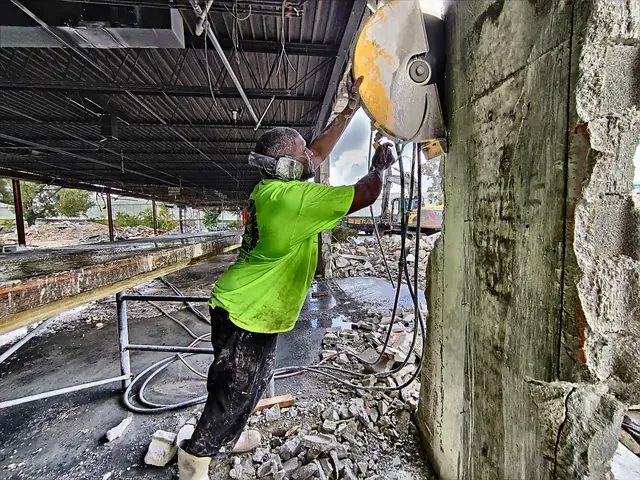
Water is the second critical factor. Cutting steel generates far more heat than cutting concrete, and heat is what destroys a diamond blade. Keeping the cut wet cools the blade, flushes away the metal fines, and prevents the glaze that stops a blade cold. A wet blade cutting rebar will last far longer than a dry one asked to do the same job.
In Miami, wet cutting is standard anyway, both for the blade and for silica dust control. But it is doubly important when rebar is in the cut. If you have ever seen a blade stop cutting halfway through a slab, heat and a glazed bond are usually the reason. More water and a softer bond fix it.
Feed Rate and the Patience the Job Demands
When the blade reaches the rebar, the operator has to slow down. Steel grinds slower than concrete, and forcing the blade through the steel just builds heat and wears the blade faster. A skilled operator eases off the feed rate when they feel the blade hit the steel, lets the diamond do its work, and speeds back up once they are through.
This is a feel thing as much as a technique. An experienced cutter can tell by the sound and the resistance when the blade has reached the rebar, and they adjust accordingly. That is part of why professional operators get results that a rented saw and an untrained hand never will.

When Cutting Rebar Is a Structural Decision
There is a big difference between cutting rebar in a slab for a control joint and cutting rebar in a load-bearing beam. In a slab joint, cutting the steel is routine and expected. In a structural element, cutting the reinforcement changes how the member carries load, and that is an engineering decision, not a sawing decision.
Before cutting through rebar in any structural element, the design has to account for it. That might mean adding reinforcement, installing a header, or choosing a different approach entirely. Our guide to cutting reinforced concrete covers the structural side of the work.
Segmented Versus Turbo and Continuous Blades
The style of the blade matters when rebar is in the cut. A segmented blade has gullets between the segments that help clear debris and cool the blade, and it is the standard for reinforced concrete because it handles the heat of cutting steel well. A turbo blade cuts faster but is better suited to lighter reinforcement. A continuous rim blade is for very clean, fine cuts and is not the tool for heavy rebar.
For most Miami slabs with standard rebar, a segmented blade with the right bond is the workhorse. It clears the steel fines, stays cool under water, and keeps cutting through the reinforcement without glazing. Matching the blade style to the job is part of the same decision as matching the bond. Our guide to blade types and bond hardness walks through the options.
Why a Wet Cut Saves the Blade and Your Lungs
Cutting rebar dry is hard on both the blade and the operator. The heat builds fast, the blade glazes, and the dust from grinding steel and concrete hangs in the air. Cutting wet solves all three at once: the water cools the blade so it keeps cutting, and it suppresses the dust so the operator is not breathing silica and metal fines.
In Miami, wet cutting is the standard for exactly these reasons, and it is also required by the silica rules that govern concrete work. A professional sets up the water before the saw starts and keeps it flowing through the cut. Our guide to silica dust and cutting safety explains the health side of the equation.
Signs Your Blade Is Glazing and What to Do
A glazed blade is one where the diamond particles have worn smooth and the metal bond has smeared over them, so the blade stops cutting and just spins. You can see it in the blade face, which takes on a shiny, polished look, and you can feel it in the saw, which stops making progress no matter how hard you push. The fix is usually a softer bond or more water, not more pressure.
Pushing harder on a glazed blade makes the problem worse, because it builds more heat and smears the metal further. The right response is to ease off, correct the water flow, and sometimes dress the blade to expose fresh diamond. This is the kind of thing an experienced operator handles on the fly. Our guide to concrete cutting tools covers blade care and troubleshooting.
A diamond blade will cut rebar, but only if it is the right blade for the job. Blades are designed with different bonds and segment formulations, and a blade made for plain concrete will glaze and overheat when it hits steel. A blade rated for reinforced concrete has a softer bond that lets fresh diamond expose as the steel wears it, so it keeps cutting instead of polishing over. Matching the blade to the steel is the whole game.
The feed rate changes the moment the blade touches rebar. Push too hard and the segments glaze; let the blade do the work and the steel cuts cleanly with the concrete around it. This is where an experienced operator is worth the money, because the feel of steel under the blade is not something you pick up from a manual. Cut rebar the right way and it is routine; cut it the wrong way and you burn through a blade in a single job.
If you are cutting rebar yourself, watch the slurry for the tell. When a blade hits steel, the slurry darkens with metal fines and the saw’s sound changes, and that is your signal to ease off the feed and let the blade work. Pushing through steel is how a diamond blade glazes in minutes, and a glazed blade stops cutting and starts burning. The steel will cut fine if you respect it; fight it and the blade is done before the job is.
The Right Blade Makes Rebar a Non-Issue
A diamond blade will cut rebar cleanly when you match the bond to the steel, keep the cut wet, and let the blade work at its own pace. The mistakes that ruin blades are almost always the same: too hard a bond, too little water, and too much pressure. Get those three right, and rebar goes from a problem to just another part of the cut.