What Most Contractors Get Wrong About Chainsaw Demolition Chain and Slurry Generation
Walk onto any active demolition site in Miami-Dade County and you’ll find contractors who treat slurry as an afterthought — something to hose down after the cut is done. That mindset is not only operationally sloppy, it’s a direct path to regulatory violations, project shutdowns, and significant liability exposure. The chainsaw demolition chain you select, the water flow rate you run, and the containment infrastructure you deploy are not three separate decisions. They are one integrated system, and every experienced concrete professional understands that the chain specification is where that system either works or fails.
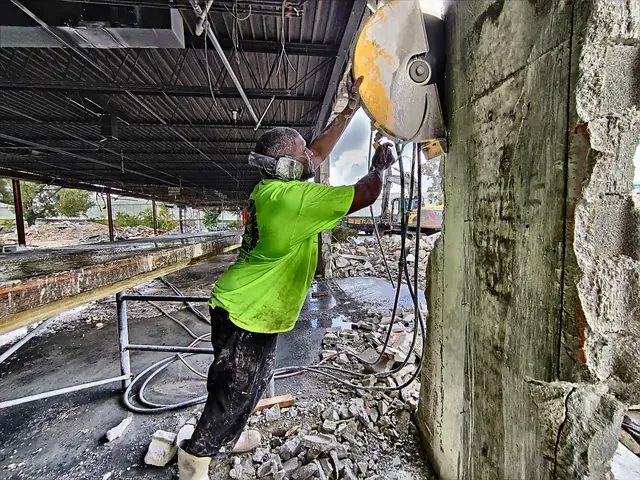
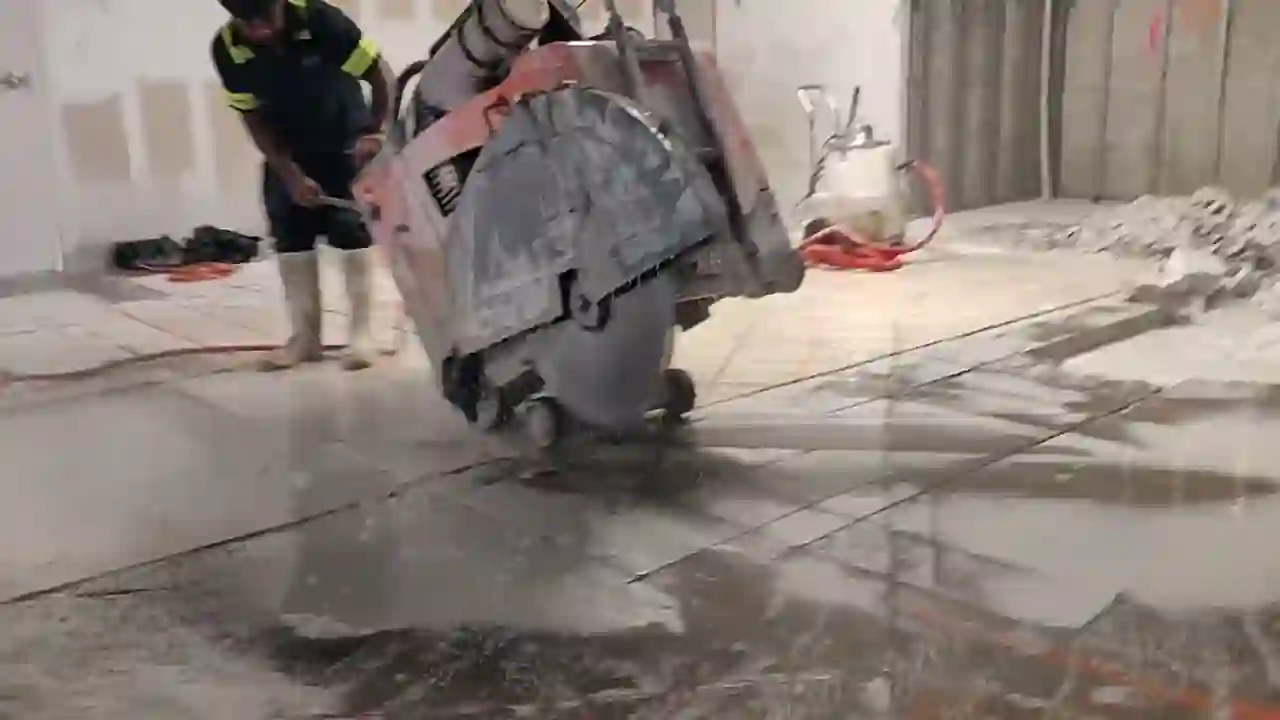
Concrete chain saws — sometimes called concrete chainsaws or wall saws with bar-and-chain configurations — use a continuous loop of diamond-tipped cutting segments to slice through reinforced concrete, masonry, and aggregate-heavy substrates. Unlike circular blade saws, the bar-and-chain system excels in confined spaces, odd angles, and plunge cuts that no other tool can execute cleanly. But that mechanical advantage comes with a specific environmental challenge: the cutting action generates high-velocity slurry spray in a wide arc, not a controlled stream. Without proper chain selection and water management, you’re not cutting concrete — you’re painting the surrounding environment with alkaline slurry that carries a pH between 11 and 13.
Chain Geometry and Its Direct Impact on Slurry Dispersion Patterns
Not all chainsaw demolition chains are built the same, and the geometry of the cutting segment — specifically the segment height, gullet depth, and drive link spacing — directly controls how much water the chain requires and how aggressively it disperses slurry during the cut. High-segment chains designed for fast material removal in soft aggregate concrete generate significantly more slurry volume per linear foot of cut than low-profile chains optimized for hard, high-PSI substrates. Selecting the wrong chain for your substrate isn’t just a productivity problem. It’s a water consumption and slurry volume problem that compounds every environmental compliance challenge downstream.
In Miami’s coastal construction environment, where projects frequently occur near storm drains, Biscayne Bay tributaries, and sensitive estuarine systems, the Florida Department of Environmental Protection (FDEP) and Miami-Dade DERM (Department of Environmental Resources Management) both maintain active enforcement postures around concrete slurry discharge. The alkaline pH of cementitious slurry is acutely toxic to aquatic life, and a single uncontained discharge event can result in fines, stop-work orders, and mandatory environmental remediation at the contractor’s expense. What separates elite concrete saw cutting companies from average operators is precisely this awareness — that chain selection and environmental compliance are not separate conversations.
Water Flow Rate Engineering for Chainsaw Demolition Chain Operations
Every chainsaw demolition chain has a minimum and optimal water flow rate specified by the manufacturer, typically measured in gallons per minute (GPM). These specifications exist to cool the diamond segments, flush cuttings from the gullets, and suppress airborne silica particulates. But from an environmental compliance standpoint, these flow rates also define the volume of slurry your containment system must handle. A chain saw running at 2.5 GPM through a 12-inch wall cut generates a calculable slurry volume — and that calculation should drive your containment infrastructure sizing before the first cut is made, not after.
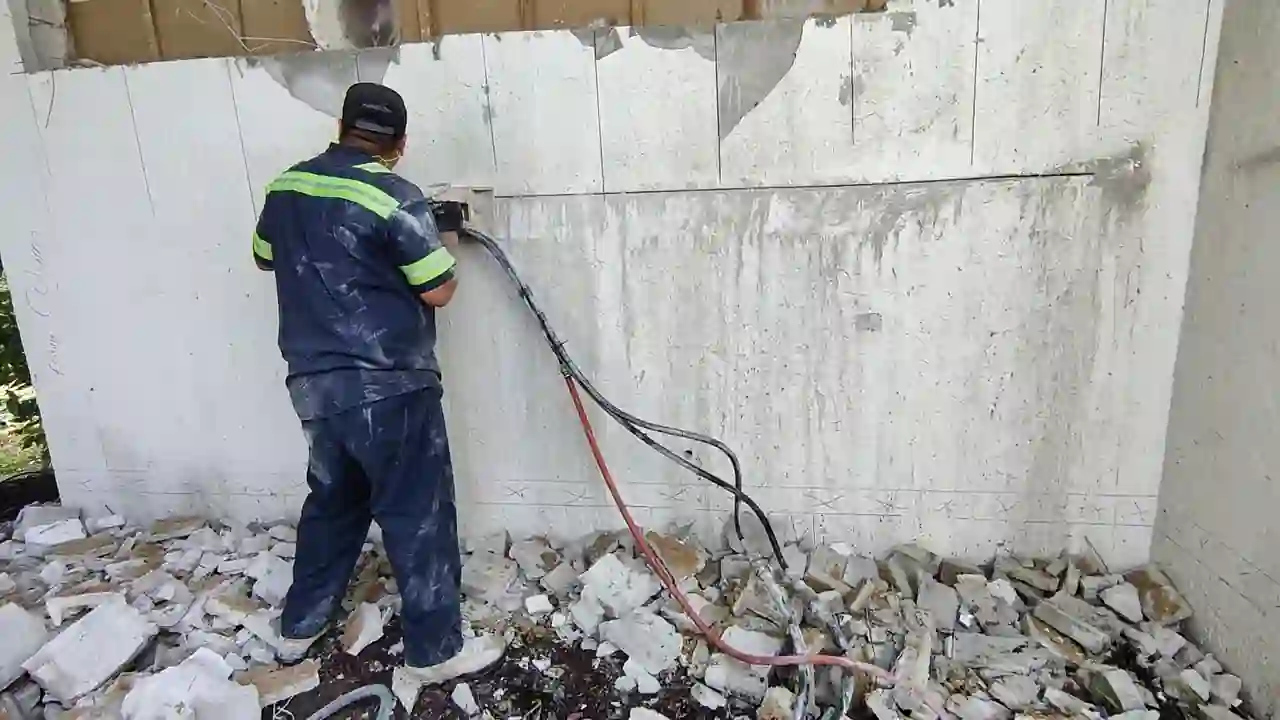
Standard practice on compliant Miami job sites involves a closed-loop water recirculation system wherever feasible. Water is delivered to the chain bar via a pressurized supply line, the resulting slurry is directed into a collection berm or vacuum recovery system, and the recovered liquid is filtered and either recirculated or transported off-site for proper disposal. The chain selection influences this entire system because high-segment chains running at higher GPM rates will overwhelm undersized vacuum recovery units and breach low-profile containment berms. Matching your chain specification to your water management infrastructure is a non-negotiable step in pre-job planning.
Containment Berm Sizing Based on Chain Type and Cut Duration
For short plunge cuts in confined interior spaces, foam berm systems with integrated drain plugs are generally sufficient when paired with a wet-dry vacuum recovery unit rated for slurry service. For extended cuts — foundation walls, retaining structures, hurricane-damaged load-bearing elements — a rigid containment system using interlocking polyethylene berms with a minimum 4-inch wall height and sealed corner joints is the professional standard. Hurricane damage restoration projects in Miami frequently require chainsaw demolition chain operations on compromised structural elements near flood-prone areas, making proper containment not just a regulatory requirement but a practical necessity given the site conditions.
The slurry volume formula most field supervisors use is straightforward: multiply your GPM flow rate by the estimated cut time in minutes, then add a 25% safety margin to account for splashback and chain-spray dispersion. A 45-minute cut at 2 GPM produces approximately 90 gallons of slurry. Your containment system must hold that volume without breach, and your vacuum recovery or pump-out capacity must be able to process it within the job window. These are engineering decisions, not field improvisations.
pH Neutralization Protocols Before Slurry Disposal
Concrete cutting slurry cannot be discharged to storm drains, surface water, or sanitary sewer systems without treatment in most jurisdictions. Miami-Dade County’s Industrial Waste Ordinance requires that any liquid discharge to the sanitary sewer system meet pH standards between 5.0 and 11.0, and most storm drain ordinances are even more restrictive. Raw concrete slurry at pH 12 or 13 fails these thresholds without treatment.
On-site pH neutralization using carbon dioxide injection or dry ice is the most common professional approach. CO2 reacts with the calcium hydroxide in the slurry to form calcium carbonate — a benign precipitate — while driving the pH down to acceptable discharge levels. Some contractors use citric acid or sodium bisulfate as alternative neutralizing agents, though CO2 injection is generally preferred for volume efficiency and handling safety. The chain type matters here again because high-volume slurry generators require larger neutralization capacity, and undersizing your CO2 system is a compliance failure waiting to happen. For contractors looking to understand how these decisions affect overall project economics, concrete cutting pricing structures reflect the real cost of compliant slurry management at scale.
Silica Dust Suppression as a Secondary Chain Selection Criterion
OSHA’s silica standard (29 CFR 1926.1153) mandates specific water delivery rates for wet cutting operations involving concrete. For chainsaw demolition chain work, the standard requires continuous water delivery that suppresses dust at the point of cut — not just at the blade. The segment geometry of your chain affects whether water delivered through the bar’s internal water ports reaches the full cutting arc or only the leading edge. High-segment chains with wide gullets tend to carry water more effectively around the full chain loop, providing better silica suppression across the entire cut face. This is a health and safety consideration that also intersects directly with environmental compliance, since inadequate water delivery increases both worker exposure and dry dust dispersion beyond the containment perimeter.
Selecting diamond tooling with appropriate specifications for your substrate and compliance requirements is a subject covered in depth in our guide on diamond tooling must-knows for concrete chipping projects. The principles translate directly to chainsaw demolition chain selection — bond hardness, segment geometry, and water delivery compatibility are equally critical variables.
Field Verification Checklist Before Running Chainsaw Demolition Chain Near Sensitive Areas
- Chain specification confirmed against substrate PSI rating and aggregate hardness test results
- Water flow rate calculated and supply system pressure-tested at job-site conditions
- Slurry volume estimate completed using GPM × cut time × 1.25 safety factor
- Containment berm system installed and sealed before first cut, with overflow capacity verified
- Vacuum recovery or pump-out system staged and rated for slurry service at required GPM
- pH neutralization equipment on-site with sufficient CO2 or chemical agent for estimated slurry volume
- Storm drain protection deployed on all drains within 50 feet of cutting operations
- Silica monitoring plan active with water delivery confirmed to full chain arc
- DERM/FDEP permit reviewed for any proximity-to-water-body requirements specific to the site
Contractors who want to develop the full skill set for managing complex concrete cutting operations — including chain saw work in environmentally sensitive contexts — will find the foundational techniques covered in our resource on how to cut concrete like a pro a valuable starting point. But at the commercial and structural level, chainsaw demolition chain work requires a level of pre-job planning and environmental systems thinking that goes well beyond basic technique.
The Real Cost of Non-Compliance Versus Proper Slurry Management Investment
Miami-Dade DERM enforcement actions for concrete slurry discharge violations routinely result in fines ranging from $5,000 to $50,000 per incident, depending on proximity to protected water bodies and volume of discharge. Stop-work orders on active projects carry their own cost multiplier when you factor in crew downtime, equipment rental extensions, and client penalty clauses. Against that exposure, the cost of a properly specified chainsaw demolition chain, a closed-loop water management system, and on-site pH neutralization equipment is not an overhead burden — it is risk mitigation with a calculable return.
The contractors who consistently win complex, high-value demolition work in Miami’s competitive market are the ones who have internalized this calculus. They don’t treat environmental compliance as a regulatory obstacle. They treat it as a technical discipline — one that starts with chain selection, runs through water flow engineering, and ends with documented, compliant slurry disposal. That’s what professional chainsaw demolition chain operation looks like at the highest level of the trade.