Hand Breaking Is Possible, Not Always Smart
Breaking concrete by hand is a real option for a small slab, a narrow walkway, or a thin patio, but it is slow, hard work. The question is not whether you can do it, it is whether the slab is small enough and unreinforced enough that a sledgehammer beats renting a breaker. For a thin, unreinforced slab under a few hundred square feet, hand breaking is genuinely viable.
The trick is technique. Most people swing a sledgehammer at the center of a slab and get nowhere, because concrete is strong in compression and the middle has nothing to give. The edges and the existing cracks are where the slab is weakest, and that is where you start. Breaking concrete by hand is a method, not just effort.
The Tools You Need
The core kit is simple. A sledgehammer for the breaking, a pry bar and a digging bar for levering, and a pair of gloves and safety glasses. A maul or a heavier sledge works better than a light one, and a long-handled sledge lets you use your legs and back instead of your arms.
If the slab is reinforced, add a pair of bolt cutters or a grinder to cut the rebar, because reinforced concrete will not break cleanly by hand until the steel is cut. Reinforced slabs are usually the point where hand breaking stops making sense.
The Technique That Actually Works
Start at an edge or a crack, where the concrete is already weak. Swing the sledge to fracture the slab into pieces, then use the pry bar to lift and separate the pieces. Work your way across the slab from the weak point, breaking off pieces as you go rather than trying to break the whole slab at once.
Use gravity and leverage. Once a piece is cracked, pry it up so the crack opens, then break the piece free. Lifting a section with the bar and dropping it can break pieces faster than swinging at them. The work is about patience and leverage, not raw force.
Safety When Breaking by Hand
Concrete shards fly when you swing a sledgehammer, so safety glasses are mandatory, and gloves protect your hands from the sharp edges. Long pants and boots protect your legs and feet from flying chips and dropped pieces. A dust mask helps if the concrete is dry and dusty.
Watch your back. Lifting heavy pieces with a bent back is how people get hurt, so use the pry bar for leverage and your legs for lifting, and keep the pieces small enough to carry without strain. Safety first applies even to hand work.
When to Stop and Rent or Hire
Hand breaking has a limit. A thick slab, a large area, or any slab with rebar will quickly make a sledgehammer a losing proposition. If you are an hour in and have broken a two-foot square, the machine or the pro is the answer. Reinforced concrete almost always justifies a breaker or a saw.
The math is simple. A breaker rents cheaply and does in an hour what a sledgehammer does in a day. If your time is worth anything, the machine wins on anything but the smallest slab. Choosing the right equipment is the difference between a weekend project and a week-long one.
Disposing of the Pieces
Broken concrete has to go somewhere, and it is heavy. A small slab can fill several trash cans, and a larger one needs a truck or a haul-away service. Most concrete goes to a recycling facility, so check local options before you start so the pieces have a place to go.
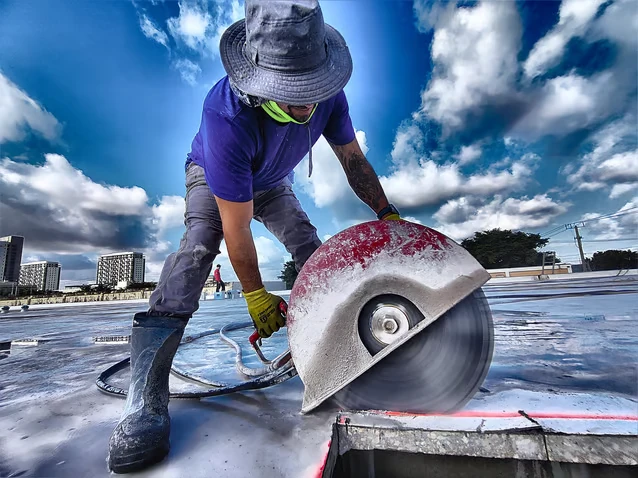
The disposal is the part hand-breakers forget, and it is why a professional removal often makes more sense than it first appears. Concrete removal includes the haul-away that hand breaking does not.
The Physical Toll Nobody Mentions
Breaking concrete by hand is honest work, and it takes a toll the manuals do not mention. Swinging a sledgehammer all day is exhausting, and the vibration and repetitive motion will find your hands, wrists, and back by the end of the first afternoon. The pieces are heavy, the work is low to the ground, and the heat in Miami makes it all harder.
That physical cost is why the hand-breaking math rarely favors anything but the smallest slab. A breaker rental costs less than a day of your sore back, and a professional removal costs less than a week of your time. The satisfaction of doing it yourself is real, but it is worth being honest about what the job will actually take out of you.
When Hand Breaking Makes Sense
- Small walkway or step: a few square feet, unreinforced.
- Thin patio section: under four inches, no steel.
- Already-cracked concrete: the cracks do half the work.
- No access for equipment: a spot a breaker cannot reach.
Outside those cases, the machine or the pro is the better call. Hand breaking is a tool in the box, not the default, and knowing when to put the sledgehammer down is part of doing it right.
Disposing of the Pieces You Break
The breaking is only half of a hand-breaking job, and the other half is getting rid of the pieces. Broken concrete is heavy, and even a small slab fills a surprising number of containers. Before you swing the first hammer, figure out where the debris is going, because the disposal is often the part people do not plan for until they are standing in a pile of broken concrete.
The options are a few. A dumpster rental handles a larger job, while a smaller one might fit in a pickup bed for a trip to a local facility. Most concrete goes to a recycler that crushes it into road base and fill, which keeps it out of the landfill and usually costs less than general waste. Check the local options and the weight limits before you start, because concrete is heavier than it looks.
This is the hidden reason hand breaking sometimes does not pay. The labor is one cost, but the disposal is another, and once you add a dumpster or a haul-away, the total can approach what a professional removal would have cost. Do the disposal math before you commit to doing it yourself, and you will know whether the savings are real.
Heat is the Miami wildcard. Swinging a sledgehammer in ninety-degree humidity is a different job than doing it in a mild climate, and it drains you fast. Work early, take breaks, and hydrate, because heat exhaustion sneaks up on someone focused on the concrete. The heat is one more reason the hand-breaking math favors the smallest possible job.
Technique protects your back more than strength does. The power in a sledge swing comes from the legs and the rotation of the body, not the arms, and lifting a broken piece means bending the knees and using the legs. A long-handled sledge keeps you more upright and spreads the work over your whole body. Get the safety and technique right and the job is slower but survivable; get it wrong and it is a week of back pain.
Pacing is the secret nobody writes down. Concrete breaking is a marathon, not a sprint, and a steady rhythm with breaks outlasts a burst of hard swings. Work from the edges, keep the pieces small, and let the cracks do half the work. The hand-breaking cost is mostly your time and your back, so pace both.
Know Your Limits
Breaking concrete by hand is satisfying and doable for the right small job, but it is honest, hard work. If the slab is bigger than a walkway or has steel in it, call us and we will have it out before you finish sharpening your sledgehammer technique.
We will tell you straight whether your slab is a hand job or a machine job, and we will get it removed either way.