Hire Jackhammer or Hire a Crew The Question Behind the Question
The decision to hire jackhammer equipment and do the breaking yourself, or to hire a crew, usually comes down to one thing people underestimate: concrete breaking is physically brutal, and the hard part is not the breaking, it is the cleanup and the disposal. A rental jackhammer is cheap for a day, but the concrete is still there when the day ends, and now it is in your way in smaller pieces.
In Miami, where slabs are reinforced, heat is punishing, and disposal is regulated, the math changes quickly. Let me walk through how to make the call honestly.
What a Jackhammer Actually Costs to Rent and Run
A jackhammer rental is the cheap part of a DIY job. You can rent an electric or pneumatic breaker for a day for a modest fee, plus the bits and the safety gear. But the rental is only the first cost. You will also need a way to cut the concrete into sections first, a wheelbarrow or cart, a disposal plan, and a lot of time and sweat.
The bigger cost is hidden: reinforced concrete fights a jackhammer. The rebar holds the concrete together, so the breaker chips away instead of breaking clean sections, and the job takes far longer than the estimate. Our guide to breaking concrete explains what actually happens when you start swinging at a reinforced slab.
When DIY Breaking Is a Reasonable Choice
There are times when doing it yourself makes sense. A small, thin, unreinforced slab, like a narrow walkway or a small patio section, can be broken with a rented jackhammer in a day, if you are fit, patient, and have a plan for the debris. If the slab is four inches thick with no rebar and you have somewhere to put the broken concrete, DIY can work.
The key is honesty about the slab. If you are not sure whether it is reinforced, assume it is. Most Miami slabs have rebar or wire mesh, and that reinforcement is what turns a quick job into an all-weekend fight. Our guide to DIY versus professional demolition helps you make the call.
When to Hire the Crew Instead
The moment the slab is large, thick, reinforced, or indoors, hiring a crew is the better call. A professional crew cuts the concrete into sections first, which makes the breaking controlled and fast, then breaks it, loads it, and hauls it away. The haul-off alone is worth the cost, because concrete is heavy and disposal is regulated.
Indoors, the case for a crew is even stronger. Breaking concrete inside a home throws silica dust and requires containment, and the noise and vibration are serious. A professional handles the dust control, the slurry, and the cleanup. Our guide to hiring a concrete removal contractor covers what a crew brings.
The Safety Math in Miami Heat
Concrete breaking is one of the most physically demanding jobs there is, and in Miami’s heat and humidity it becomes a real safety issue. Heat exhaustion is a genuine risk for someone not used to the work, and the vibration from a jackhammer takes a toll on hands and arms. A professional crew is conditioned for it and paces the work accordingly.
The dust is the other hazard. Concrete dust contains silica, and breaking it without proper respiratory protection is a long-term health risk. A DIYer with a dust mask is not getting the same protection a professional crew brings. Our guide to concrete dust exposure explains the difference.
What the Rental Does Not Include
The jackhammer rental is the cheap part, and everything else is where the cost and the effort hide. The rental does not include the saw you need to cut the concrete into sections first, the wheelbarrow and ramp to move the broken pieces, the dump fees and the truck to get there, or the days of recovery your body will need. Add those up and the DIY savings shrink fast.
It also does not include the judgment. A professional knows when a slab is reinforced, when it is too thick for a rental breaker, and when the job has grown beyond a weekend. That judgment is what keeps a small job small, and it is the hardest thing to rent. Our guide to breaking concrete lays out what the work actually involves.
Cutting First Makes the Breaking Easier
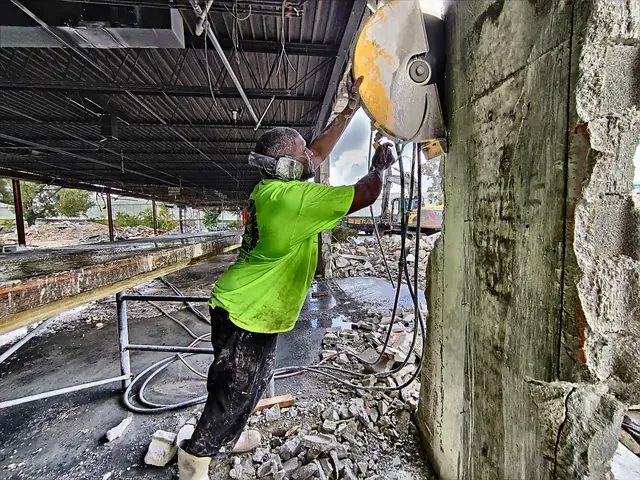
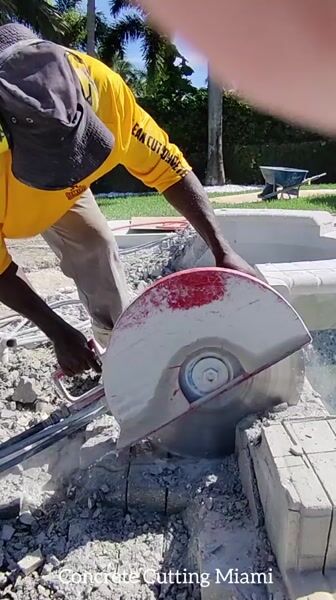
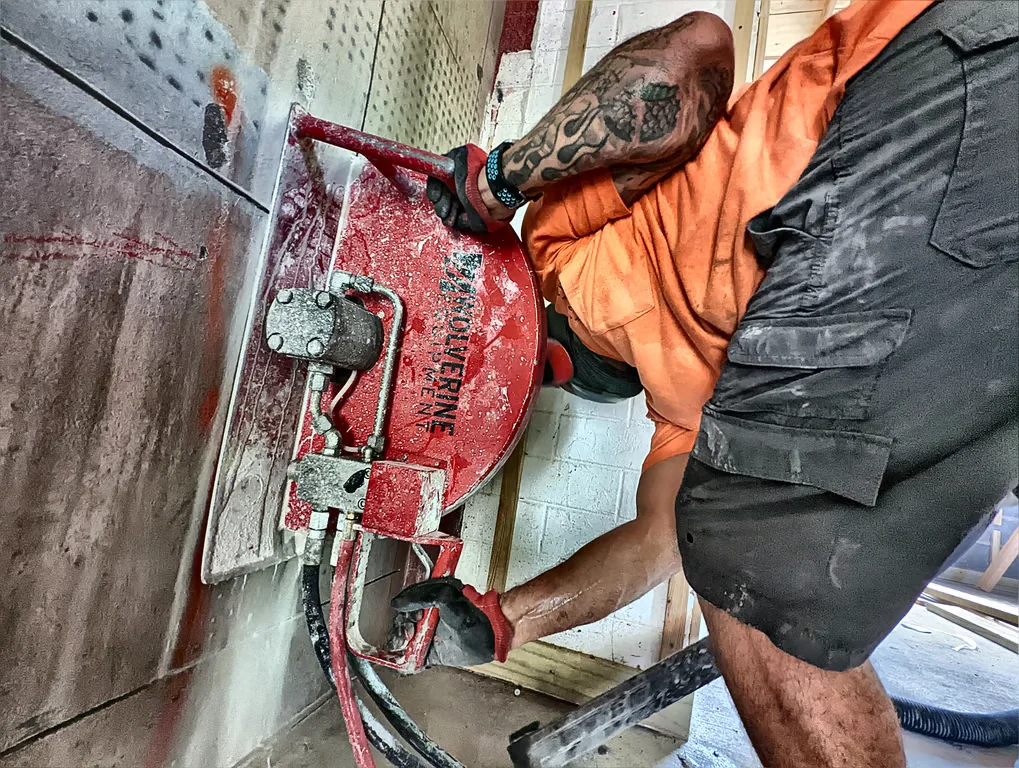
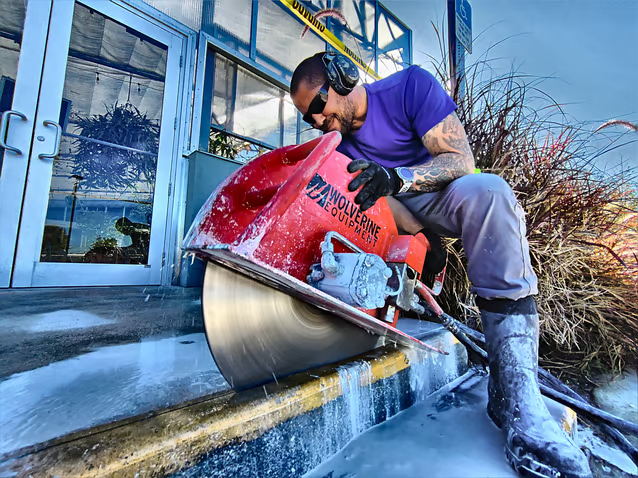
The secret to breaking concrete efficiently is cutting it first. A saw cut through the slab creates the weak lines where the concrete will break, and the breaker then works section by section instead of fighting the whole slab at once. Without the cuts, the concrete shatters unpredictably and the job drags on far longer than it should.
This is the step most DIYers skip, and it is why their jackhammer jobs take all weekend. A couple of saw cuts turn an hour of breaking into twenty minutes, and they give you clean edges where the removed concrete meets what stays. Our guide to DIY versus professional demolition explains the cut-first approach.
The Disposal Problem Nobody Plans For
The broken concrete does not disappear when the jackhammer stops. It has to be loaded, hauled, and disposed of, and concrete is heavy and regulated. Most homeowners do not have a truck that can carry a patio’s worth of broken concrete, and the dump will not take it for free. The disposal is often the part that tips the decision toward hiring a crew.
A professional includes the haul-off in the quote and has the equipment and the disposal route already figured out. When you hire a crew, the disposal is their problem; when you rent a jackhammer, it is yours. Our guide to concrete debris removal and disposal covers what the haul-off really involves.
Hiring a jackhammer for a small job can make sense, but match the tool to the concrete first. A full-size electric or pneumatic breaker is overkill for a thin slab and will rattle the whole neighborhood, while a smaller breaker or a chipping hammer is often the better fit for a patch or a single footing. The right size does the job without destroying more concrete than you meant to remove.
The hidden cost of a jackhammer rental is what it does to your body and your schedule. Breaking concrete by hand is slow, hard work, and on a slab with rebar it can take all day to do what a professional crew does in an hour. Add in the dust, the disposal, and the fatigue, and the rental often stops looking cheap. There is a line where hiring the concrete breaking out to a crew is the better value.
Check what is under the concrete before you break it, because a jackhammer will not stop for a pipe or a conduit. In Miami, slabs sit over plumbing and electrical lines, and a breaker will find them the hard way if you have not located them first. A quick locate or scan before you start is the difference between a clean break and an emergency call to a plumber. The jackhammer does exactly what you tell it, so make sure you have told it the right place.
Make the Call With Your Eyes Open
Hiring a jackhammer for a small, unreinforced slab can be a smart way to save money, if you are honest about the work and the disposal. But the moment the slab is reinforced, large, or indoors, the crew is the better value. The rental is cheap, but the cleanup, the disposal, and the toll on your body are not. Make the call with your eyes open, and you will spend your money where it actually saves you something.