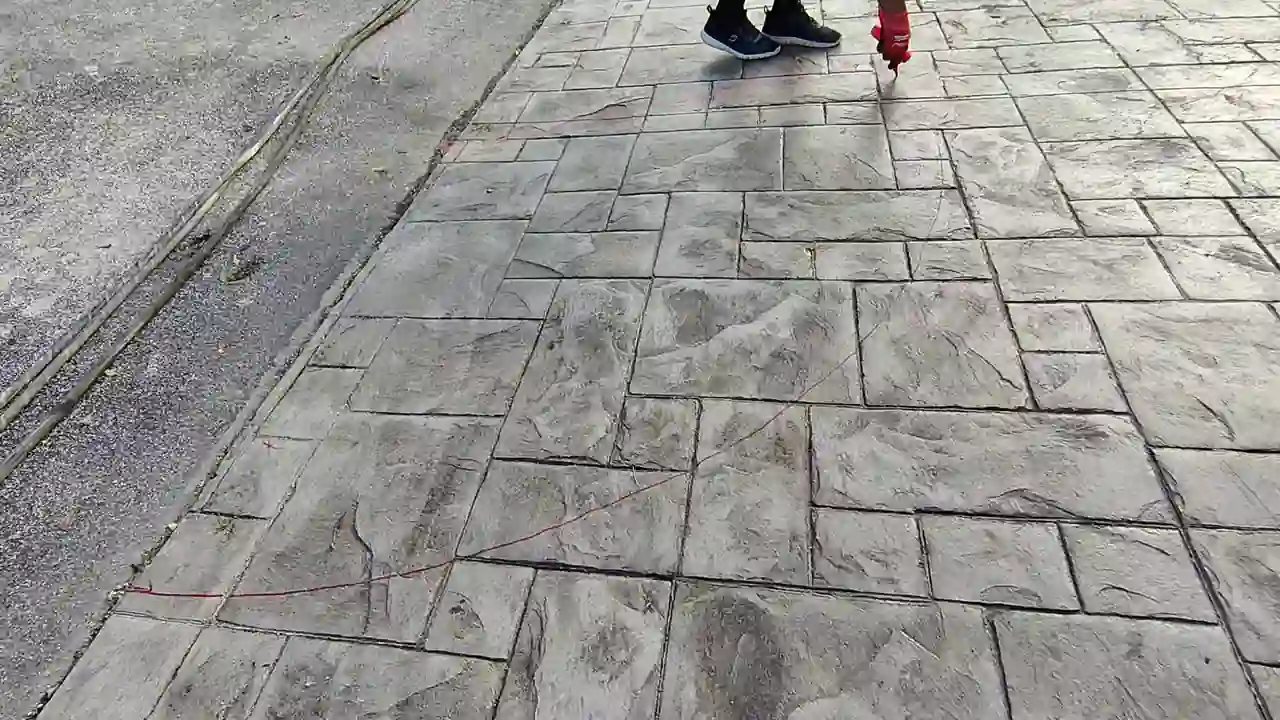
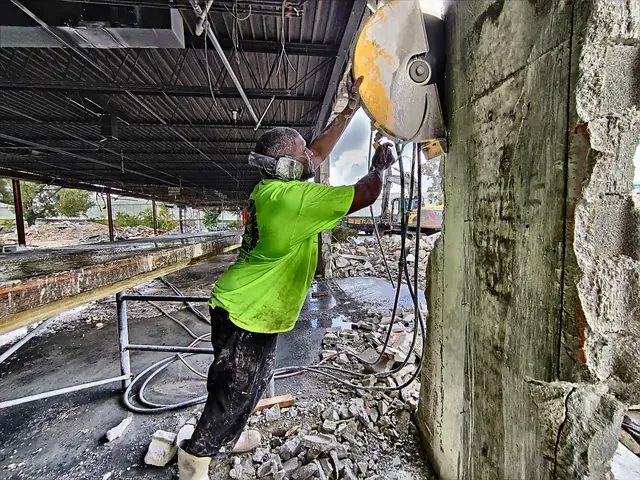
What Concrete Shaving Actually Is
Concrete shaving is the process of removing a thin layer of concrete from a high spot to bring it level with the surrounding surface. It is faster and more aggressive than fine grinding, which is why it is the go-to when a slab has a pronounced hump, a raised edge, or a high pour that has to come down before flooring goes in.
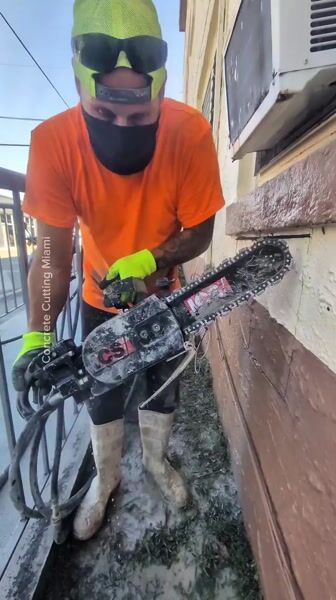
The distinction matters. Grinding polishes and smooths a surface by thousandths of an inch, while shaving removes real material, sometimes a quarter-inch or more, to correct a level problem. In Miami, where slabs settle and heave with the soil, concrete repair often starts with shaving the high side down.
The Tools Behind a Clean Shave
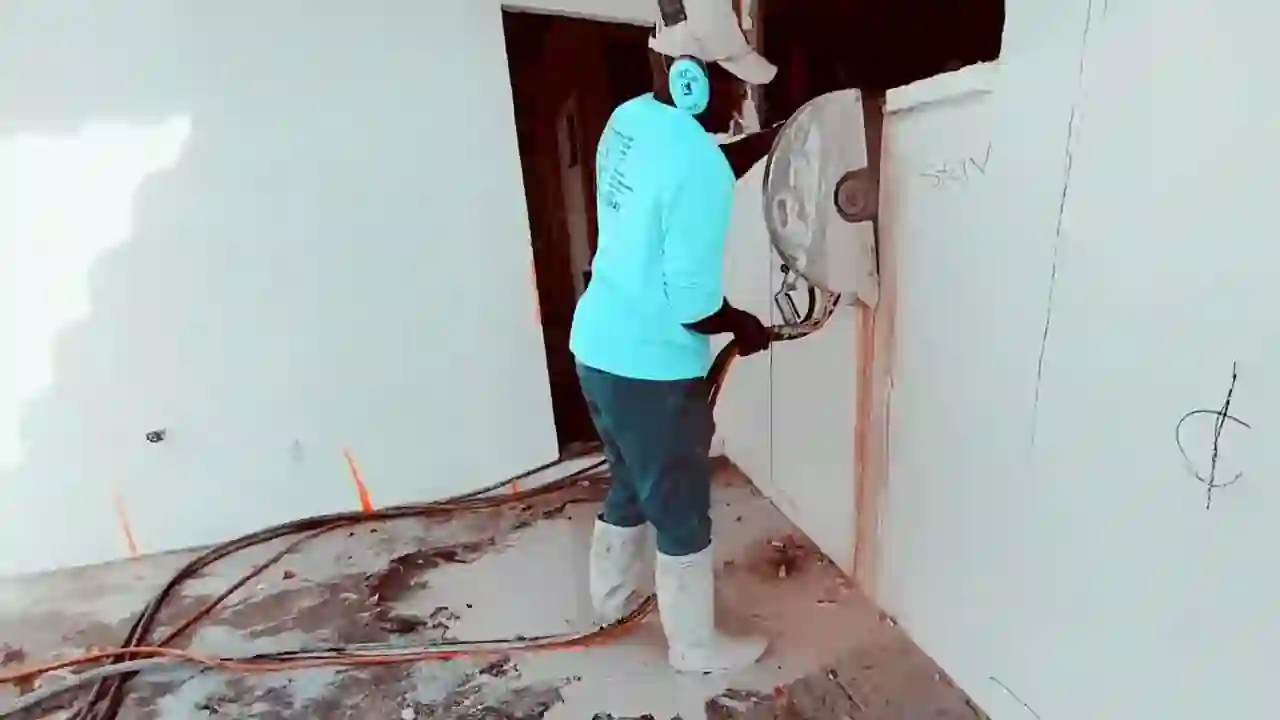
Concrete shaving is done with walk-behind or hand-held diamond grinders fitted with aggressive tooling, or with a scarifier that uses rotating flails to chew off material fast. The choice depends on how much has to come off and how smooth the final surface needs to be.
A scarifier removes material quickly but leaves a rough, textured surface that is fine under new concrete or a thick underlayment. A diamond grinder is slower but leaves a surface ready for thin flooring. The right tooling is what separates a smooth shave from a gouged mess.
Shaving for Flooring Prep
One of the most common reasons to shave concrete in Miami is flooring. Luxury vinyl, tile, and thin epoxy all telegraph every bump in the slab, so a high spot in the middle of a room has to come down before the finish goes on. Shaving the high area level is cheaper and cleaner than pouring self-leveler over the whole floor.
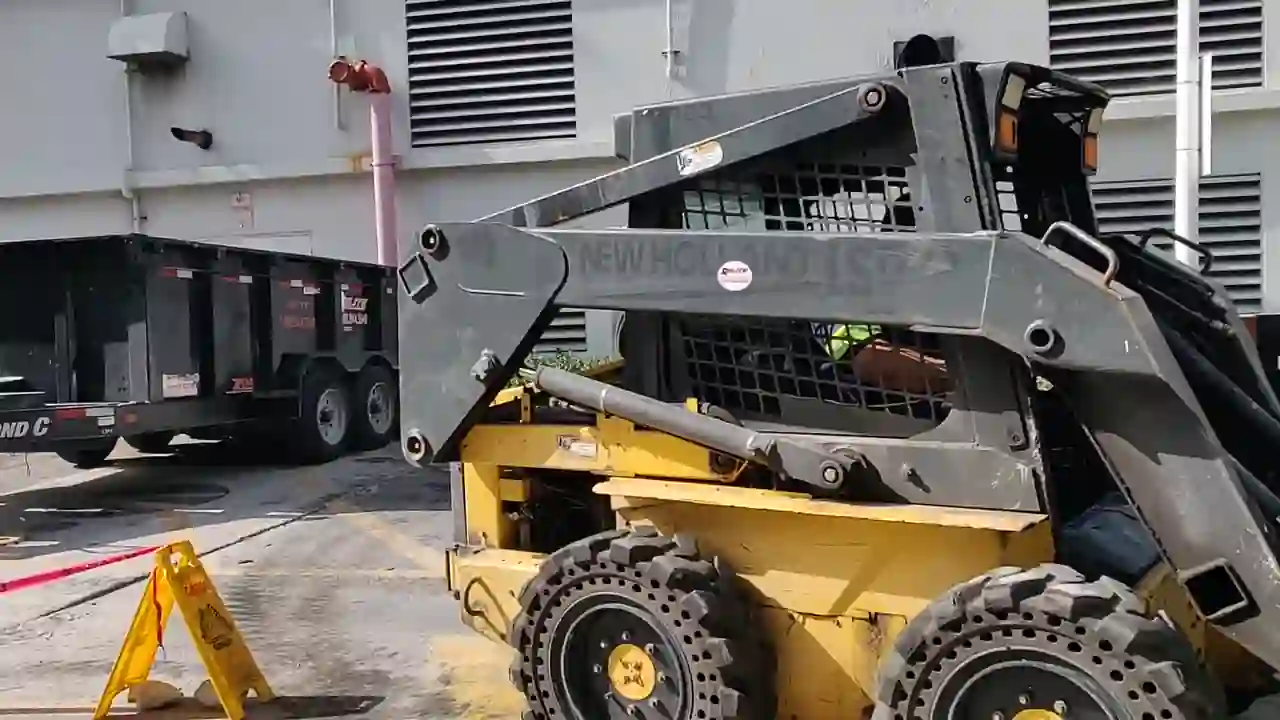
We shave the high spots, test with a straightedge, and leave a surface that the flooring contractor can work with. It is the difference between a floor that lies flat and one that shows a wave under the light.
Trip Hazards and ADA Compliance
For commercial properties, a raised sidewalk or walkway is an ADA and liability issue. Shaving the raised edge back to grade restores compliance without the cost and downtime of replacing the slab, and it can often be done in a day with minimal disruption to foot traffic.
Property managers in Brickell and Downtown Miami deal with this constantly, and commercial concrete cutting keeps their walkways safe and their insurance costs down. A smooth transition is a legal requirement, not a nicety.
Dust Control While Shaving
Shaving concrete produces fine dust, and on an occupied property or a public walkway, that dust has to be controlled. We run vacuum shrouds on the grinders and scarifiers to capture dust at the source, which protects occupants and keeps us compliant with silica dust rules.
On wet-shaved surfaces we contain the slurry too. A clean shave means the dust and slurry are handled, not left for someone else to sweep.
Shaving Versus Replacement
Shaving only works when the slab is sound and the problem is a high spot. If the slab is cracked, hollow, or sunken in the middle, shaving the edges down will not fix the dip. In those cases replacement or a leveling compound is the answer, and we will tell you straight which one you need.
The quick test is a straightedge and a look at the cracks. A sound slab with a high spot is a shaving job. A broken slab is a different conversation entirely.
Shaving Versus Grinding Versus Self-Leveler
The words get thrown around interchangeably, but shaving, grinding, and self-leveling are three different fixes for three different problems. Shaving removes a real thickness of concrete from a high spot to bring it down to grade. Grinding is a finer process that smooths a surface and corrects very small variations. Self-leveler is a pourable compound that fills low spots and brings the whole floor up to the high point.
The choice depends on what is wrong with the slab. A pronounced hump is a shaving job, because you want to remove material, not add it. A floor with minor waves is a grinding job. A floor with low spots and dips is a self-leveler job, because you are filling, not cutting. Getting this wrong means either over-removing concrete or pouring far more leveler than the floor needed.
Which Fix Fits Your Slab
- High hump or raised edge: shave it down.
- Minor surface waves: grind them smooth.
- Low spots and dips: self-leveler fills them.
- Trip-hazard lip: shave the high side to grade.
- Broken or hollow slab: none of the above, replace it.
A quick straightedge test usually reveals which one you need, and it saves you from paying for the wrong fix. We will tell you straight what your slab is asking for.
Shaving Concrete in an Occupied Home
Most concrete shaving happens in homes people are living in, and that changes how the job is run. The grinding and scarifying equipment is loud and produces dust, so the work area has to be sealed off, and the dust has to be captured at the source. A professional shaves the high spots while protecting the rest of the home from the dust and noise.
The sequence matters on a lived-in home. We move furniture and cover what cannot move, we seal the room to contain the dust, and we run vacuum shrouds on the equipment so the dust never gets airborne. Then we shave the slab, clean up, and leave the room ready for the next trade. The protection is as much a part of the job as the shaving.
Homeowners are usually surprised at how clean the process is, because the equipment has come a long way from the dusty grinders of the past. A professional shaving job leaves a flat, clean slab and a room that does not look like a construction site. That is the difference between doing the job and doing it in someone’s home.
Testing the result is part of the job. After we shave a high spot, we check it with a straightedge and a level, because the goal is not just to remove material but to leave a surface that is actually flat. A high spot that becomes a low spot is no better than the original problem, and it is the kind of error a quick straightedge check catches before the flooring goes down.
The thickness of the removal matters too. Shaving a quarter-inch off a slab is routine, but shaving deeper than the slab can afford is a structural question, and there is a point where you are removing enough concrete that the slab’s strength matters. We stay within what the slab can safely lose, and if the correction needs more than that, we tell you before we cut. A concrete repair that respects the structure is one that does not create a new problem while fixing the old one.
The type of flooring going down also changes the tolerance. Thick tile and luxury vinyl forgive tiny variations, but thin epoxy and polished concrete telegraph every bump, so the shave has to be flatter for those finishes. Tell us what is going on top and we will shave to the tolerance that finish needs. A surface that is flat enough for tile may still be too wavy for a renovation finish like epoxy.
In the end, shaving is the fastest way to fix a high spot without disturbing the slab around it, and it is almost always cheaper than replacement.
Get Your Slab Level the Right Way
If you are searching for concrete shaving near you in Miami, call us. We will look at the slab, tell you whether shaving will fix it, and get the high spots down so your flooring or your walkway is flat and safe.
Concrete shaving is fast, affordable, and far less disruptive than replacement. Let us get your surface back to level.