What a Concrete Chain Saw Does That a Circular Saw Cannot
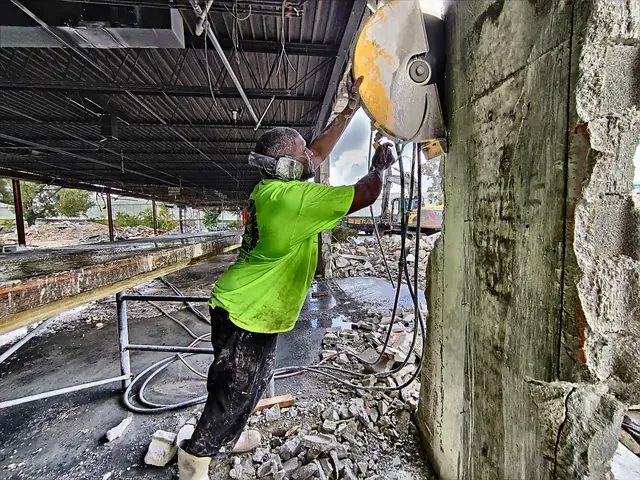
A concrete chain saw is a niche tool that solves a specific problem. A circular saw can only cut as deep as its blade radius, but a chain saw drives a diamond-impregnated chain around a bar, which lets it cut much deeper and through corners that a round blade cannot reach. That makes it the tool for plunge cuts, deep narrow openings, and inside-corner cuts in walls and slabs.
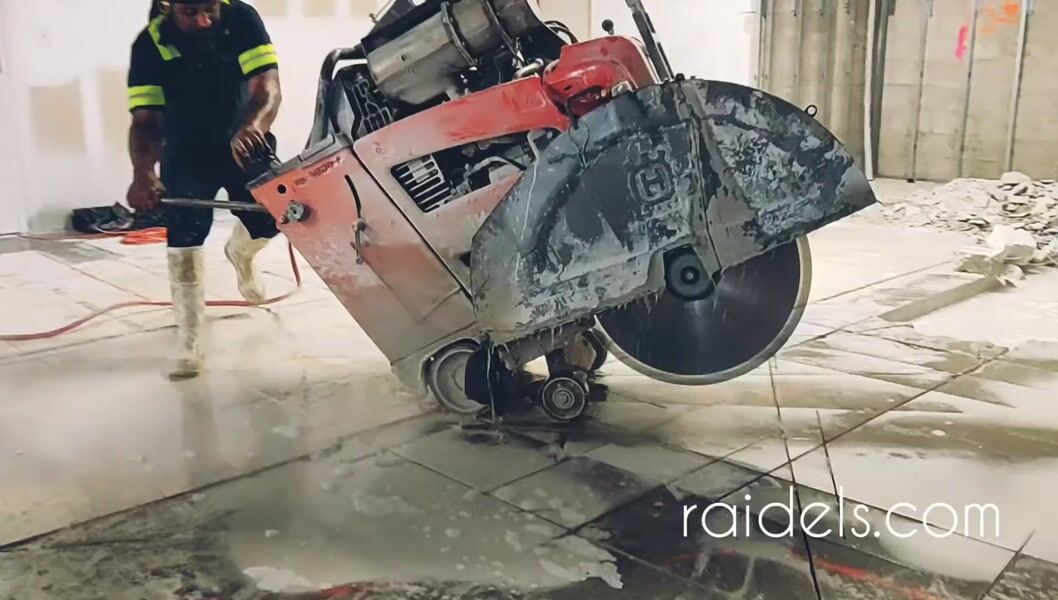
Concrete chain saws come in gas, hydraulic, and electric versions, and in Miami the hydraulic and gas models dominate because they deliver the power and water flow a deep concrete cut needs. Hydraulic and gas chain saws are how pros open deep, square penetrations.
When Rental Makes Sense, and When It Does Not
Renting a concrete chain saw looks cheaper than hiring a crew, but the saw is only part of the job. A deep concrete cut also needs water, dust control, and an operator who understands how the bar behaves in a cut that is wider than a standard chain. The learning curve is real, and the consequences of a mistake are serious.
For a one-off plunge cut or a single deep opening, rental can work if you already know the tool. For anything structural, anything near utilities, or anything where the cut has to be square and clean, hiring a professional with the saw on the truck is the better math. The DIY versus professional decision comes down to risk, not just price.
The Safety Realities of a Diamond Chain
A concrete chain saw is not a wood saw. The diamond chain runs at high speed under load, the bar can kick back, and the cut throws slurry and debris. Eye protection, hearing protection, and a full understanding of the tool’s kickback zone are non-negotiable, and wet cutting means standing in water around a powered tool, which adds an electrical and footing risk.
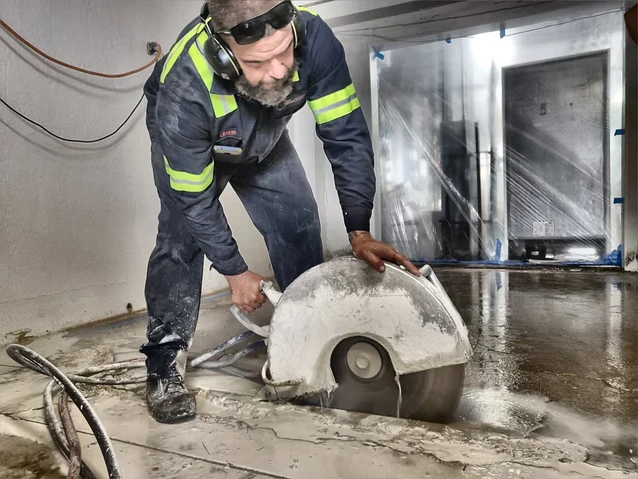
This is also a silica-heavy operation, and dry cutting with a concrete chain saw is exactly the kind of work silica safety rules were written for. A rental saw run dry without dust control is a health hazard to you and everyone downwind.
Cutting Corners and Deep Openings
The chain saw’s real superpower is the inside corner. When you need a square opening for a beam pocket, a utility penetration, or a doorway in a thick wall, a circular saw leaves a rounded corner that has to be chipped out by hand. A chain saw can cut the corner square, which saves hours of cleanup and gives you a cleaner result.
That is why you see chain saws on jobs where a beam has to seat precisely into a pocket. The square corner matters, and wall cutting with the right tool is the difference between a beam that seats and one that needs shims and grout.
What a Chain Saw Cut Costs
Whether you rent or hire, the real cost of a chain saw cut is time and safety. Rental fees run by the day or week, and you add water, fuel or power, and the blade or chain wear. Hiring a pro bundles the saw, the operator, the water, and the dust control into one number, and the cut is square and clean the first time.
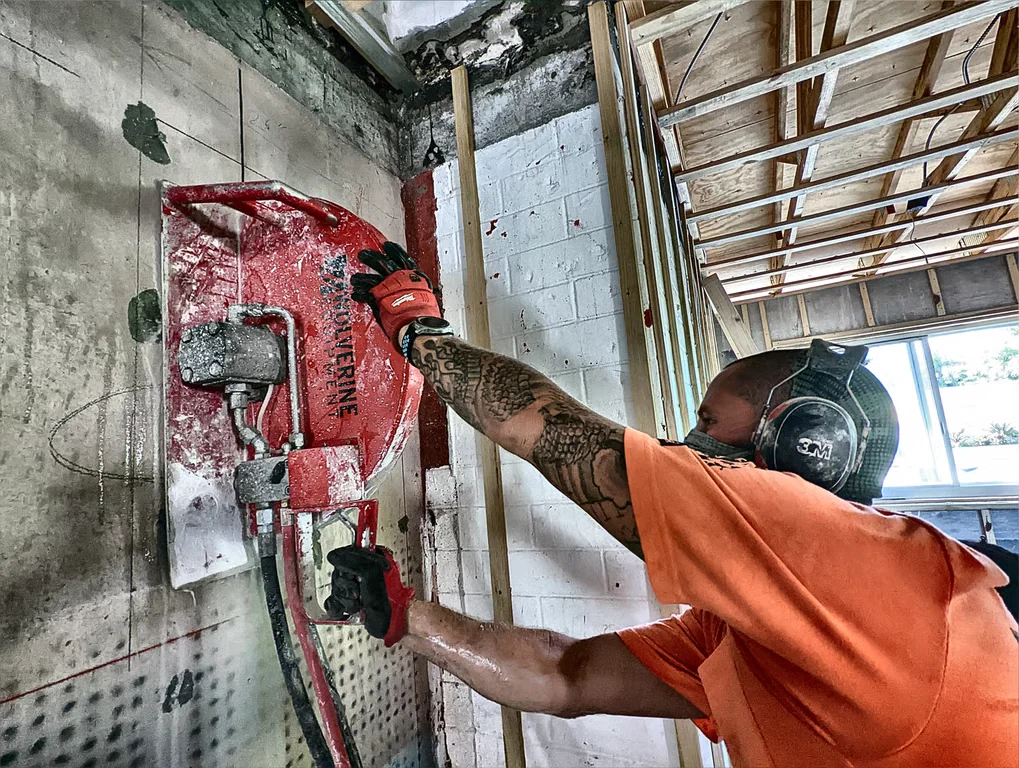
For a deep, square penetration in concrete, the tool is specialized enough that the operator matters more than the rental rate. A chain saw in the wrong hands is slower and more dangerous than a circular saw in the right hands.
What Rental Yards Do Not Tell You
The rental fee on a concrete chain saw looks reasonable until you add up the rest. The saw needs water, which means a hose and a water source or a pump. The chain wears with every cut, and diamond chain is expensive to replace. If you cut dry to save the hassle of water, you are creating a silica dust hazard and eating the chain even faster. The rental fee is the smallest part of what that cut actually costs you.
Then there is the learning curve. A concrete chain saw has a real kickback zone, and the bar behaves differently than a wood chainsaw under load. Most first-time renters spend the first hour just getting comfortable, and some never do. On a structural cut, that inexperience is dangerous, because a wandering chain saw cut in a load-bearing wall is a problem, not a learning opportunity.
When Rental Makes Sense Versus Hiring
- Rent: a single, shallow, non-structural plunge cut you can practice first.
- Hire: any cut in a load-bearing or shear wall.
- Hire: any cut near utilities or post-tension cables.
- Hire: a cut that has to be square and clean for a beam or frame.
- Rent: only if you already know how to run one safely.
The honest answer is that most concrete chain saw jobs are better hired out. The saw is specialized enough that the operator is the expensive, and valuable, part.
The Real Cost of a Rented Cut
Add up a concrete chain saw rental honestly and the picture changes fast. The daily or weekly rental is the headline number, but then you add the water source, the fuel or power, the diamond chain wear, and the time spent learning the tool. On a structural cut, you are also adding the risk, because a mistake with a chain saw in a load-bearing wall is not something you fix with another pass.
The diamond chain is the cost people forget. Concrete chain is expensive, and a first-time operator will wear it faster than a professional, either by cutting dry, forcing the bar, or running it too hot. By the time you replace the chain you dulled, the rental savings are gone, and you still did not get the clean cut a professional would have delivered.
That is why the honest math usually favors hiring for anything but the simplest cut. The professional brings the saw, the water, the dust control, and the experience, and the cut is square and clean the first time. The rental is not wrong, it is just rarely the bargain it looks like on the yard’s price board.
The chain itself is the cost people do not plan for. Diamond chain is expensive, and a first-time operator wears it faster than a professional by cutting dry, forcing the bar, or letting the chain overheat. By the time you replace a chain you dulled on your first cut, the rental savings are largely gone, and you still did not get the clean, square cut a professional would have delivered the first time.
Then there is the water. A concrete chain saw has to run wet, which means a water source, a hose, and somewhere for the slurry to go. On a job site, that is routine, but on a DIY project it is one more thing to rig up, and getting it wrong means a silica dust hazard and a chain that burns out. The safety and dust rules apply to a rental saw exactly as they do to a professional one, and there is no rental discount on compliance.
The honest short version is this: a concrete chain saw is a specialized tool with a real kickback zone and a real learning curve, and most cuts are better hired out. If you rent, rent for a practice cut first. If the cut is structural or needs to be square, call a crew instead.
We Bring the Saw and the Operator
If you are weighing a concrete chain saw rental against hiring, call us first. We will tell you honestly whether your cut is a rental job or a professional job, and if it is professional, we will bring the right chain saw and an operator who runs it every week.
For deep openings, beam pockets, and square penetrations anywhere in Miami-Dade, a professional concrete chain saw is the fastest, safest way to get the cut done right.