Why Site Geometry — Not Blade Size — Drives the Decision to Use a Concrete Hand Saw
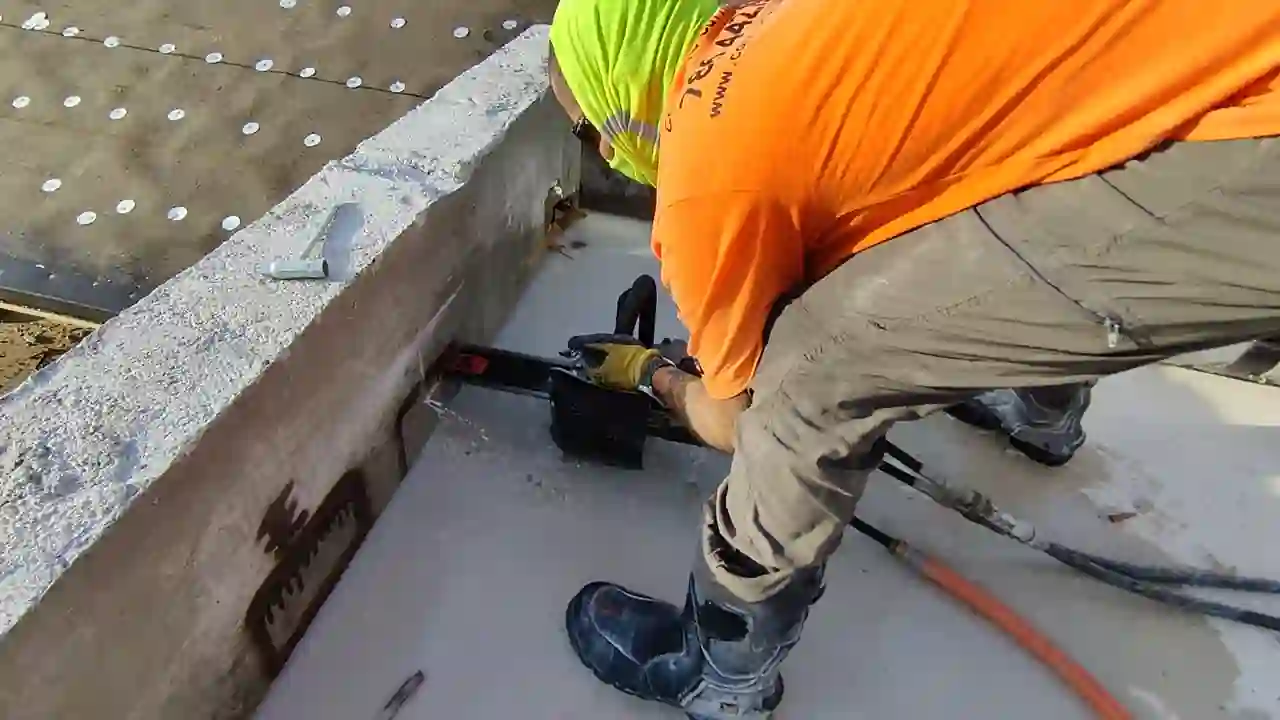
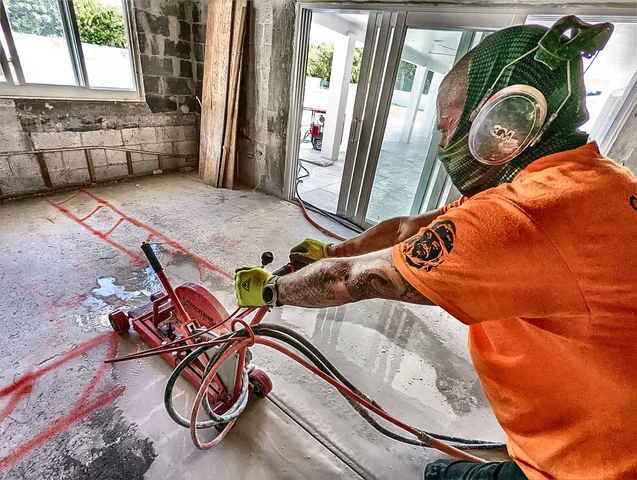
Walk onto enough job sites in Miami-Dade and Broward counties and you’ll notice something quickly: the equipment that wins isn’t always the most powerful. It’s the equipment that can physically get to where the cut needs to happen. A 20-horsepower hydraulic wall saw is an extraordinary machine — until the ceiling height drops to 5 feet, the doorway is 24 inches wide, and there’s active plumbing running along the only wall with clearance. At that point, the concrete hand saw isn’t a compromise. It’s the only legitimate option on the table.
This post is written specifically for project managers, GCs, and facility engineers who are dealing with access-constrained concrete cutting scenarios. We’re going to break down the site logistics that push jobs toward handheld cutting, the technical limitations and capabilities of modern concrete hand saws, and the planning details that separate a clean cut from a catastrophic rework.
Access Mapping Before Any Blade Touches Concrete
The first thing a qualified concrete cutting contractor should do on a confined-space job isn’t sharpen a blade — it’s conduct a thorough access audit. This means physically walking every path from the staging area to the cut zone and documenting every constraint. Doorway widths, ceiling heights, floor load ratings, staircase rise-and-run dimensions, and the presence of hazardous materials all factor into equipment selection before a single spec sheet gets pulled.
For most residential and light commercial jobs where a concrete hand saw becomes necessary, you’re dealing with one or more of the following:
- Ceiling height under 6 feet — eliminates wall saws and most track-mounted systems entirely
- Doorway openings under 30 inches — prevents roll-in of walk-behind flat saws or hydraulic power packs
- Structural obstructions within 18 inches of the cut line — columns, beams, or load-bearing walls that prevent blade swing clearance
- Active utilities within the slab or wall section — requiring precision depth control that only a handheld operator can provide in real time
- Occupied adjacent spaces — hospitals, data centers, and occupied residences where vibration and noise must be minimized at the source
If you’re managing a project that involves any of these conditions, understanding the serious site logistics planning that goes into constrained concrete cutting is non-negotiable before mobilization day.
Blade Selection and Depth Capacity for Handheld Saw Work in Tight Spaces
The concrete hand saw category covers a wide range of tools — from 9-inch angle grinder-style units running 4-inch segmented blades up to dedicated 14-inch handheld power cutters capable of achieving 4.5 to 5 inches of cut depth per pass. The blade diameter and arbor size directly dictate maximum cut depth, and in confined spaces, you often can’t achieve that depth in a single pass due to blade guard interference with the surrounding structure.
Here’s the practical reality: a 14-inch blade on a handheld saw achieves roughly 4.75 inches of usable depth when the guard is in its standard position. If you’re cutting through an 8-inch slab, you’re making two passes — one from each face — and that assumes you have physical access to both sides. In a crawlspace or mechanical room where the slab soffit is inaccessible, you may need to core-relieve the corners and use a combination of handheld saw and chipping to complete the opening.
Blade segment geometry also matters more in confined work than in open-air cutting. Aggressive turbo-rim blades generate more vibration and lateral deflection, which is manageable on a flat floor but becomes a control problem when you’re working overhead, at an angle, or in a kneeling position. For confined space work, most experienced operators prefer a continuous-rim or medium-segment blade running at lower RPM with higher water flow — it trades speed for control, and control is what prevents a $4,000 rework.
For a deeper technical breakdown of blade specifications and how they interact with different concrete mix designs, see our resource on concrete saw specifications.
Water Management and Slurry Containment When There Is Nowhere for It to Go
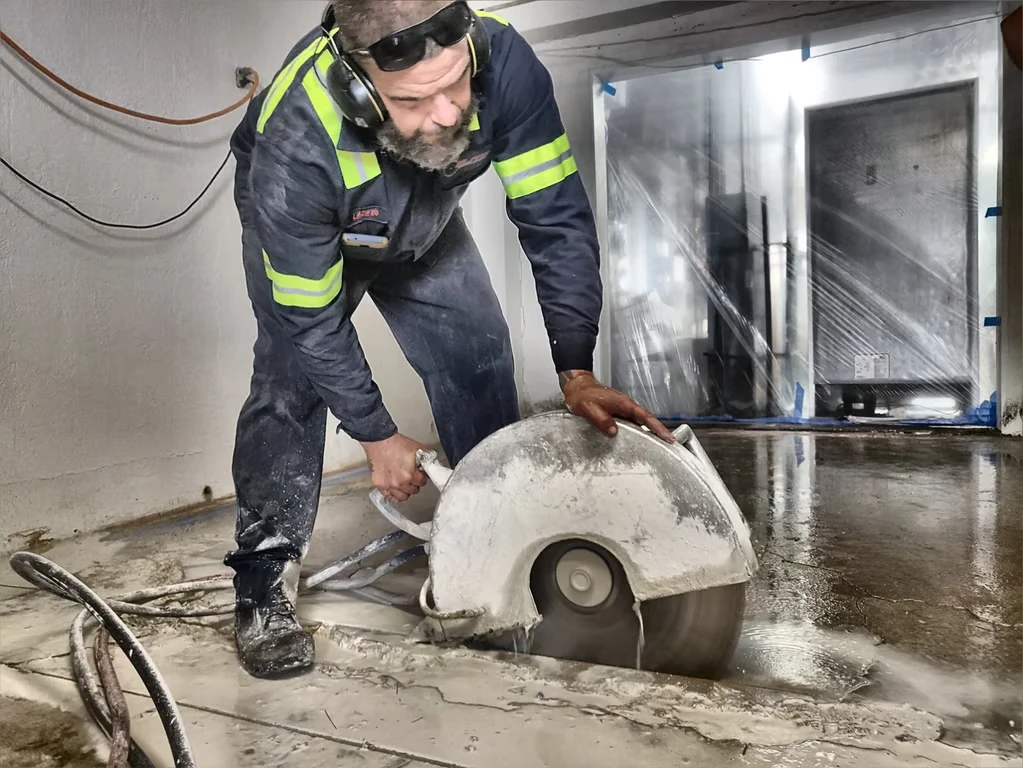
Wet cutting with a concrete hand saw in a confined space creates an immediate secondary problem: slurry has to go somewhere, and in a mechanical room or crawlspace, “somewhere” is usually directly onto equipment, insulation, or existing structural elements you can’t afford to damage.
Professional concrete cutting contractors operating in confined spaces use a tiered slurry management approach:
- Pre-built containment berms constructed from hydraulic cement or foam backer rod around the perimeter of the cut zone to prevent slurry migration
- Wet/dry vacuum integration — a second technician running a HEPA-rated vacuum directly behind the saw operator, pulling slurry before it spreads
- Polyethylene sheeting staged below the cut zone in multi-story applications where slurry could migrate through existing cracks to occupied floors below
- Reduced water flow rates calibrated to the minimum needed for blade cooling, reducing total slurry volume generated per linear foot of cut
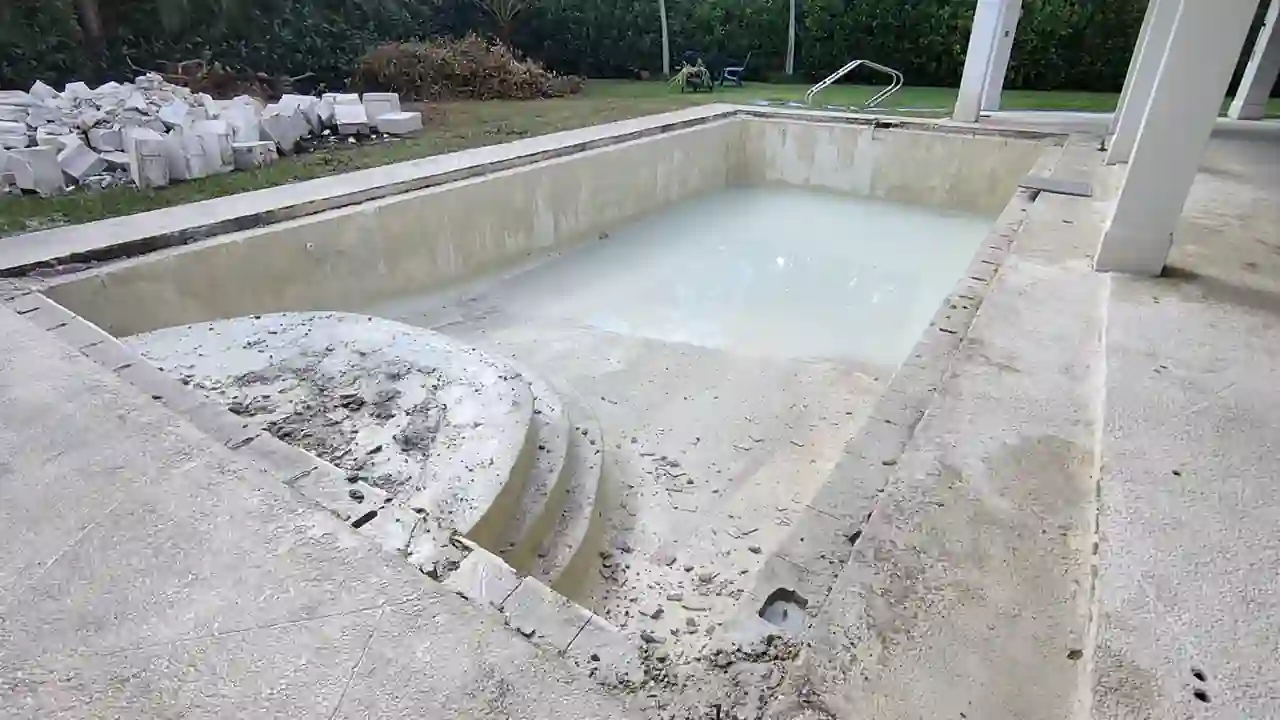
On jobs involving slab removal in tight quarters — particularly older construction in Miami where slab thickness is inconsistent and rebar spacing is non-standard — the combination of hand saw cutting and controlled demolition requires the kind of planning detailed in our guide on removing a thick concrete slab.
Operator Ergonomics and Fatigue in Confined Cutting Scenarios
This is the section that rarely makes it into technical write-ups, but it’s operationally critical. A concrete hand saw running a 14-inch blade weighs between 22 and 28 pounds depending on the power source. Operating that tool in a kneeling, crouching, or overhead position for extended periods creates fatigue-driven errors — inconsistent cut depth, blade wander, and loss of line accuracy — that can compromise the structural integrity of the remaining concrete.
On confined space jobs, experienced cutting crews rotate operators on 15-to-20-minute intervals during continuous cuts. They also pre-mark cut lines using chalk snap lines and depth gauges rather than relying on freehand tracking, because visual reference points are often obscured by slurry and dust even with water suppression active.
Respiratory protection in confined spaces is not optional. Even with wet cutting, crystalline silica exposure in a space with limited air exchange can exceed OSHA PEL thresholds within minutes. Supplied-air respirators or at minimum P100 half-face respirators are standard on any enclosed concrete hand saw operation.
Power Source Selection — Electric, Hydraulic, and Battery in Restricted Environments
The power source for a concrete hand saw in a confined space has direct implications for air quality, vibration transmission, and operational flexibility. Gas-powered handheld saws are categorically excluded from interior confined space work due to carbon monoxide accumulation — a point that seems obvious but still causes incidents when crews are under schedule pressure.
Electric handheld saws (both corded and brushless battery-powered) dominate interior confined space applications. Hydraulic handheld saws offer superior torque consistency and are preferred when a hydraulic power pack can be staged outside the confined zone with hose runs into the work area — this keeps the heaviest equipment out of the restricted space entirely while maintaining full cutting performance at the blade.
Battery-powered concrete hand saws have improved dramatically and are now viable for cuts up to 3 inches in depth on standard 3,000–4,000 PSI residential slab concrete. For anything thicker or harder — post-tensioned slabs, high-strength commercial pours, or fiber-reinforced decks — battery platforms still fall short of the sustained power needed for clean, controlled cuts. This matters for jobs like concrete cutting for plumbing rough-ins, where depth consistency directly affects pipe clearance tolerances.
Waterproofing Considerations When Cutting in Below-Grade or Moisture-Prone Spaces
Confined space concrete cutting in Miami frequently occurs in below-grade mechanical rooms, parking structure columns, and foundation walls where existing waterproofing membranes are present. A concrete hand saw cut that breaches a crystalline waterproofing layer or a sheet membrane without a pre-planned remediation protocol creates a moisture intrusion pathway that can cost multiples of the original cutting contract to repair.
Before any hand saw work in moisture-sensitive environments, the cutting contractor and waterproofing subcontractor need to coordinate on membrane location, cut path geometry, and post-cut restoration scope. This is especially relevant in Miami’s high water table environment where below-grade spaces face significant hydrostatic pressure. Learn more about how cutting intersects with concrete waterproofing services and why that coordination matters before mobilization.
Pre-Cut Structural Assessment for Confined Openings in Load-Bearing Elements
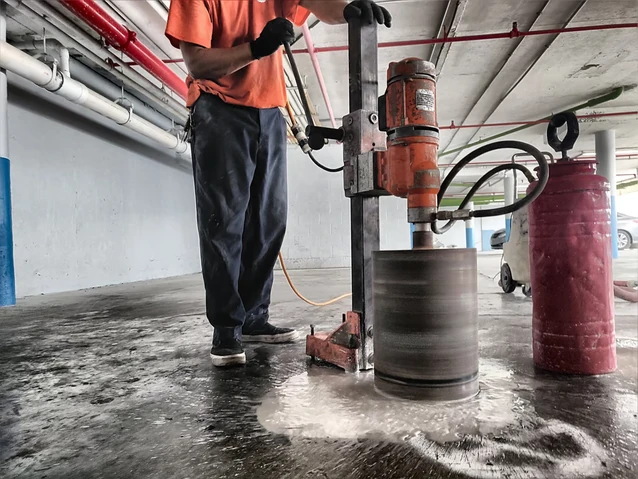
The final — and most technically consequential — element of confined space concrete hand saw work is the structural assessment that must precede any cut in a load-bearing element. Handheld saws are frequently deployed to create new openings in walls, slabs, and grade beams precisely because the confined access prevents the use of larger equipment. But the structural implications of those cuts don’t shrink because the saw does.
A qualified structural engineer must review the cut geometry, confirm the existing reinforcement layout via GPR scanning, and specify any temporary shoring requirements before the saw starts. In confined spaces, installing temporary shoring is itself a logistical challenge — hydraulic shores, screw jacks, and timber cribbing all need to fit within the same constrained envelope as the cutting crew and their equipment.
For a full picture of how equipment selection, site logistics, and structural considerations intersect across different cutting applications, the equipment and technology resources on our site provide the technical depth that project teams need at the planning stage — not after the first blade goes in.
The concrete hand saw is not a lesser tool. In the right site conditions, it is the most precise, most controllable, and most logistically viable cutting instrument available. The key is recognizing those conditions early, planning around the real constraints of the space, and deploying the right operator with the right blade, the right power source, and a slurry management plan that won’t create a second problem while solving the first.