Why Slurry Management Is the Most Overlooked Risk When You Cut Out a Concrete Slab
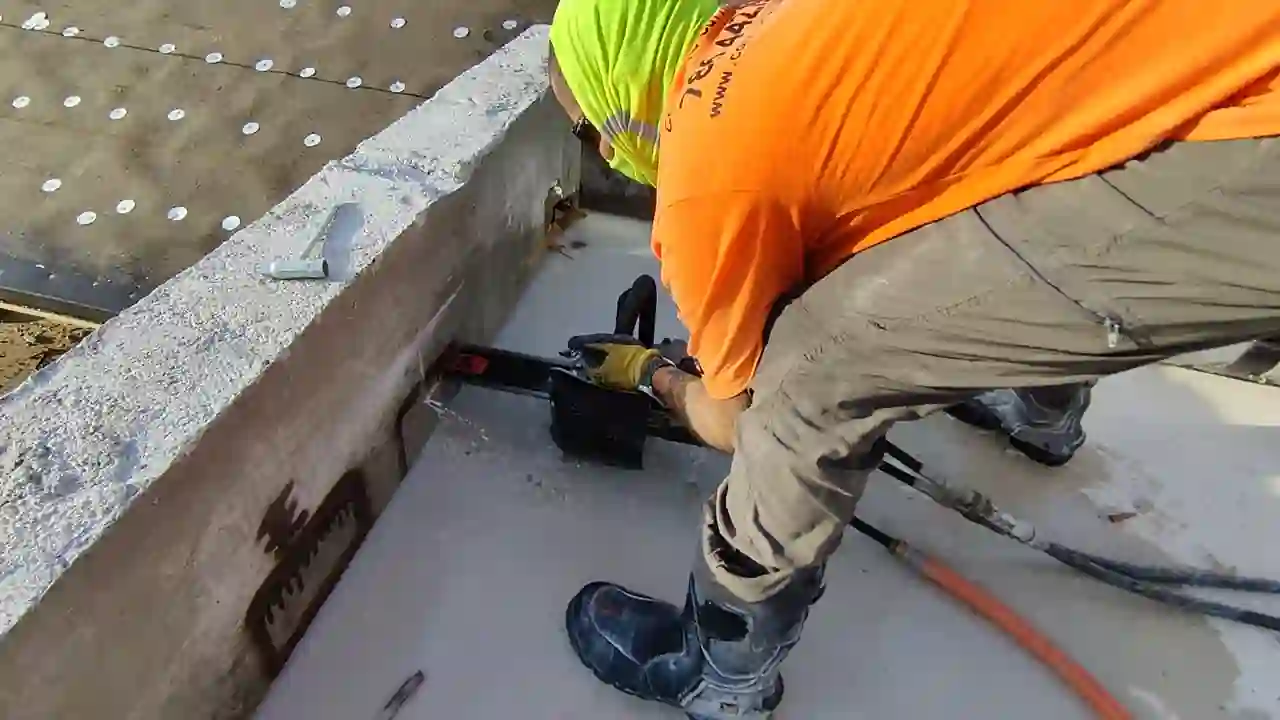
Every time a diamond blade makes contact with a concrete slab, two things happen simultaneously — material is removed and a byproduct is created. That byproduct is slurry: a high-pH, silica-rich suspension of water and pulverized concrete particulate that most contractors treat as an afterthought. In Miami-Dade County, where stormwater drainage connects directly to Biscayne Bay and the broader South Florida aquifer system, that afterthought can become a six-figure regulatory violation before the blade even finishes its second pass. When you need to cut out a concrete slab — whether it’s a full removal, a penetration for utility access, or a precision opening for structural modification — the environmental compliance framework governing that work is as technically demanding as the cut itself.
This post breaks down the full technical picture — from slurry chemistry to containment hardware to disposal chain of custody — so that project managers, GCs, and facility owners understand exactly what responsible slab cutting looks like on a compliant Miami jobsite.
The Chemistry Behind Concrete Slurry and Why It Cannot Enter Stormwater Systems
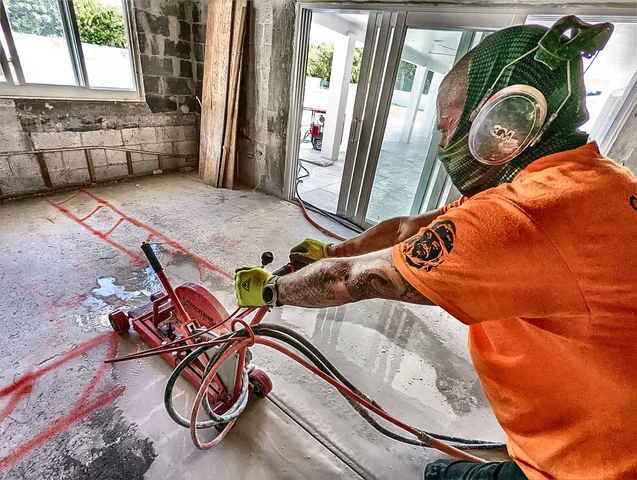
Concrete slurry is not simply dirty water. When a wet-cutting flat saw or wall saw runs water across a diamond blade to suppress silica dust, the resulting effluent carries a pH typically ranging from 11 to 13 — highly alkaline, comparable to household bleach. That alkalinity comes from calcium hydroxide (portlandite) and calcium silicate hydrate compounds liberated during cutting. In addition to pH, the slurry contains respirable crystalline silica particles, heavy metals leached from aggregate and rebar corrosion products, and fine particulate matter that can remain suspended in water for extended periods.
Under the Clean Water Act’s NPDES (National Pollutant Discharge Elimination System) framework, and specifically under Florida’s stormwater permit requirements enforced by the FDEP and Miami-Dade DERM, discharge of this effluent into any stormwater inlet, swale, drainage ditch, or impervious surface with runoff potential is a direct violation. The consequences are not theoretical — contractors working on high-profile projects like the Faena House corridor have operated under strict DERM oversight precisely because proximity to coastal drainage infrastructure leaves zero margin for slurry mismanagement.
Wet Cutting vs. Dry Cutting — Choosing the Right Method for Containment Feasibility
The debate between wet vs. dry cutting is often framed around blade life and dust suppression, but from an environmental compliance standpoint, the decision is fundamentally about which hazard you can more effectively control on a given site. Wet cutting generates liquid slurry that must be physically contained and removed. Dry cutting generates airborne respirable silica that must be captured at the source through HEPA-equipped vacuum systems.
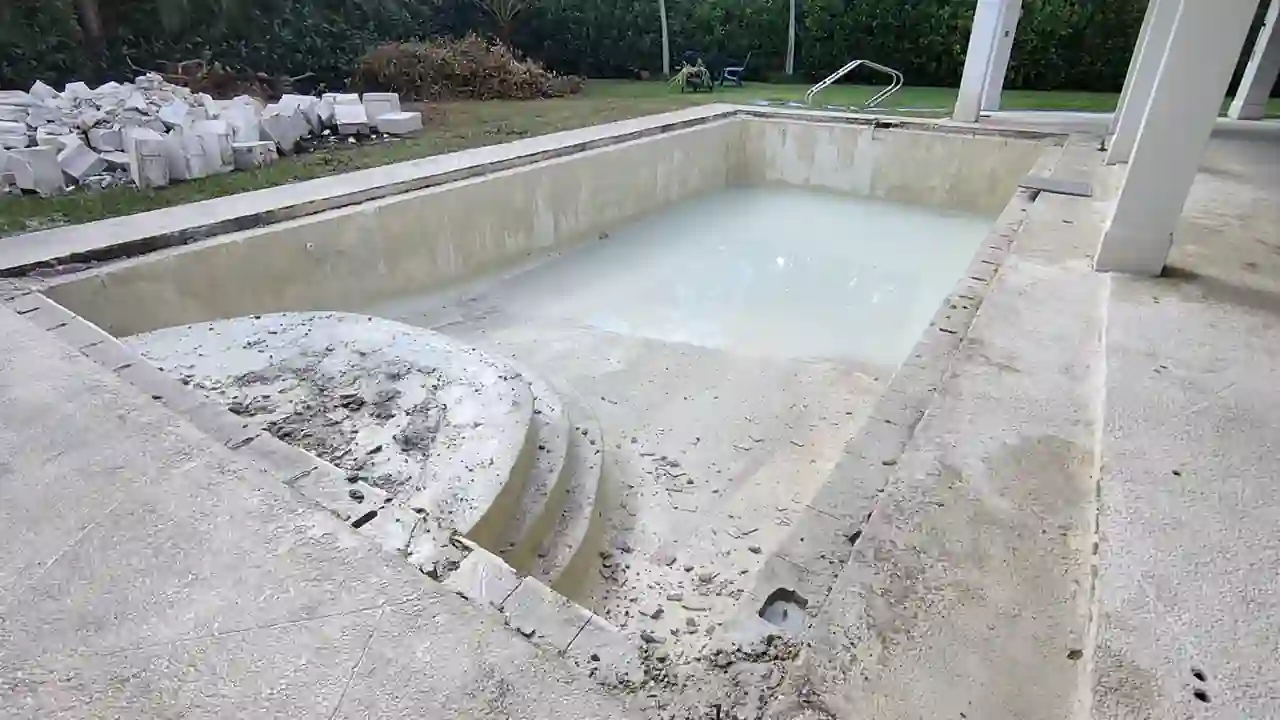
In outdoor Miami environments — parking decks, pool decks, roadway slabs, industrial yard slabs — wet cutting is generally preferred because liquid containment is more reliably engineered than airborne particulate capture in open-air conditions. However, wet cutting on a sloped surface, near open drains, or in a confined mechanical room introduces containment geometry challenges that require pre-cut site planning. The selection of method should never be made at the blade — it should be resolved during the pre-construction environmental assessment.
Physical Containment Systems Used During Slab Cutting Operations
Effective slurry containment during a slab cut-out requires a layered physical barrier system. The specific configuration depends on slab geometry, cut length, proximity to drains, and surface slope. Here are the primary containment components used by professional crews:
- Foam berm dams and sand snake barriers — Deployed around the perimeter of the cut zone and around any nearby floor drains or trench drains. These create a low-profile impoundment basin that captures slurry as it migrates from the blade path.
- Drain plug inserts — Rubber expansion plugs or inflatable bladder plugs inserted directly into floor drain inlets before cutting begins. These prevent any slurry from entering the drainage system even if surface containment is breached.
- Wet-dry vacuum slurry recovery systems — Industrial-grade slurry vacuums with high-capacity tanks (typically 55–110 gallons) that actively pull slurry from the cut path in real time, reducing surface accumulation and containment load.
- Portable impoundment berms — Used on outdoor slabs and parking structures where gravity drainage toward site perimeters is a risk. These deployable fabric berms create temporary catch basins around the entire work zone.
- Polyethylene sheeting underlayment — For interior slab cuts above occupied or sensitive spaces, 6-mil poly sheeting is deployed beneath the slab (where accessible) and on surrounding floor areas to capture drip-through and splash.
The concrete cutting equipment itself also plays a containment role — modern flat saws with integrated blade guards and slurry shrouds direct effluent toward a defined collection point rather than allowing free-flow dispersion across the slab surface.
Slurry Neutralization Protocols Before Disposal
Collected slurry cannot simply be dumped into a sanitary sewer cleanout without authorization, and it absolutely cannot be poured on-grade or into landscaping. The disposal pathway depends on pH testing of the collected effluent and the available disposal infrastructure at the project site.
The standard field protocol for slurry neutralization involves pH testing of collected material using calibrated test strips or a handheld pH meter, followed by carbon dioxide (CO₂) injection or citric acid addition to reduce pH to the 6.0–9.0 range acceptable for sanitary sewer discharge under most municipal pretreatment standards. Some jurisdictions require a sewer discharge permit even for neutralized slurry above certain volumes. In Miami-Dade, contractors working on commercial projects should coordinate with WASD (Water and Sewer Department) for discharge authorization on high-volume cuts.
For projects where on-site neutralization and sewer discharge is not feasible, slurry is collected in sealed poly drums or vacuum tanker trucks and transported to a licensed liquid waste disposal facility. This chain of custody — from collection through transport to final disposal — should be documented with manifests retained for a minimum of three years per FDEP record-keeping requirements.
Silica Dust Exposure Controls Running Parallel to Slurry Management
OSHA’s Respirable Crystalline Silica Standard (29 CFR 1926.1153) establishes a permissible exposure limit (PEL) of 50 micrograms per cubic meter of air (50 μg/m³) as an 8-hour time-weighted average for construction activities. When you cut out a concrete slab using wet methods, water suppression dramatically reduces airborne silica generation — but it does not eliminate it entirely. Operators must still wear N95 or P100 half-face respirators during wet cutting, and any dry grinding or chipping used to finish cut edges must be performed with HEPA vacuum capture.
For detailed tool selection guidance that integrates both silica control and cut efficiency, the ultimate guide to breaking up concrete provides a thorough breakdown of method-to-application matching that accounts for dust and slurry generation profiles across different equipment types.
Site Logistics Planning as an Environmental Compliance Function
Environmental compliance during slab cutting is not a standalone checklist item — it is an output of rigorous site logistics planning executed before mobilization. The placement of equipment staging areas, the routing of water supply lines, the positioning of slurry recovery tanks, the identification of approved disposal pathways, and the assignment of containment monitoring responsibilities all need to be resolved in the pre-cut planning phase.
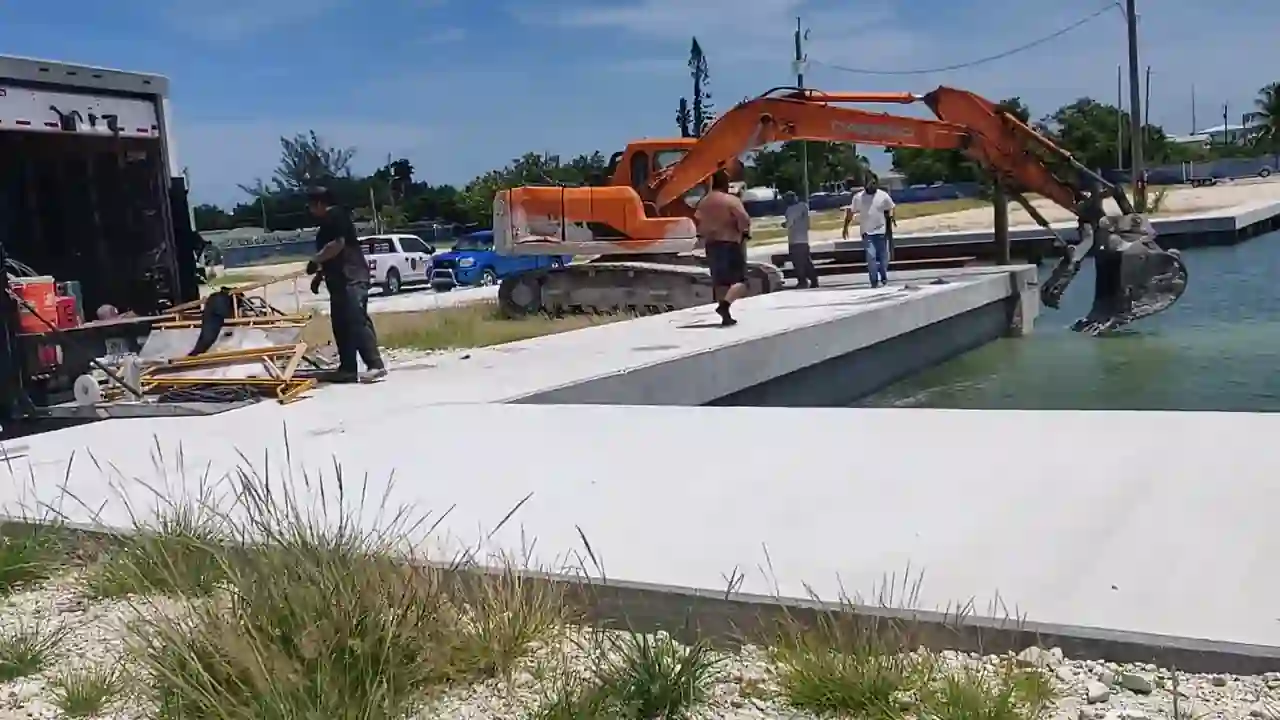
This is particularly critical on complex urban sites where cutting operations interact with occupied spaces, active stormwater infrastructure, and sensitive neighboring uses. The site logistics demands of concrete cutting in dense urban environments illustrate how even seemingly straightforward cuts require multi-discipline coordination to execute without environmental incident.
For slab sawing services in Miami, this planning function is embedded in every project scope — not offered as an optional add-on. A crew that shows up to cut without a slurry management plan is not a compliant crew, regardless of how clean their blade work is.
Documentation and Third-Party Verification for High-Stakes Projects
On projects with environmental oversight requirements — LEED-certified buildings, FDEP-permitted sites, federal facilities, or projects with contractual environmental compliance clauses — documentation of slurry management practices is as important as the practices themselves. This means maintaining field logs of slurry volumes collected, pH test results before and after neutralization, disposal manifests, and photographic records of containment setup prior to cutting.
Third-party environmental monitors are increasingly present on large commercial and institutional projects in Miami-Dade. Their role is to verify that contractor practices match the approved environmental management plan (EMP). Contractors who cannot produce contemporaneous documentation of their slurry handling procedures face stop-work orders and potential debarment from future permitted work.
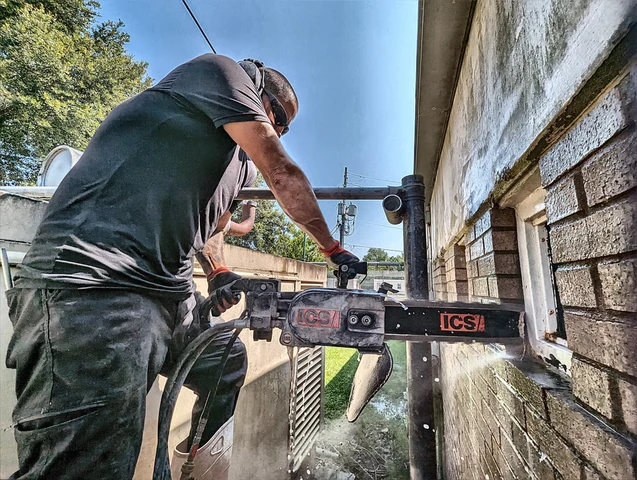
What Responsible Slab Cut-Out Work Actually Looks Like on a Miami Jobsite
A compliant, professionally executed slab cut-out in Miami involves more pre-cut setup than most clients expect. Before the first blade rotation, the crew has already plugged drains, deployed perimeter containment, staged slurry recovery equipment, confirmed water supply and disposal pathway, and briefed all personnel on the environmental management protocol for the day. The cut itself — whether it’s a 10-foot flat saw pass through a 6-inch post-tensioned deck or a precision core-and-saw opening through a 4-inch residential slab — is the shortest phase of the operation.
The slurry recovery, neutralization, documentation, and disposal that follows the cut is where environmental compliance is either earned or lost. In a regulatory environment as active as South Florida’s, with drainage infrastructure as ecologically sensitive as Miami-Dade’s coastal watershed, there is no acceptable alternative to getting this right every single time.
When you engage a concrete cutting contractor to cut out a concrete slab on your project, ask them directly — what is your slurry management plan, and can you show me your disposal documentation from your last three jobs? The answer will tell you everything you need to know about whether they’re equipped to protect your project, your permit, and the environment around it.