Why Concrete Slab Cutting Cost Is Never a Single Number
Every week, someone calls our office expecting a flat rate per linear foot for slab cutting. That expectation is understandable — it would make budgeting simple. But experienced concrete cutting contractors in Miami know that a single number without context is either a lowball to win the job or a guess that’ll blow up during execution. Concrete slab cutting cost is a function of at least eight distinct variables, and each one can shift your final invoice by 20 to 60 percent. Before you request a bid or accept one, you need to understand exactly what drives the price.
The Primary Cost Variables Every Estimator Evaluates First
Before a single blade touches concrete, a qualified estimator is mentally pricing the job across several technical dimensions. These aren’t soft variables — they’re hard cost multipliers that affect labor hours, equipment selection, blade consumption, and slurry management.
Slab Thickness and Its Direct Impact on Blade Wear
A standard residential slab in Miami runs 4 inches thick. Commercial pours often hit 6 to 8 inches. Post-tensioned parking structures can exceed 10 inches. Each additional inch of depth demands more blade exposure, slower cutting passes, and increased horsepower draw. A 4-inch slab cut with a 14-inch diamond blade on a walk-behind flat saw is a fundamentally different operation than a 10-inch post-tensioned deck requiring a 20-inch blade and a self-propelled unit with a 65-horsepower engine. Blade cost alone can jump from $80 per blade to over $400 per blade as depth increases. Factor in that deeper cuts consume blades faster, and you can see why depth is the single largest pricing variable in any slab cutting estimate.
Reinforcement Type — Rebar, Mesh, or Post-Tension Cables
Unreinforced concrete cuts fast and clean. Wire mesh slows the process slightly but remains manageable. Rebar — especially #5 and #6 bar on 12-inch centers — significantly increases blade wear and requires the operator to adjust feed rate to prevent blade warping. Post-tension cables are the most complex scenario. Cutting through an active post-tension slab without a verified tendon layout is a structural and safety risk. Proper hydraulic sawing and demolition protocols require ground-penetrating radar or tendon mapping before any blade enters a post-tensioned pour. That pre-cut investigation adds time and cost to the project — but it’s non-negotiable from both a safety and liability standpoint.
Concrete PSI and Aggregate Hardness
Higher-strength concrete — 5,000 PSI and above — is denser and more abrasive to diamond segments. Aggregate type matters equally. Miami limestone aggregate is relatively soft. Silica-heavy mixes from inland pours are significantly harder on diamond tooling. An estimator who doesn’t ask about mix design or pull existing pour records is leaving blade cost exposure on the table. On hard aggregate jobs, diamond blade consumption can increase by 30 to 50 percent over baseline assumptions.
Equipment Selection and Its Effect on Labor Hours and Daily Rate
The equipment mobilized to your site directly determines both the daily rental cost and the labor hours required to complete the cut. Here’s how the typical equipment tiers break down for slab cutting specifically.
Walk-Behind Flat Saws for Standard Slabs
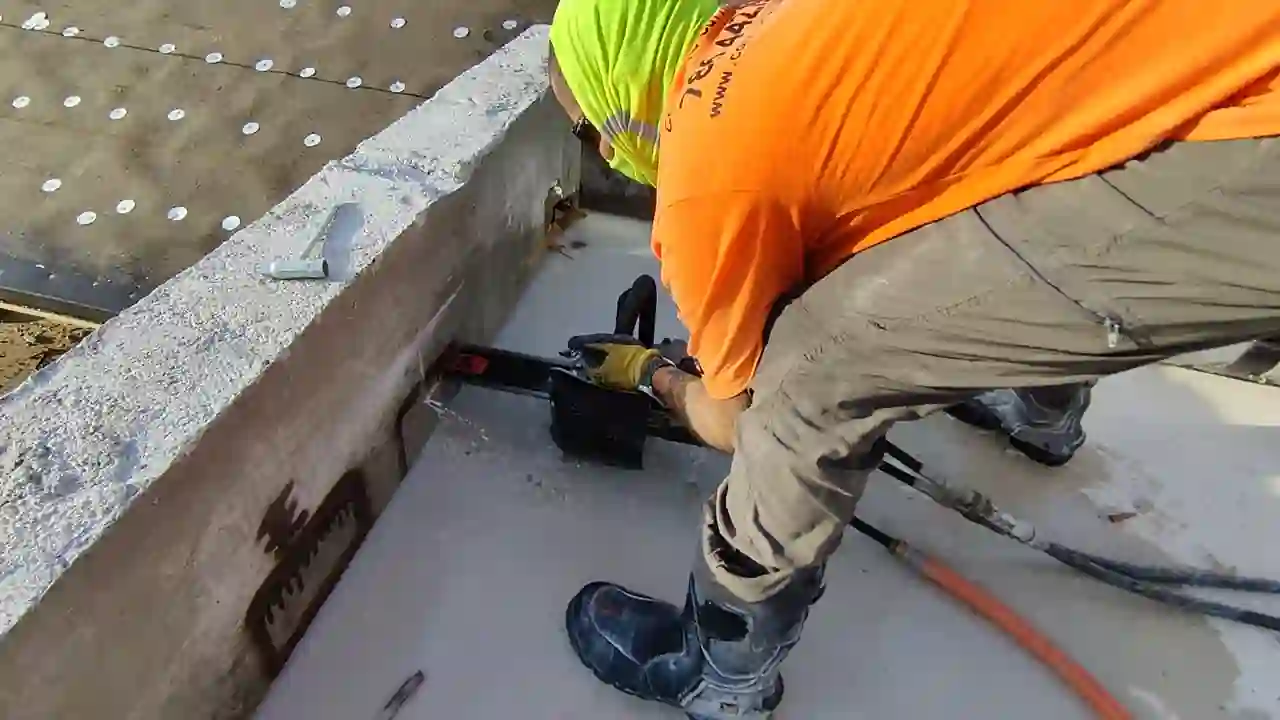
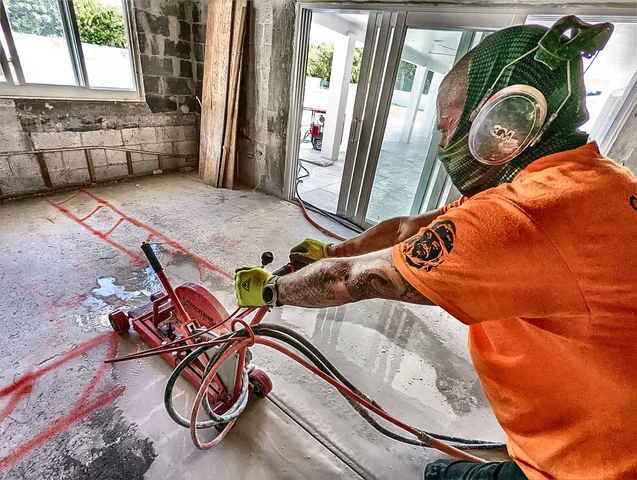
Walk-behind flat saws — typically 14 to 18-inch blade capacity — are the workhorse of residential and light commercial slab cutting. A skilled operator can average 50 to 100 linear feet per hour on a clean 4-inch unreinforced slab. Day rates for this equipment range from $400 to $700 including the operator. For a 200-linear-foot cut, you’re looking at roughly 2 to 4 hours of cutting time plus setup, slurry cleanup, and mobilization — putting the total job in the $800 to $1,400 range before any permit or disposal fees.
Self-Propelled Saws for Deep Commercial Cuts
Self-propelled flat saws with 20-inch-plus blade capacity and 50+ horsepower engines are required for any cut exceeding 6 inches in depth. These units are heavier, require more setup time, and demand a two-person crew for safe operation. Day rates for this equipment class run $1,200 to $2,000. On a 6-inch reinforced slab, production rates drop to 20 to 40 linear feet per hour. A 100-linear-foot cut on a heavy commercial slab can easily run $2,500 to $4,000 when you factor in blade consumption, crew time, and slurry management.
Core Drilling Integration in Slab Projects
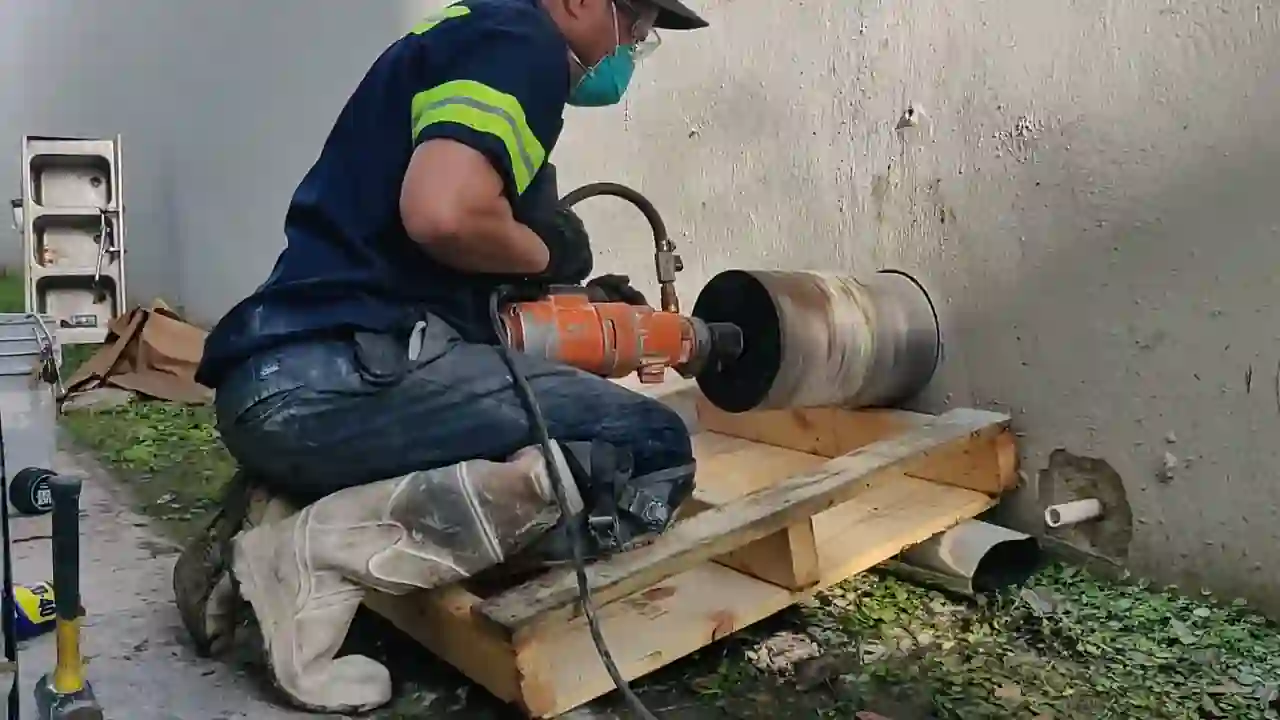
Many slab cutting projects also require core drilling — for plumbing penetrations, electrical conduit, HVAC drops, or structural investigations. When core drilling is bundled into a slab sawing project, the mobilization cost is shared, which improves overall project economics. Review our core drilling service overview to understand how these operations are priced when combined with flat sawing work.
Site Conditions That Add Time and Cost to Any Bid
Two jobs with identical slab specs can have dramatically different final costs based entirely on site conditions. This is where inexperienced estimators consistently undercharge and then either eat the loss or fight over change orders.
Interior Access, Ventilation, and Slurry Containment
Wet sawing generates significant slurry — a mixture of water and pulverized concrete that must be contained, collected, and disposed of properly. On exterior slabs, slurry can often be directed to a containment area. Interior work requires vacuum-assisted wet cutting systems or dry cutting with dust collection, both of which add equipment cost and slow production. Tight interior spaces with limited equipment access — basement slabs, mechanical rooms, elevator pits — add a 20 to 40 percent labor premium over open exterior conditions.
Existing Utilities and Scan Requirements
Any slab cut in an occupied building requires utility scanning before work begins. Ground-penetrating radar (GPR) scans run $300 to $800 per mobilization depending on the area covered. This cost is either line-itemed separately or absorbed into the overall bid. Either way, it’s a real cost. Skipping it to save money creates liability exposure that no legitimate contractor should accept. This is also directly tied to OSHA compliance requirements for subsurface hazard identification before cutting operations begin.
Noise, Vibration, and Work Hour Restrictions
Miami-Dade County and municipal jurisdictions within the metro area impose noise ordinances that restrict heavy equipment operation to specific hours. Jobs near hospitals, schools, or residential zones may require night or weekend work — which triggers overtime labor rates and potential equipment surcharges. Always confirm work hour restrictions before finalizing a bid schedule.
How Contractors Build a Concrete Slab Cutting Bid
A properly structured bid for concrete slab cutting includes the following cost components, each priced independently and then summed.
- Mobilization and demobilization: Typically $250 to $600 depending on distance from equipment yard to job site.
- Equipment day rate: Walk-behind units at $400 to $700; self-propelled at $1,200 to $2,000.
- Labor hours: Based on production rate estimates adjusted for slab depth, reinforcement, and site conditions.
- Diamond blade consumption: Priced per blade used, estimated based on linear footage, depth, and aggregate type.
- GPR scanning: $300 to $800 per mobilization when required.
- Slurry disposal: $150 to $400 depending on volume and disposal site requirements.
- Permits: Varies by municipality; Miami-Dade right-of-way permits can add $200 to $500 for street-adjacent work.
- Overhead and margin: Legitimate contractors apply 15 to 25 percent overhead and a reasonable margin to cover insurance, equipment maintenance, and business continuity.
Understanding this cost structure helps owners and general contractors evaluate competing bids more accurately. A bid that’s 40 percent below market isn’t necessarily a deal — it’s often a signal that scope items are missing or that the contractor is underinsured. For a deeper analysis of what your per-square-foot cost actually covers in terms of safety and compliance, read our breakdown of what concrete cutting cost per square foot actually buys you in job site safety and OSHA compliance.
Realistic Timeline Expectations for Common Slab Cutting Scopes
Timeline is as important as cost on most projects. Here’s a realistic breakdown of how long common slab cutting scopes take from mobilization to site clear.
Residential Slab Opening for Plumbing Rough-In
A standard residential plumbing rough-in requiring 40 to 60 linear feet of 4-inch slab cutting can typically be completed in a single day — including mobilization, scanning, cutting, and cleanup. Total elapsed time on site is usually 4 to 6 hours. Budget $600 to $1,100 for this scope in the Miami metro area.
Commercial Slab Penetration for New MEP Routing
A commercial project requiring 150 to 300 linear feet of cutting through a 6-inch reinforced slab with embedded conduit and rebar will typically require 1.5 to 2 full days. GPR scanning the day before adds a half-day. Total project duration is 2 to 3 days. Budget $3,500 to $6,500 depending on reinforcement density and interior access conditions.
Post-Tension Slab Modification in a Parking Structure
Post-tension work is the most time-intensive category. Tendon mapping, structural engineering sign-off, staged cutting with tendon avoidance, and careful debris management can stretch a 100-linear-foot scope across 3 to 4 days. Costs for this type of work routinely run $8,000 to $15,000 or more depending on complexity. This is not a scope to assign to the lowest bidder.

Getting an Accurate Bid Starts With Accurate Information
The single most effective thing an owner or GC can do to get an accurate concrete slab cutting cost estimate is to provide complete project documentation upfront. That means slab thickness, pour date, mix design if available, reinforcement drawings, existing utility records, and any known post-tension tendon layouts. Contractors who receive complete information can bid tighter and more competitively. Contractors bidding blind build in contingency — which means you pay more for uncertainty you could have eliminated. Concrete cutting is a precision trade. Treat the estimating process with the same precision you expect from the work itself.