Breaking Down Concrete Cutting Cost Per Square Foot Through a Safety-First Lens
When a general contractor or property owner asks me what concrete cutting costs per square foot, the number I give them is never just about blade wear and labor hours. Every dollar embedded in that per-square-foot rate reflects a layered system of hazard controls, OSHA-mandated engineering protocols, and equipment investments that keep workers alive and keep your project out of federal violation territory. In Miami’s dense construction environment — where high-rises, bridge decks, and slab-on-grade work happen simultaneously within blocks of each other — cutting corners on safety infrastructure is not a line-item savings. It is a liability multiplier. Understanding what drives concrete cutting cost per square foot from a compliance standpoint is the single most important thing you can do before signing a subcontract.
OSHA’s Silica Rule and What It Does to Your Per-Square-Foot Number
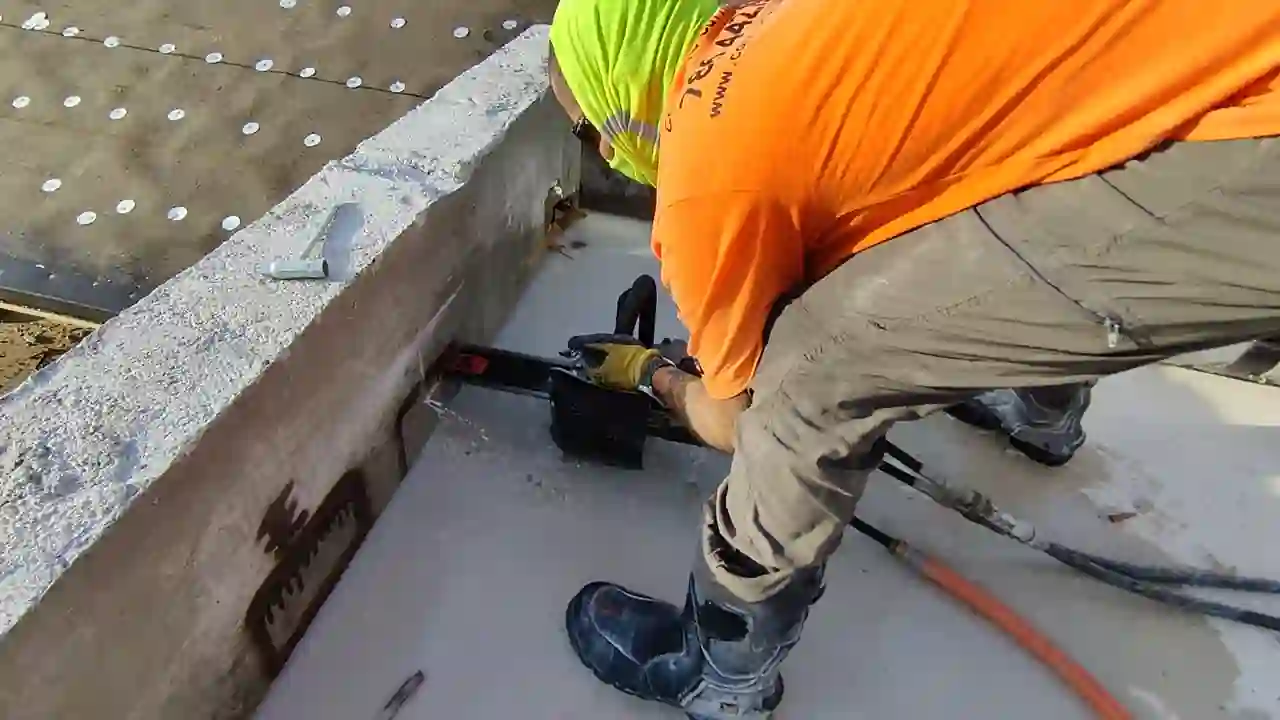
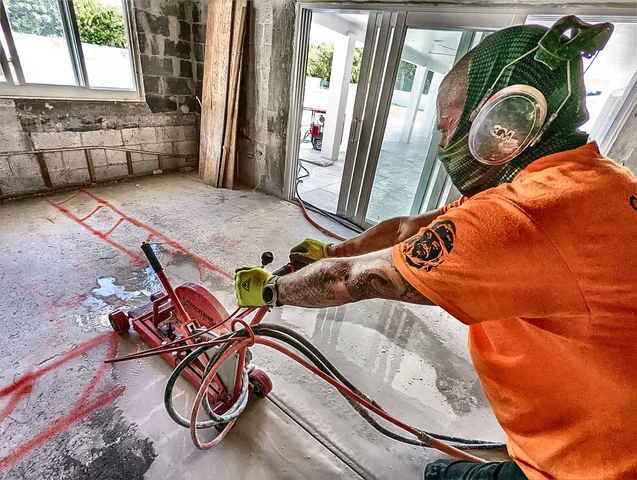
OSHA’s Respirable Crystalline Silica Standard (29 CFR 1926.1153) fundamentally restructured how concrete cutting is priced in the commercial sector. The permissible exposure limit (PEL) for respirable silica is now 50 micrograms per cubic meter of air, averaged over an 8-hour shift — half the previous limit. For cutting crews operating flat saws, wall saws, or ring saws on reinforced slabs, that threshold is breached almost immediately without active engineering controls.
Table 1 of the OSHA silica standard is the operative document here. It specifies that when cutting concrete with a handheld or walk-behind saw, the employer must either use a saw equipped with integrated water delivery that continuously feeds the blade, or use a saw equipped with a HEPA-filtered vacuum dust collection system. Both options cost money. Water delivery systems require a pressurized supply line, a flow regulator, and a containment plan for slurry — a byproduct that is itself a regulated waste in many Miami-Dade jurisdictions. HEPA vacuum systems rated for silica capture (minimum H13 filtration) run $1,800 to $4,500 per unit. That capital cost gets amortized across every linear and square foot of cutting the crew produces. When you see a legitimate concrete cutting cost per square foot ranging from $4.50 to $12.00 depending on slab thickness and reinforcement density, a meaningful portion of that spread is silica compliance infrastructure.
Work with a qualified Miami concrete cutting company that can show you their written exposure control plan (ECP) before mobilization. If a subcontractor cannot produce that document, the OSHA fine exposure falls partly on the general contractor under multi-employer worksite doctrine.
Wet Cutting Protocols That Directly Affect Pricing and Hazard Mitigation
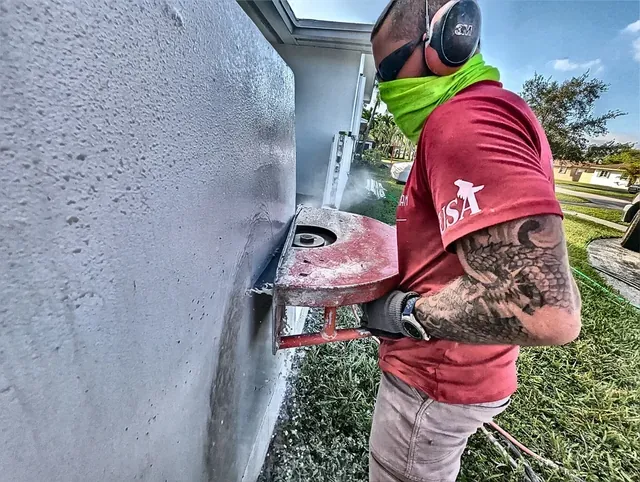
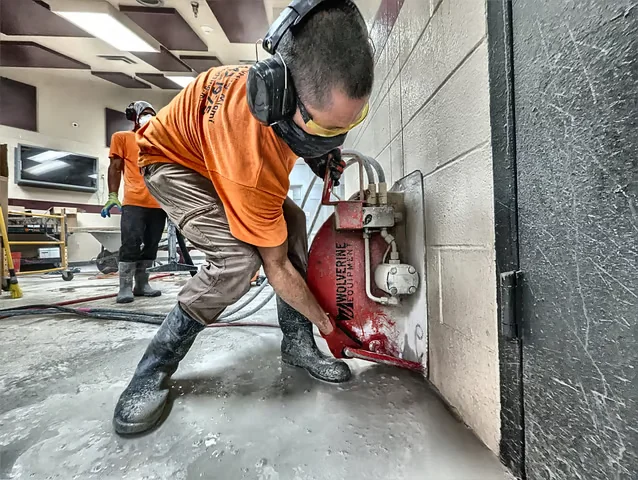
Wet cutting is the dominant method for silica suppression in slab and wall cutting operations, and it is also the most misunderstood line item on a cutting invoice. Concrete cutting wet cutting is not simply running water over a blade. It requires precise flow rates — typically a minimum of 1.5 gallons per minute delivered directly to the blade-concrete interface — to suppress airborne particulate at the point of generation. Inadequate flow rates create the illusion of compliance while still generating respirable silica at dangerous concentrations.
The cost implications are significant. Wet cutting on an elevated deck or interior slab requires slurry containment berms, vacuum extraction equipment to recover the silica-laden water before it migrates to storm drains (a separate EPA violation risk), and additional labor for cleanup. On a typical Miami commercial slab cutting project, slurry management alone can add $0.75 to $1.50 per square foot to the base cutting rate. Contractors who quote below this threshold are almost certainly skipping containment — and exposing you to environmental liability under Florida Department of Environmental Protection regulations that mirror federal Clean Water Act standards.
Blade Selection, Tensile Failure Risk, and the Hidden Safety Cost in Diamond Blade Technology
Diamond blade selection is not purely a performance decision — it is a safety decision with direct cost consequences. Undersegmented blades used on hard Miami limestone aggregate or high-PSI reinforced concrete are subject to segment loss under thermal stress. A segment ejected from a 14-inch blade spinning at 5,000 RPM becomes a projectile with kinetic energy sufficient to penetrate standard PPE. ANSI B7.1 and EN 13236 standards govern blade tensile strength ratings, and OSHA 29 CFR 1926.303 requires that all abrasive wheels and blades be rated for the RPM of the tool they are mounted on.
Properly specified diamond blade technology for a given aggregate hardness, slab PSI, and reinforcement pattern costs more upfront but dramatically reduces segment loss risk and blade-related downtime. A premium laser-welded segmented blade for 4,000 PSI reinforced concrete runs $180 to $450 depending on diameter. A contractor using a $60 pressed-segment blade on the same material is cutting costs in a way that creates both a safety hazard and a quality defect — wavy cuts, micro-fracturing along the cut line, and unpredictable blade behavior under load.
Structural Hazard Assessment Before First Cut — What This Adds to the Quote
Before any saw touches a slab, a competent person (as defined under OSHA 29 CFR 1926.32(f)) must assess the structural conditions of the work zone. This is not optional language — it is a compliance requirement when cutting operations could affect the load-bearing capacity of a structure. In practice, this means reviewing structural drawings to identify post-tension cables, conduit runs, rebar placement, and any pre-stressed elements that could fail catastrophically if cut.
Ground-penetrating radar (GPR) scanning prior to cutting has become standard practice among serious concrete demolition services providers in South Florida. GPR scanning costs $350 to $900 per mobilization depending on slab area and complexity, and it is one of the most defensible line items on any cutting invoice. Striking a post-tension tendon during slab cutting releases stored energy equivalent to several hundred pounds of tensile force instantaneously — the resulting whip and slab movement has caused fatalities. The GPR scan that prevents that event is cheap at any price.
If you want a deeper breakdown of how to evaluate these costs before committing to a contractor, read our guide on how to get the right concrete services for your project without wasting time or money. It covers scope documentation, contractor vetting, and how to read a cutting proposal line by line.
Fall Hazard Control During Core Drilling and Slab Penetration Work
Core drilling for utility penetrations, plumbing sleeves, and HVAC openings introduces a fall hazard that is frequently underweighted in job-site planning. A 6-inch core through a second-floor slab creates an unguarded opening the moment the core plug drops. OSHA 29 CFR 1926.502 requires that floor openings be covered with material capable of supporting twice the maximum intended load, or be guarded by a standard railing system with mid-rail and toe board.
The cost of proper core drilling in Miami ranges from $75 to $250 per hole depending on diameter, depth, and reinforcement density. That price includes the labor to install a temporary cover immediately after the core is complete — a step that takes approximately four minutes and prevents a fall incident that would cost hundreds of thousands of dollars in workers’ compensation, OSHA penalties, and project delay. Contractors who skip this step are not saving you money. They are transferring risk onto your project.
Gravel and Debris Removal After Cutting Operations — A Slip and Strike Hazard
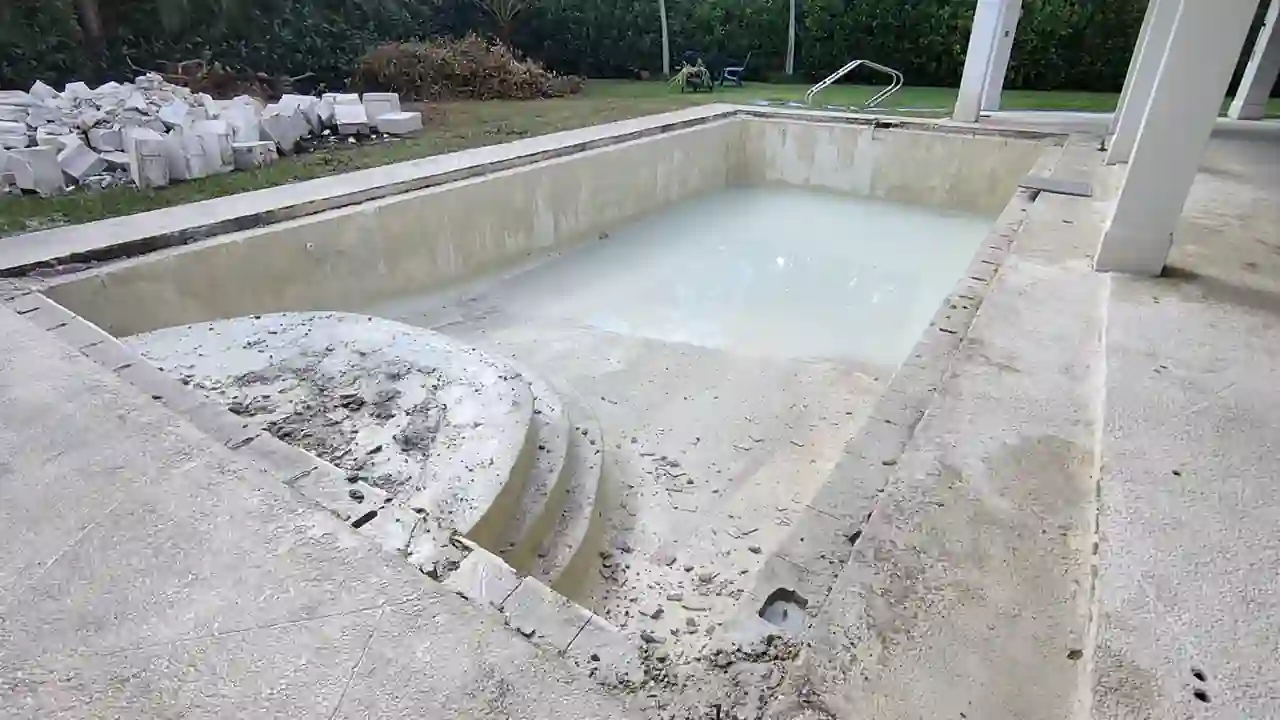
Cut concrete generates aggregate debris, slurry residue, and blade dust that accumulate rapidly in the work zone. Beyond the silica exposure risk, this debris creates slip-and-fall hazards and strike hazards for workers operating in adjacent areas. Gravel removal in Miami job sites is not a trivial task — it requires vacuum extraction or wet sweeping (never dry sweeping, which re-suspends silica), debris containment in sealed bags or containers, and proper disposal in accordance with Miami-Dade solid waste regulations.
The labor and equipment cost for post-cut debris management typically adds $0.50 to $1.25 per square foot to a cutting project. This is a non-negotiable safety line item, not an upsell.
Reading a Concrete Cutting Proposal Through the OSHA Compliance Filter
The next time you receive a per-square-foot cutting quote, apply this checklist before accepting the lowest number on the table:
- Written Exposure Control Plan (ECP) — Required under 29 CFR 1926.1153. If it is not referenced in the proposal, ask for it explicitly.
- Wet cutting or HEPA vacuum system specification — The proposal should identify which Table 1 control method will be used for each cutting task.
- GPR scan inclusion or exclusion — Know whether pre-cut scanning is in scope. If excluded, understand why and document the decision.
- Slurry containment and disposal plan — Especially critical for interior work and projects near storm drain infrastructure.
- Blade specification by task — A reputable contractor will specify blade type, segment configuration, and RPM rating for each cutting operation.
- Temporary opening protection protocol — For any core drilling or slab penetration work, ask how openings will be covered and when.
- Post-cut debris removal methodology — Wet sweep or vacuum extraction only. Dry sweeping is a violation indicator.
A per-square-foot concrete cutting price that cannot account for each of these line items is not a competitive bid. It is an incomplete scope with deferred liability. In Miami’s construction market, where OSHA inspection frequency has increased and multi-employer citation doctrine is actively enforced, the cheapest cutting quote on your bid sheet may be the most expensive decision you make on the project. Invest in contractors who price safety infrastructure transparently — because when the work is done right, the cost per square foot reflects a job site where nobody goes home injured.