Why Job-Site Safety Is the First Cut You Make Before the Blade Ever Touches Concrete
Every experienced concrete cutter knows the rule: the most dangerous moment on a slab job isn’t when the blade is spinning at full RPM — it’s the five minutes before the cut starts, when crews skip the hazard assessment. Cutting concrete slabs is a high-risk, high-precision trade task. Done correctly, it’s controlled demolition. Done carelessly, it produces crystalline silica exposure, blade kick-back injuries, utility strikes, and OSHA citations that shut down entire projects. Whether you’re slicing expansion joints in a Miami warehouse floor or opening a structural slab for MEP penetrations, the safety framework must be built before the first mark is made.
Pre-Cut Hazard Assessment and Utility Mapping Protocols
Before any diamond blade contacts a concrete slab, a formal pre-cut hazard assessment must be completed and documented. This is not optional — OSHA 29 CFR 1926 Subpart Q governs concrete and masonry construction, and failure to identify embedded utilities is one of the most cited violations in the trade. The assessment must include ground-penetrating radar (GPR) scanning or equivalent sub-surface detection to locate rebar patterns, post-tension cables, conduit runs, water lines, and any embedded structural elements.
Post-tensioned slabs deserve special attention. Cutting through a live PT cable releases stored energy equivalent to a ballistic event — operators have been killed by this specific hazard. Confirm PT cable location and direction before marking any cut line. On building demolition projects, structural drawings should be cross-referenced with GPR data because as-built conditions rarely match original plans. Utility mapping results must be communicated verbally and in writing to every crew member on site before work begins.
Site Perimeter Controls and Exclusion Zones
Establish a minimum 10-foot exclusion zone around all active cutting operations. This zone must be marked with physical barriers — not just cones. Flying concrete fragments, blade debris, and water slurry from wet cutting operations create projectile and slip hazards that extend well beyond the immediate cut line. Post visible signage indicating active cutting, mandatory PPE requirements, and restricted access. On multi-trade job sites, coordinate with the general contractor to ensure the exclusion zone is respected during shift changes and when adjacent trades are working nearby.
OSHA Silica Dust Compliance Under 29 CFR 1926.1153
Crystalline silica exposure is the defining occupational health hazard in concrete cutting. OSHA’s respirable crystalline silica standard for construction (29 CFR 1926.1153) sets a Permissible Exposure Limit (PEL) of 50 micrograms per cubic meter of air as an 8-hour time-weighted average. For concrete slab cutting, this standard is not met by respirators alone — it requires an engineered control hierarchy.
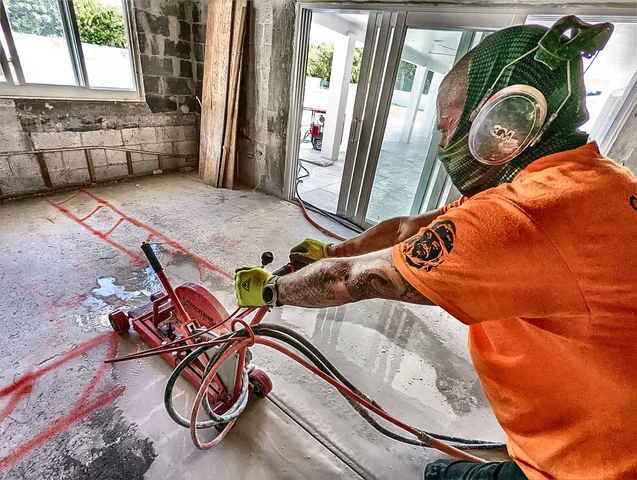
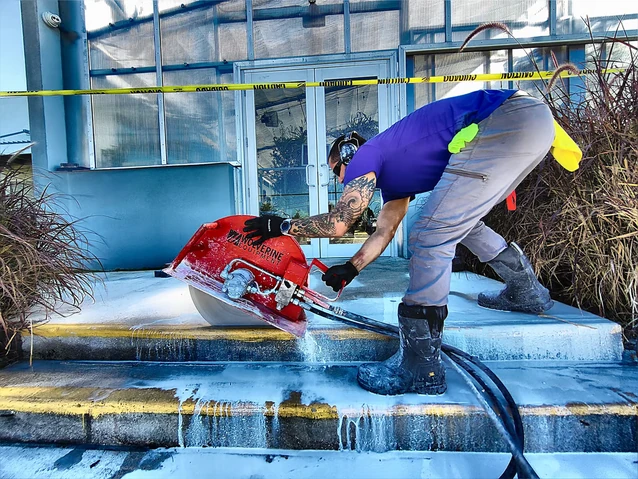
The most effective and OSHA-preferred control for slab cutting is wet cutting with continuous water delivery directly to the blade-concrete interface. Water suppresses respirable dust at the point of generation, reducing airborne silica by up to 95% compared to dry cutting. Our detailed breakdown of why wet cutting is safer and more effective than dry cutting covers the technical specifics of water flow rates and delivery systems. When wet cutting is not feasible — such as in electrical rooms or areas with active drainage restrictions — integrated vacuum extraction with HEPA filtration rated at 99.97% efficiency at 0.3 microns must be used.
Required PPE for Concrete Slab Cutting Operations
Personal protective equipment is the last line of defense, not the first. With engineering controls in place, the following PPE is still mandatory for all personnel within the work zone:
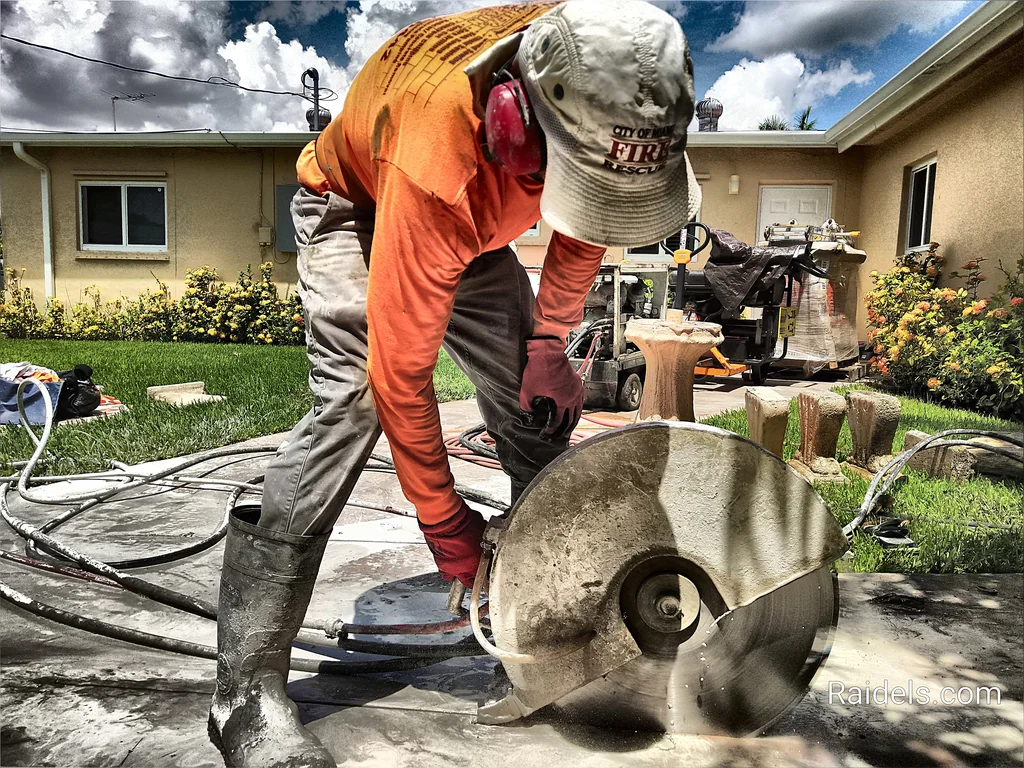
- Respiratory protection: Minimum NIOSH-approved N95 for incidental exposure; a half-face respirator with P100 filters for sustained cutting operations without full wet suppression
- Eye and face protection: Safety glasses with side shields plus a full-face shield during active cutting — blade fragments travel at velocities that defeat standard safety glasses alone
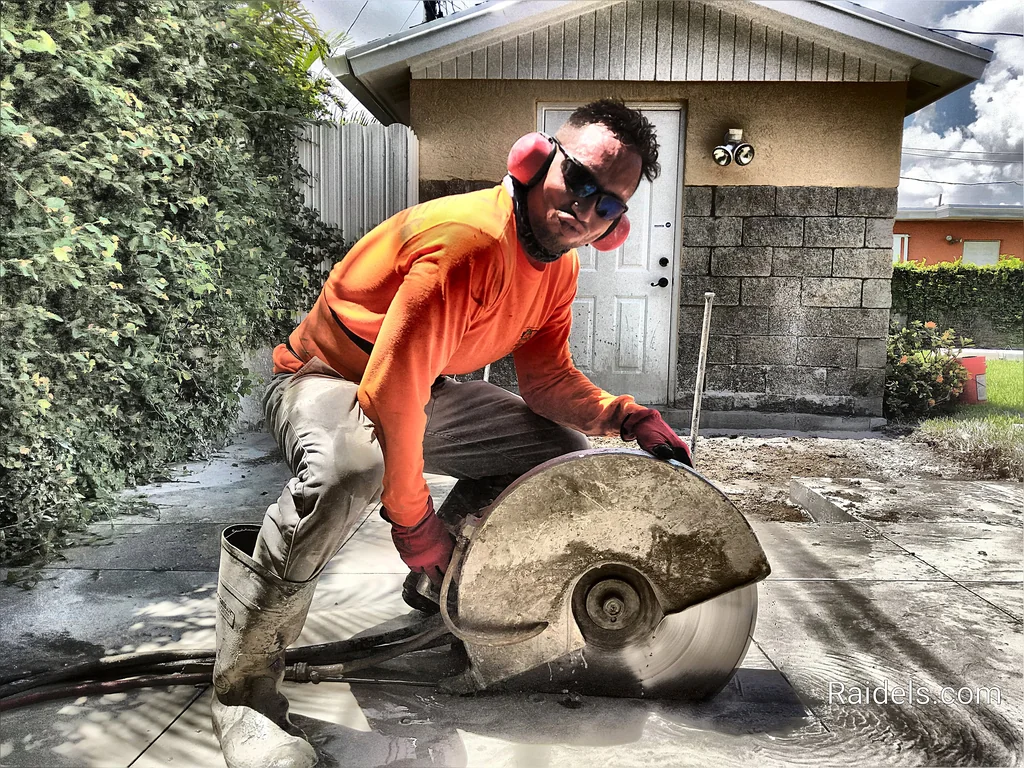
- Hearing protection: Concrete slab cutting with a walk-behind saw generates 95–105 dB at the operator position; double protection (plugs plus muffs) is required for cuts exceeding 30 minutes
- Cut-resistant gloves: Rated to EN 388 Level 4 minimum for blade-adjacent handling tasks
- Steel-toed boots with metatarsal guards: Slab sections and diamond blades are among the highest-weight dropped objects in the trade
- High-visibility vest: Required on any job site where mobile equipment is operating within 50 feet of the cut zone
Diamond Blade Selection, Inspection, and Kick-Back Prevention
Blade failure is the leading cause of acute injury in slab cutting operations. Using the wrong blade specification for the concrete hardness, aggregate type, or cutting depth is not just an efficiency problem — it’s a safety violation waiting to happen. Diamond blades for slab cutting must be matched to the concrete’s compressive strength (PSI rating), the aggregate hardness (using Mohs scale as a reference), and the saw’s horsepower and RPM range. A blade rated for 4,000 PSI concrete used on a 6,000 PSI industrial slab will segment prematurely, creating a catastrophic blade failure scenario.
Pre-use blade inspection is mandatory before every cut sequence. Check for:
- Core cracks or stress fractures visible along the steel core plate
- Segment loss or undercutting where diamond segments are missing or worn below the core steel
- Warped or out-of-round profiles that indicate thermal damage from previous dry or under-watered cuts
- Arbor hole condition — any deformation of the arbor hole creates an imbalance that generates dangerous vibration at operating RPM
Kick-back events — where the blade binds in the cut kerf and the saw is violently thrown back toward the operator — are prevented through a combination of blade selection, proper feed rate, and kerf management. Never force a blade through a cut. If the saw decelerates noticeably, back out, identify the cause (often rebar contact, slab flex, or blade glazing), and address it before resuming. Walk-behind flat saws have anti-kick-back blade guards that must remain in place and functional at all times.
Structural Slab Integrity and Cut Sequencing for Safe Panel Removal
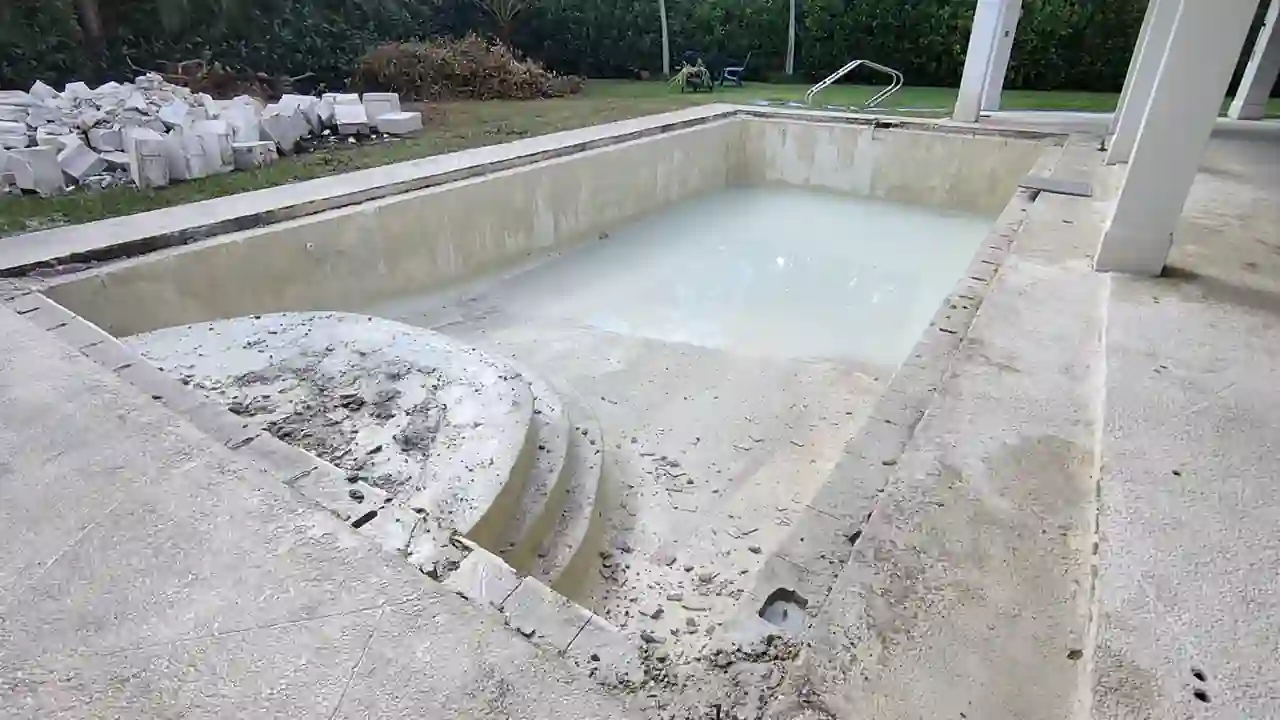
On projects involving full-depth slab removal — common in slab cutting for renovation or site preparation work — the sequence of cuts determines whether slab sections can be removed safely or will collapse unpredictably. Slab panels must be cut in a sequence that maintains structural stability until controlled removal is executed. Never cut all four sides of a large panel simultaneously without a mechanical lifting plan in place. The weight of a 4-inch concrete slab runs approximately 50 pounds per square foot — a 4×8 panel weighs 1,600 pounds and requires rated rigging equipment for safe extraction.
For projects near coastal or waterfront environments, additional considerations apply. Marine construction cutting operations introduce tidal movement, saltwater corrosion of equipment, and barge stability as additional hazard categories that require site-specific safety planning beyond standard OSHA construction requirements.
Slurry Management and Environmental Compliance on Miami Job Sites
Wet cutting produces concrete slurry — a high-pH waste stream that is an environmental hazard if discharged into storm drains, waterways, or unprepared ground. In Miami-Dade County, uncontrolled slurry discharge violates both local stormwater ordinances and EPA Clean Water Act provisions. Slurry must be contained using berms, vacuum recovery systems, or wet/dry vacs and disposed of according to local waste management guidelines. For projects involving significant ground disturbance alongside cutting work, review our resource on environmentally responsible material removal in Miami for compliant disposal strategies.
OSHA Recordkeeping and Toolbox Talk Requirements
OSHA requires that employers maintain records of hazard assessments, PPE assignments, and silica exposure monitoring results. For concrete cutting operations lasting more than one day, a written exposure control plan specific to the task must be available on site. Daily toolbox talks covering the specific hazards of that day’s cut — blade type, depth, utility proximity, dust control method — are best practice and increasingly expected by general contractors as a condition of subcontract. Document every talk with date, attendees, and topics covered.
Building a Safety Culture That Outlasts Any Single Job
The crews that execute concrete slab cutting at the highest level — with zero incidents and zero citations — are not the ones with the most expensive equipment. They are the ones where safety protocols are non-negotiable habits, not pre-inspection checklists. Every operator should be able to articulate the silica PEL, identify a stressed diamond blade by sight, and recite the utility mapping procedure without being prompted. That level of internalized knowledge is what separates professional concrete cutting contractors from the ones who make headlines for the wrong reasons. When your project demands precision cutting with a safety record to match, work with a crew that treats OSHA compliance as the floor, not the ceiling.