Why Most Concrete Service Decisions Go Wrong Before the First Cut Is Made
The single most expensive mistake on any concrete project happens before a single blade spins or a jackhammer swings. It happens in the planning phase, when a contractor or property owner selects a concrete service method based on price alone, or worse, based on what a generalist crew happens to have on their truck. Concrete is not a monolithic problem with a one-size-fits-all solution. It is a highly variable material — reinforced or unreinforced, post-tensioned or plain, aged or freshly cured — and every one of those variables changes which service method is appropriate, safe, and cost-effective. This guide is designed to walk you through the full landscape of professional concrete services, explain the technical demands of each, and give you a decision framework that actually works on real job sites in South Florida.
Mapping the Full Spectrum of Professional Concrete Services
Professional concrete services fall into several distinct operational categories, each with its own equipment requirements, crew certifications, and substrate considerations. Understanding these categories is the first step toward making an informed decision. The primary service types include concrete cutting, core drilling, slab sawing, wall sawing, wire sawing, selective demolition, and controlled breaking. Each one addresses a different problem geometry — meaning the shape, depth, location, and structural context of the concrete you need to modify or remove.
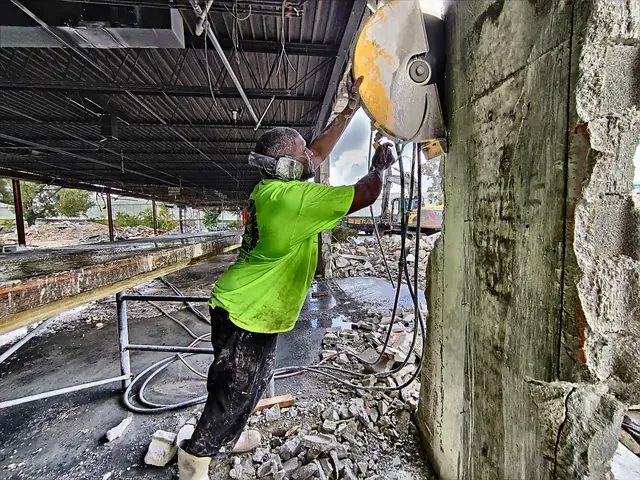
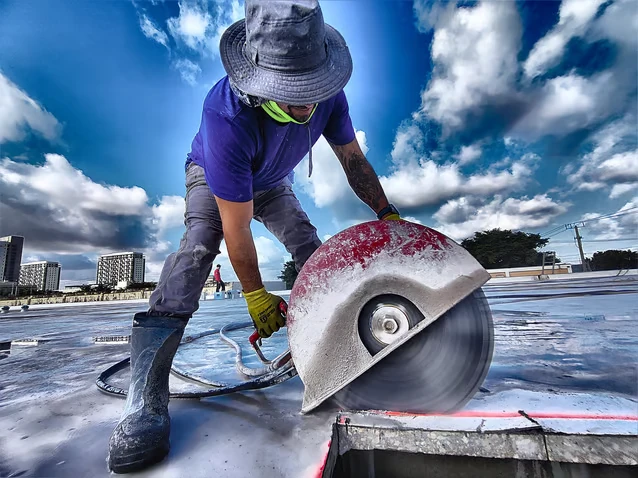
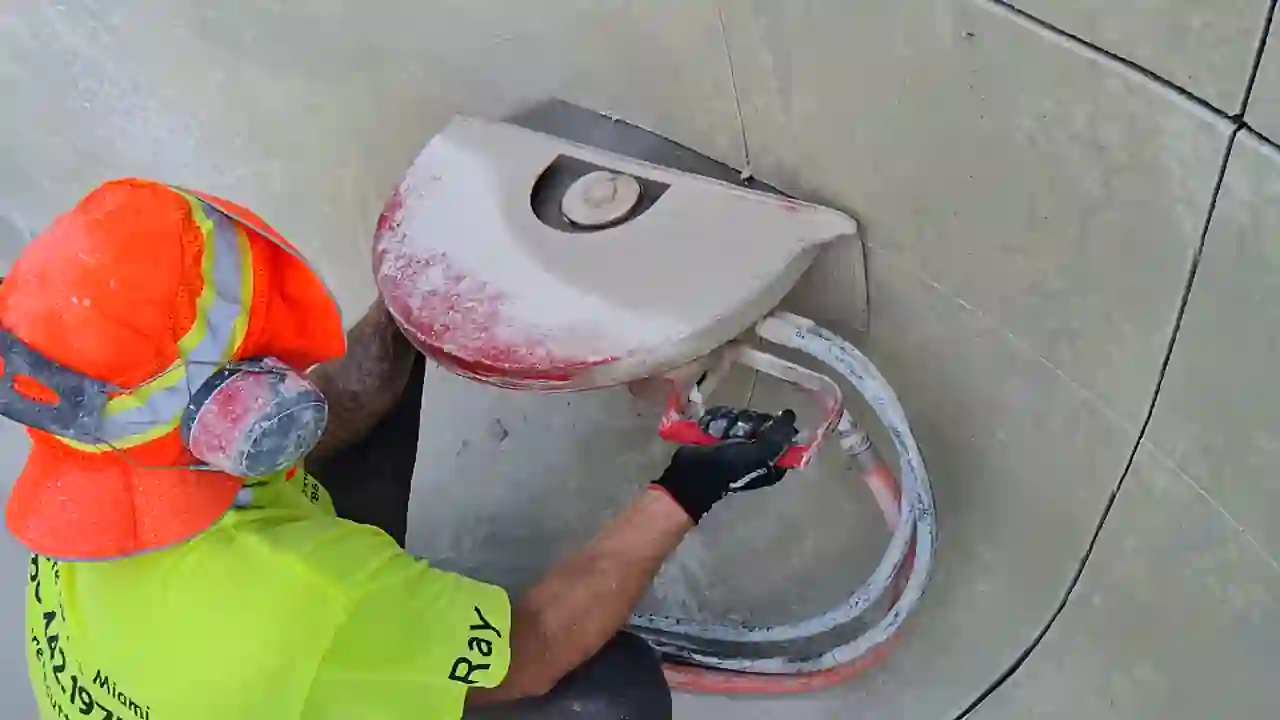
For flat horizontal work like driveways, parking decks, and warehouse floors, flat slab sawing using walk-behind or ride-on diamond blade saws is the standard. These machines can reach depths of 24 inches or more with the right blade diameter and are ideal for creating clean, straight control joints or removal lines. For vertical surfaces — walls, columns, elevator shafts — wall sawing with a track-mounted diamond blade system is the correct tool. Attempting to use a hand-held angle grinder for deep wall cuts is one of the most common and dangerous errors in the trade, and you can read more about those kinds of critical errors in this detailed breakdown of common mistakes to avoid when concrete cutting.
Core Drilling for Utility Penetrations and Structural Analysis
Core drilling is one of the most technically precise concrete services available, and it is far more than just making a hole. When you need to run conduit, plumbing, HVAC ducting, or anchor bolts through a concrete structure, the diameter, depth, and angle of the core must be engineered to avoid existing rebar, post-tension cables, and embedded utilities. In Miami’s older building stock — much of which was constructed between 1960 and 1990 — as-built drawings are frequently inaccurate or entirely unavailable. That means a competent core drilling crew must use ground-penetrating radar (GPR) scanning before any bit touches the surface.
Core diameters typically range from half an inch for anchor bolt installations up to 36 inches for large mechanical penetrations. The bit itself is a diamond-impregnated steel tube, and the bond hardness of the diamond segments must be matched to the aggregate hardness of the concrete being drilled. Hard aggregate like Miami oolite limestone requires a softer bond matrix so that the diamonds expose themselves faster. Getting this wrong destroys bits prematurely and dramatically increases project cost. For a deeper look at the technology driving these decisions, explore the resources available at concrete sawing technology.
Selective Demolition Techniques That Protect Surrounding Structure
Selective demolition is where the skill gap between a general contractor and a specialized concrete services firm becomes most visible. The goal is to remove a defined portion of concrete — a section of slab, a wall opening, a staircase landing — without transmitting destructive vibration or shock load to the surrounding structure. In occupied buildings, hospitals, data centers, or any facility with sensitive equipment, this is not optional. It is a code and liability requirement.
The correct approach to selective demolition almost always begins with saw cutting the perimeter of the section to be removed. This severs the structural continuity of the slab and prevents crack propagation. Once the perimeter is cut, the interior material can be broken using hydraulic bursters, electric chipping hammers, or in some cases, expansive demolition grout for zero-vibration environments. The broken material is then removed in manageable pieces. This process is fundamentally different from the swing-a-sledgehammer approach that causes cracking in adjacent slabs, damages waterproofing membranes, and creates liability exposure. Learn more about the full range of concrete demolition techniques used by professional crews.
Wire Sawing for Massive or Geometrically Complex Concrete Removal
When the section of concrete to be removed is simply too large or too irregularly shaped for conventional flat or wall saws, wire sawing becomes the correct service. A diamond wire saw uses a continuous loop of steel cable embedded with diamond beads, driven by a hydraulic or electric flywheel. The wire is threaded through a series of guide pulleys anchored around the concrete mass, and as it runs at high speed, it cuts through virtually any thickness of reinforced concrete, including post-tensioned structures.
Wire sawing is commonly used for bridge pier removal, large foundation modifications, dam cutting, and the removal of heavily reinforced machine bases in industrial facilities. In Miami’s marine construction environment, it is also used for cutting concrete piling and seawall sections where conventional equipment cannot access the cut zone. The setup time is longer than other methods, but the ability to cut curves, angles, and through unlimited thickness makes it irreplaceable for certain project types.
Concrete Grinding and Surface Preparation as a Standalone Service
Surface preparation is frequently overlooked as a concrete service category, but it is a prerequisite for nearly every flooring system, coating, or overlay installation. If the concrete surface profile (CSP) is not correctly prepared, epoxy coatings delaminate, polished concrete shows ghost lines from old adhesive, and self-leveling underlayment fails at the bond line. The Concrete Surface Profile scale runs from CSP 1 (near-polished) to CSP 9 (heavily scarified), and the correct profile must match the coating system’s technical data sheet requirements.
Planetary grinders with diamond tooling are the industry standard for large floor areas. Shot blasting is used for heavy industrial coatings that require CSP 5 or higher. Scarifying — using a drum with carbide cutters — is used for removing thick coatings, glue, or contaminated surface layers. Each of these is a distinct service with distinct equipment, and none of them are interchangeable. This type of precision surface work connects directly to home improvement applications like garage floor coatings and interior polished concrete installations.
Safety Protocols That Non-Negotiably Govern Every Concrete Service Operation
Concrete services generate silica dust, which is a Class 1 carcinogen under OSHA’s Respirable Crystalline Silica Standard (29 CFR 1926.1153). Every wet-cutting and dry-grinding operation must include engineering controls — either wet suppression systems or HEPA-filtered vacuum extraction — to keep airborne silica below the permissible exposure limit of 50 micrograms per cubic meter averaged over an eight-hour shift. This is not a best practice. It is federal law, and violations carry significant fines.
Beyond silica, concrete cutting operations near existing utilities require positive identification of all embedded conduit, gas lines, and post-tension cables before any cutting begins. Post-tension cables under load store enormous energy, and an unintentional cut can cause catastrophic, fatal failure. Every professional concrete services firm operating in Miami should be following a pre-cut scanning protocol on every project. For a comprehensive overview of the safety standards governing this work, the safety in construction resources provide essential reading for both contractors and property owners.
- Always perform GPR scanning before core drilling or saw cutting in any post-1970 structure
- Verify blade depth settings against confirmed slab thickness — never assume standard dimensions
- Use wet cutting or HEPA vacuum extraction on every interior cutting operation without exception
- Establish exclusion zones around all wire saw and wall saw operations with physical barriers
- Confirm utility locates through 811 and private utility locating services before any outdoor slab work
How to Evaluate and Select a Concrete Services Contractor in South Florida
Not every company that owns a concrete saw is qualified to execute your project. When evaluating a concrete services contractor, ask for documented proof of OSHA 30 certification for their field supervisors, evidence of active CSDA (Concrete Sawing and Drilling Association) membership, and a written pre-job safety plan specific to your project. Request references from projects of similar scope — a contractor who specializes in residential pool deck cutting is not automatically qualified to handle a post-tensioned parking structure modification.
Insurance requirements in Miami-Dade County for concrete services work typically include a minimum of $1 million per occurrence in general liability, workers’ compensation at statutory limits, and umbrella coverage for projects above a certain contract value. Verify these certificates directly with the insurer, not just from a copy provided by the contractor. The combination of technical qualification, proper insurance, and a documented safety culture is what separates a professional concrete services firm from a crew that will create more problems than they solve.
Concrete is one of the most durable and demanding materials in the built environment, and the services required to cut, drill, demolish, and prepare it demand an equivalent level of expertise. Whether you are managing a large commercial renovation in Brickell, a residential addition in Coral Gables, or an infrastructure repair project along the coast, matching the right concrete service to the specific demands of your substrate, geometry, and environment is the single most important decision you will make before work begins. Get that decision right, and everything downstream — cost, schedule, quality, and safety — falls into place.