Why Demolition of Concrete Gets Complicated Before the First Blade Spins
Most property owners and even some general contractors picture concrete demolition as a straightforward operation — bring in a jackhammer, swing a sledge, haul off the rubble. That mental model collapses the moment you’re standing inside a 6-foot-wide mechanical room beneath a 14-story building in Miami’s Brickell corridor, trying to remove a 12-inch reinforced slab without vibrating the structural columns on either side. The demolition of concrete in real-world commercial and residential environments is a logistical discipline as much as it is a mechanical one. Site access, debris routing, overhead clearance, dust containment, and equipment staging all converge before a single cut is made — and every one of those factors can turn a straightforward scope into a project that demands weeks of pre-planning.
Reading the Site Before Any Equipment Gets Mobilized
The first step in any technically sound demolition of concrete is a full site logistics assessment — not an estimate walk, not a quick tape measure. A proper assessment documents ceiling height, door and corridor widths, load-bearing proximity, existing utility corridors, slab thickness and reinforcement type, and the viable debris removal pathway from point of demolition to point of disposal. In Miami’s older building stock — particularly structures built between 1950 and 1985 — you’ll frequently encounter post-tensioned slabs, embedded conduit runs, and aggregate compositions that behave unpredictably under percussive methods.
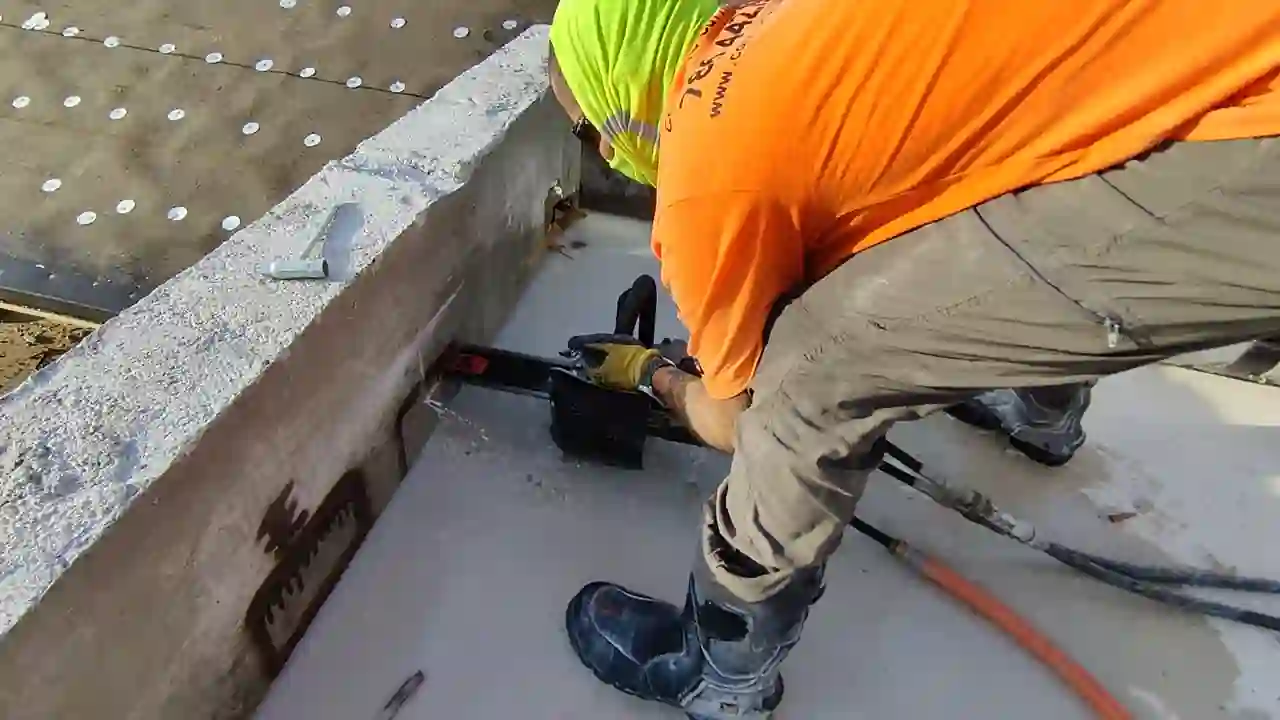
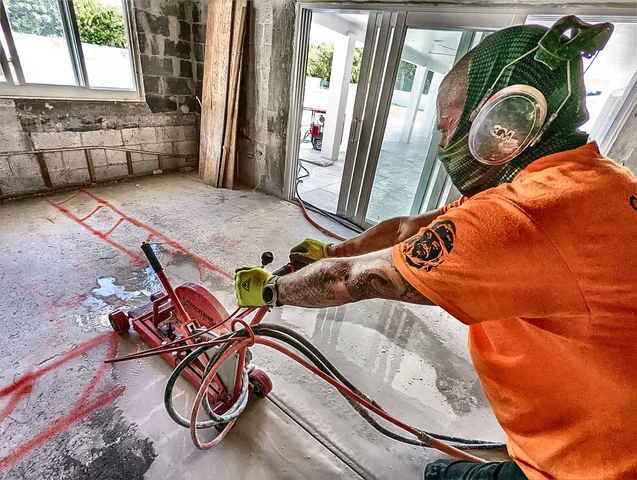
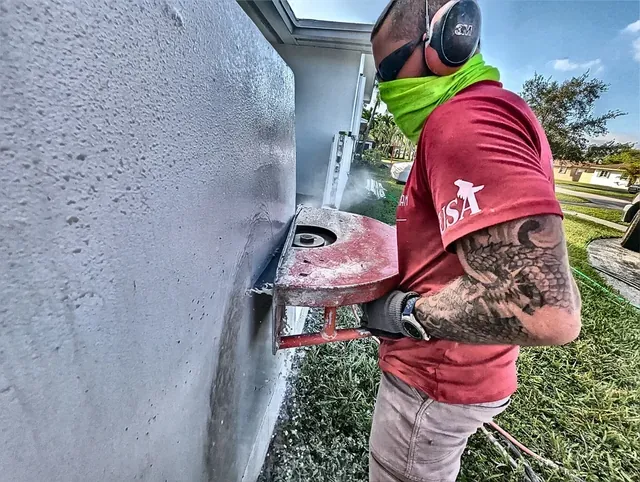
Equipment selection flows directly from this assessment. A 14-inch walk-behind flat saw that handles an open parking deck perfectly becomes a liability inside a basement with 7-foot ceilings and no ventilation. That same job might require electric-powered wall saws or hand-held core drilling rigs to break the slab into liftable sections without exceeding the overhead clearance or generating combustion exhaust in a space with no air movement. Understanding diamond tooling and blade selection becomes critical here — the wrong blade bond hardness on an abrasive Miami limestone aggregate will glaze over within minutes, costing time and money in a space where repositioning equipment is already a 20-minute operation.
Confined Space Protocols That Separate Professionals from the Rest
OSHA defines a permit-required confined space as any space large enough for a worker to enter, with limited means of entry or exit, and not designed for continuous occupancy. Many concrete demolition scenarios — sub-grade mechanical rooms, crawlspaces beneath elevated slabs, interior elevator pits, or enclosed pool equipment vaults — meet this definition directly. Ignoring confined space protocols isn’t just a regulatory violation; it’s a life-safety failure. Carbon monoxide from gas-powered equipment accumulates rapidly in these environments, and silica dust concentrations can reach dangerous levels within minutes of cutting operations beginning.
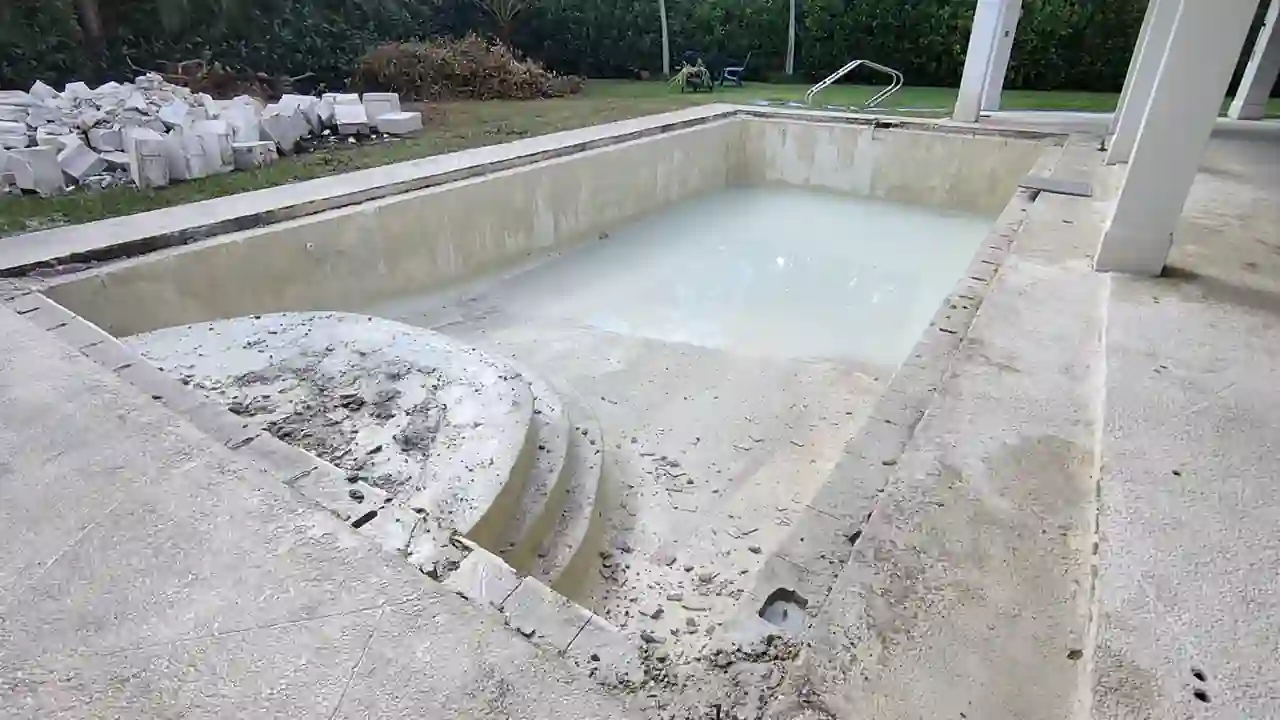
Proper confined space demolition of concrete requires atmospheric monitoring before entry and continuously during work, forced-air ventilation rated for the cubic footage of the space, a trained attendant stationed at the entry point, and a rescue plan that accounts for the physical limitations of the entry pathway. On jobs where we’re cutting inside enclosed pool equipment rooms or sub-grade utility vaults, we run electric-powered or hydraulic cutting equipment exclusively — no combustion, no CO risk. The pool demolition work we do in Miami puts these protocols front and center, because pool shells and associated hardscape often sit in configurations that create natural confined space conditions around the work zone.
Ventilation Engineering for Dust and Exhaust Control
Silica exposure during the demolition of concrete is the occupational health issue that doesn’t get enough attention on job sites. OSHA’s respirable crystalline silica standard (29 CFR 1926.1153) mandates engineering controls — not just respirators — as the primary exposure reduction method. In open environments, this typically means wet cutting with continuous water suppression or HEPA-filtered vacuum extraction integrated directly into the cutting tool. In confined spaces, it means all of the above plus positive-pressure ventilation that exhausts contaminated air away from the work zone and the attendant position. Calculating the air changes per hour needed for a given space, then matching that to the CFM output of your ventilation equipment, is a calculation that needs to happen before the crew loads the truck — not on-site when someone’s already in the hole.
Debris Routing and Weight Management Inside Restricted Access Sites
Concrete is heavy. A single cubic foot of standard 4,000 PSI concrete weighs approximately 150 pounds. A 10-foot by 10-foot slab at 6 inches thick represents roughly 1.9 tons of material. When that slab sits three floors underground with no freight elevator access, the debris routing challenge becomes the defining constraint of the entire project. The demolition sequence — meaning the order in which sections are cut, broken, and removed — must be engineered to keep debris movement paths clear and to prevent sections from being cut into pieces too large for manual or mechanical extraction through the available openings.
On projects with extreme access restrictions, we’ll often cut slabs into sections sized specifically to pass through a single doorway or hatchway, then use electric-powered material lifts or chain hoists to stage debris at intermediate levels before final extraction. Proper waste management planning at the project level determines whether debris gets containerized on-site or loaded directly into haul vehicles — and in dense Miami urban environments, that choice is often dictated by available street staging area and local ordinance restrictions on dumpster placement.
Saw Sequencing to Control Panel Weight and Prevent Uncontrolled Fracture
One of the most technically demanding aspects of confined-space demolition of concrete is controlling how panels behave when the final cut is made. An unsupported slab section doesn’t wait for you to be ready — it drops when the last connection is severed. On open sites, this is managed with excavator buckets and rigging. In a confined space with no mechanical lifting capacity, it means calculating the panel dimensions so that the piece can be safely caught, tilted, and walked out manually, or it means leaving temporary support connections and using wedges and hydraulic spreaders to control the release.
Reinforcement type matters enormously here. A conventionally reinforced slab will fracture predictably along the cut lines. A post-tensioned slab, once the tendons are cut, can release stored energy in ways that are genuinely dangerous in a confined environment. Identifying post-tensioned systems during the site assessment — through construction drawings, GPR scanning, or visual indicators at the slab edge — is non-negotiable before any cutting begins.
Access Limitations Specific to Miami’s Urban and Waterfront Construction Environment
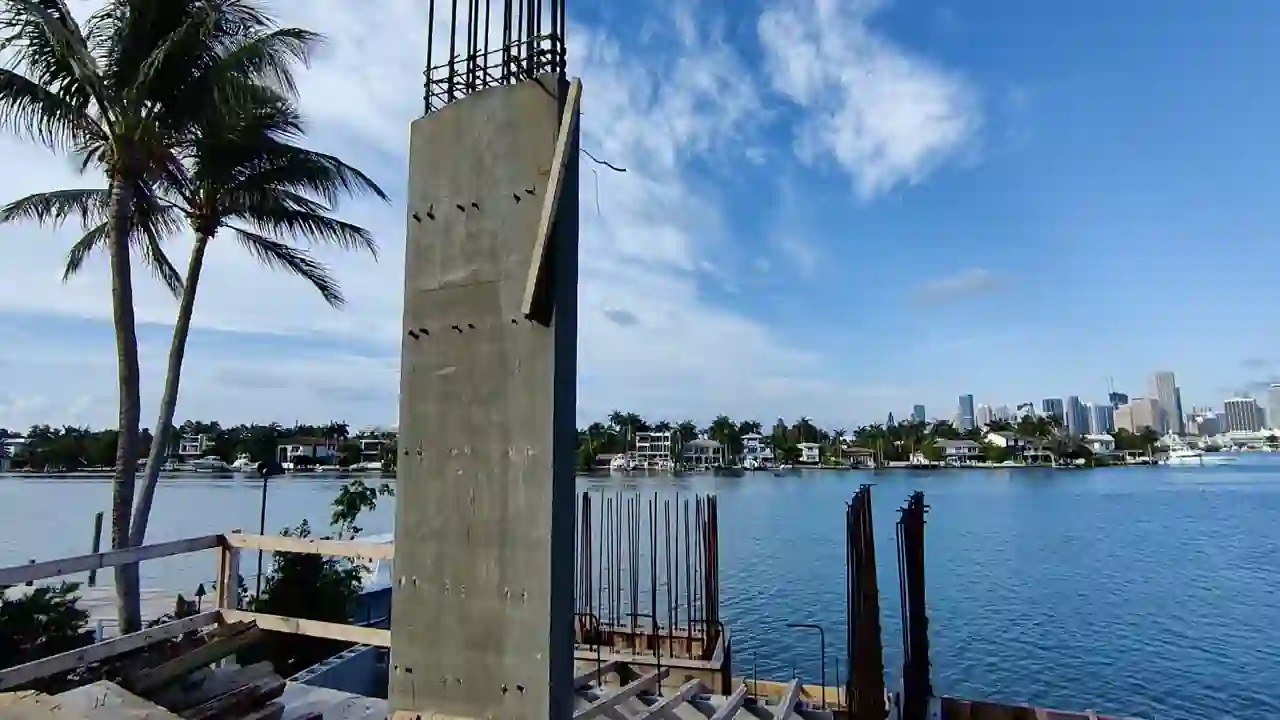
Miami presents site logistics challenges that are specific to its geography and building culture. Waterfront properties often have slabs poured directly over coral rock or fill material, creating variable substrate conditions that affect how panels behave when cut free. High-rise residential towers in Edgewater, Brickell, and South Beach have loading dock restrictions, HOA-mandated work hour windows, and elevator use limitations that compress the available working day and restrict equipment size. Older Art Deco structures in Miami Beach have concrete compositions that include sea sand aggregate — a material notorious for high chloride content and unpredictable compressive strength variation across a single pour.
For pool removal projects specifically, the combination of confined access around the pool shell, proximity to existing landscaping and pool decking, and the need to manage pool fill material in a controlled sequence creates a multi-phase logistics problem. The pool shell itself must be demolished in a sequence that allows fill material to be placed progressively, preventing the surrounding soil from becoming destabilized before the void is adequately supported.
Pre-Job Engineering Documentation That Protects Everyone on the Site
Every technically complex demolition of concrete in a confined or access-restricted environment should be supported by written documentation before work begins. This includes a site-specific safety plan addressing confined space entry, silica exposure controls, and emergency egress. It includes a cutting sequence diagram that shows the order of operations and panel dimensions. It includes equipment specifications confirming that all powered tools are rated for the environment — electric or hydraulic in enclosed spaces, with appropriate GFCI protection for wet cutting operations. And it includes a debris management plan that maps the path from cut section to haul vehicle, with weight calculations at each stage to confirm manual handling limits aren’t exceeded.
This level of documentation isn’t bureaucratic overhead — it’s the difference between a project that executes cleanly and one that stops mid-job because an unanticipated constraint surfaces after the crew is already inside the space. In Miami’s competitive construction market, the contractors who win repeat work from developers and general contractors are the ones who show up with this documentation already prepared, not the ones who figure it out as they go.
The demolition of concrete in challenging site conditions is where trade expertise earns its premium. Equipment matters. Blade selection matters. But the planning that happens before any of that equipment arrives on site is what actually determines whether the job goes right.