What Concrete Saw Cutting Actually Costs Per Linear Foot in 2025 — A Field-Level Breakdown
If you’ve gotten a quote for concrete saw cutting recently and walked away confused, you’re not alone. Pricing in 2025 has shifted considerably due to diamond tooling supply chains, fuel surcharges, and the increasing complexity of reinforced slab work across South Florida’s booming construction corridor. The number you’ll hear most often — somewhere between $3.00 and $12.00 per linear foot — is technically accurate and practically useless without context. This guide gives you the context. We’re going to break down every variable that moves that number, so you can walk into any bidding conversation with a realistic expectation and zero surprises.
The Real Price Drivers That Estimators Use in 2025
Concrete cutting is not a commodity service, even though it gets priced like one on low-quality bid sheets. The per-linear-foot rate is a summary number — it compresses a dozen technical variables into a single figure. Before you can interpret any quote accurately, you need to understand the mechanical factors that drive it up or down.
Slab Thickness and Its Exponential Effect on Blade Wear
This is the single largest cost variable in any saw cutting job. A 4-inch residential slab is a fundamentally different animal than a 12-inch post-tensioned parking structure deck. Here’s why: diamond blade segments wear relative to the volume of material removed, not the linear distance traveled. Cutting 100 linear feet through a 4-inch slab removes roughly 267 cubic inches of concrete per inch of blade width. The same 100 feet through a 10-inch slab removes over 666 cubic inches. Blade segment cost alone can triple between those two scenarios.
- 4-inch slab (residential): $3.00–$5.50 per linear foot
- 6-inch slab (commercial light): $5.00–$7.50 per linear foot
- 8-inch slab (commercial heavy / parking): $6.50–$9.00 per linear foot
- 10–12-inch slab (industrial / post-tensioned): $8.00–$14.00+ per linear foot
These ranges assume standard aggregate hardness. Miami-Dade and Broward County projects frequently involve limestone aggregate, which is softer than granite-based mixes and can reduce blade wear costs by 15–20%. Understanding your concrete type and aggregate composition is not just academic — it directly affects what you should be paying.
Reinforcement Density and Rebar Configuration
Plain concrete and reinforced concrete are priced differently for a reason. Every time a diamond blade contacts a rebar bar, it generates heat, accelerates segment loss, and risks blade deflection. A lightly reinforced slab with #4 rebar at 18-inch spacing on a single mat is manageable. A heavily reinforced mat slab with dual layers of #6 at 12-inch centers — the kind you find in high-rise podium decks and luxury residential foundations — can increase blade consumption by 40–60% and slow cut speed by 25–35%.
Post-tensioned slabs require a pre-cut survey to locate tendon paths. Cutting through an active tendon is a catastrophic failure mode. That survey cost, typically $150–$400 depending on slab area, gets folded into the per-linear-foot rate on most professional bids. If a contractor doesn’t mention tendon location as part of their process on a PT slab, that’s a serious red flag. Projects like high-end residential renovations — the kind we’ve executed at properties such as those featured in our Mansions at Acqualina portfolio — demand this level of pre-cut diligence without exception.
Equipment Selection and How It Shifts Your Cost Per Foot
Walk-Behind Flat Saws vs. Early-Entry and Hand-Held Units
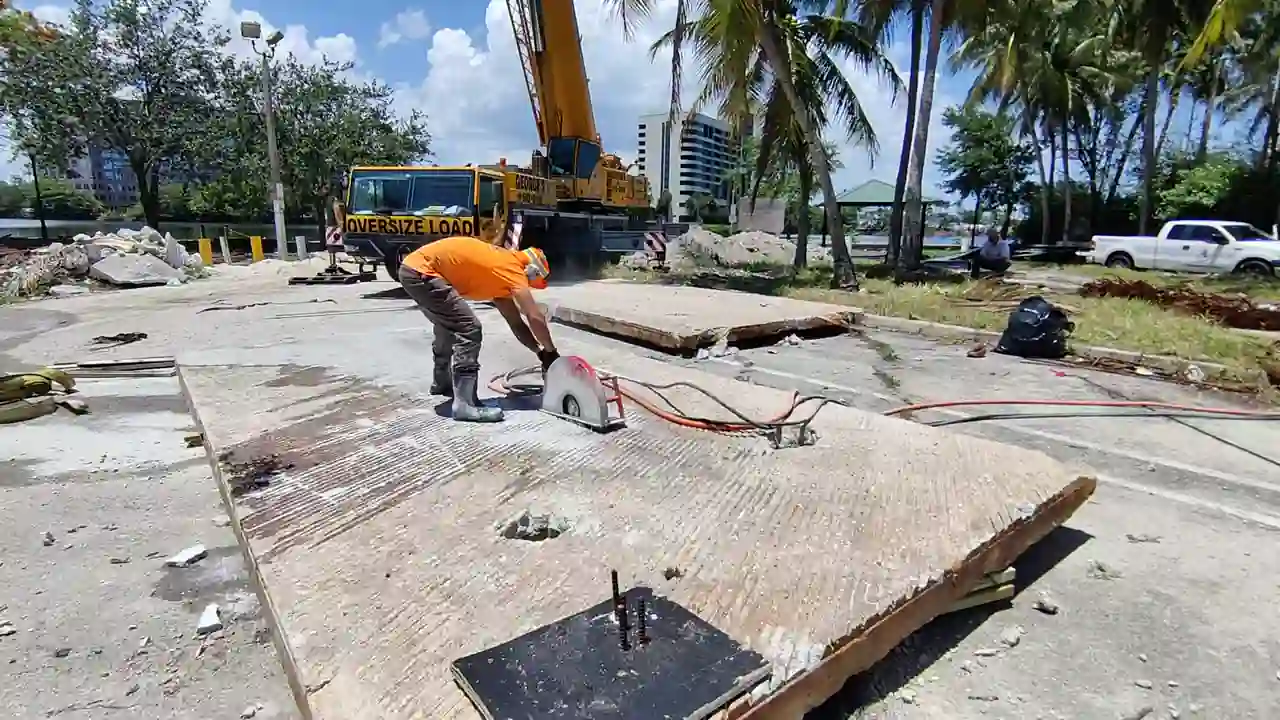
Walk-behind flat saws with 14-inch to 20-inch blades are the workhorses of slab cutting. They deliver the lowest cost per linear foot on long, straight runs in open areas — typically on the lower end of the pricing ranges above. The efficiency equation changes the moment your cut path gets complicated.
Hand-held angle grinders and demo saws are used for short cuts, wall penetrations, and tight interior spaces. Their per-linear-foot cost is 30–50% higher than flat saw work because of reduced cut speed and higher operator fatigue. Early-entry saws, used for joint cutting in fresh concrete, occupy a specialized niche with their own pricing tier.
Wet Cutting vs. Dry Cutting — The Slurry Cost Factor
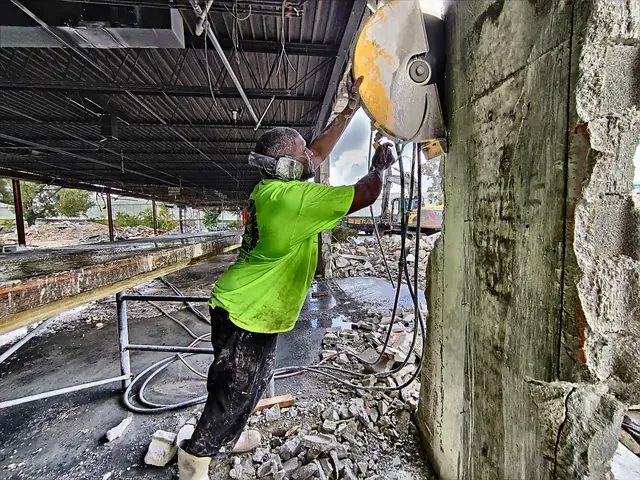
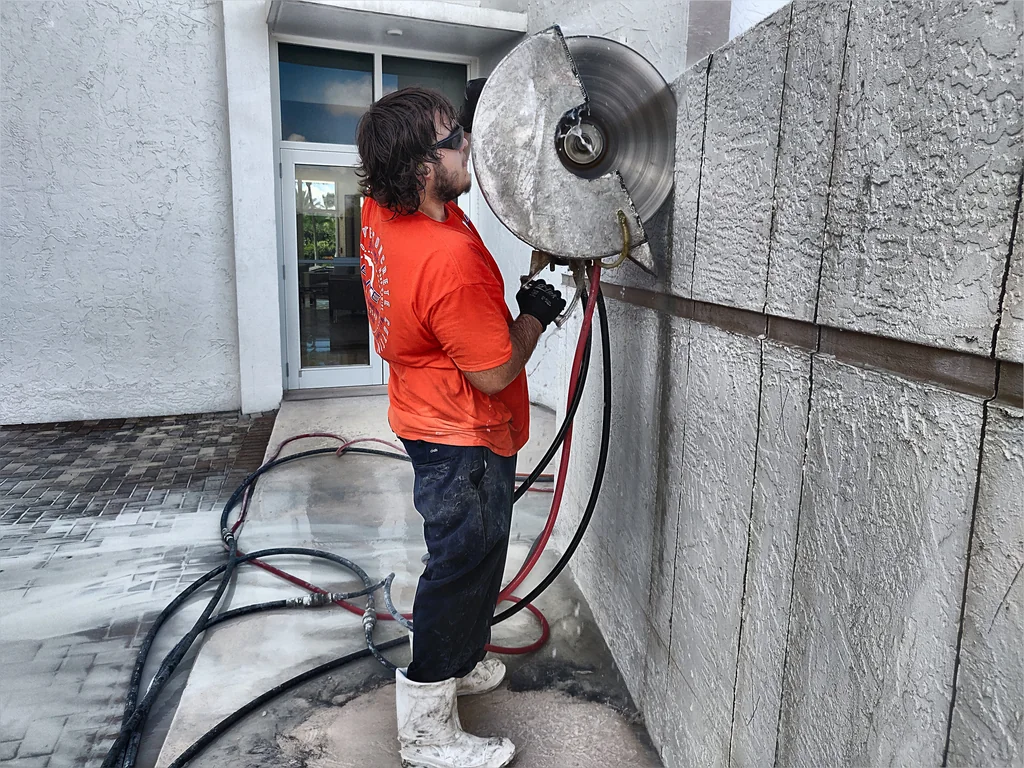
Wet cutting is the industry standard for anything over 2 inches deep. Water cools the blade, suppresses silica dust, and extends diamond segment life. But wet cutting generates slurry — a concrete-water mixture that requires containment and disposal under EPA and local environmental regulations. In Miami-Dade County, slurry disposal is not optional. It cannot be washed into storm drains. Vacuum extraction systems, slurry bags, and proper disposal add $0.50–$1.50 per linear foot to project costs depending on volume. Any quote that doesn’t account for slurry management is either dry-cutting (a quality concern) or externalizing a cost you’ll eventually absorb.
Mobilization, Minimum Charges, and the Small-Job Premium
Here’s where small projects get expensive in a hurry. Most professional concrete cutting operations carry a minimum charge of $350–$650 regardless of how little cutting is involved. This covers mobilization, equipment setup, blade staging, and the crew’s minimum billable time. On a job with only 20 linear feet of cutting, that minimum charge can translate to an effective rate of $20–$30 per linear foot — numbers that look alarming until you understand what you’re actually paying for.
If you’re managing a larger project, consolidating cut sequences and maximizing linear footage per mobilization is one of the most straightforward ways to reduce your effective per-foot cost. We’ve detailed this and other budget management strategies in our deep-dive resource on how to save money on large-scale concrete cutting and demolition projects.
Site Conditions That Add Cost Lines to Any Honest Bid
Interior Access Restrictions and Dust Containment Requirements
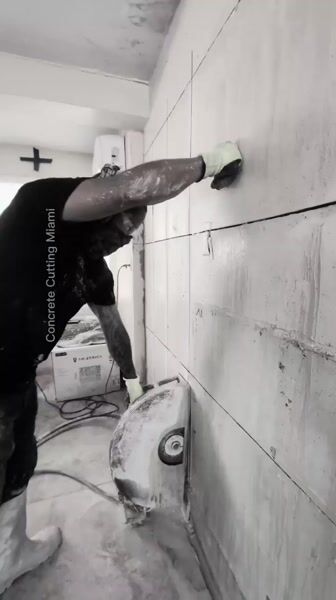
Occupied buildings — commercial spaces with active tenants, hospitals, schools — require HEPA vacuum attachment to all cutting equipment, plastic sheeting containment, and sometimes off-hours scheduling with overtime premiums. HEPA-filtered dust control systems add $1.00–$2.50 per linear foot. Night or weekend work adds a 25–40% labor premium on top of base rates.
Grade Changes and Leveling Conditions
Cutting on an uneven substrate forces the saw operator to manage blade depth manually, reducing speed and increasing the risk of blade binding. Projects that involve leveling the ground as a precursor to cutting may require additional prep work that gets billed separately or folded into an elevated per-foot rate. Always clarify with your contractor whether their rate assumes a level, accessible substrate.
How to Read a 2025 Concrete Cutting Quote Without Getting Burned
A professional quote for concrete saw cutting should itemize at minimum: slab thickness and reinforcement assumptions, blade specification (bond hardness, segment height, diameter), wet or dry cutting method, slurry disposal handling, mobilization charge, and any applicable minimum. If you receive a single-line quote that says “concrete cutting — $X per foot,” ask for the breakdown. The line items tell you whether the contractor actually assessed your project or is guessing.
For residential renovation work specifically — additions, pool deck modifications, driveway expansion cuts — rates in the $4.00–$7.00 per linear foot range are typical for standard conditions in 2025. Explore our full range of residential concrete cutting solutions to understand what service tier fits your project scope.
Commercial and industrial projects should budget at the higher end of their applicable thickness range and add 15% contingency for unknown reinforcement. It’s better to budget high and return money than to re-negotiate mid-project when a post-tension tendon shows up where the drawings said it wouldn’t.
Putting 2025 Numbers Into a Workable Project Budget
Let’s make this concrete (no pun intended). A typical residential pool deck modification in Miami — 80 linear feet of cutting through a 5-inch reinforced slab, wet cut, with slurry vacuum and standard access — should come in between $520 and $720 all-in, including mobilization. A commercial tenant improvement requiring 200 linear feet through an 8-inch post-tensioned slab, interior HEPA control, and off-hours scheduling should be budgeted at $2,800–$4,200 depending on rebar density and access complexity.
These are not guarantees — they are informed starting points. The only way to get an accurate number for your specific project is a site visit by an experienced estimator who can physically assess slab condition, reinforcement, access constraints, and disposal logistics. Professional concrete cutting is a precision trade, and precision starts with a proper assessment — not a phone quote based on square footage alone.
If you’re working on a project in Miami-Dade or Broward County and need a line-item estimate built on the variables above, contact Concrete Cutting Miami, LLC directly. We’ll give you a number you can actually build a budget around.