Why Site Logistics Make or Break Concrete Cutting Demolition Services
Most project owners focus on the cut itself — the blade, the depth, the line. What they underestimate is everything surrounding the cut. In commercial and industrial concrete cutting demolition services, the physical environment of the job site often dictates more about the outcome than the equipment specifications ever will. Tight corridors, underground vaults, parking garage decks, mechanical rooms, elevator pits — these are the environments where standard demolition approaches fall apart fast. The crews that thrive in Miami’s dense urban construction landscape are the ones who treat site logistics as a primary engineering challenge, not an afterthought.
Confined Space Classifications and What They Actually Mean for Cutting Crews
OSHA’s definition of a confined space — any space large enough to enter but not designed for continuous occupancy, with limited means of entry or exit — covers a staggering number of environments where concrete cutting demolition services are routinely performed. Pump rooms, utility tunnels, crawlspaces under elevated slabs, and basement mechanical areas all qualify. When a permit-required confined space is involved, the operational complexity multiplies immediately.
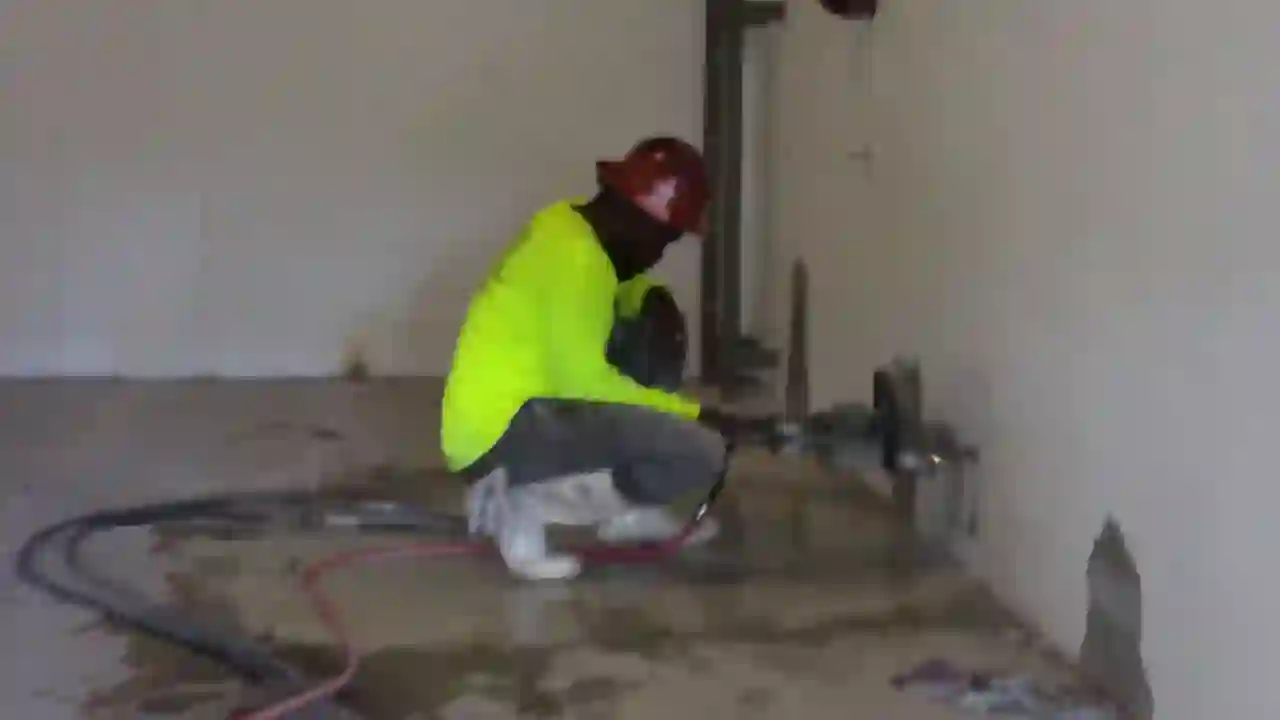
Before a single blade touches concrete in these environments, a site-specific entry plan must be in place. That means atmospheric testing for oxygen levels, combustible gases, and toxic vapors — critical when cutting through slabs that may have been treated with chemical hardeners or sealers that off-gas when disturbed. It means a trained attendant stationed outside the entry point at all times, communication protocols, and a rescue plan that accounts for the actual dimensions of the space. These aren’t bureaucratic formalities. They are operational prerequisites that directly affect crew positioning, equipment selection, and cutting sequencing.
Reviewing safety precautions specific to cutting operations before mobilizing into any confined space is non-negotiable for any crew operating at a professional level.
Ventilation Engineering for Slurry and Silica Control in Tight Spaces
Wet cutting generates slurry. Dry cutting — sometimes necessary when water introduction would compromise the structural environment or adjacent systems — generates respirable crystalline silica dust at concentrations that can reach dangerous thresholds within minutes in a poorly ventilated space. In confined cutting environments, passive ventilation is almost never sufficient. Forced-air ventilation systems, positioned to create positive pressure at the work face and exhaust contaminated air through a defined exit point, are standard practice on professionally managed jobs.
The challenge compounds when the confined space has irregular geometry — L-shaped utility corridors, spaces with low overhead clearance, or rooms with multiple interconnected chambers. In these cases, ventilation engineers and cutting supervisors need to coordinate on airflow modeling before work begins, not during it. Slurry management in confined spaces also requires contained collection systems since uncontrolled slurry flow in a tight space creates slip hazards and can migrate into adjacent systems. Proper waste management protocols for slurry and concrete debris are engineered into the job plan from day one on well-run projects.
Equipment Downsizing Strategies Without Sacrificing Cut Quality
The standard walk-behind flat saw used on open slab work is a powerful, productive machine. It is also completely useless in a space where ceiling height is 5 feet and the corridor is 36 inches wide. Concrete cutting demolition services that operate effectively in access-limited environments maintain a fleet that scales down in footprint without scaling down in capability.
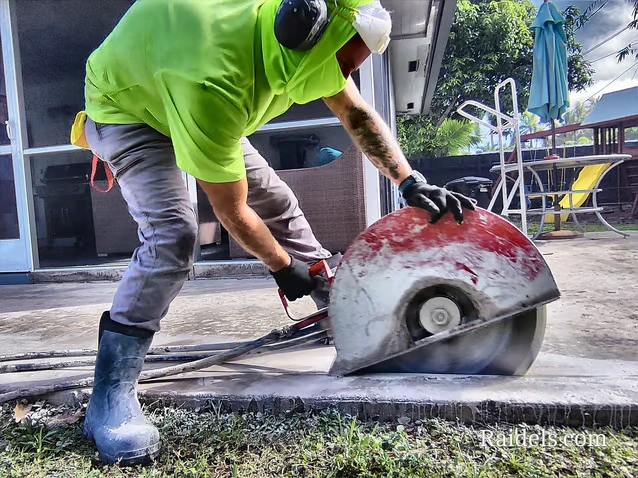
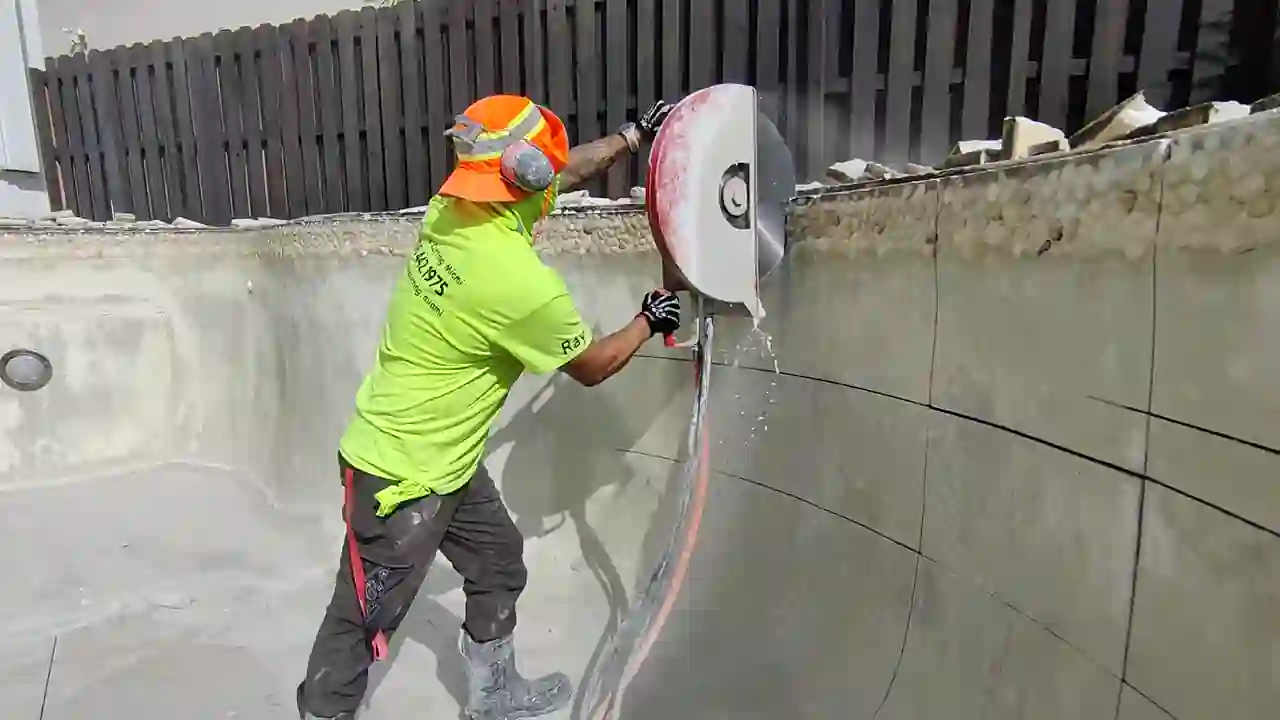
Hand-held ring saws with vacuum-shroud dust suppression systems handle wall and overhead cuts in tight spaces where a wall saw track cannot be rigged. Electric-powered chain saws designed for concrete cutting eliminate the exhaust concerns that make gas-powered equipment impractical indoors. Hydraulic power packs positioned outside the confined space can drive tools inside through extended hydraulic lines, keeping the operator’s immediate environment cleaner and cooler. For slab penetrations in extremely restricted areas, core drilling replaces flat sawing as the primary removal strategy, with multiple overlapping cores used to define the removal boundary.
Understanding the economics and operational logic of specialized cutting tools — including concrete pipe cutter selection and ROI — is part of what separates reactive equipment choices from strategic ones.

Sequencing Demolition Cuts When Structural Load Paths Are Compressed
In open demolition environments, structural engineers often have flexibility in sequencing recommendations. In confined or access-limited sites, that flexibility shrinks dramatically. When you’re cutting a section of a load-bearing wall in a basement with minimal shoring clearance, or removing a slab segment in a parking structure where adjacent bays remain in active service, cut sequencing becomes a structural safety calculation, not just a productivity preference.
The general principle is to work from the perimeter inward, establishing relief cuts that isolate the removal section from the surrounding structure before any primary cuts are made. Shoring must be installed and verified before cuts that remove lateral or vertical support. In confined spaces, installing adequate shoring is itself a logistical challenge — standard adjustable steel shores may not fit, requiring custom timber shoring or engineered bracket systems that can be assembled within the space constraints.
Flat Sawing on Elevated Decks with Restricted Below-Grade Access
Elevated parking deck demolition is a common scenario where surface access is reasonable but below-deck conditions create significant complications. Flat sawing the deck surface is straightforward enough. The problem is that cut concrete sections — often weighing several hundred pounds per square foot — need to be broken out and removed, and the space below the deck may be a tight ramp structure, a retail space, or a mechanical room that cannot accommodate a standard excavator or crane operation.
In these situations, the removal strategy shifts to controlled sectioning. Cut sections are sized to what can be manually lifted or moved with compact material handlers that fit within the below-deck clearance. Lifting inserts cast into the concrete or drilled anchor points allow sections to be rigged and extracted vertically through the deck opening using a compact electric chain hoist. The entire operation requires precise coordination between the cutting crew above and the removal crew below, with communication maintained throughout.
Navigating Access Restrictions in Active Urban Construction Zones
Miami’s urban core presents a specific set of access challenges that compound the physical constraints of confined spaces. Street-level right-of-way restrictions, active pedestrian corridors, adjacent occupied buildings, and underground utility corridors all create a layered access puzzle that must be solved before mobilization. Lane closure permits, shoring permits, and demolition permits all carry specific requirements that affect where equipment can be staged, what hours cutting can occur, and what noise and vibration thresholds must be maintained.
Compliance with local building codes and permit requirements isn’t just a legal obligation — it’s an operational framework that shapes the entire job plan. Experienced concrete cutting demolition crews in Miami work with permit requirements as design inputs, not constraints imposed after the plan is set.
- Noise ordinances may restrict cutting to daytime hours, requiring accelerated sequencing to hit production targets within compressed windows.
- Vibration monitoring near sensitive structures or occupied spaces requires real-time instrumentation and pre-established thresholds that trigger work stoppages.
- Utility protection zones around underground infrastructure define no-cut corridors that affect layout and sequencing of the entire demolition scope.
- Crane and equipment swing radius restrictions in dense urban blocks force debris removal strategies that rely on smaller, more maneuverable equipment.
- Dust migration controls in occupied or retail-adjacent environments require containment barriers and negative pressure systems that add setup time and cost.
Communication Systems and Crew Coordination as a Technical Discipline
In open-site demolition, visual communication between crew members is easy. In confined space cutting operations, line-of-sight between the saw operator, the signal person, the attendant outside the space, and the project supervisor may not exist simultaneously. Hardwired communication systems, radio protocols with designated channels, and pre-established hand signal systems for when noise levels exceed radio intelligibility are all part of the operational toolkit.
Crew briefings before each shift in confined space operations cover the specific cut sequence for that shift, emergency egress routes, atmospheric monitoring checkpoints, and the specific responsibilities of each crew member. This isn’t a safety formality — it is the mechanism by which complex, multi-person operations in difficult environments execute without incident. The best concrete cutting demolition services operating in Miami treat crew communication as a technical system, engineered and rehearsed with the same rigor as the cutting methodology itself.
Selecting the Right Concrete Cutting Demolition Partner for Restricted-Access Projects
When evaluating concrete cutting demolition services for projects with significant site logistics challenges, the questions to ask go well beyond pricing and scheduling. Ask for documented experience in confined space permit-required entry operations. Ask for their ventilation and atmospheric monitoring protocols. Ask how they handle slurry management in spaces where gravity drainage isn’t available. Ask what their equipment fleet looks like at the compact end of the spectrum.
The answers reveal whether you’re talking to a crew that handles straightforward open-site work and improvises when things get complicated, or a team that has built its operational systems specifically to perform in the environments where standard approaches fail. In Miami’s complex built environment — dense, aging, and constantly being redeveloped — the latter is the only category of contractor worth putting on a restricted-access demolition project.