The Financial Mechanics of Concrete Pipe Cutting Operations
When evaluating concrete pipe cutting operations, the financial variables extend far beyond the simple purchase price of equipment. The sophisticated contractor understands that proper cost analysis involves equipment depreciation schedules, labor multipliers, consumable tracking, and project-specific variables that impact the bottom line. This technical breakdown examines the economic framework that supports profitable concrete pipe cutting operations across commercial and infrastructure projects.
The concrete pipe cutting market has evolved substantially, with specialized equipment now capable of achieving precision cuts while maintaining structural integrity across various pipe diameters. For contractors working across commercial construction projects, understanding the cost implications of these specialized tools directly impacts profitability and competitive bidding position.
Equipment Investment Analysis for Pipe Cutting Systems
Concrete pipe cutters range from $4,500 for basic handheld models to $75,000+ for automated hydraulic systems with remote operation capabilities. This initial capital investment represents only the foundation of your cost structure. The sophisticated contractor must calculate the following financial metrics:
- Depreciation Rate: Most concrete cutting equipment depreciates on a 5-7 year schedule, translating to approximately $10,000-15,000 annually for premium systems
- Maintenance Reserve: Budget 12-18% of equipment value annually for maintenance, calibration, and unexpected repairs
- Consumables Cost Per Linear Foot: Diamond blade wear averages $0.75-2.50 per linear foot depending on concrete PSI and aggregate composition
- Fuel/Power Consumption: Hydraulic systems consume 4-7 gallons of fuel per 8-hour operation day
When bidding projects requiring extensive pipe cutting, these calculations must be amortized across projected annual usage hours. For specialty contractors serving South Florida’s construction market, equipment utilization rates typically fall between 65-78% of available working hours.
Hourly Operation Cost Breakdown
To accurately estimate project costs, calculate the true hourly operation rate using this formula:
(Equipment Depreciation + Maintenance + Consumables + Fuel + Labor + Overhead) ÷ Annual Operating Hours = Hourly Cost Rate
For a mid-range hydraulic concrete pipe cutter, this typically translates to $115-175 per operating hour, excluding mobilization costs. This baseline informs minimum billing rates required to maintain profitability.
Project Timeline Variables Affecting Cost Structures
Timeline estimation for concrete pipe cutting projects hinges on several technical variables that directly impact the cost structure:
- Pipe Diameter Correlation: Cutting time increases exponentially rather than linearly with diameter increases. A 36″ pipe requires approximately 2.7x the cutting time of an 18″ pipe
- Material Density Factors: High-PSI concrete (5000+) extends cutting time by 30-45% compared to standard 3000 PSI mixes
- Reinforcement Complexity: Heavy reinforcement (double-mat or specialized steel) adds 25-40% to base cutting times
- Access Limitations: Restricted workspace reduces productivity by 15-60% depending on severity
These variables must be quantified in bid documents to protect profit margins. For residential applications like patio demolition projects, simplified timeline calculations may apply, but commercial and infrastructure work demands rigorous analysis.
Productivity Rate Calculations
Standard productivity metrics for concrete pipe cutting operations:
- 8-12″ diameter pipe: 4-6 linear feet per hour
- 14-24″ diameter pipe: 2-3.5 linear feet per hour
- 30-48″ diameter pipe: 0.75-1.5 linear feet per hour
- 54″+ diameter pipe: 0.3-0.8 linear feet per hour
These rates assume optimal conditions and must be adjusted for the variables mentioned above. When preparing bids for Miami construction services, factor in additional time for site-specific challenges including water management and reinforcement variations.
Competitive Bidding Strategies for Pipe Cutting Contracts
Successful bidding for concrete pipe cutting contracts requires strategic positioning based on equipment capabilities and cost efficiency. The data indicates that specialized contractors typically achieve 15-22% higher profit margins compared to general contractors attempting to perform this work with rented equipment.
When preparing bids, implement these technical pricing strategies:
- Tiered Pricing Structures: Establish diameter-based pricing tiers with clearly defined parameters
- Mobilization Cost Allocation: Separate mobilization costs from cutting rates to protect margins on smaller projects
- Volume Discount Thresholds: Define specific linear footage thresholds where economies of scale reduce per-foot costs
- Reinforcement Surcharges: Apply transparent multipliers for reinforcement complexity
Contractors should reference effective planning guidelines for concrete cutting projects to develop accurate bids that account for all variables while maintaining competitive positioning.
ROI Calculation Methodology for Equipment Investment
To determine whether purchasing specialized pipe cutting equipment makes financial sense versus subcontracting, apply this ROI formula:
(Annual Revenue from Pipe Cutting – Operating Costs) ÷ Equipment Investment = Annual ROI Percentage
Industry benchmarks suggest that equipment ROI should exceed 20% annually to justify the capital expenditure. For contractors with consistent pipeline work, specialized equipment typically achieves ROI breakeven within 16-24 months of operation.
Risk Mitigation Factors in Cost Estimation
Accurate cost estimation for concrete pipe cutting must incorporate risk factors that can impact project economics:
- Material Variance: Concrete with unexpected aggregate composition can accelerate blade wear by 30-45%
- Environmental Conditions: Water intrusion management adds $75-150 per hour in additional equipment and labor costs
- Access Changes: Mid-project access limitations can reduce productivity by up to 60%
- Regulatory Delays: Permit issues and inspection delays cost $1,500-3,000 per day in equipment standby costs
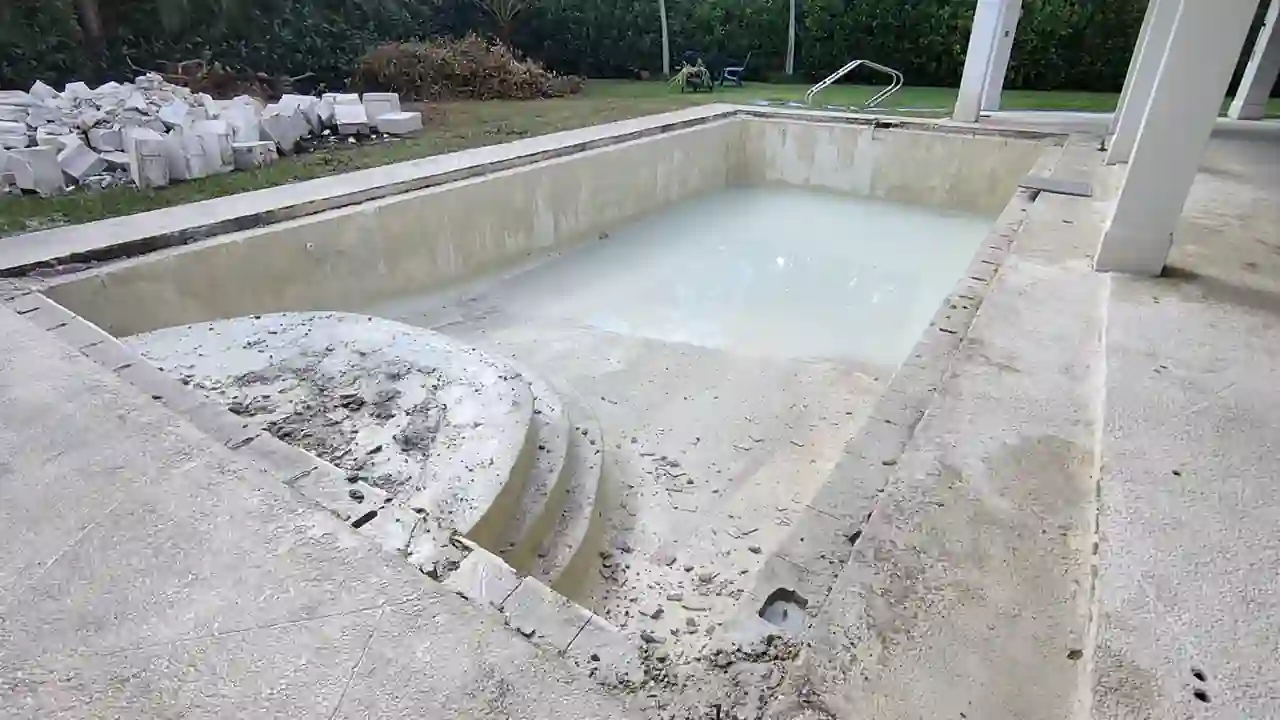
Professional estimators typically add a 15-25% contingency factor to pipe cutting operations to account for these variables. This approach parallels risk management strategies used in other specialized demolition work like swimming pool demolition projects.
The financial success of concrete pipe cutting operations ultimately depends on precision in both technical execution and economic analysis. By incorporating these detailed cost factors, timeline variables, and bidding strategies, contractors can maximize profitability while delivering competitive pricing in this specialized market segment.